TERMINATOR: DARK FATE – an Alternative Lens review

Starring: Linda Hamilton (Dante’s Peak), Arnold Schwarzenegger (True Lies), Mackenzie Davis (Halt and Catch Fire), Natalia Reyes (Birds of Passage), Gabriel Luna (Agents of S.H.I.E.LD.), Diego Boneta (Rock of Ages) 

Director: Tim Miller (Deadpool)

Writers: David S. Goyer (Batman Begins) & Justin Rhodes (Grassroots) and Billy Ray (Captain Phillips)

Runtime: 2 hours 8 minutes

Release Date: 23rd October (UK), 1st November (US)

So we’re back again, huh? The Terminator franchise hasn’t had a solid entry for nearly three decades, and yet the legacy of those first two films has kept it alive through critical and box office failure. After Genisys failed to produce its promised trilogy, it really felt like the series might have finally been put to rest, and yet the future has yet again found a way. However, Terminator: Dark Fate has two things all of the other sequels lacked: Linda Hamilton and James Cameron. With the series creator once again overseeing as a producer and story co-writer, and its former star now back in a leading role, the franchise once again has the tools necessary to maybe create something worthy of its name. The final result is perhaps not a patch on Cameron’s two classics, but it does give the series something it has lacked for a long time: hope.

Ignoring all instalments after Judgement Day, Dark Fate is a back-to-basics return to the formula established in the 1984 original on a structural level, but it avoids falling into the trap of just being a rehash like Rise of the Machines. It recycles some of the better ideas of the now non-canon sequels from a fresh angle, but for the most part this is a new film that aims to look forward rather than playing purely for nostalgia. The story may perhaps be a little predictable to franchise fans and certain plot devices are a little too convenient and lack explanation, but it mostly manages to avoid the clichés that ran the series into the ground in the first place. When you get down to it, Dark Fate is using that familiar framework to put focus instead back on the franchise’s themes, updating and fleshing them out for a modern age where technology has greatly advanced and the socio-political climate has made us more divided. The series is still about belief in the face of annihilation and resisting inevitability, but Dark Fate specifically discusses how destinies aren’t tied to specific individuals and that anyone can evolve beyond their expectations. It relies far less on iconography and call-backs to prove itself a Terminator film, and as a result it feels less tired and the recycled plot elements seem far less blatant. Ultimately, the reason Dark Fate succeeds where the Cameron-less entries didn’t is because it actually feels like it has something to say.

The main mistake pop culture seems to have made about the Terminator franchise is that the T-800 is the star, ignoring the real reason those first two films resonated: Sarah Connor. All of the entries since Judgement Day have missed this obvious point; Rise of the Machines had her killed off between films, Salvation relegated her to voice recordings, and Genisys had her play second-fiddle to Kyle Reese. The series needs Sarah and, more specifically, Linda Hamilton playing her, and here she absolutely proves why there is no Terminator without her. Sarah has only grown more bitter and paranoid since the second film, and Hamilton’s portrayal of her pessimism, resentment and even prejudice all ring true. It is a sad but natural evolution to the character, which only makes it more rewarding as she learns to find hope again. Schwarzenegger is relegated to a third act supporting role instead, but he’s absolutely fantastic when he finally shows up and brings some much needed humour and closure to Sarah’s arc, as well as a logical next step for the humanization of the T-800.

Mackenzie Davis and Natalia Reyes slot into the series archetypes of the protector and the target well, but neither are straightforward rehashes. As enhanced human soldier Grace, Davis feels like a more fleshed-out and compelling version of what Salvation attempted to do with Sam Worthington’s character, making for both a flawed but badass heroine and a worthy foil to the world-weary Sarah. Her back-story and motivation feel a tad simplistic and underdeveloped, but from a performance perspective Davis absolutely proves she has action movie chops on par with Hamilton. Reyes’ Dani at first doesn’t seem too different to young Sarah in the first film, but she quickly shows herself to be a fiery and street-smart protagonist with a potentially interesting future ahead. Gabriel Luna as the new hunter Rev-9 adopts a similar eerie charm to Robert Patrick’s T-1000, and whilst not as iconic as him or Schwarzenegger he proves himself a worthy foe and is still easily miles more enthralling than the likes of Kristanna Loken or Jason Clarke.

When James Cameron is involved in a film, you know the production values are going to be of a high standard. Teamed with Deadpool helmsman and VFX veteran Tim Miller, Dark Fate is a seamless blend of old-school practical action filmmaking and modern CGI mastery. It feels like a natural evolution of the techniques pioneered by T2, and the result is action that feels grounded and real and is then elevated by the technology. The set pieces are especially heightened by Grace’s superhuman enhancements and Rev-9’s ability to divide its consciousness, and the result is classic Terminator action but with fresh twists. The film’s production design is a seamless blend of old and new, with classic iconography like the T-800’s red heads-up display slotting perfectly next to Grace’s sleeker HUD. The visual effects are extensive but never overtake the entire film, and the film opens with absolutely the best digital de-aging and likeness recreation I have ever seen; eat your heart out, Gemini Man. Tom Holkenborg’s score has more of a techno influence than previous franchise scores but is fitting for the updated setting, and cleverly withholds using the classic Terminator theme until it means something.

Terminator: Dark Fate is the first good Terminator movie since 1991 and it’s about damn time. It’s nothing fresh from a plot perspective, but in terms of character and theme it’s the only film since Judgement Day that seems to understand the franchise’s core appeal. If nothing else, the film is testament to the fact that Linda Hamilton is an unsung gem and more than deserving of a comeback. Plenty of people are going to compare the film to The Force Awakens, and whilst not as great as that film it does admirably achieve similar goals. The opportunity for future entries is certainly possibly and with far better incentive to do so, but I’d equally respect them if they decided to let it finally end on a good note.

FINAL VERDICT: 7.5/10
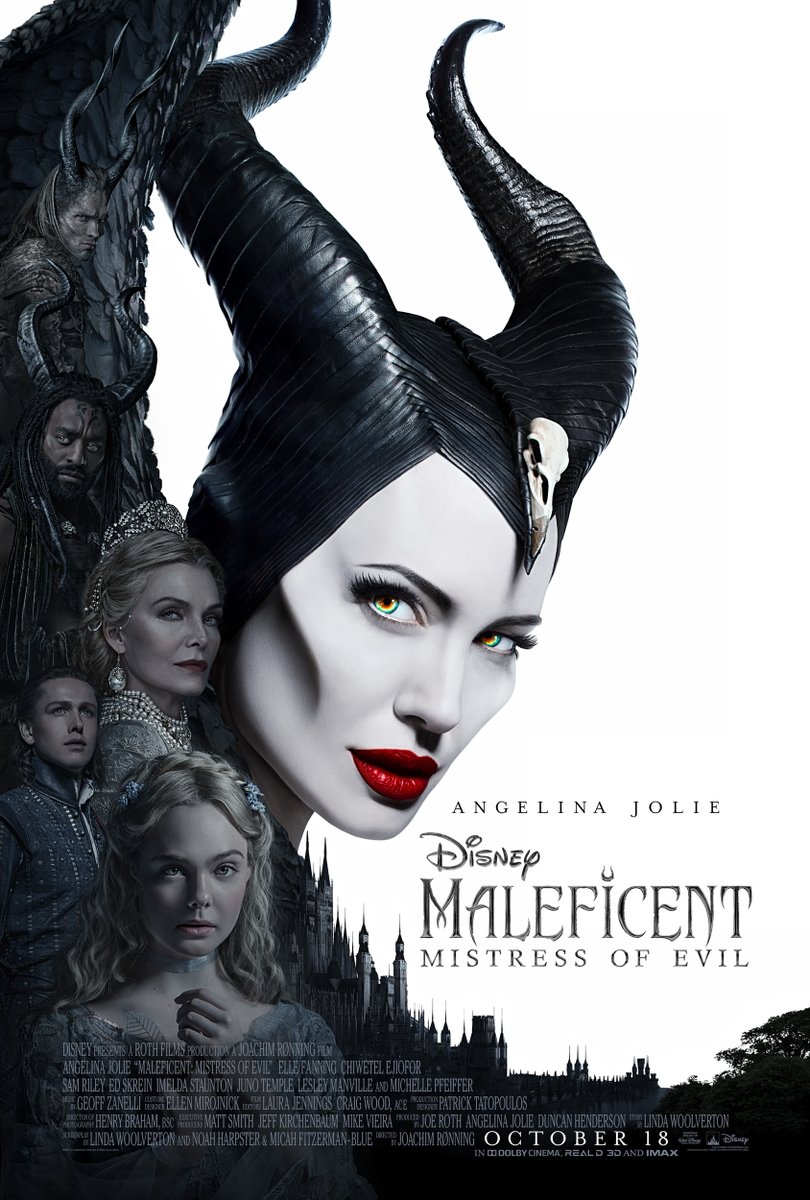
MALEFICENT: MISTRESS OF EVIL – an Alternative Lens review

Starring: Angelina Jolie (Mr. and Mrs. Smith), Elle Fanning (Super 8), Chiwetel Ejiofor (12 Years a Slave), Sam Riley (On the Road), Ed Skrein (Deadpool), Imelda Staunton (Vera), Juno Temple (St. Trinian’s), Lesley Manville (Another Year), Michelle Pfeiffer (Batman Returns) 

Director: Joachim Rønning (Pirates of the Carribean: Dead Men Tell No Tales)

Writers: Linda Woolverton (Alice in Wonderland) and Noah Harpster & Micah Fitzerman-Blue (Transparent)

Runtime: 1 hour 58 minutes

Release Date: 18th October (US, UK)

Maleficent still stands out as something of a black sheep within Disney’s recent live-action catalogue. Instead of a simple remake or sequel, the film instead presents a revisionist retelling of Sleeping Beauty from its villain’s point of view whilst also turning the narrative into an allegory for sexual assault and abusive relationships. The final result was admittedly ambitious but sloppy and ill-conceived (you can read my recent reappraisal of its botched metaphors here), but it did well financially so a sequel was always on the cards. After covering the entirety of the original tale, where exactly Mistress of Evil has to go from there seems a bit nebulous on first thought but, and this is an especially relieving shock to me, the final results are far beyond what anyone would reasonably expect.


Whilst it never outright addresses its predecessor’s faults, Mistress of Evil is at least smart enough to work around them and move forward with confidence. The film’s story much more fleshed-out and better told this time around, and manages to find an interesting new angle on what can happen after happily ever after. The pacing isn’t such hurried and scattershot, its structure traditional but firm, and the overbearing narration of the first is almost entirely gone. The tone is also far more coherent, finding a better balance between family-friendly and adult commentary that avoids tonal whiplash; it is many ways exactly how the first film should have been approached. Though it avoids directly tackling sexual subtext, the film is still abound with heavy allegories, switching targets to internalised misogyny and racially motivated imperialism. Luckily, it’s much more smoothly and thoughtfully handled, and avoids falling victim to unintentional misogynist tropes. It’s not exactly smart or biting exegesis, but it is satisfying and sends a valuable lesson about combating intolerance to the young audience, and it’s a marked improvement over some of the other Disney remakes’ attempts at contemporizing their narratives.

Angelina Jolie was perfectly cast as Maleficent and was the only consistently good thing about the first film, and here she’s just as wickedly delicious. She’s essentially playing a camp hybrid of Wonder Woman and Morticia Addams, but Jolie completely commits to the role and keeps enough of her tongue in her cheek to remain enjoyable. It is rather underwhelming that Maleficent herself takes more of a backseat in the film’s story, but her entire arc is still fascinating and the lore surrounding the world of the fae is begging for further expansion. Elle Fanning is thankfully given more work with this time around as Aurora, even if she still somewhat falls into the default modern Disney “strong independent woman” archtype, and the pixies played by Imelda Staunton, Juno Temple and Lesley Manville are thankfully toned down from their irritating status in the first. Chiwetel Ejiofor is unfortunately wasted as Maleficent’s newfound mentor Conall, with barely enough screen time to properly establish him, but Ed Skrein picks up some of the slack as the war-hungry Borra. However, the film undoubtedly belongs to Michelle Pfeiffer, who hams it up to the max as the backstabbing Queen Ingrith. Portraying the role as essentially like Lady Macbeth as played by Ann Widdecombe, she knows exactly what kind of movie she’s in and absolutely relishes the chance to play a deliciously femme nemesis.

On a technical level, the sequel is also a step-up from the original. The film looks far more palatable and less candy-coated, giving even the returning fantastical designs a little more grit and verisimilitude. There are moments in the film that are outright gorgeous to behold, with the stand-out being the fae’s nest; it looks like something out of a perfume ad on shrooms, but in a good way. The film’s editing is a bit odd at points, using a lot of unnecessary cross fades within a scene and some abrupt cuts to avoid potentially violent moments, but the cinematography and choreography is uniformly solid. Whilst the film reuses much of James Newton Howard’s score from the first, Geoff Zanelli’s original compositions slot right in and give the film an extra kick of twisted fantasy.

It absolutely has no right to be, but Maleficent: Mistress of Evil is a solid Disney blockbuster and a massive improvement over its problematic predecessor. It does much of what the first film tried and failed to do, but actually accomplishes far more of its goals by being smarter and less abrasive. It does such a solid job of expanding and grounding its revisionist fantasy world that I actually wanted to spend more time in it, and its commentary on both its source material and current culture in general is more in line with what Disney’s live-action remakes should be doing. So yeah, no one is more surprised than me, but I’d absolutely be curious to see a third instalment.

FINAL VERDICT: 7/10

ZOMBIELAND: DOUBLE TAP – an Alternative Lens review

Starring: Woody Harrelson (The Hunger Games), Jesse Eisenberg (The Social Network), Emma Stone (La La Land), Abigail Breslin (Little Miss Sunshine), Rosario Dawson (Sin City), Zoey Deutch (Set It Up), Luke Wilson (Idiocracy)

Director: Ruben Fleischer (Venom)

Writers: Rhett Reese & Paul Wernick (Deadpool) and Dave Callaham (The Expendables)

Runtime: 1 hour 39 minutes

Release Date: 18th October (US, UK)

Just when it seems like zombie craze has finally gone, only now does Zombieland decide to return to our screens. When the first film arrived back in 2009, it not only hit right at the pop culture zeitgeist of the moment but also was a defibrillator shock to the careers of its four main stars. A sequel has been in the works ever since, but the stars’ suddenly-packed schedule, writers Reese & Wernick busy in the land of Deadpool and waning interest in the zombie sub-genre have held it back. For a while, it seemed like a project that not only would never get off the ground, but maybe shouldn’t. Well, Double Tap is finally here regardless and, whilst the zombie apocalypse may have continued to rot this world, there’s still a little life left in this franchise.

Picking up in real time after the events of the first film (firmly placing it now as an alternate timeline rather than a possible future), the Zombieland formula hasn’t changed too much. The film is structurally similar to the first, being essentially yet another series of zany set pieces on their way to a final destination, but the pacing and rhythm remain as tight as ever. There’s definitely a thematic evolution brought on by the time gap, mainly focused around the tumultuous relationship between Columbus (Eisenberg) and Wichita (Stone) and Little Rock (Breslin) growing into adulthood, but that family dynamic is a little upset due to Breslin spending much of her screen time away from the core cast. The humour this time around does rely on a of call backs to the first and meta references to its place in pop culture, but there’s just enough that are funny compared to lazy, and some of the fresh jokes are just as worthy of the original. The film definitely has a throwback feel and, despite time having moved forward with the audience, it still feels like it was made only a year or two after the first. Fortunately, unlike some of its contemporaries, the humour has aged far less poorly, and certainly stands as one of the better comedy sequels in recent memory; then again, considering other comparable examples like Dumber and Dumber To or Zoolander 2, the competition isn’t exactly fierce.

Zombieland primarily worked down to the quality and chemistry of its main cast, who had to hold the movie together with nary a side character to interact with (other than the obvious brain-hungry hordes). Woody Harrelson is as brazen and backwards as ever as Tallahassee, and other than a brief subplot between him and newcomer Nevada (Dawson) his motivations are much the same just with the details swapped out. Jesse Eisenberg once again takes narration duties as Columbus and is still his charmingly neurotic self, but the film ultimately fails to visibly develop him and his relationship with Emma Stone’s Wichita. Their shared subplot hits something of a wall early on and remains mostly unresolved until the plot abruptly decides it needs to be, and it’s ultimately a tad unsatisfying. Abigail Breslin’s Little Rock has obviously changed most since last we saw her from a doe-eyed mischievous scamp to a frustrated young adult, but the film fails to do little more than the obvious “I need independence to find myself” malarkey with her. The main cast certainly make the best of their material and generate enough laughs, but when you lay it all out they all somewhat end up barely ahead of where they started.

For Double Tap, a bunch more supporting characters have been introduced in comparison to the first, and they all bring a little needed variety. Rosario Dawson feels a little underused as Nevada but brings her natural charm to every scene she can, and her chemistry with Harrelson is something one would hope gets further expansion in a potential third instalment. Luke Wilson and Thomas Middleditch’s appearance as conspicuous mirrors of Harrelson and Eisenberg is a gag that starts out tired and obvious, grows into something very funny and absurd, before then dragging on too long and ending in an obvious punch line; Shaun of the Dead was wise to keep this gag to a brief aside. Stealing much of the movie’s attention for both good and ill is Zoey Deutch as the klutzy tag-along Madison. Her valley girl shtick is pretty tired and dated on paper, but somehow through charisma and sheer determination Deutch manages to take this clichéd valley girl character and make her absolutely hilarious. I can’t see her being a recurring character moving forward, but for this film she’s in it just enough to avoid becoming cloying.

Zombieland was always a comedy first with action and horror taking a back seat, but the spectacle here is certainly a step up from its predecessor; you can thank more experience and a bigger budget for that. There’s plenty of standard melee and gunplay combat on display, but set pieces like an impressive one-take fight through a Graceland hotel and the climatic duo on the walls of Babylon certainly take the cake. A lot of this can be credited to the vibrant cinematography, courtesy of Oldboy and It DP Chung-hoon Chung. The clever use of titles continues over from the first and is used even more for comedic effect, with reminders of Columbus’ rules often even showing up just in the background. Licensed music continues to be a key component of the film’s tone and humour, and kicking off the plot with a sequence set to “Master of Puppets” by Metallica is an absolutely brilliant note to start on.

Zombieland: Double Tap does struggle to recapture the magic of its forbearer, but neither does it sully its memory. It’s less a sequel and more a reunion tour, content to play the same hits for the most part, but when originality does strike it reminds you why people fell in love with the original. It may not be the long-awaited follow up many hoped for, but as a Friday night bit of fluff enjoyed amongst friends and alcohol it hits enough of the right notes. At least it is miles better than the failed TV pilot.

FINAL VERDICT: 7/10

GEMINI MAN – an Alternative Lens review

Starring: Will Smith (Men in Black), Mary Elizabeth Winstead (Scott Pilgrim vs. The World), Clive Owen (Sin City), Benedict Wong (Doctor Strange) 

Director: Ang Lee (Life of Pi) 

Writers: David Benioff (Game of Thrones) and Billy Ray (Captain Phillips) and Darren Lemke (Goosebumps)

Runtime: 1 hour 57 minutes

Release Date: 11th October (US, UK)

As unique and talented a filmmaker Ang Lee is, he can be very hit and miss with his projects. Films like Crouching Tiger, Hidden Dragon, Brokeback Mountain and Life of Pi stand amongst some of the most defining movies of this generation, yet in the same time frame he’s made critical and/or commercial flubs like Hulk, Taking Woodstock and Billy Lynn’s Long Halftime Walk. With Gemini Man, Lee attempts his most mainstream film since that failed dalliance with Marvel’s green giant, and one would hope the filmmaker had learnt his lesson in crafting western action cinema since then. With veteran blockbuster craftsman Jerry Bruckheimer in the producer’s chair and Will Smith in the lead, Gemini Man has the potential to be at least a dumb fun high-spectacle romp in the vein of Bruckheimer’s output in the late 90s. Unfortunately, the final product is far less than the sum of its parts, and may well prove to be Lee’s biggest directing flub to date. Yes, worse than the time he made a movie where The Hulk fights Nick Nolte as a trauma bubble.

The script for Gemini Man has been floating around Hollywood for over twenty years, with concerns over the extensive de-aging visual effects required from its assassin vs. clone premise being the main stumbling block on its path to the big screen. When it comes to long-gestating projects, the result is rarely ever middling; you either end up with a masterpiece that has had time to think through every detail, or you get an overhyped mess that has larger problems than just those of practicality. The plot is a pretty standard spy-on-the-run action caper in the vein of The Bourne Identity, but the film’s pacing is far too weighty and the tone is often confused. Rather than clones, the film’s worst enemy is its dialogue, which over-explains obvious details through droning exposition and contains ostensibly witty banter delivered without any sense of comic timing; it is simply cringe-worthy at moments. The story lacks a good sense of momentum due to a baffling dearth of action sequences, with it all culminating in a frustratingly anti-climactic third act that ends just as it starts to get interesting. It all feels like Ang Lee understood the problem with Hulk is that it was too introspective and not thrilling enough, but here he has wholly removed the former yet without increasing the latter, and the result is arguably worse.

Will Smith is usually pretty reliable when playing magnetic, witty characters, but his track record at playing it dead straight is a little more inconsistent; for every Ali and The Pursuit of Happyness, there’s a Seven Pounds and Collateral Beauty. Playing a dual role is an exercise every actor loves to challenge themselves to, and in Gemini Man Smith clearly tries but it never quite lands. As Henry Brogan, Smith manages to balance out his dramatic and charming sides relatively well, but his characterisation never really stretches beyond the expected tropes of the “aging badass who’s still got it but wants out” archetype. As his younger clone Junior, he brings a more stoic performance in-keeping with the character’s emotionally-bereft upbringing, but it too often veers into stilted; it reminded me of his acting in After Earth, and that is not a good thing. Mary Elizabeth Winstead and Benedict Wong bring some chemistry and humour respectively to the proceedings as Smith’s allies Danny and Baron but they rarely get in on the action, with Smith often sheltering Winstead despite her character being a capable assassin in her own right. Faring worst of all is Clive Owen as big bad Clay Varris, who plays it so over-the-top he might as well be the villain from a GI Joe cartoon, and yet is thoroughly unthreatening; having Smith constantly tell us he’s relentless and evil doesn’t make it so.

As he did on Billy Lynn, much has been made of Lee’s decision to shoot the film at 120 frames per second (as opposed to the standard 24) and the bizarre distracting effect it has. Unfortunately, I was unable to see the film in this format so I cannot comment on this aspect, but regardless Gemini Man is a technically inconsistent film. After years of delay due to effects concerns, the final result of the de-aging process on Smith is genuinely impressive, but only in certain conditions. When movement and lighting is limited, the effect looks solid both as a recreation of 20-something Will Smith and as a believable human character. However, when in broad daylight or motion faster than a few steps, the flaws in the magic start to show, which is especially apparent in a scene towards the film’s end. The other visual effects are just as variable, with some looking seamless whilst others gave me shuddering flashbacks to the likes of Daredevil and Catwoman. Whether this is a result of the high frame rate or down to so much of the budget going to the de-aging process, but there are shots in Gemini Man that flat out do not look finished, and for a $138 million movie in 2019 it’s frankly embarrassing.

Gemini Man is the exact kind of overcooked mess you’d expect from a project that’s been in the kitchen for over twenty years. Whilst the performances are inconsistent and Lee still clearly hasn’t quite got a knack for directing Hollywood action, the tired and overwritten script is the clear culprit here. If this film had been made in the 1990s by a filmmaker within Bruckheimer’s usual stable, this could have been a disposable but fun action sci-fi romp in the vein of Face/Off, but as is it doesn’t work as either a throwback or a modern blockbuster. If you want to see a young Will Smith in an action/thriller, just go back and watch Enemy of the State or something and leave this one be. 

FINAL VERDICT: 3/10

JOKER – an Alternative Lens review

Starring: Joaquin Phoenix (The Master), Robert De Niro (Goodfellas), Zazie Beetz (Deadpool 2), Frances Conroy (Dirty Rotten Scoundrels), Brett Cullen (The Dark Knight Rises), Douglas Hodge (Red Sparrow), Marc Maron (G.L.O.W.)

Director: Todd Phillips (The Hangover)

Writers: Todd Phillips & Scott Silver (The Fighter)

Runtime: 2 hours 2 minutes

Release Date: 4th October (US, UK)

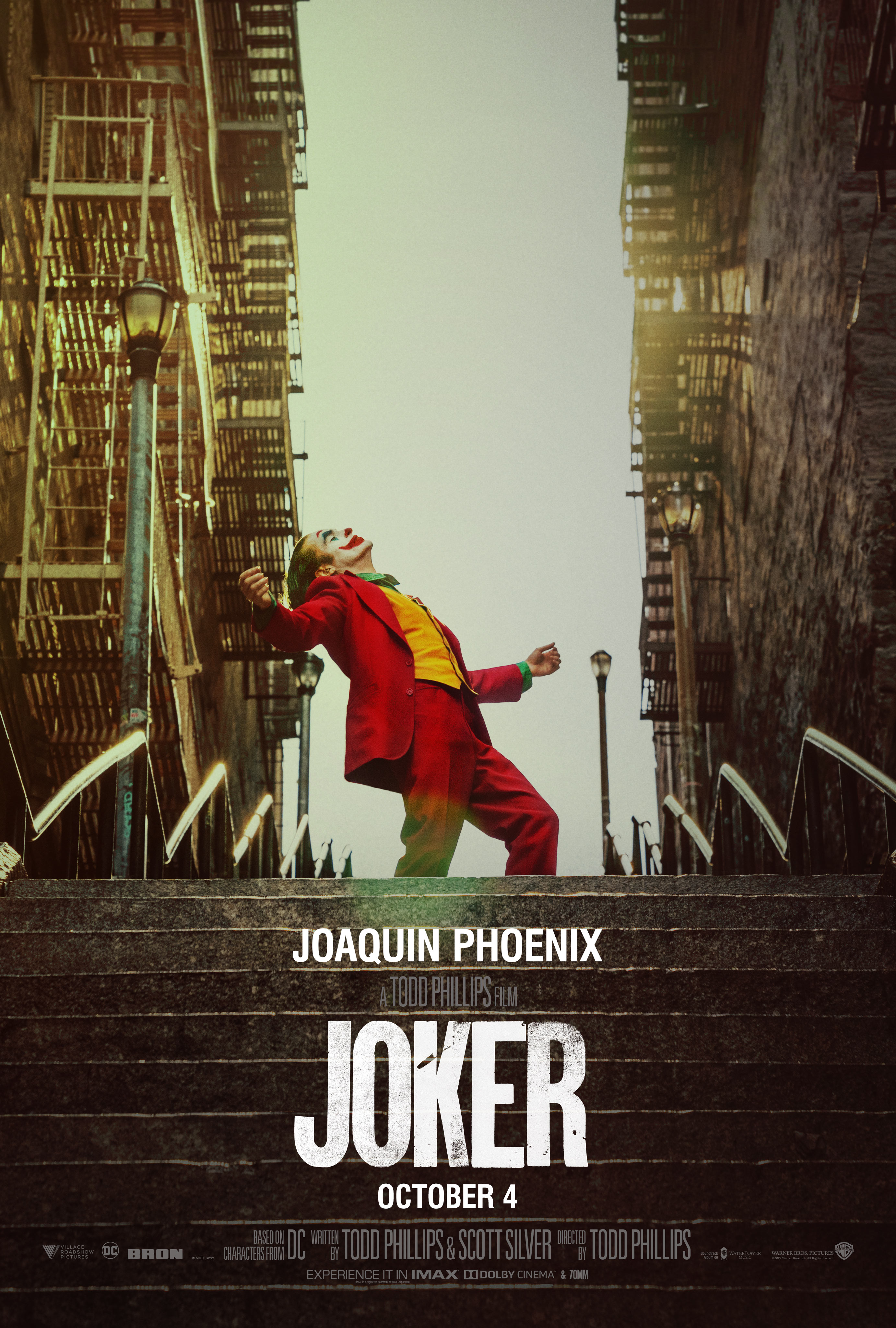
It’s hard to talk about Joker without addressing how controversial it has become. When it was first floated that Warner Bros. was going to start a new brand for gritty reinterpretations of DC Comics characters with no ties to the ongoing DCEU, starting with an origin story for The Joker, opinions were immediately polarised, and the reaction has only grown more heated once people finally saw it. Some have hailed it as a revolutionary next step for comic books becoming a basis for legitimate cinema, whilst others have trashed it as a tone-deaf and conceited piece of Oscar bait that is harmful to the community it attempts to spotlight. In these troubled times, it is impossible to remove Joker from the socio-political culture that spawned it, making it a film that is absolutely impossible to critique objectively (well, more so than any piece of art, at least). So for what it’s worth, what do I think? Well, get your torches and pitchforks ready, because I am about to get honest.

A word of warning: if you struggle with your mental health to any degree, be wary if and when you see Joker. It’s an unrelentingly bleak movie that tackles abuse, trauma, and the general unfairness of the world, all through the lens of an unhinged man who’s had one too many bad days. It’s a phrase that has been ruined by the Internet, but Joker is going to be a triggering film to many audiences in a variety of ways; it certainly affected me during and after watching it. With that said, the film has very little to say of value after subjecting you to its horrid outlook. It is very obviously cribbing its style and lens from Martin Scorsese films like Taxi Driver and The King of Comedy, and those movies at the time had similarly twisted but original and thought-provoking views of the culture that spawned them. Joker, however, only seems interested in parroting the ideas of its inspirations without the originality or depth. There’s a fine line when homage drifts into theft that Joker dances around constantly, and when it can’t just copy Scorsese it instead rambles off with the same “look what society has turned me into” talking points that are tired to the point of parody.

Most damningly, it fails to grasp the core of why Scorsese’s tales work: they remind you not to fully sympathize with their protagonists. Whilst it is easy to assume a general audience’s moral compass will kick in, the film completely negates to frame Arthur (Phoenix) and his actions in an appropriate context. His victims are always people who seemingly deserved it, those who criticize him are usually hypocrites, there’s no effective moral compass character to anchor the audience in sanity, and there’s never that moment where a line has clearly been crossed and we completely lose sympathy. It’s not just a poor way of framing a character with psychotic tendencies, but an irresponsible one than benefits neither a general audience nor those who suffer from poor mental health. I wouldn’t say the film condones the actions and views of its protagonist, but it does absolutely nothing to safeguard itself from such an interpretation, and that’s highly concerning.

That’s not even getting into how the film plays with the Batman mythos, but its viewpoint is just as weak and disrespectful, achieving easily the most uninformed thesis of a comic book character since David Carradine interpreted Superman as a smug elitist with contempt for humanity in Kill Bill. A distinct sense of disdain for the source material reeks from every frame of Joker, and director Todd Phillips’ statements about the film and its conception only further fuel that perception. Much like how Arthur has to take notes on when people laugh at a stand-up gig to understand how comedy works, Joker is a film that’s trying to seem like both a legitimate Oscar-worthy drama and a comic book movie based on context-less observations, having such a shallow interpretation of one and a dismissive ignorance for the other that it fails equally at both

What singlehandedly saves the film from being an entirely despicable mess is Joaquin Phoenix’s performance as Arthur Fleck. Whilst not necessarily a great interpretation of The Joker per se, the character has fascinating potential and Phoenix wrings every piece of character detail out of the material. Though it has faint echoes of Heath Ledger’s iconic interpretation from The Dark Knight, Phoenix and the screenplay takes a vastly different approach to exploring Joker’s psyche, and removed from the context of Batman it is a compelling character transformation. However, the payoff is ultimately unsatisfying, as once Fleck goes full Clown Prince of Crime he just devolves into the aforementioned living embodiment of the “we live in a society” meme. That’s more the fault of the screenplay than Phoenix, whose work here is certainly worthy of Academy Award consideration, but it does hurt his portrayal nonetheless.

In regards to the rest of the cast, most of them barely get enough screen time to leave an impact. Robert De Niro essentially just plays himself via Johnny Carson in the film’s most blatant homage to the tale of Rupert Pupkin, with Marc Maron essentially rendered to a cameo as his producer. Zazie Beetz is utterly wasted as Arthur’s neighbour Sophie, left with a mere blank slate character whose only purpose is so blatantly obvious that it’s hard to believe the filmmakers thought it worthy of a twist, whilst Frances Conroy has potential as Arthur’s delusional mother Penny but she gets written out of the movie just as their relationship gets interesting. Brett Cullen is completely underutilised as the film’s cynical reinterpretation of Thomas Wayne, with again the film opting for the obvious direction for his character journey, and Douglas Hodge apparently plays Alfred Pennyworth in this movie? He only gets one scene and is barely even recognisable as the character, so why even include him?

Though the film’s aping of aesthetics rarely goes beyond the superficial, Joker does absolutely nail the grimy atmosphere of 1980s New York for the film’s period-inspired imagining of Gotham City. It’s easily the most distinctive and imaginative portrayal of the locale on screen since the Burton/Schumacher era, and everything from the production and costume design down to even the lighting and sound just oozes with seediness. Laurence Sher’s cinematography is the only aspect of the film that feels remotely comic book-inspired, shooting the film with a composition and palette that evokes the dark graphic novels of the 1980s in a vivid but grounded way. The film’s music by Hildur Guðnadóttir is also suitably eerie and uninviting, perfectly evoking the warped mindset of its protagonist; it’s a score worthy of a far better film.

Joker is to Martin Scorsese what Battleship was to Michael Bay; an empty attempt at imitation that confuses aesthetics and homage for quality and flattery. Joaquin Phoenix’s performance may be worthy of all the hype, but it cannot carry a film that without him is just an edgelord fantasy that thinks it is poetry. Phillips feels completely out of his depth like a toddler trying to talk at the big kids’ table, repeating the naughty words they heard on TV and hoping everyone thinks they’re cool, and just reeks of a filmmaker who thinks they are better than the material they are working with. The concept of making DC films outside of continuity with radically different takes is a great one, but Joker is a wasted opportunity to do something far more subversive with the material. Comic book movies shouldn’t have to pretend to be Oscar movies to receive respect. As Black Panther proved, you can get there by just being the best version of what you are.

FINAL VERDICT: 4/10

AD ASTRA – an Alternative Lens review

Starring: Brad Pitt (Inglourious Basterds), Tommy Lee Jones (Men in Black), Ruth Negga (Loving), Liv Tyler (The Incredible Hulk), Donald Sutherland (The Hunger Games)

Director: James Gray (The Lost City of Z)

Writers: James Gray & Ethan Gross (Fringe)

Runtime: 2 hours 4 minutes

Release Date: 18th September (UK), 20th September (US)

We like to think of outer space as this awesome unexplored frontier, and that adventuring through it would be this grand adventure full of excitement and wonder. In reality though, knowing the real science of space travel, going on an intergalactic trip would actually involve a lot of down time spent isolated in the middle of a vast void. Sounds a lot more harrowing when you put it like that, eh? Ad Astra is a film absolutely aware of the realities of this potential future, tapping into that sense nothingness to craft a sci-fi tale that asks the age-old question of “are we alone in the universe?” in more ways that one.

The marketing for Ad Astra has been purposefully obfuscating, selling the picture as more of a straightforward futuristic action movie. However, the final product is actually far more in the vein of the contemplative sci-fi flicks of the 1970s like Solaris or Silent Running. This shouldn’t be too much of a surprise to fans of director James Gray’s other work, but those expecting something as thrilling as Gravity or Interstellar may be left wanting. Fortunately, those willing to accept Ad Astra’s real mission will find a film that is deep, engrossing, and wrought with emotional depth. The story is simple and engaging, but theme and emotion take precedence, as the film tackles subjects like loneliness, psychology, work addiction and childhood trauma in a brutally honest but ultimately optimistic fashion.

That’s not to say the film is completely without respite from its sorrowful musings. Though it moves at a deliberate pace, the story is solidly structured and doesn’t bog itself down with needless detail, relegating much of its extensive world building to background details and assumed familiarity. The result is a film that takes its time, but is just brisk and efficient enough to never bore. This also means that when the action does finally hit, there’s a weight to it; it functions as a tension breaker rather than just something to keep the audience awake. When you take away all the space-faring bells-and-whistles, Ad Astra is the story of a man contemplating how his relationship with his father has shaped him and his world, and it’s one that anyone with their own parental struggles can find something to relate to.

For a career as varied and well-regarded as Brad Pitt’s, it’s surprising to realise he’s never really stepped his foot in the realm of science fiction before. However, what’s not surprising is that Pitt knocks it out of the part. Whilst his presence in the pop culture often has him pegged as a charming heartthrob, the actor has a knack for handling disturbed and off-putting characters, and here he delivers his best performance of that type since Fury. As Major Roy McBride, Pitt is cold and contemplative, brought to a near emotionless state by his trauma, but there’s a sadness and frustration that bubbles to the surface in key moments.

Pitt carries much of the film on his own, with even major supporting cast members like Liv Tyler and Donald Sutherland getting fleeting screen time (there’s even a bizarre cameo about two-thirds in by a certain comedienne, so look out for that). The only other cast member who gets ample time on screen is Tommy Lee Jones as Roy’s estranged father Clifford, but he totally kills it when he gets the chance. Jones is often typecast as the same gruff sardonic hard case in everything, but here is far from that, instead revelling in playing a deranged but dedicated scientist that is simultaneously menacing and pitiful; it’s easily his most distinctive performance in recent memory.

There are so many cinematic depictions of the future that it’s impossible to count all the variations, but Ad Astra is certainly one of the more distinctive. It balances the scientific and the fantastical elements of its world perfectly, creating something that seems utterly tangible yet also otherworldly; basically imagine a slightly more grounded depiction of the future from the original Total Recall. The technical presentation across the board is absolutely top notch, from Hoyte van Hoytema’s gorgeous cinematography to the near-flawless CGI work that makes every fantastical image seem oh-so-tangible.

The visual effects are especially key in selling the film’s action sequences, which whilst few and far between are thoroughly fantastic. From the opening antennae sequence, to a buggy chase across the Moon, to the final confrontation in deep space, the only moment that breaks this illusion that this is all movie magic is one slightly tacky-looking CG beard towards the end. The film’s audio is also equally impressive; Max Richter’s score is haunting and ethereal, whilst the sound design utilises the silence of space to phenomenal effect.

Ad Astra is a kind of movie you rarely see anymore, using blockbuster assets to tell an arthouse story, but it’s a superb original blend that we need more of in our increasingly homogenous film landscape. It wears its references on its sleeves yet still stands out from its peers, and the film deserves plenty of recognition come awards season for its technical achievements alone. It may not be a crowd pleaser and could leave some feeling deflated or even depressed, but for those willing to take this journey, it’s an emotional rollercoaster you won’t soon forget.

FINAL VERDICT: 9.5/10

HUSTLERS – an Alternative Lens review

Starring: Constance Wu (Crazy Rich Asians), Jennifer Lopez (Second Act), Julia Stiles (The Bourne Identity), Keke Palmer (Scream Queens), Lili Reinhart (Riverdale), Cardi B, Lizzo (UglyDolls), Madeline Brewer (The Handmaid’s Tale), Mette Towley, Trace Lysette (Transparent) 

Writer/Director: Lorene Scafaria (Seeking a Friend for the End of the World)

Runtime: 1 hour 50 minutes

Release Date: 13th September (US, UK)

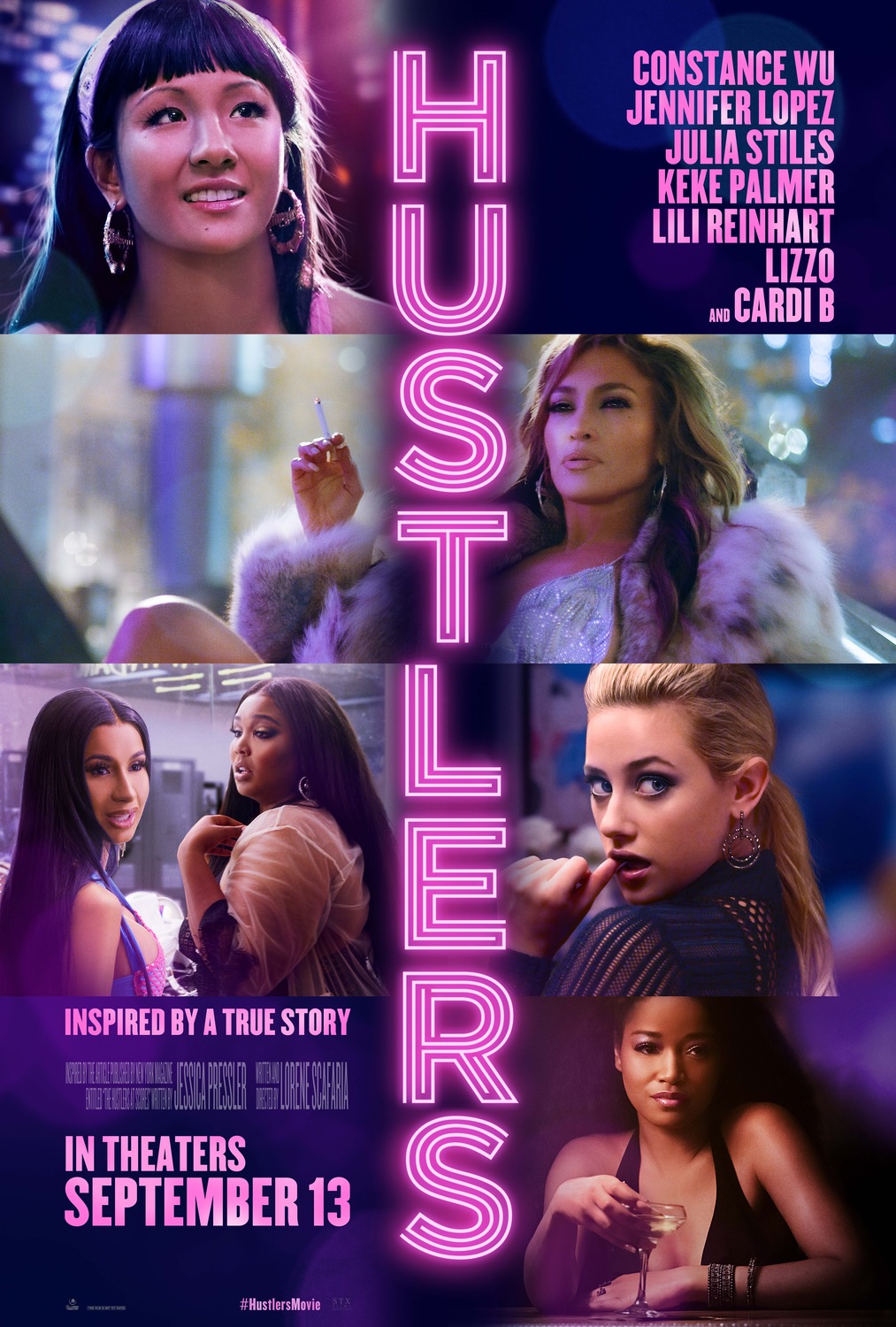
Crime films have often been the domain of the boys, but in recent years we’ve begun to see more female-centric entries in the genre; Widows, The Kitchen and Ocean’s 8 just to name a few. But even amongst those examples, Hustlers proves itself a step above by putting its femininity and sexuality at the forefront, making for a familiar yet unique experience that anyone who loves a good rise-and-fall story is absolutely going to dig.

Hustlers works fantastically as a companion piece to The Big Short (that film’s director Adam McKay is also a producer on this), switching perspectives from the financial dealmakers who saw it coming to the those on the lowest rung affected by its ramifications. It perfectly balances that line between saying screw you to the rich and spoiling itself in the glamour of the lifestyle, serving as a perfect catharsis for anyone still righteously pissed off by the whole ordeal. The film is structured and paced very much like any Martin Scorsese picture in the same vein, with a similar wit and self-awareness as it cuts around time and contradicts itself between the retelling and the truth. There are times where it occasionally lacks juicy detail, and by the end of the second act the story starts to grow a little stagnant, but luckily things escalate quickly towards the end. There’s a lot to take away from Hustlers, but more than anything I’m just glad to see a film about sex workers that is clever, well-made and far from exploitative of the community. We need more stories with a sympathetic pro-sex work perspective, and hopefully this is just the first in a new line of thinking on the subject for film.

For any film of this style, you need a strong cast of capable and confident actors, and Hustlers has them in spades. Taking the lead as Destiny is Constance Wu, who is absolutely ideal for the role as a smart but struggling and insecure young woman. Her comedic background definitely helps give her a charismatic spark, but Wu also impresses dramatically and is the glue that holds the movie together. With that said, it’s hard to deny that Hustlers ultimately belongs to Jennifer Lopez as the loving but conniving Ramona Vega. In easily her best performance since Out of Sight (and perhaps even ever), Lopez owns the screen from the minute she struts in. She absolutely brings new energy to the typical “charismatic head criminal who lures the hero in with promises of fortune” role, mainly by how she righteously frames their activities as a middle finger to the Wall Street yuppies who caused the crash in the first place. It’s a rich and captivating performance from beginning to end, and Lopez deserves serious awards consideration for her efforts.

The rest of the cast is strong across the board, but none get quite as much depth or screen time as Wu or Lopez. Keke Palmer and Lili Reinhart are good foils as their fellow conspirators, with Reinhart especially shining with a running gross-out gag that never fails to get a laugh, but their respective subplots are often forgotten about. Julia Stiles is as fantastic as you’d expect as the journalist chronicling the events, with her dryness making for a good counterpoint to the crazy situations she finds herself learning about, but again she lacks detail beyond her usefulness to the plot. Cardi B, Lizzo and Trace Lysette are also a lot of fun as fellow strippers, but fans of theirs may be disappointed to learn they essentially only have extended cameos, and are completely absent from the film by the end of the first act.

In regards to aesthetics, Hustlers certainly has visual flair. The film’s appreciation for Scorsese pictures extends here too, with the similar use of long tracking shots to establish ambience and character. The film is often awash in bright one-tone fluorescent lighting, which absolutely gives the film that seedy neon edge, but it also continuously runs the risk of causing colouring detail problems; unless you’re watching on a 4K HDR TV, home video versions of this are probably going to have a lot of washed-out sequences. The editing is also excellent, with some clever use of cross and match cutting, and the film’s soundtrack is packed full of contemporary pop and hip-hop tracks that perfectly compliment the film’s late 2000s/early 2010s setting.

Hustlers is like if The Wolf of Wall Street had a baby with Dead Presidents, but was high on Pain & Gain during the pregnancy. Its sex-positive feminist perspective is a breath of fresh air amongst typically macho crime dramas, and shines a much-needed spotlight on an often-disparaged community. Funny, brutal and heart wrenching all at once, this is a film any fan of the genre can appreciate, but is also very accessible to audiences who may usually shy away from these stories. It’s not exactly a shoo-in for Oscar season, but with the right campaign and critical buzz it deserves to at least be considered. It’s frankly disrespectful to constantly have to compare female-led films to their more prevalent male counterparts, but for all intents and purposes Hustlers stands as the Goodfellas of the women’s crime subgenre, and will probably hold onto that title for a solid spell.

FINAL VERDICT: 9/10

IT CHAPTER TWO – an Alternative Lens review

Starring: James McAvoy (Split), Jessica Chastain (Molly’s Game), Bill Hader (Barry), Isaiah Mustafa (Shadowhunters), Jay Ryan (Beauty & The Beast), James Ransone (Sinister), Andy Bean (Power), Bill Skarsgård (Assassination Nation)

Director: Andy Muschietti (Mama)

Writer: Gary Dauberman (Annabelle)

Runtime: 2 hours 49 minutes

Release Date: 6th September (US, UK)

When people talk about Stephen King’s It, much of the praise lies during its segments set during the Losers’ Club’s childhood encounters with the unsettling Pennywise. The second half, focused on the characters now as adults, is generally where fans of the book and the 1990 miniseries say things begin to fall apart. So whilst it was a smart decision for the filmmakers of the 2017 film adaptation to focus exclusively on the childhood storyline for the first instalment, they ultimately just kicked the can on tackling the trickier subject matter. Now with critical acclaim and box office success raising the stakes for Chapter Two, the big question surrounding the film is not only how it brings this tale of childhood trauma and fear to a close, but also how it addresses the issues that made its source material a disappointment to many. In execution, It Chapter Two does an admirable job of elevating its subpar inspiration into something engaging, but it can’t help but pale in comparison to its predecessor.

As an adaptation of the novel, Chapter Two stays faithful in spirit to the original story and boldly includes even some of the zanier concepts many filmmakers would try to avoid, but it also makes smart and welcome changes where it counts. The film is even keenly aware of its shortcomings and expectations, as dramatised through a running joke with novelist Bill (McAvoy) being consistently reminded that his stories often don’t have satisfying endings (which could apply as a criticism of any number of King novels). The story has been streamlined without losing its identity, though it does overlook some key aspects of the novel that were hinted at in the first instalment. Despite running close to three hours, It Chapter Two rarely suffers from pacing issues and is far too bonkers to ever be considered boring. The film’s main shortcoming is that it hits too many of the same beats as the first, especially as the formula of “character is alone, sees or hears something strange, gets drawn in with increasing tension, then something scary jumps at them before going away” gets picked for all its worth. However, when the film dives into new territory and embraces the nutty aspects of the source material, it begins to stand out. At moments, this is easily one of the more bizarre and outrageous blockbusters in recent memory, and I wish it embraced that side of itself more rather than rehashing what worked before.

What secured the first chapter of It as an instant classic was the fantastic performances of its lead cast of child actors, who all return here and are as solid as ever during flashback sequences. However, much of the film is focused on their adult counterparts, and they are unfortunately not quite as consistently solid. James McAvoy’s Bill is a bit of mixed bag, fluctuating between decent but underwhelming and cartoonishly crazed; it often reminded me of his performances in Split and Glass, and not in a good way. Isaiah Mustafa is also a bit off as Mike, with the character’s fanaticism played a bit too on the nose, and despite his character’s key role in the plot he again disappears for much of the story’s second act. Jay Ryan is decent enough as the now-handsome Ben, but there’s very little evidence of Jeremy Ray Taylor’s performance in his characterisation, with his personality now whittled down to merely “has a crush on Beverly” in the present-day storyline.

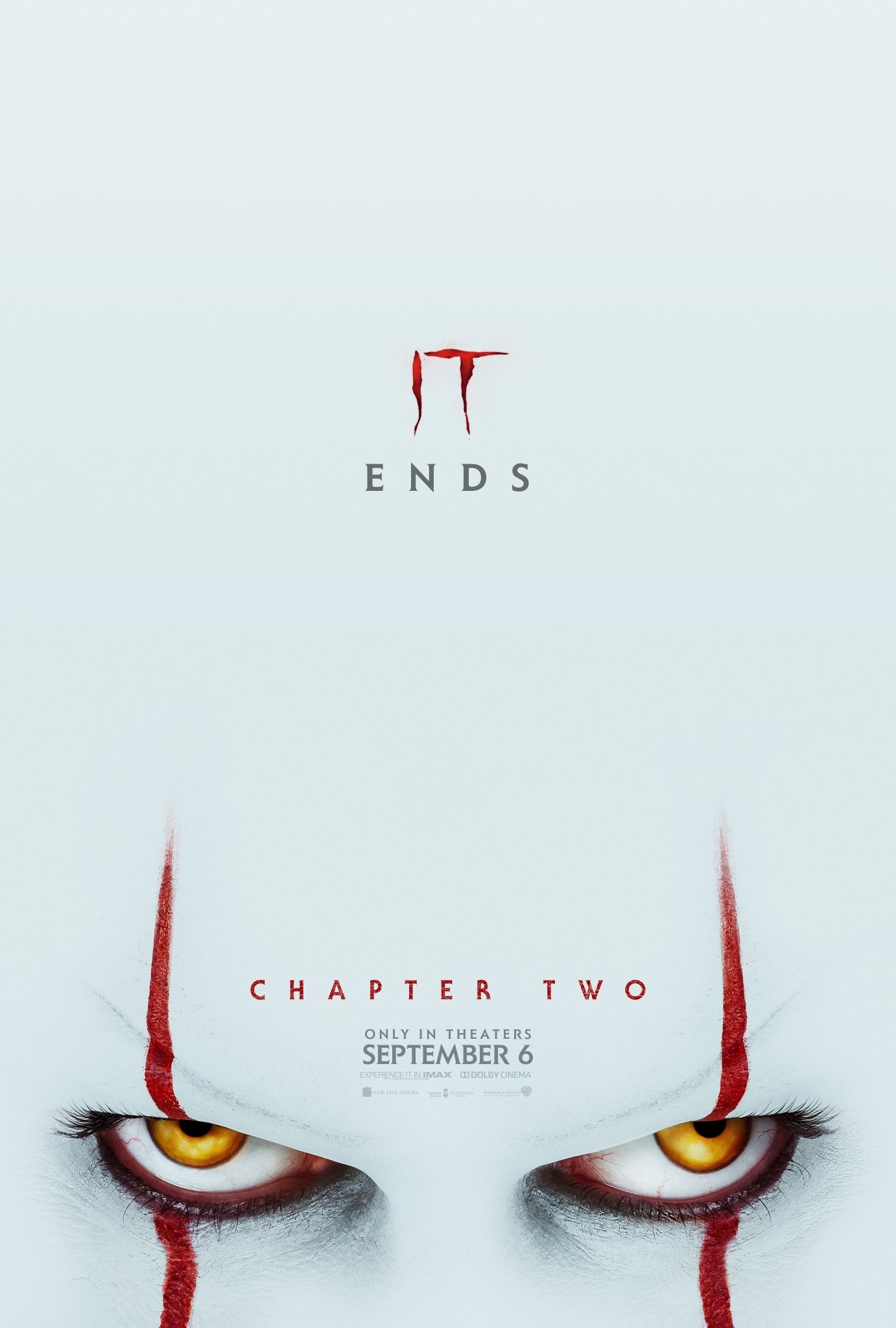
On the opposite end, James Ransone is not only fantastic as the adult Eddie but does an uncanny job of incorporating Jack Dylan Grazer’s mannerisms into his performance, absolutely making the character his own whilst respecting the work of his counterpart. Jessica Chastain similarly captures the core of Sophia Lillis’ Beverly whilst also extrapolating on her, giving further depths to her continued traumatised existence. However, the film’s MVP is easily Bill Hader as Ritchie. Not only is he a believable analog to Finn Wolfhard’s performance and brings much of the film’s humour, but he also puts in a tortured and relatable dramatic performance that many audiences may not have seen Hader pull off. Whilst the handling of his subplot is clumsy from a storytelling perspective (it’s hard to address without spoiling, but it’s another example of Hollywood trying to have its cake and eat it), Hader absolutely nails it from a performance perspective, and I hope this nets him more serious consideration for dramatic roles. Returning as Pennywise, Bill Skarsgård is as eerie and grotesque as ever but, even as the film goes deeper into the history and rules of the titular creature, his performance remains relatively unchanged from the prior film. If you’ve seen the first film, you know what to expect from Pennywise and the results are still satisfyingly gruesome, but I wish the character was given more opportunity to evolve rather than deliver more of the same.

The first It was one of the more visually arresting modern horror blockbusters, and those same sentiments can be shared for Chapter Two. Though it lacks the rich shadows and distinct foreboding camerawork that cinematographer Chung-hoon Chung brought to the first, Checco Varese does a decent job of emulating his style and brings a more dreamlike aesthetic to the picture, whilst Benjamin Wallfisch’s score continues to bring that perfect blend of horror movie creepiness and John Williams-like whimsy. Where this film really shines over the first is in its creature design, bringing new demented forms of Pennywise to the screen that are sure to inspire new nightmares for audiences. The visual effects that bring them all to life are equally impressive, and there’s nary a sign that extensive work has gone into de-aging the young cast for the flashback sequences.

It Chapter Two is a solid conclusion to the story began by its predecessor, but it is fighting an uphill battle right from the get go. As an adaptation of a notoriously kooky and unsatisfying half of an otherwise compelling novel, it manages to both excise and embrace its inspiration’s shortcomings in clever ways, but it can’t help but pale in comparison to the first. It Chapter One stands on its own as a gripping and haunting piece of horror cinema, whilst Chapter Two is incredibly beholden to the accomplishments of that film, and I can’t see future audiences watching it in isolation in the way the first part absolutely can; it’s more of a companion piece or an expansion pack than a full-fledged successor. Ultimately, what It Chapter Two does is prove no story, no matter how inherently wacky and absurd, can’t be mined and improved into something better, and hopefully that’s a lesson future Stephen King adaptations can use as a blueprint. Now…Maximum Overdrive remake, anyone?

FINAL VERDICT: 7/10

ONCE UPON A TIME IN HOLLYWOOD – an Alternative Lens review

Starring: Leonardo DiCaprio (The Revenant), Brad Pitt (The Big Short), Margot Robbie (The Wolf of Wall Street), Emile Hirsch (Speed Racer), Margaret Qualley (The Nice Guys), Timothy Olyphant (Deadwood), Austin Butler (Yoga Hosers), Dakota Fanning (Man on Fire), Bruce Dern (Nebraska), Al Pacino (Scarface)

Writer/Director: Quentin Tarantino (Pulp Fiction)

Runtime: 2 hours 39 minutes

Release Date: 26th July (US), 14th August (UK)

Quentin Tarantino, love him or hate him, is always going to be a legend of cinema. He’s a man whose zest for and knowledge of the form is all encompassing down to the tiniest detail, and that unbridled passion has made him the messiah figure of many a film fan. Now (supposedly) coming to the end of his cinematic career with his penultimate film Once Upon a Time in Hollywood, an ode to the era and style of filmmaking he loves so much, it feels like a perfect time and subject matter for Tarantino to really lay down his thesis on his career and film itself. In reality however, Once Upon a Time in Hollywood isn’t that movie. It’s trying to be at times, but it’s simultaneously trying to be several other movies too, and in trying to be about everything it ends up being about nothing.

Set in the world of film and television circa 1969, Tarantino’s latest is an unfocused and ambulating affair that never quite sets a tone other than “Tarantino flick”. Clocking in at over two and half hours, the film spends much of that runtime meandering through several storylines connected by mere threads, with their relevance to each other and the ultimate point of the film only becoming clear right as the credits start rolling. The first two acts are quite slow and deliberate, with much time spent on quieter, dialogue-free scenes of characters just driving and listening to tunes woven between the usual Tarantino banter. However, just as the pacing seems to settle into a good grove, the third act suddenly leaps it into high gear as we are rocketed through a massive time jump with excessive narration that feels somewhat unnecessary.

The whole affair feels haphazardly put together, with large swaths of story clearly left on the cutting room floor (with the end credits even noting major actors who’ve been excised), and yet the final product still feels unwieldy. Taking many scenes on their own merits, they are fantastically well put together and deserving of a far better movie than this. There’s a brilliant story in here about a Hollywood has-been trying to come to terms with his status in the industry, with some great introspection into not only the Hollywood machine but Tarantino’s career itself. Unfortunately, it seems like the director couldn’t let go of his own vices, with the film leaping into full-on fantasy in the third act in a way that makes complaints about the finales of Inglourious Basterds and Django Unchained seem pithy. The way it weaves in real world events feels far less justified than Tarantino’s previous historical efforts, and it might have been better if that subject matter had been the focus of its own film or just cut entirely. With it, we have a self-indulgent and esoteric conclusion that will leave viewers unfamiliar with the true events confused, whilst leaving those who do know with a lot of questions about not only how but also why. As the film comes to a close and the film’s message finally dawns, what you’re left with is an egocentric and juvenile piece of revisionist fan fiction that is completely oblivious to its own contemplative possibilities.

When Quentin Tarantino says he’s going to make a new movie, pretty much everyone in the industry wants a role, and with his career coming to an end it seems like he just decided to cast everybody in case he never got to work with them. This is a film jam-packed with stars, with many barely even getting a line before their role is over, but luckily the acting is what ultimately saves Once Upon a Time in Hollywood from being a complete waste of time. Taking centre-stage is Leonardo DiCaprio as washed-up heavy Rick Dalton, and his performance is absolutely fantastic from start to finish. There are so many layers and nuances to his character, making him an endearing yet unpredictable character to follow. It’s just a shame that his arc feels thrown off-course by the film’s end, and ultimately his story would have been better served if you excised it from the rest of the film and cut off before the third act. Brad Pitt is equally brilliant as Dalton’s stunt double and best friend Cliff Booth, bringing a laid-back affableness to a darkly funny character; he’s exactly the kind of guy you love even though he kind of scares you too.

Margot Robbie gives a sweet and understated performance as Sharon Tate, but from a plotting level the film gives her very little to do other than be a symbolic figure. The rest of the cast is so overstuffed it’d take forever to go through everyone, so just be rest assured that no one gives an especially bad performance. However, there are a few names that deserve shout-outs. Firstly, Margaret Qualley is utterly charming and yet unnerving in the role of Pussycat, holding her own against Pitt and once again proving herself a young actor to watch. Then there’s Mike Moh, who gives a spot-on turn as Bruce Lee and has fun with playing an exaggerated version of the legendary martial artist’s persona. However, the star that comes out of nowhere and steals every scene she’s in is Julia Butters as the precocious young method actor Trudi. Her scenes with DiCaprio are among the film’s best, and made me wish the whole movie was just about these two actors at opposite ends of their careers learning from each other.

If you know the aesthetics of a Tarantino movie, you know what to expect here. So many of his film’s have adopted the aesthetics of 1960s B-movies in the past, making one set in the period around the world of B-movies is basically second nature to him. Everything from how the locations have been retrofitted to the fashion of the costume design and even the poster art for Dalton’s fictional films is all beautifully brought to screen with love and attention. There’s some fantastic camera work and editing throughout, with the sequences emulating period films being the main standout in how they emulate the cinematography and artifacting of those old prints and TV broadcasts. Of course, no Tarantino movie would be complete without a fantastic soundtrack, and this film is plenty packed with contemporaneous rock hits both well known and obscure, and I’m sure many a film fan will start associating these songs with the scenes from this movie as a point of reference.

There is so much to like and even love about Once Upon a Time in Hollywood within the details, but when put all together with the film’s narcissistic thesis, the final product is far from the sum of its parts. There’s a much, much better movie hiding in plain sight within this, and it feels like Tarantino either didn’t know what he had or didn’t care. He feels like a slave to his own aesthetics and influences, constantly reaching back to not only his reference films but also his own work instead of forging out something new. It’s easily his weakest film to date, and with only one more supposedly to go, one would better hope he goes out with a bang and not a whimper.

FINAL VERDICT: 5/10

FAST & FURIOUS (PRESENTS): HOBBS & SHAW – an Alternative Lens review

Starring: Dwayne Johnson (Jumanji: Welcome to the Jungle), Jason Statham (Crank), Idris Elba (Thor), Vanessa Kirby (Mission: Impossible – Fallout), Eiza Gonzalez (Baby Driver), Helen Mirren (The Queen)

Director: David Leitch (Deadpool 2)

Writers: Chris Morgan (Wanted) and Drew Pearce (Iron Man 3)

Runtime: 2 hours 15 minutes

Release Date: 1st August (UK), 2nd August (US)

So Fast & Furious 8 (The Fate of the Furious for you Yanks) was a pretty decent movie, eh? I mean, it was hardly the best film in the franchise, but it was a lot of fun and proved the series still has plenty of interesting sharks left to jump. For many audiences, the big surprise was the unexpected chemistry between Dwayne Johnson’s Luke Hobbs and Jason Statham’s Deckard Shaw, so much so that many thought a spin-off just about them would be a neat idea. Well, it seems Universal had the same thought, and so now we have Hobbs & Shaw. Does the focus on these two bickering knuckleheads bring new life to the franchise, or can you really have too much of a good thing?

For the first time since arguably Tokyo Drift, Hobbs & Shaw is thoroughly understandable without prior investment in the franchise (though familiarity with it, especially the eighth instalment, does help). Now less constrained by the car-centric perspective of its mother series, the story now feels more opened up to dabble in all kinds of ridiculous blockbuster spectacle, and with it the series trajectory towards the fantastical has only increased. This film has now leapt into the territory of superhero movies, with biomechanically enhanced soldiers, viral super weapons and Darwinian technology cults now thrown into the mix without an eyelid bat. The film wastes no time throwing these leaps in logic at you either, and if you’re willing to roll with the punches it only makes the experience that much more ridiculously enjoyable. Anybody going into this movie expected anything other than an implausible extravaganza in Hollywood excess is completely missing the point.

With that said, that jump in irreverence does come with a less-welcome leap into self-depreciation. Hobbs & Shaw is easily the most overtly comedic entry in the series thus far, with barely a scene going by without some kind of one-liner or sly wink at the audience. In moderation, this twist in tone helps to differentiate the film from its forbearers, but at many points it oversteps the mark into cloying and unnecessary. The new framing inevitably throws off the film’s balance, which results in not only an oversaturation of comedy but the story’s actually sincere moments coming off far cheaper. The Fast & Furious franchise since the fifth instalment has thrived not just because they’ve grown increasingly ridiculous, but because they’ve retained a po-faced sensibility in spite of it, and that’s ultimately far funnier because it’s not overtly trying to be.

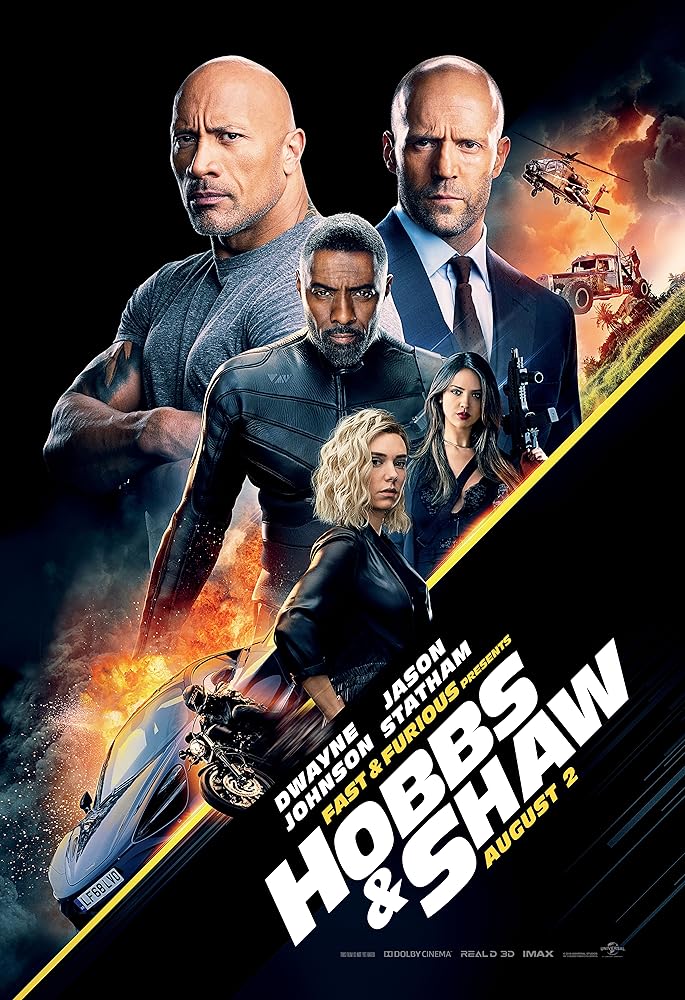
If you liked the way Johnson and Statham played off each other in Fast & Furious 8, you certainly get more of that in Hobbs & Shaw. Their never-ending squabbling and one-upmanship is certainly still entertaining, and the two actors share a much more natural chemistry than Johnson ever has with Vin Diesel, but their rapport also feels stretched to the absolute limit here. Their relationship fails to evolve satisfyingly, with the pair cycling through the same set of jabs over and over again until the third act, when their differences are ultimately resolved because the plot needs them to. Lacking their own tangible evolution or identity, the film simply falls back on the “it’s all about family” themes of the other films, and as is it’s basically just two hours of these two trading yo mamma jokes interrupted by the most ridiculous action scenes this side of Con Air.

As the villainous Brixton, Idris Elba absolutely knows what kind of film he’s in and relishes the opportunity to go full ham. He’s just as naturally charming as ever, but there’s a sadistic joy to his performance that makes him a perfect adversary for Hobbs & Shaw, but I wish there was a little more to his motivations than just “I believe I am a supreme human and the world must be culled because this mysterious cult person says so”. Stealing much of the film away from even our leads is Vanessa Kirby as Shaw’s secret agent sister Hattie. She’s an absolute delight from her first moments on screen, matching (if not besting) the boys not only in the action but in the comedy too. The film occasionally runs the risk of just turning Hattie into a plot token/damsel, but the film does its best to fight against those expectations and so much of that is down to Kirby’s performance. Seriously, she deserves to not only come back in future Fast & Furious instalments, but someone please give Kirby her own blockbuster franchise. As for the rest of the cast, it’s mostly just an avalanche of cameos from a wide spectrum of Hollywood talent, with some of them arguably having more screen time than credited cast members. I won’t spoil them all given the marketing hasn’t, but much like the rest of the film their wink-and-nudge presence constantly threatens to push the entire film into outright farce.

David Leitch has more than proven himself as a talented action director by now through John Wick, Atomic Blonde and Deadpool 2, and with Hobbs & Shaw he finds the perfect balance between his own penchant for grounded, tightly-choreographed brawls with Fast & Furious’ tendency to ignore all the laws of physics. Every set piece here would be the standout in any other summer blockbuster, but that’s just a testament to Leitch’s ability to stage action with an attention to detail most of his contemporaries don’t even aspire to. There’s the occasional moment when the film succumbs to quick cuts and tight cinematography, but for the most part this is a fluidly shot and executed piece of action cinema. Tyler Bates’ score for the film is suitably bassy and rock-influenced, but as usual it’s the film’s soundtrack that takes centre stage, and this film threatens to rival Suicide Squad at points for the number of needle drops throughout its runtime. Heck, Idris Elba even raps on the soundtrack! How much more 90s action blockbuster can you get?

The best Fast & Furious movies know they’re stupid but try not to act like it. Hobbs & Shaw admits its stupidity early on, and your mileage with its tone may vary from there. This is undoubtedly the most brazen and flat-out insane film the franchise has offered thus far, and within it are some of the best moments of the series period. However, the movie is often too high on its own supply, stuffing its overlong running time with self-aware digs at itself and celebrity cameos that somewhat detract from the delusional fun of it all. If you’re a fan of the franchise or either of the film’s stars, you’re probably going to have a blast with this, and it certainly needs to be seen on a big screen for the full effect. However, if they’re going to continue on with Hobbs & Shaw as their own sub-franchise, we need to get past the childish quarrelling and give the characters somewhere else to grow. The next film could involve them fighting space iguanas on a guacamole planet whilst riding unicycles for all I care about story logic, but there needs to be more to them than just The Odd Couple hopped up on Mountain Dew.

FINAL VERDICT: 7/10