LOGAN – a review by JJ Heaton

Starring: Hugh Jackman (Prisoners), Patrick Stewart (Star Trek: First Contact), Dafne Keen, Boyd Holbrook (The Skeleton Twins), Stephen Merchant (I Give It a Year), Richard E. Grant (Withnail & I)

Director: James Mangold (3:10 to Yuma)

Writers: Scott Frank (Minority Report) & James Mangold and Michael Green (Green Lantern)

Runtime: 2 hours 17 minutes

Release Date: 1 March (UK), 3 March (US)

It’s kind of hard to believe that fans didn’t readily accept Hugh Jackman when he was cast as Wolverine nearly two decades ago. Now on his ninth portrayal of the character, he is practically bonded to him. But inevitably it becomes time to move on and, rather than let age or apathy bring an end to the character, Jackman has decided to definitely conclude his story with Logan. The final result is not only the best solo Wolverine movie, but also a unique and captivating film in its own right that stands apart from the rest of the superhero genre.

loganimaxposter

Picking up sometime after the events of X-Men: Days of Future Past, Logan quickly sets the tone with its sun-scorched landscapes, resentful characters, frequent profanity and abundance of gore; this certainly ain’t one for the kiddies. It has far more in common with films like Children of Men and Hell or High Water than it does with any X-Men film, but that bleak grounded approach feels fitting for what is this character’s last mission. The story itself is a relatively straightforward road movie for our protagonists to meet new characters, flee from the bad guys, and ultimately bond over the course of the journey. The story flows as you’d expect and there aren’t any particularly big twists (especially if you’re a fan of the comics), but this is ultimately a character-focused movie and the simple plot does everything it needs to do to support that. This is easily the best character study of a superhero since Batman Begins, and it accomplishes a far more weighty examination of a hero on his last legs than The Dark Knight Rises. It’s a superhero film far more driven by atmosphere and emotion than action, delivering moments of anguish and depth superior to most Oscar bait, and so if you’ve been following this franchise since the beginning there is a more than likely chance you’ll get a little teary-eyed towards its conclusion. I certainly did.

Hugh Jackman has made the character of Wolverine his own now, and his performance in Logan is easily his finest as the character yet. Jackman does an excellent job of creating a Logan that is tired, bitter and fed up with his own existence. He’s finally given the opportunity to go all out on the berserker front, delivering a performance that is equally the most comic-accurate portrayal but also the most human and nuanced; he’s definitely justified with calling it quits on this high note. Also returning for the last time is Patrick Stewart in an incredibly unorthodox portrayal of Professor X that rivals Jackman’s on the tragedy scale. He is broken in more ways than one and far from the eternal optimist he was back in 2000, but underneath is still the Charles Xavier we know and love and Stewart pulls on those heartstrings more than effectively. The rest of the supporting cast all do a good job but aren’t always utilised to their full potential. Stephen Merchant’s Caliban serves as some good comic relief early on but his importance to the story gradually fizzles away, and though Boyd Holbrook and Richard E. Grant are suitably slimy as the villains of the piece there isn’t exactly much depth to them; by the time they start getting interesting, the movie’s almost over. However, Logan’s breakout star is easily Dafne Keen as the mysterious Laura. Keen accomplishes a lot through very little dialogue, nailing both the young innocent girl in need of a father figure and feral wild child sides of the character equally. If they ever announce a spin-off with her in the lead, I’m going to be first in line.

Fans have been clamouring for a true R-rated Wolverine movie for years and Logan more than delivers on that sadistic need. It’s arguably even more graphic than Deadpool with the amount of bloodshed on display, but it all feels appropriate given the bleak tone. The action sequences aren’t always the most imaginatively staged or filmed, occasionally falling prey to too many quick cuts, but the excessiveness of the violence more than makes up for it. Without all of the superpowers it’d be easy to mistake Logan for an indie film, as the gritty cinematography and rundown production design creates a near-future USA that feels all too inevitable. Marco Beltrami’s score is suitably dour and western-influenced, and the soundtrack choices echo that ambience equally too; placing a Johnny Cash song on it almost feels too perfect.

Logan is easily the best superhero film of its kind since The Dark Knight, finding that suitable balance between escapism and verisimilitude to create a grim but thoroughly entertaining movie. This is the Wolverine story fans have wanted to see on screen all along, and the filmmakers are to be commended for taking the character to this difficult but necessary place. Even if another actor succeeds him sooner or later, Hugh Jackman‘s performance here makes him now and forever the definitive Wolverine alongside other superhero icons like Christopher Reeve and Robert Downey Jr. If the X-Men franchise as we know it called it quits here I’d be more than satisfied, but if it has to continue I hope they find ways to be as uniquely different from Logan as it has from its X-Men forbearers.

FINAL VERDICT: 9/10
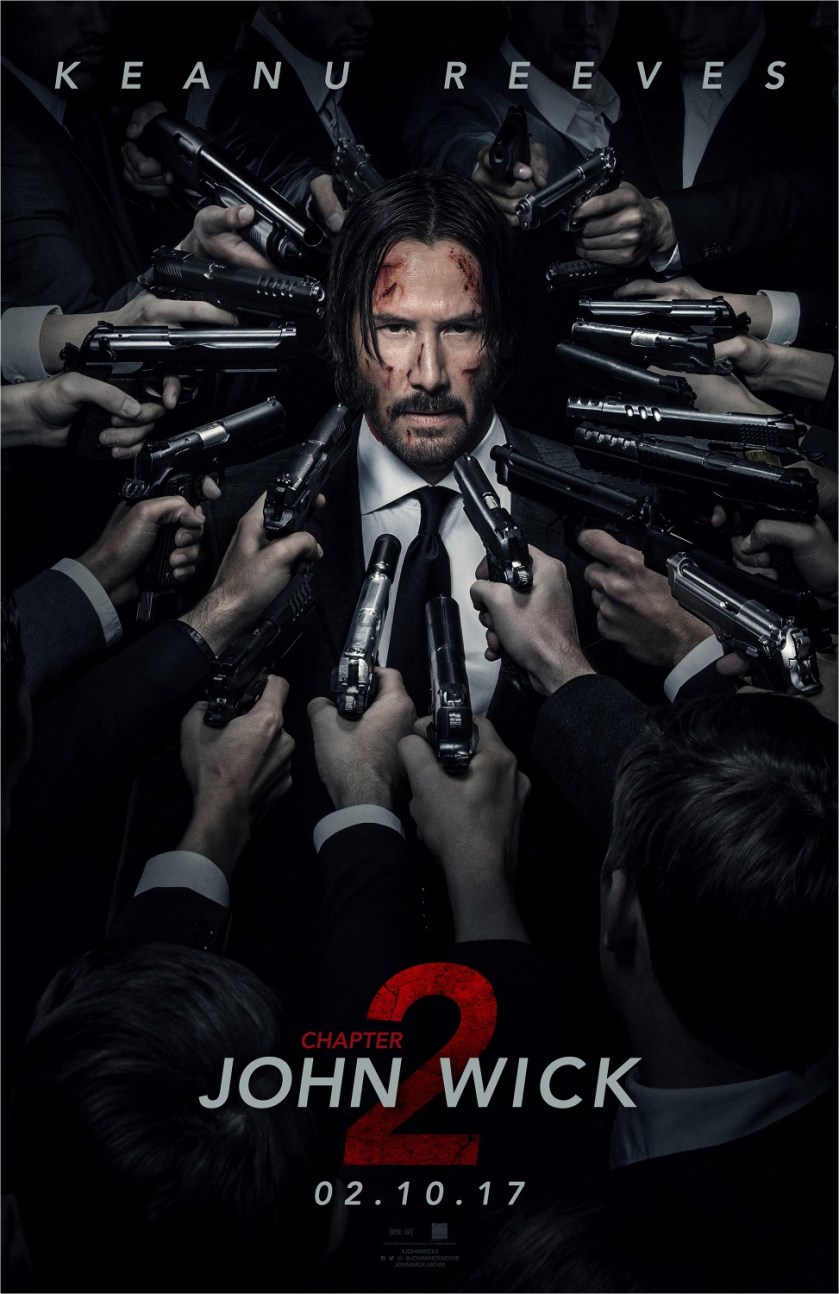
JOHN WICK: CHAPTER 2 – a review by JJ Heaton

Starring: Keanu Reeves (The Matrix), Ian McShane (Pirates of the Caribbean: On Stranger Tides), Riccardo Scamarcio (Burnt), Common (Run All Night), Ruby Rose (Orange is the New Black), Lance Reddick (Fringe), Laurence Fishburne (Man of Steel)

Director: Chad Stahelski (John Wick)

Writer: Derek Kolstad (John Wick)

Runtime: 2 hours 2 minutes

Release Date: 10 February (US), 17 February (UK)

The first John Wick was a breath of fresh air in the stagnant action genre, delivering crisp, brutal stunt work and gunfights that put every shaky-cam, quick-cut hack to shame. It revitalised Keanu Reeves as a viable action lead, and also somehow managed to tell an interesting revenge tale in a rich and well-developed story world. With its success, a sequel was inevitable but its good quality was not. Might they have blown their wad in the first outing? John Wick: Chapter 2, thankfully, confirms they were only getting started.

john_wick_chapter_two_ver2_xlg

Picking up right where the first movie left off, Chapter 2 continues to show the increasingly dire ramifications of Wick’s decision to come out of retirement. The plot itself feels less personal than the first but it does feel grander, opening up the world of assassins in interesting ways. There are a lot more twists and turns here as opposed to the simple revenge story, with characters double crossing each other or revealing shocking new information, and whilst some of it is predictable it’s never boring because every turn ratchets up the stakes. Every plot development flows into the next action sequence, which then develops the plot further and so on; it’s not just a bunch of jibber-jabber broken up with the occasional gunfight. But what’s most impressive about Chapter 2 is how much it opens the door of possibilities for future stories in this world. Details only hinted at in the original are expanded upon, chock full of rich characters begging for expansion in further stories, and all ending on a terrific hook for the next film that should every audience member begging to see what happens next.

Many mistakenly call Keanu Reeves a bad actor, but that’s mainly because he so often miscast. Put him in the right role and he shines, and the character of John Wick might be his finest to date. He’s a man of few words that speaks mainly through his actions, and Reeves knows how to pull off cool with just a look and a monosyllabic response. It’s not exactly Oscar-worthy acting, but for this kind of movie it’s all you need. The returning cast is also great, with Ian McShane getting a little more to do as Continental manager Winston and Lance Reddick is as brilliant as ever as the hilariously dry concierge Charon; even John Leguizamo returns for a brief but humorous cameo. In terms of new players, Common stands out the most as the persistent bodyguard Cassian; he’s essentially playing his character from Run All Night again, but this time in a good movie. Ruby Rose is a bit of fun as mute henchwoman Ares, sharing the occasional bit of silent banter with Wick, but I wish there was just a little more to her character. The same could be said for Laurence Fishburne’s Bowery King, though he honestly feels like he’s being set-up to be more important later. The major flaw here is Riccardo Scamarcio as main antagonist Santino. His scheme is certainly much grander than that of the villains in the first movie, but as a character he feels less compelling; he lacks that flair of eccentricity that makes everyone else in the movie stand out.

What you ultimately come to a John Wick movie for is the action, and director Chad Stahelski has outdone himself on this one. Every action sequence in this movie is a marvel to behold, combining expert choreography with beautiful cinematography and expertly paced editing. Thanks to this attention to detail and perfection, there is not a single hit or gunshot that gets lost in the melee, making you feel the impact of every kill. Sure, sometimes the action looks so immaculately conceived that it’s like watching someone play Superhot at full speed, but I’ll easily take that over yet another Bourne-wannabe disaster. For now, I’d rather not say anymore and let you behold this film’s mastery for yourself.

John Wick: Chapter 2 is to the first film as The Raid 2 was to its predecessor: it may not be as original, but it’s certainly bigger, bolder and moves the story forward in a meaningful way. This is the fine wine of action films, classily designed and feeling elegant every step of the way. Its story may not transcend the genre, but on a pure visceral level you’d be hard-pressed to find a better movie of its kind in the modern marketplace. When that third chapter finally arrives, it is now primed to be one hell of an action extravaganza.

FINAL VERDICT: 9/10

THE LEGO BATMAN MOVIE – a review by JJ Heaton

Starring: Will Arnett (Bojack Horseman), Michael Cera (Superbad), Zach Galifianakis (The Hangover), Rosario Dawson (Daredevil), Ralph Fiennes (Harry Potter)

Director: Chris McKay (Robot Chicken)

Writers: Seth Grahame-Smith (Abraham Lincoln: Vampire Hunter) and Chris McKenna & Erik Sommers (Community) and Jared Stern (The Internship) & John Whittington

Runtime: 1 hour 44 minutes

Release Date: 10 February (US, UK)

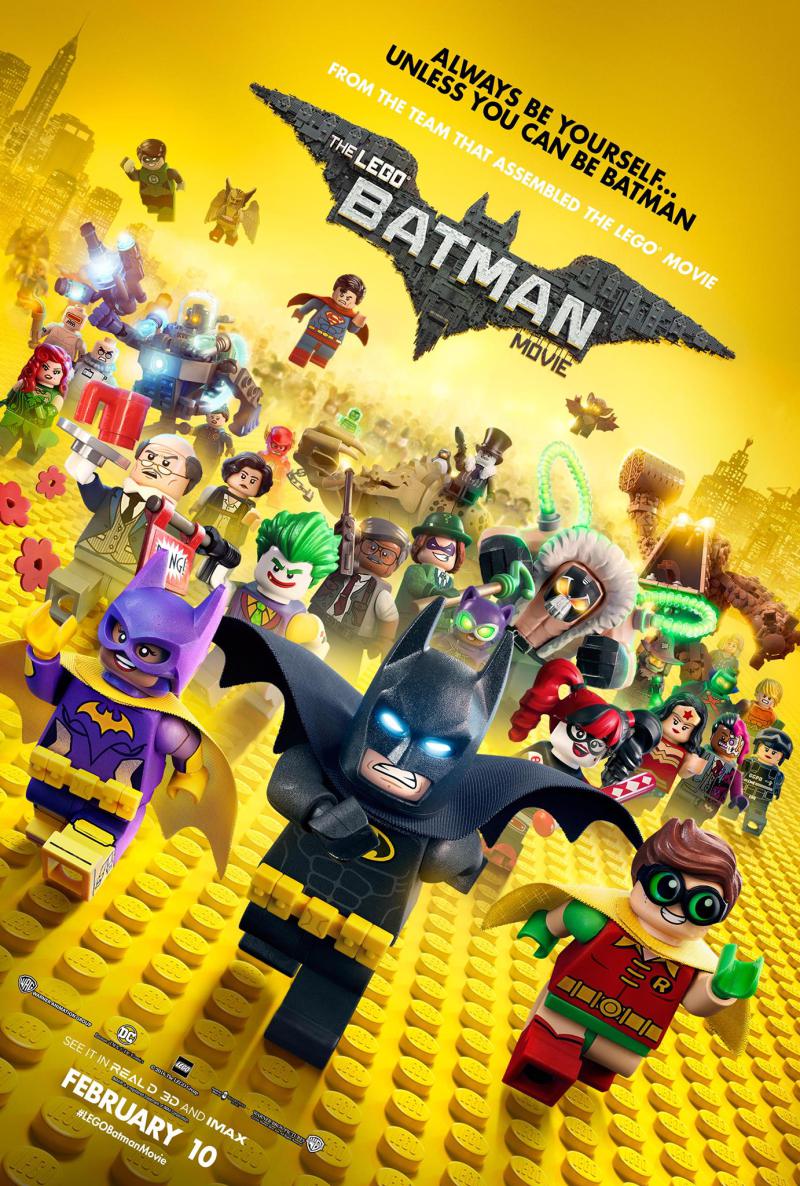
I do love Batman, but I don’t think I’m quite as enamoured with him as the rest of the world. I find him interesting as a character but I feel that, especially after the success of the Nolan films, he is taken way too seriously. This is an issue that plagues all the DC movies at the moment, but Batman needs to be taken down a peg. Thankfully, The LEGO Batman movie seems aware of this issue and does everything in its power to not only alleviate this problem but also parody it.

the-lego-batman-movie-poster

In terms of tone and style, the film successfully carries over everything that made the first LEGO Movie so entertaining. The movie is filled to the brim with jokes both verbal and visual, many of which only the most die-hard of DC fans will get. It targets every interpretation of the Batman pop culture mythos at least once, even the most recent movies, and finds a clever way to send it up. It doesn’t stop there though, as just like its originator it expands its satire to all sorts of unexpected areas; to say any more would spoil the fun. The film will have you laughing consistently throughout, but where it falters is cramming all of this humour into a flowing narrative. The plot is mostly an excuse to make all these remarks on Batman lore and they are all amusing (seeing The Caped Crusader treat The Joker like an unrequited lover or render the Gotham police useless are amongst the highlights), but it results in a film that feels overstuffed especially in its third act. There are so many moments where it feels like we’re heading to the climax, but then it just keeps going. Also, whilst the film certainly has a lot of the spirit of The LEGO Movie, it doesn’t manage to deconstruct on as much of an ingenious level. This film does a good job of parodying its main target, but that movie went way beyond that to analyse Hollywood storytelling and socio-political issues with the same amount of aplomb. I wasn’t expecting The LEGO Batman Movie to top the original and it’s certainly not trying to, but I think there’s a way they could have at least reached par.

Will Arnett’s subversion of The Dark Knight was one of many highlights in The LEGO Movie and he continues to impress with his performance here. He still portrays the character with self-aggrandising arrogance, but he also gets the chance to show more of the character’s insecurity and denial. Batman’s realization and arc is not only what makes the movie so fun, it’s key to the entire goal of the movie: make Batman fun again. The only other returning players are Channing Tatum’s Superman and Jonah Hill’s Green Lantern in small roles, but the film has a fantastic new set of supporting characters all gamely played by an impressive all-star cast. Michael Cera’s wide-eyed interpretation on Robin is adorable and his manic but well-intentioned personality is a perfect contrast to Arnett’s glowering. Rosario Dawson’s Barbara Gordon is arguably the best interpretation of the character ever outside the comics, modernising her but also serving as a counterpoint to Batman’s antics. Zach Galifiankis takes the idea of The Joker needing Batman to its natural comedic conclusion, creating not only the funniest version of the character since Mark Hamill but also the most sympathetic. Ralph Fiennes’ Alfred is probably the weakest of the main cast, but maybe that’s just a side effect of his extremely deadpan delivery; he says every line so lethargically that it’s sometimes hard to know which ones contain jokes. The rest of the cast is a smorgasbord of talent providing a sparse amount of lines between them, which is a little disappointing but, considering how jam-packed the movie already is, that’s probably for the best.

Getting beyond the humour, one of the most impressive things about The LEGO Movie was how it emulated traditional brickmation through CGI to make what essentially looked like the greatest fan film ever made. The LEGO Batman Movie continues that impressive visual feat with its gorgeous rendering of Gotham City, which combines pretty much every interpretation of the locale under the sun into a gothic paradise. This movie is far more action-packed than its predecessor and is full of memorable set pieces that take full advantage of both the Batman and LEGO brands for awesome and humorous purposes. The soundtrack choices are also excellent from the cheesy 80s love ballads and even a few cues from previous DC scores, but Lorne Balfe’s original compositions end up taking a back seat. They do sound appropriate, but they aren’t as memorable or inventive as Mark Mothersbaugh’s score for the original.

It may not be fair of me to constantly compare this film to The LEGO Movie but it does so many of the same things that it’s hard not to. The LEGO Batman Movie is a hilarious and fun film on its own terms, providing a much-needed satire of the hero after years of taking itself so seriously; without any irony, I can say it’s the best Batman movie in general since The Dark Knight. However, when compared to its predecessor and fellow superhero parody Deadpool, it only settles for funny instead of reaching for groundbreaking. I look forward to seeing where they take the LEGO franchise in the future, and if they can all be at least this good then I don’t see any real danger ahead.

FINAL VERDICT: 8/10

P.S. I’d argue the LEGO Ninjago short that plays before this movie is actually better than the main movie. It makes me actually look forward to the full Ninjago feature this September.

T2: TRAINSPOTTING – a review by JJ Heaton

Starring: Ewan McGregor (Moulin Rouge!), Ewen Bremner (Alien vs. Predator), Jonny Lee Miller (Elementary), Robert Carlyle (Once Upon a Time), Anjela Nedyalkova (Avé)

Director: Danny Boyle (Steve Jobs)

Writer: John Hodge (The Program)

Runtime: 117 minutes

Release Date: 27 January (UK), 17 March (US)

Trainspotting is an iconic film in many regards. It’s the film a lot of people think of when they think of Scotland. It’s the film that jumpstarted Danny Boyle’s career, as well as the careers of its entire cast. It’s a perfect encapsulation of 90s culture, especially in regards to the youth and the drug scene, but it’s still just as relevant today. So why make a sequel? There are plenty of reasons not to, but just as many to do so as well. You could tread on the heels of a classic, but equally you could expand on a story that may play out a little differently in the modern world. T2: Trainspotting ultimately doesn’t need to exist but, even though it can never reach the heights of its predecessor, I’m glad it does.

t2-trainspotting-uk-poster

Picking up in real time from the end of the first movie, T2 finds the characters of the original scattered. In many ways time has changed them, but they all still have the same ticks and vices. It’s a story about reflection, rediscovery, and accepting your lot in life, as our protagonists struggle to recapture a lost past that was never that good to begin with. It is a film more focused on character than story, and on that level it ultimately succeeds, but in the actual plotting it feels a little unfocused. The original film didn’t exactly have a flowing narrative either, opting for more of a slice-of-life feel, but each story flowed more naturally into the next. Here, the film basically starts with a handful of storylines and waits to see which ones last until the runtime is up; some ultimately mean something, but a lot just drop of the face of the movie. The film also reminded me a lot of the fourth season of Arrested Development in how infrequently the main characters share scenes, instead following them in their own stories that intertwine here and there; it actually takes until near the end before all four of them are finally together. The strong character journeys themselves thankfully hold the film together to create a tangible through line, because without them the film would feel far more haphazard.

Speaking of character, all four main stars recapture the essence of their characters whilst still bringing something new to the table; it’s like they’ve been living in the skins of these people for twenty years and brought all that baggage with them. Ewan McGregor’s Renton has changed the most, having tried to choose life but ultimately made a mess of it. He’s more aware of his mortality than ever and is trying to reconcile his past, but he’s come back home to find that not everything can be changed. Ewen Bremner as Spud is as dopey as ever, still screwing up job opportunities and fighting his addiction, but his story here is a chance at redemption. He can’t fix his past, but he can build something from the ashes it, and his journey gives T2 more of a heart than any single call back to the original can. Renton and Spud represent the characters trying to change, but Jonny Lee Miller’s Sick Boy and Robert Carlyle’s Begbie are the ones who are unable to. They are caught up in the past, simply using the advances of today’s world to make the same mistakes they’ve always been making. This character contrast is the entire thematic core of T2, and it makes it one of the few sequels that successfully reminisces about the first film without feeling like it’s begging for nostalgia, mainly because what they’re remembering is a past that’s not exactly worthy of nostalgia. This reflection on the passage of time is best seen in Anjela Nedyakova as Veronika, who voices the audience’s main concern: why are these people stuck in a past not worth remembering? She isn’t exactly as exciting a character as our returning four leads, but she provides a necessary bridge from the old to the new; someone young enough to leave this life while they still can. There are plenty of other reprising players like Kelly Macdonald, James Cosmo, Shirley Henderson and author Irvine Welsh himself, but they are unfortunately the ones who get lost in the unstable narrative; it’s nice to see them back, but you could have easily done the movie without them.

T2 not only shows how time has changed these characters, but how much Danny Boyle has evolved as a director since the first film. He wisely doesn’t attempt to replicate the muted, grainy look of the original, instead transposing the style he has created for himself since onto this familiar canvas. The use of digital camerawork and saturated neon colours is a staple of modern Boyle and regular cinematographer Anthony Dod Mantle, and instead of clashing with the aesthetics of Trainspotting it gives it a fresh twist; the rest of the world has evolved around these characters, and so naturally the filmmaking techniques have too. However, not all the advances work, as that also means the more trippy visuals have changed from practical effects to digital ones. Not only are they not as memorable as seeing a man climb into a toilet, sink into the floor or witness a dead baby crawling on the ceiling, they stand out too much in what is otherwise a more naturalistic piece of filmmaking. The original film’s soundtrack is arguably as iconic as the film itself, and though T2’s probably won’t be as impactful it does have a solid selection of tunes; the inclusion of a remix of Iggy Pop’s “Lust for Life” by The Prodigy probably sums up this film’s themes better than my words can.

T2: Trainspotting isn’t as good as the first film, but it does live up to the original. It doesn’t succumb to outright repeating the original or forget what made it so special. It’s a companion piece more than a traditional sequel; an examination of what can happen when you choose life but can’t escape your past. As much as the plot surrounding them can falter, these characters remain as compelling as ever and this film provides a fitting end for them all. It’s not a necessary addition to the story, but for anyone who has wanted to know what happened to Renton and the gang this provides a satisfying answer to that question. Like sharing a few drinks with old friends you grew apart from, T2 can’t recapture everything about your memories of the past, but it can provide some closure to a chapter of your life that may need some.

FINAL VERDICT: 8/10

SPLIT – a review by JJ Heaton

Starring: James McAvoy (X-Men: Apocalypse), Anya Taylor-Joy (The Witch), Betty Buckley (The Happening), Haley Lu Richardson (The Edge of Seventeen), Jessica Sula (Skins)

Writer/Director: M. Night Shyamalan (The Sixth Sense)

Runtime: 1 hour 57 minutes

Release Date: 20 January (US, UK)

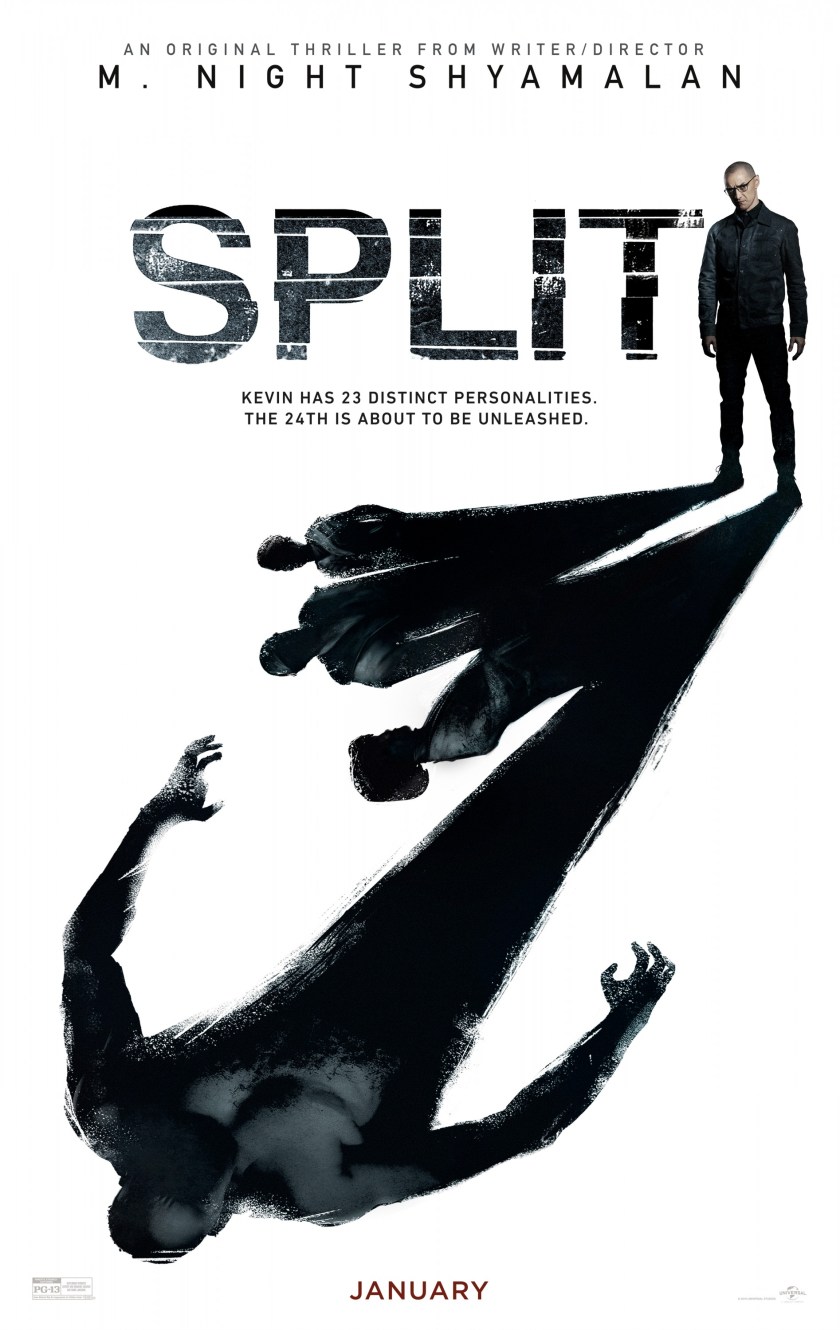
Movies that are heavy on twists are incredibly hard to talk about, and Split has several doozies that I’d rather not spoil. However, it’s equally hard to sell how great this movie is without doing so, so please take my word for it that Split is not only M. Night Shyamalan’s best movie in seventeen years but is also one of the best high-concept horror/ thrillers of the decade, and so I’ll try to tread very carefully in this review around a minefield of spoilers.

split_poster-2

Like all great suspense movies, Split has a deceivingly simple premise that gradually grows and grows as the story progresses. What simply starts as three girls held captive by a madman gradually evolves into something far bigger than a simple escape thriller. The unpredictability of Kevin (McAvoy) and his fragmented identities constantly keeps the audience on their toes, his shifting moods meaning the difference between safety and danger for these teens. The film does jump around between several plotlines including flashbacks to the childhood of Casey (Taylor-Joy) and psychologist Dr. Fletcher (Buckley) dealing with Kevin’s case, which in the moment feel unnecessary but as the film progresses they prove to be anything but; still, there might have been a better way to weave them in without stopping the main plot in its tracks. There are a lot of moments like that in Split where it tests your willingness to stick with it, especially in the third act when it really starts to go off the rails, but you are rewarded for your patience with a final note that completely annuls every inconsistency and bizarre moment up until that point. The film reminded me a lot of 10 Cloverfield Lane in how it handled its climax but, whereas that film’s ending ultimately cut off the legs of an otherwise excellent picture, this one pays off because it fits more naturally into what came before and actually answers questions rather than raising them. I can’t say much more, but I will say that if you are a fan of Shyamalan’s early work then you are going to love Split.

Every actor wants a chance to show off his or her range in a single movie, and James McAvoy gets the Valhalla of chances to do so in Split. Every single personality inside Kevin’s head is made completely distinct through the way McAvoy adjusts his accent, cadence, posture, body language, etc. At certain points, you don’t even need the costume changes to recognise which identity is in control, but at other times you are unsure as to whether one of his more innocent personalities is in control or one of his darker ones is simply imitating them, and that’s what ultimately makes him so terrifying. It instantly ranks up there with McAvoy’s best performances and sets a new bar to cross for actors tasked with playing multiple characters; Tatiana Maslany, you’ve got some new competition. But Kevin doesn’t steal the entire movie for his twenty-four selves, because Anya Taylor-Joy as Casey holds her own against him every step of the way. One of the best final girls in horror since You’re Next, Taylor-Joy continues to prove herself as a great new talent in a role that could have easily felt generic and weak. Those flashback may be intrusive but they give enormous depth to the character that would have left her flat otherwise, and the greater amount of tension to the situation they provide gives the film another whole layer to dissect. It’s a pity that Haley Lu Richardson and Jessica Sula aren’t afforded anywhere near that amount of character, but ultimately the film isn’t really about them; they serve their purpose and they do so exceptionally for the most part. Betty Buckley, best remembered as the crazy old lady from The Happening (“You eyein’ my lemon drink?”), rounds out the cast well as Kevin’s psychologist who helps provide much of the context that hints at the greater context of the piece. Suddenly, she seems far less off-key now that she’s not playing opposite a befuddled Mark Wahlberg.

Shyamalan’s recent directing has been known for its odd quirks and fumbles, but here he has finally again grasped the art of filmmaking and has crafted one hell of a slick thriller. The movie looks haunting and grimy thanks to the excellent work of It Follows cinematographer Mike Gioulakis, evoking a similar haunting sense of dread in that picture but with Shyamalan’s own penchant for off-kilter shots. The main set is minimal but full of detail and character; so much can be extrapolated about Kevin’s personalities from just analysing the decorations. West Dylan Thordson’s is minimal but adds to the uneasy tension of the piece, and by the film’s climax it all perfectly coalesces with Shyamalan’s familiar classic style. If you’ve seen the movie, you might know what I’m talking about there.

The Visit was Shyamalan’s stepping-stone back to the light side, but with Split he has now fully reaffirmed he is back in business. This is a truly unique movie that reminds you why filmgoers fell in love with the director all those years ago: high concept ideas achieved through simple but effective filmmaking and a fine attention to theme and suspense. The performances by McAvoy and Taylor-Joy alone would have made this film worth watching, but those last few minutes skyrocket this movie from good to pretty damn awesome. If you aren’t as into Shyamalan’s films even before his legendary bad streak, you may not be convinced. But if you have even the slightest fond memories of his early work, no matter how much his lesser works have burned you in the past, you owe it to yourself to watch Split.

FINAL VERDICT: 8.5/10

ASSASSIN’S CREED – a review by JJ Heaton

Starring: Michael Fassbender (X-Men: Apocalypse), Marion Cotillard (Inception), Jeremy Irons (Batman v Superman: Dawn of Justice), Brendan Gleeson (The Guard), Michael K. Williams (Triple 9), Ariane Labed (The Lobster), Charlotte Rampling (45 Years)

Director: Justin Kurzel (Macbeth)

Writers: Michael Lesslie (Macbeth) and Adam Cooper & Bill Collage (Exodus: Gods and Kings)

Runtime: 1 hour 55 minutes

Release Date: 21 December (US), 1 January (UK)

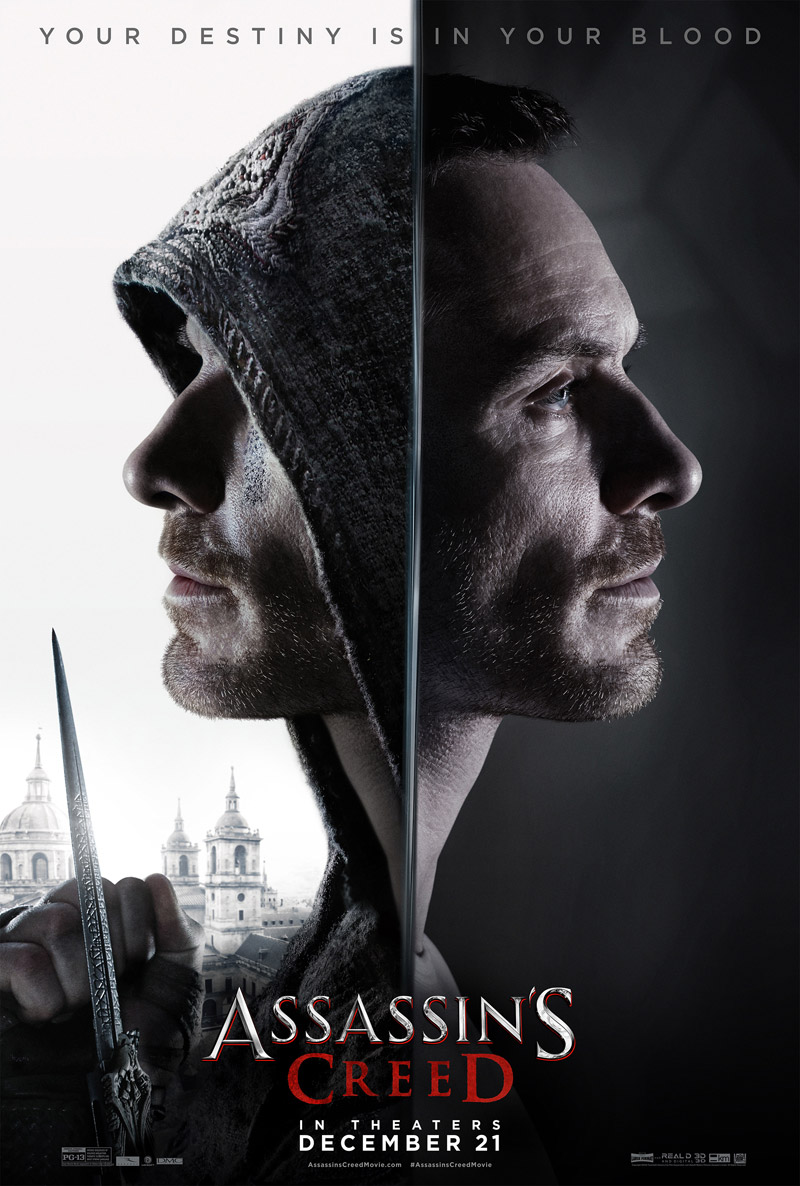
The Assassin’s Creed video game franchise has certainly waned in recent years after countless sequels and spin-offs have run the formula dry, but the core concept remains fun and amongst the numerous entries are some of the landmark titles of the past ten years. Ubisoft let the franchise rest this year, but have instead gone ahead and thrown their hat into the film ring with a cinematic interpretation on the ongoing battle between the Assassins and the Templars. Now video games movies are still as taboo today as they’ve always been, but with the developers heavily involved and some great film talent guiding it, this should be the one to break the curse, right? The short answer: no. The long answer follows…

asscreedposter

Assassin’s Creed makes a wise move by not directly adapting any of the games and instead tells a new side-story set within the canon of the franchise, with a few small but appreciated nods to the series’ past. It still follows the basic structure of the games (man forced to work for Templars, goes back into memories of ancestor, does a bunch of random quests to further plot and find Piece of Eden), but at least it can forge its own path and not have to cram ten hours of gameplay into a fifth of that experience. Unfortunately, what they’ve decided to focus on is every bad part of the game: the modern day story. A sizable majority of the film is spent in a cold research facility, and even when we are thrown into the assassin story during the Spanish Inquisition it still cuts back to the present constantly. Both plotlines are dull and underdeveloped, especially the past story because we are constantly thrown into it at random intervals with no indication of how much time has passed and what’s happened in between sequences; it’s like watching a bunch of random missions from the game with no context.

The film’s biggest crime, however, is that it’s dull. The games aren’t exactly action-packed thrill rides jam-packed with explosions and one-liners, but they have a sense of humour and revelled in the fun of being an assassin just as much as all the political intrigue and shadowy machinations. Here, any sense of joy has been sucked out and we are left with a cold, unappealing and po-faced slog that takes itself way too seriously. There are clearly even lines of dialogue that are meant to be witty but they are played completely straight; it’s almost like the director doesn’t understand the concept of humour. The pacing constantly drags as the movie weighs you down with painful scenes of characters prattling on about morality and control and power, and even when the action does kick it is all too brief and the cycle begins again. There are the occasional sparks of an interesting story underneath all the clutter, one that might have been entertaining if it actually played to the strengths of the game, but none of that is taken advantage of. By the halfway mark I was bored, and when the sequel-tease ending finally arrived I felt like I was being set free.

The protagonists of Assassin’s Creed can vary wildly in likability, with some endearing stars like Ezio or Edward but then there are some absolutely bland ones like Altair and Connor. The movie easily falls into the latter camp and Michael Fassbender is equally unappealing as both present-day captive Callum Lynch and Spanish assassin Aguilar. Lynch is given basically no personality, his backstory is barely touched upon, and his motivations fluctuate wildly throughout the movie due to a complete lack of clear character development; the man pretty much changes his allegiances on a dime. Fassbender’s performance does nothing to make the character stand out, his characterisation basically beginning and ending at a Christian Bale growl, and then there’s the bizarre scene where he starts wailing out Patsy Cline’s “Crazy” as he’s being dragged into the Animus. No, seriously, that’s a scene in the movie. He honestly makes original series protagonist Desmond Miles look positively fascinating by comparison. But at least Lynch has a vaguely discernable story and the skeleton of an arc, because Aguilar is pretty much a blank slate. We are told nothing about his past, he has no real motivation beyond his commitment to the creed, and there is no real resolution to what could barely be described his “story”. All he’s really there to do is engage in action sequences, but it’s hard to get invested when I don’t care about him or the dude experiencing these memories.

The supporting cast is a fantastic assemblage of talent on paper, but they are all given bland and underdeveloped characters to play so nobody comes out looking good. Marion Cotillard probably gets the most interesting role to play as a morally conflicted Templar scientist who doesn’t necessarily agree with all her order’s plans, but everything interesting about her just seems like it’s being saved for a sequel and Cotillard’s cold performances nixes any of the potential intrigue. Jeremy Irons does nothing but blather on about the beliefs of the Templars, Michael K. Williams is wasted as one of several other assassins held in the facility in another poorly developed subplot, Charlotte Rampling is completely pointless as the head of the Templars, and both Brendan Gleeson and Essie Davis are essentially extended cameos as Lynch’s parents. The only vaguely interesting character is Ariane Labed as Aguilar’s assassin buddy Maria, and that’s only because she looks cool and is I think the only character that smiles in the movie.

Justin Kurzel showed he could deliver on spectacle in his adaptation of Macbeth, and whilst there are some impressive moments in the all-too-brief action sequences in Assassin’s Creed they are hampered by numerous other problems. The cinematography is suitably cold and haunting in the present day sequences, but in the past it becomes overdone and jittery. There’s a lot of odd pans and shaky zooms, which completely doesn’t suit the acrobatic style of action the film has on display, obscuring what is clearly some impressive parkour and stunt work. The clumsy editing also ruins the immersion, constantly interrupting the flow of the action to cut back to the present so we can watch scientists watch Fassbender swatting around at air. Barring the film’s overdone reimagining of the Animus, the design of the sets, props and costumes is probably its only saving grace, perfectly capturing the aesthetic style of the games perfectly, but again it never takes advantage of it. One of the joys of the games was exploring a historic city and marvelling at the scale of it. Here, there’s never a moment that really lets you soak in the historic environments. Like everything else in the movie, the joy has been removed entirely.

Assassin’s Creed had everything it needed to be a great movie and makes every wrong decision it can. Not since Josh Trank’s Fantastic Four has so much promise been wasted on idiotic mistake after idiotic mistake. It takes a fascinating premise and makes it dull, it takes great actors and gives them nothing to work with, it takes thrilling action and makes it incomprehensible, and it takes a promising director like Kurzel and makes him look like an incompetent idiot. Say what you will about Warcraft, but it at least showed a passion for the material that this movie seems too afraid to even have. Most bad video games movies at least have the distinction of being hilariously bad. You can watch something like Street Fighter or Super Mario Bros. and laugh at their ineptitude. Assassin’s Creed is far too boring and lifeless to do that with. If Ubisoft thinks this is good enough to start thinking about doing more adaptations of their properties, then they are basically just throwing their money away.

FINAL VERDICT: 3/10

PASSENGERS – a review by JJ Heaton

Starring: Chris Pratt (Guardians of the Galaxy), Jennifer Lawrence (The Hunger Games), Michael Sheen (TRON: Legacy), Laurence Fishburne (The Matrix), Andy Garcia (Ocean’s Eleven)

Director: Morten Tyldum (The Imitation Game)

Writer: Jon Spaihts (Prometheus)

Runtime: 1 hour 56 minutes

Release Date: 21 December (US, UK)

In Hollywood, it’s almost a given that if your story world is high concept, requiring lavish production assets and a lot of visual effects, then you’re going to have to big on spectacle and stakes too. However, this can often get in the way of the true core of the movie, and nowhere is this more obvious than in Passengers. The film is getting a tough time with the critics for numerous reasons and I can see why, but there is a lot of great material here being held down by an unnecessary need to go big.

passengers-poster

The film has a solid premise from the very start, and in the first half it really shines when it focuses on the human drama of the situation. Jim (Pratt) is alone for much of the first act and runs the gamut of emotions as he deals with his isolation in a very Groundhog Day-like way. There is a lot of heavy exposition dumping during this section but it’s lampshaded well enough and the fun of watching Pratt live alone on this massive spaceship indulging himself more than makes us for it. Once Aurora (Lawrence) and the central conundrum of their relationship comes into play, the film poses an interesting moral question in a mostly compelling way and it evolves from watching someone alone dealing with this situation to watching two people trying to make the best of it and learning to love each other regardless. When Passengers is entirely focused on this, it’s actually a really sweet and absorbing human story. The question the film poses and the direction the characters take it is one many might see as having worrying connotations, but the film doesn’t shy away from those concerns and the character building done up to that point helps to justify those troublesome choices.

However, without wanting to spoil anything, the film begins to fall apart around the halfway point after a key character revelation. It’s an inevitable moment but the reveal just comes out of nowhere, causing what should be a really devastating point in the relationship between these characters to feel undeserved. It’s also at this point when the ultimate revelation of what’s happened to the ship is explained and it is incredibly underwhelming. It’s a problem that could have easily been fixed early if not for a series of understandable but still frustrating plot contrivances keeping our characters from doing so, and from there the film leaps into an action climax that brushes away all of the good character building that had been going on up until that point. By the film’s conclusion, the entire third act feels perfunctory and its message would have run just as true, if not better, if it had just stuck to the drama of two people trying to get along instead of the drama of human annihilation.

Chris Pratt and Jennifer Lawrence are two of the most charismatic and in-demand actors in Hollywood at this moment, so it was only a matter of time before the two had to work together. As you’d expect, their shared penchant for awkward banter means they have strong romantic chemistry right from the start, but when it comes to the more dramatic elements they also manage to shine too. Pratt is especially good in that secluded first act, showing a depression and vulnerability far removed from the wisecracking goofball we’ve come to love. Lawrence is more than capable too, but a character shift with her in the third act never rings true. It just happens abruptly with no event or character interaction that shows us why she’s changed her mind so suddenly.

Michael Sheen makes for an interesting bit of comic relief as an android barman, functioning in a similar capacity to Kevin Spacey in Moon, but his character doesn’t serve much purpose beyond giving someone Pratt to talk to in the first act and being the bearer of that botched revelation that sends the plot spiralling downwards. Laurence Fishburne comes into the story very late and is effectively a human plot contrivance, entering to explain some important story beats and literally give our characters the key to do everything they could have used to fix this problem ages ago before leaving before we can form any attachment to him. Oh, and Andy Garcia is in the movie for one shot. Not for one scene or one line. Literally one shot. Why?

Passengers presents a believable view of the future through its stark but warm production design. It doesn’t take technology too far into the future in a way that would feel dated in just a few decades, instead amplifying our modern tech in directions they inevitably seem headed in. However, the visual effects used to create them are never fully convincing. Maybe it’s the high-quality sheen everything seems to have even when the ship is in disarray, but too often at points it can feel like the movie takes place on the set of a spaceship instead of an actual spaceship. Thomas Newman’s score is appropriately wondrous and soothing, but anyone with an ear for soundtrack will tell he is aping from a lot of his previous music here; there are moments that I swear are slightly altered copies of tunes from American Beauty, WALL-E and especially Finding Nemo.

Passengers is not the Hollywood disaster the mainstream critics would have you believe, but it is a flawed film hampered under the weight of its scope. It’s a movie that might have actually benefitted without all the high-budget glam, ignoring the action and intrigue that ruin it and instead focus on what it clearly wants to be: a love story. Films like Moon and Looper proved you can do high-concept sci-fi on a low budget without sacrificing much quality, and under those circumstances maybe its best qualities would have risen to the surface. Then again, on a low budget you’d never be able to afford Chris Pratt and Jennifer Lawrence anyway. If you’re at all still curious, give it a watch and judge for yourself.

FINAL VERDICT: 6.5/10

ROGUE ONE: A STAR WARS STORY – a review by JJ Heaton

Starring: Felicity Jones (The Theory of Everything), Diego Luna (Elysium), Ben Mendelsohn (Killing Them Softly), Donnie Yen (Ip Man), Mads Mikkelsen (Casino Royale), Alan Tudyk (Serenity), Jiang Wen (Red Sorghum), Riz Ahmed (Nightcrawler), Forest Whitaker (The Last King of Scotland)

Director: Gareth Edwards (Godzilla)

Writers: Chris Weitz (About a Boy) and Tony Gilroy (The Bourne Ultimatum)

Runtime: 2 hours 13 minutes

Release Date: 15 December (UK), 16 December (US)

We are now getting a Star Wars movie every year for the foreseeable future. In the eyes of a fanboy, that can seem either exciting or worrying. You can certainly have too much of a good thing, and there is always the risk of running out of ideas fast. Then again, Marvel Studios has managed to keep things fresh despite now releasing two or three films a year, and Lucasfilm’s approach of exploring stories beyond the Skywalker saga in these anthology films is the best way to stave off staleness. Rogue One serves as the company’s first attempt to broaden the universe in ways only seen in expanded fiction beforehand, and if future efforts can be as solid as this then the experiment is on the right path.

rogueone_onesheeta

Rogue One now serves as the official story behind the Rebellion’s mission to steal the Death Star plans, erasing all previous versions of the events (apologies to Kyle Katarn). In tone and structure, it follows the template of the war movie more than Star Wars’ traditional hero’s journey, giving it a unique style right from the word go and cementing it as the first movie in the series aimed more at adults than kids; it’s like Saving Private Ryan mixed with The Dirty Dozen but with lasers and spaceships. It most closely resembles The Empire Strikes Back with its portentous atmosphere, but with the modern sense intensity and charm that The Force Awakens brought to the franchise. The film is a little slow and clunky to start as it introduces the characters and exposits the stakes, but once our band of rebels are out on their first call of duty the action only ramps up from there. Once the final act rears it gloomy head, Rogue One plunges into easily the biggest and fiercest action climax in a Star Wars movie ever before weaving itself into the original trilogy in a satisfying way that the prequel trilogy never really accomplished. There is some tension taken away considering we know where certain pieces fall into place, but it’s like a good history lesson: you know how it’ll end up, but finding out what had to be done and how is what makes it interesting.

The characters of Rogue One are a bit different to the usual noble Jedi and swarthy smugglers we’ve gotten used to. These are the grunts relegated to the background in the saga films, and though they prove to be fun and memorable heroes they aren’t quite as deep. Felicity Jones is a solid and relatable lead as Jyn Erso, probably the most immediately capable protagonist in Star Wars history, but her character lacks the definition it deserves. Her character is brought into the plot too quickly for us to get a beat on her personality, and her shift from reticent miscreant to devoted rebel soldier happens a bit abruptly. By the film’s climax she feels more complete and you’re rooting for her immensely, but a more gradual introduction and character arc would have given her more clarity early on. Similarly, Diego Luna’s Cassian Andor is given an interesting moral dilemma we haven’t really seen in a Star Wars movie that gives him an interesting conflict with Jyn, but again it gets resolved before it has a chance to breathe. The rest of the supporting rebels are given just about enough for the status of their characters, and they add a lot of heart and humour to the dourness of the picture; Donnie Yen as badass blind spiritualist Chirrut and Alan Tudyk’s hilarious Imperial droid K-2SO are constant highlights.

Ben Mendelsohn makes for an imposing threat as Orson Krennic, channelling Peter Cushing’s performance as Tarkin in some ways but with a relatable sense of hunger for respect. He could have done more to be a bigger personal threat to Jyn, especially considering his relationship with her father Galen (Mads Mikkelsen), but the two only encounter each other a handful of times throughout the story. Forest Whitaker as EU standby Saw Gerrera is fun to see realised on screen, but his screen time is brief and Whitaker’s voice for the character is distracting at first; he practically wheezes all of his lines. There are also a few familiar faces from the previous films, both original and prequel, who make small appearances and for the most part they are well-handled. I’ll keep most of them secret for you to enjoy, but considering Darth Vader has been all over the marketing, I can safely say his scenes are small and not completely essential to the story but are totally awesome; they almost completely redeemed the character to me after the menace was sucked out of him in the prequels.

Gareth Edwards has a much more rough-and-tumble approach to filmmaking compared to previous Star Wars directors, and he applies the same attention to scale and grandeur that gave Monsters and Godzilla a lot of their appeal to the Star Wars universe. It perfectly recaptures the look of the original trilogy but through a trodden and dirty lens, painting a picture that perfectly aligns with the characters’ lower status as cannon fodder amongst the larger conflict. As said before, the action sequences in Rogue One are its major highlight and finally give us the epic skirmishes on land and in space the original trilogy couldn’t accomplish and that the prequels couldn’t be bothered to. Every solider gunned down or starfighter destroyed hits far more than ever, which is exemplified by the glorious sound design and impeccable visual effects; definitely see this in a cinema with the best projector and sound system you can. The only note that unfortunately falls flat is Michael Giacchino’s score, which just doesn’t match the film’s tone most of the time. It feels caught between Giachinno’s style and John Williams’ and never finds a comfortable spot to call its own. It needed a darker and more sombre score that original choice for composer Alexandre Desplat certainly knows how to deliver, and I really wish I could hear what he would have brought to the table for comparison.

Rogue One: A Star Wars Story is a promising beginning for a new series of tales to be told in this galaxy far, far away and delivers a fresh spin on familiar material by simply changing the perspective; those who found The Force Awakens too derivative and safe should hopefully be quelled by this. It really puts the “wars” of this franchise front-and-centre like never before, and what it lacks in depth and polish it more than makes up for with spectacle and grit. Gareth Edwards has essentially crafted the greatest fan film ever made, but the way it compliments A New Hope in ways that improves that film is wonderful after seeing three movies that only detracted from it. If the characters were a little more fleshed out, this had a chance of being as good as The Empire Strikes Back, but as is it still more than meets the lofty expectations.

FINAL VERDICT: 9/10

LA LA LAND – a review by JJ Heaton

Starring: Ryan Gosling (Drive), Emma Stone (Zombieland), John Legend (Soul Men), Rosemarie DeWitt (The Watch), Finn Wittrock (The Big Short), J.K. Simmons (Spider-Man)

Writer/Director: Damien Chazelle (Whiplash)

Runtime: 2 hours 8 minutes

Release Date: 9 December (US), 13 January (UK)

The traditional movie musical has been dead for a long time. We have plenty of animated Disney films and adaptations of stage shows, but rarely do we see an original musical done on the scale of the golden age of cinema. Tastes have changed considerably since those times, but after so many other trends and ideas have been revived to varying success over the years it’s a surprise it took this long for someone to take another shot at one of Hollywood’s traditional genres. However, though La La Land does take most of its inspiration from films of old, it uses those tropes to tell a very modern story that deconstructs the musical genre, show business and the psyche of the modern dreamer all in one unique motion picture.

1

The love story is almost always the central dynamic of a movie musical, and La La Land follows suit but through a contemporary and honest lens. They don’t fall in love at first sight, they vent and argue like normal people do, and they don’t act drastically melodramatic about their every emotion. Everything feels genuine and true to life, even somehow when they do break into song-and-dance. The plot plays like A Star is Born but in the cynical, vapid world of modern Los Angeles, with our protagonists not only struggling with their own dreams but also trying to convince an apathetic industry to care. The film doesn’t take a totally cynical approach, sprinkling in a lot of the fun and artistry of show business, but it doesn’t make the road to stardom fanciful or miraculous like a traditional musical would. It’s a film equally in love with film and music but also frustrated with all the seemingly unnecessary hardship that comes with that love.

This candid tone is brought to a fantastic conclusion in the film’s closing moments, which subverts all expectations of the genre but still feels like the only satisfying ending this story could have; anything else would feel too saccharine or too pessimistic. And yet even when La La Land plunges into the saddening truths of the search for fame, it never stops being a joy to watch. The story is constructed elegantly, it moves at a punchy pace, and there isn’t a moment that feels wasted or unnecessary. It’s a solidly entertaining ride throughout the first two thirds, but it’s that ending that pushes it over the edge from a good movie to a great one.

Ryan Gosling and Emma Stone already proved they have wonderful chemistry together in both Crazy, Stupid Love and Gangster Squad (more so the former than the latter), but La La Land will most likely end up being the iconic film of this on-screen couple and deservedly so. There isn’t an iota of this relationship that falls flat, and that’s mainly because there’s never a moment where they feel dishonest. Though the movie treats their courtship like a traditional musical romance on an aesthetic level, their words and actions and emotions feel like those of a real couple in this situation. Their frustrations are relatable, their flaws are incredibly apparent, and though you’ll never question whether these two are in love there is the question as to whether they should be. Gosling and Stone compliment and balance each other out perfectly, never letting one outshine the other for too long, and they captivate for the vast majority of the film’s lengthy run. The supporting cast is surprisingly minimal in presence, especially J.K. Simmons in what amounts to an extended cameo, which is somewhat disappointing but it’s no major problem. Gosling and Stone more than carry the film themselves, and the rest of the cast serve their purpose perfectly fine, so I’d call it less of a flaw and more like an overlooked opportunity.

La La Land pulls a great magic trick by managing to recreate the style of a 1950s Hollywood musical whilst not completely sugarcoating its contemporary California setting. The film of course shows iconic locales like the studio lot or the Griffith Observatory through rose-tinted lenses, but it also does the same for the less glamorous sides of the city and manages to make them look enticing without losing their grit. The cinematography is full of bright saturated colours and warm lighting to give it that nostalgic look, but it combines it with the rapid-fire editing of modern cinema to further cement the marriage between old and new. However, where La La Land doesn’t quite hit the landing is in a place where it matters most for a musical: the music. None of the songs are badly composed or lack passion, but they don’t immediately stick with you like the great musicals do; I can barely recall a single lyric. Luckily, the choreography of the numbers makes them memorable enough, especially the opening piece “Another Day of Sun” that makes a traffic jam on the freeway look like a cool place to be. But going down again, whilst Gosling and Stone shine from an acting standpoint, from a singing perspective they don’t exactly excel. Stone is more solidly consistent and manages to really shine in her final piece “Audition (The Fools Who Dream)”, but Gosling only just manages to be passable. He’s not distractingly off on a Russell Crowe or Pierce Brosnan level, but it’s abundantly clear he’s no professional singer.

La La Land is a wonderfully entertaining throwback film that respects the legacy it’s drawing from but keeps its eyes on the present, repurposing the magic of the traditional musical to tell a story for the lovers and dreamers of today. Ryan Gosling and Emma Stone’s lead performances elevate the film to heights it couldn’t reach without them, and Damien Chazelle’s passionate direction brings to life a vision of modern show business that is equally mythical and truthful. It’s going to be a crowd-pleaser for sure and the awards circuit is going to eat up every bit of its nostalgic Hollywood sweetness, so definitely go see it before the critics really blow its accomplishments out of proportion. If the actual music was captivating throughout and the first two thirds were as dazzling and heartfelt as those final moments, this would easily be the best movie of the year. As it stands, it’s just a really damn great one.

FINAL VERDICT: 9/10

MOANA – a review by JJ Heaton

Starring: Auli’i Cravalho, Dwayne Johnson (Central Intelligence), Rachel House (Hunt for the Wilderpeople), Temuera Morrison (Star Wars: Episode II – Attack of the Clones), Jemaine Clement (What We Do in the Shadows), Nicole Scherzinger (Men in Black 3), Alan Tudyk (Frozen)

Directors: Ron Clements & John Musker (The Little Mermaid)

Writer: Jared Bush (Zootopia)

Runtime: 1 hour 43 minutes

Release Date: 23 November (US), 2 December (UK)

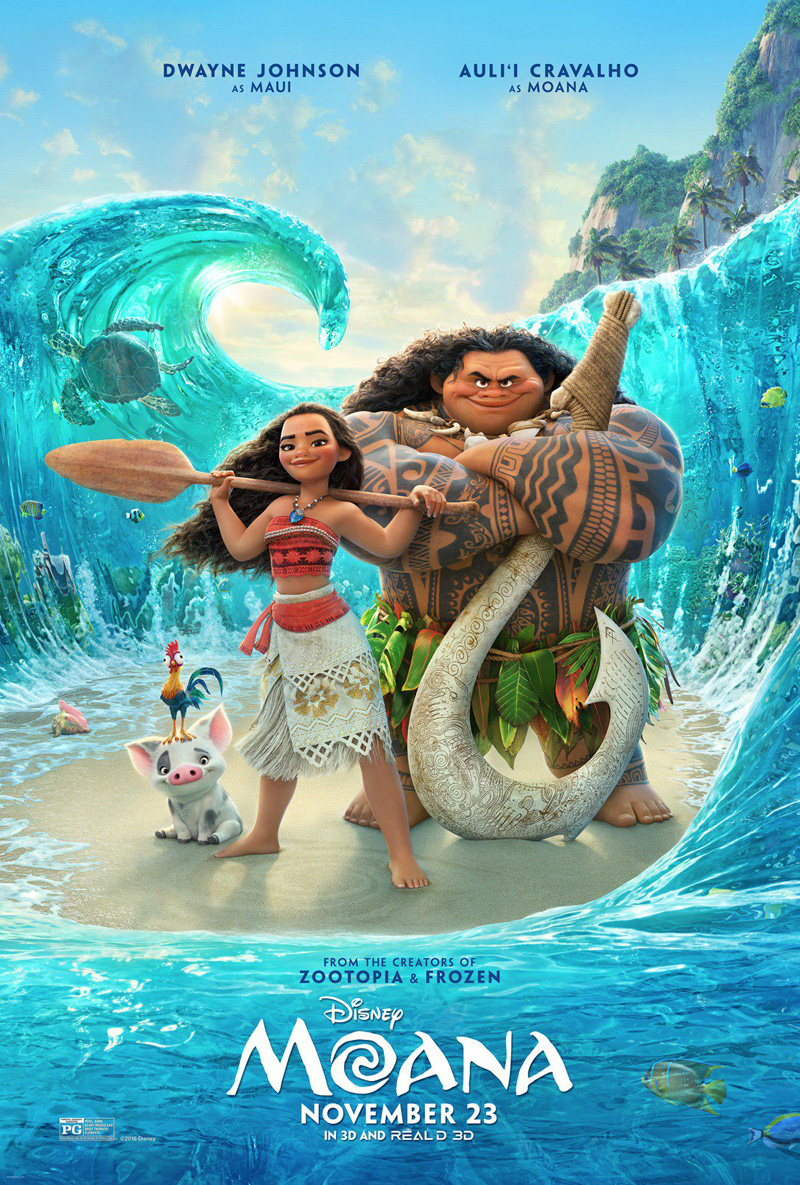
Moana represents a lot for Walt Disney Animation Studios. It’s another step for them in their quest to revamp their Disney Princess brand for a progressive age, it’s another chance for them to step outside Western folklore in a way they haven’t tried since Mulan, and it sees long-time veteran Disney directors Ron Clements & John Musker finally step into the realm of computer animation. In a lot of ways, Moana succeeds in those lofty ambitions and does stand out from the pack of traditional Disney films, but on a mechanical level it doesn’t quite do enough to make it the instant classic it is attempting to be.

csky6rmviaenstq-jpg-large

Moana does a lot aesthetically to set the film apart from previous Disney tales, but a lot of the core components are still there. You’ve got the strong and outspoken protagonist wanting to leave the path she has been set on for something “more”, some tragic event forces her to do so but she lacks all the necessary skills, she is paired with a kooky side character whom she learns to get along with, and the two help each other get over their issues and become heroes. It’s all done with a lot of heart and passion, but it’s hard not to feel like we’ve seen this all before but in a different coat of paint. They’ve eschewed a lot of other elements like the love interest and the tragic childhood for the better, but then they’ve also avoided having a compelling main villain and an original message to its detriment.

The film is paced well but feels structurally askew with a first act that drags and a third that feels disappointingly brief (which is thankfully held together by an incredibly strong middle), but it feels very similar to Big Hero 6 in the sense it makes me wonder if they got near the end of the movie and had to rush things to fit within a 100 minute runtime. I’ll give it the final climax reveal and its resolution compliments for playing against expectations, but again it feels underdeveloped and it ultimately makes what should have been the film’s emotional denouement lack the punch it so clearly wants to deliver. I’m glad to see Disney continue to be self-aware of their clichés and trying to refine them (there are a lot more in-jokes and fourth wall moments than I expected), but in the process of retooling the formula they’ve lost some of what made it work in the first place.

The real focus of the film is less on story and more the relationship between Moana and the demigod Maui, and in this area the movie shines brightly. Moana as a character is built a lot like her predecessors, mostly feeling like a combination of Pocahontas and Mulan with dashes of Ana and Merida, but Auli’i Cravalho’s charming and enthusiastic performance helps to keep her distinctive enough. It’s a little disappointing to see the “chosen one” narrative trotted out again for her, but thankfully they don’t play it up too much. Ultimately she feels like a character defined too much by what she isn’t rather than what she is. They don’t give her a love interest, no one questions her ability to become a leader, and her gender is never even brought up detrimentally beyond a brief knowing gag. That’s all great, but there’s very little to her as a character beyond her connection with the ocean and her desire to explore it.

But whilst Moana on her own feels a bit lacking, once Dwayne Johnson’s Maui comes into the plot the movie kicks up several notches and improves every other aspect of the film by association. In a performance that owes a great deal to Robin Williams’ legendary turn as The Genie in Aladdin, Johnson lets his already cartoonish charisma go on overdrive and he steals every second of screen time he can grab. His personality finally gives Cravalho something to play off of and the pair has an adorable chemistry throughout their adventure. Rachel House and Jemaine Clement are also fantastic in their supporting roles as Moana’s kooky grandmother/mentor and an amusingly flamboyant crab respectively, but their roles are far briefer. Temuera Morrison and Nicole Scherzinger also feel a bit underdeveloped as Moana’s parents, especially Morrison as the father. He’s the main obstacle for Moana in the first act, but once you finally learn his justified motivations they are never addressed again in what feels like another concession to the story made to fit the running time.

For Clements & Musker’s first outing into computer animation, they have created one of the most beautifully animated productions the studio has put out in recent years. The environments of Polynesia makes for a welcome change of pace from the usual European fantasylands and American cities, filled with gorgeously rendered water and lush tropical islands. The character animation is also wonderfully fluid and vibrant, with the real standout being the marvellous 2D animation of Maui’s sentient tattoos. The action sequences flow with an electric sense of energy, especially a pirate sequence that plays like a child-friendly Mad Max: Fury Road on water. The film’s music from Mark Mancina, Opetaia Foa’i and Hamilton’s Lin-Manuel Miranda is wonderfully composed and fits the environment of the story perfectly, but some of the songs do blend together and they aren’t particularly well spread out across the film. There are definitely some standouts like “We Know the Way” and Clement’s wonderfully camp “Shiny” but once again Johnson takes the gold with “You’re Welcome”, a ridiculously catchy tune that rivals Beauty and the Beast’s “Gaston” for best smug Disney song ever.

Moana is a thoroughly enjoyable animated adventure that earns a strong place in the Disney pantheon, but it doesn’t quite rise to the lofty ranks it clearly aspires to reach. There’s a lot here like Dwayne Johnson’s performance as Maui and the gorgeous animation that is up there with some of the best work the studio has put out in recent years, but it lacks a distinct sense of spirit that gives the true Disney classics their lasting power. If you’re a Disney fanatic or the parents of one, you are going to end up seeing this anyway and I’m sure you’ll have a good time. Just don’t go in expecting another Frozen.

FINAL VERDICT: 8/10