Starring: Jon Favreau (The Wolf of Wall Street), John Leguizamo (Ice Age), Sofia Vergara (Modern Family), Emjay Anthony, Scarlett Johansson (Captain America: The Winter Soldier), Oliver Platt (X-Men: First Class), Dustin Hoffman (The Graduate), Robert Downey Jr. (Iron Man 3)
Writer/Director: Jon Favreau (Iron Man)
Runtime: 1 hour 54 minutes
Release Date: 9 May (US), 25 June (UK)
Jon Favreau has certainly had one of the more interesting careers in recent film history. After writing and starring in indie classic Swingers, Favreau continued to be a familiar face in movies and on TV whilst transitioning to directing with films like Made, Elf and Zathura, before finally getting a huge break by directing Iron Man and kicking off the Marvel Cinematic Universe with a bang. After dabbling with the big boys for a few years, Favreau now returns to his roots with his newest creation Chef. Is this picture the freshest flick on the market, or should it be sent back to the kitchen?
Chef certainly feels like a very personal film for Favreau. Not just because it has the flavour of his earlier work, but also because the film’s story does mirror his own career in many ways. Not that the metaphor ever becomes grading or obtuse, as Favreau resists the temptation to turn the film into an “I hate critics” anthem the way Roland Emmerich and M. Night Shymalan have done in the past, but it’s hard not to see Carl Casper’s struggles paralleling the flack Favreau received for Iron Man 2 and Cowboys & Aliens (which I personally think are unfairly shat upon). But putting aside any potential deeper meaning, the story of Chef is a simple but heart-warming and effective tale of a man learning to do what he loves no matter what. The film could have maybe trimmed a little fat around the edges, keeping the pacing and timing a bit tighter, but otherwise this is exactly what I want from this kind of picture. Favreau injects a great deal of passion into the film and it shows on screen, making for a sweet and highly enjoyable trip through the culinary world.
Favreau has certainly never stretched too much as an actor, but he’s very good at what he does and here he’s as endearing as ever. That said, when he flips out on Oliver Platt’s character, it is golden; one of the best freak-outs I’ve seen on screen recently. Favreau has also made some good friends during his time in Hollywood and has assembled an impressive supporting cast to liven up the proceedings; standouts being John Leguizamo, who ends up giving one of the best performances of his career, the young Emjay Anthony, who manages to balance that fine line between cute and smart whilst never feeling like a third wheel, and Oliver Platt as probably the best depiction of a critic since Peter O’Toole’s Anton Ego in Ratatouille.
There’s not much to talk about on a technical level here, so instead I’m going to eschew tradition and devote this paragraph to talking about how good the food looks in this movie. In short: I am now very, very hungry. The way the camera lovingly gorges over the food on display here just makes your mouth water, almost like it’s teasing you. I know everyone who’s seen this movie has said the exact same thing, but it bears repeating: don’t see this movie on an empty stomach. You’ll regret it. Not much else to say but if I was working on this movie, I hope this was the stuff they had at craft services.
Chef is a simple but well-crafted and lovingly made dish of a film. I love a good movie about following your passions without worrying about what anyone else thinks, and this is the best film in that vein I’ve seen in quite a while. It can feel a little self-indulgent at points, with the overlong runtime and occasionally invasive subtext, but they’re gripes I can forgive. Much like Chef Casper himself, Jon Favreau has gone back to making the kind of movies he loves and I graciously encourage him to continue his career with this amount of honesty and passion.
Here are some quick rambling thoughts on the films I had the opportunity to see at the Edinburgh International Film Festival this year:
Life After Beth
Amusing and charming little rom-zom-com, though perhaps a little too indie for its own good. Some fun and unexpected performances from Dane DeHaan and Aubrey Plaza and certainly a unique take on the zombie apocalypse, but could have done with some better pacing. If you though Warm Bodies felt too tame, perhaps you might enjoy this take on an undead love story better. 8/10
Palo Alto
Yet another Coppola, Gia, has taken up the directing gig, and unfortunately it makes some of Sofia’s worst efforts look like Francis’ best. Adapted from James Franco’s collection of short stories, the film is a meandering contemplation on teen angst but with nothing new or interesting to say about it. The actors try their best and the cinematography is admittedly pretty, but beyond that there was nothing to keep me interested in this flat piece of celluloid. 2/10
Intruders (Jo nan-ja-deul)
Fun little Korean horror film. Good use of suspense, location and dark humour. Genuinely didn’t know where it was going, especially the seemingly out-of-nowhere but actually well foreshadowed ending. Perhaps a little too drawn out though; could have been trimmed to speed up the tension. 7/10
The Skeleton Twins
Funny and heart-warming dramedy with a warped sense of humour. Some of Bill Hader and Kristen Wiig’s finest work, held together by good supporting work from Ty Burrell and Luke Wilson and a fantastically witty script. Definitely one to watch. 8.5/10
Snowpiercer
Bong Joon-ho’s long-awaited sci-fi action extravaganza certainly lives up to the hype, even if it’s not the most original piece of work. Fantastically imaginative production design and action set pieces surrounded by Bioshock-esque satire and some wonderfully broad performances from the likes of Tilda Swinton and John Hurt contrasted against Chris Evans in one of the finest performances of his career. The echoes of Brazil can clearly be heard in this picture along with plenty of other obvious influences, but it has enough it can call its own to be certainly worth a look. Overall, Snowpiercer is just a lot of fun. 8.5/10
Castles in the Sky
Inoffensive but ultimately very dry historical drama that feels less like a movie and more like something that would air on BBC Four on a Monday afternoon. Eddie Izzard is perfectly serviceable though I still found his casting somewhat questionable, whilst everyone else is a broad caricature (see Tim McInnery’s performance as Winston Churchill, which basically consists of him jutting his lower lip and slurring his words). Not bad, but not much good either. 4/10
Set Fire to the Stars
Interesting if somewhat full-of-itself little film. Gorgeous black and white cinematography, some good performances from Elijah Wood and Celyn Jones, and a few cool scenes both funny and tragic. Found it somewhat unfocused and self-important at points, as the pacing does tend to drag and lengthen a film that isn’t actually that long. Good, but if you want something similar but better, I recommend Kill Your Darlings. 7/10
Coherence
Cool and inventive indie sci-fi flick. Grounded but witty script combined with unique and interesting concepts as well as some fun black humour. Saying much more would ruin the fun. I went into this one completely cold, and I think that’s the best way to watch it. If you liked Primer, you’ll probably like this. 7.5/10
Cold in July
This one is now in cinemas, and I highly recommend you check it out. Gripping and tense old-school thriller with plenty of twists and a retro synth soundtrack. Fine acting work from Michael C. Hall, Sam Shepard and a scene-stealing Don Johnson. Possibly my favourite film of the festival. Give it a watch. 8.5/10
The Anomaly
Noel Clarke makes his directorial debut with this sci-fi action flick with an interesting premise but terrible execution. The pacing is spotty, the script is plagued with forced exposition and on-the-nose dialogue, and whilst the fight scenes are well shot and choreographed, they overuse the “speed up, slo-mo” effect so much that even Zack Snyder would say it was too much. Plus, apparently the only thing you have to do to make your film look futuristic is slap superfluous blue lights on everything. 3/10
The Infinite Man
Humorous and touching Aussie sci-fi rom-com; like Groundhog Day set in the outback. Fun use of repeating and altering scenes. Plus, it gets points for being a sci-fi film that actually, you know, uses science. Also a good example of how to make a high-concept film on a dirt-cheap budget. 7.5/10
That Guy Dick Miller
Hilarious and informative documentary; a must-see for film geeks. You’ve probably seen Dick Miller in several films and never even knew who he was, and its great to finally see the story behind the man whose been invading our screen for so long. 8/10
Hellion
Touching little indie drama. Strong performances from its kid leads, and good supporting work from Juliette Lewis and Aaron Paul, who thankfully proves he can still act (though I think its safe to say he’s better off as a character actor than trying to be a leading man. Sorry, Need For Speed). 7.5/10
We’ll Never Have Paris
Hilarious rom com that doesn’t sugar coat the details; one that feels honest and much closer to real life. A fantastically clever script with fun performances from the entire cast, especially leads Simon Helberg, Melanie Lynskey and Maggie Grace. It’s like a date movie for people who don’t particularly like date movies. 8.5/10
X/Y
Occasionally interesting but mostly flat. A series of short stories about the modern concept of romance, but rarely do these people’s problems feel more than just the whining of over-privileged twenty-something Caucasians. Some interesting moments and decent performances, but overall nothing much outstanding. 5/10
Joe
Nicolas Cage finally goes back to his roots and gives us possibly his best serious performance since Adaptation; it’s like his answer to Mud, some much so that they actually got the kid from Mud. Also a return to form for David Gordon Green, who has finally escaped the realm of bad studio comedies (still doesn’t excuse Your Highness). Funny, poignant and bleak, often all at the same time, any true fan of His Cageness should certainly give it a watch. 8/10
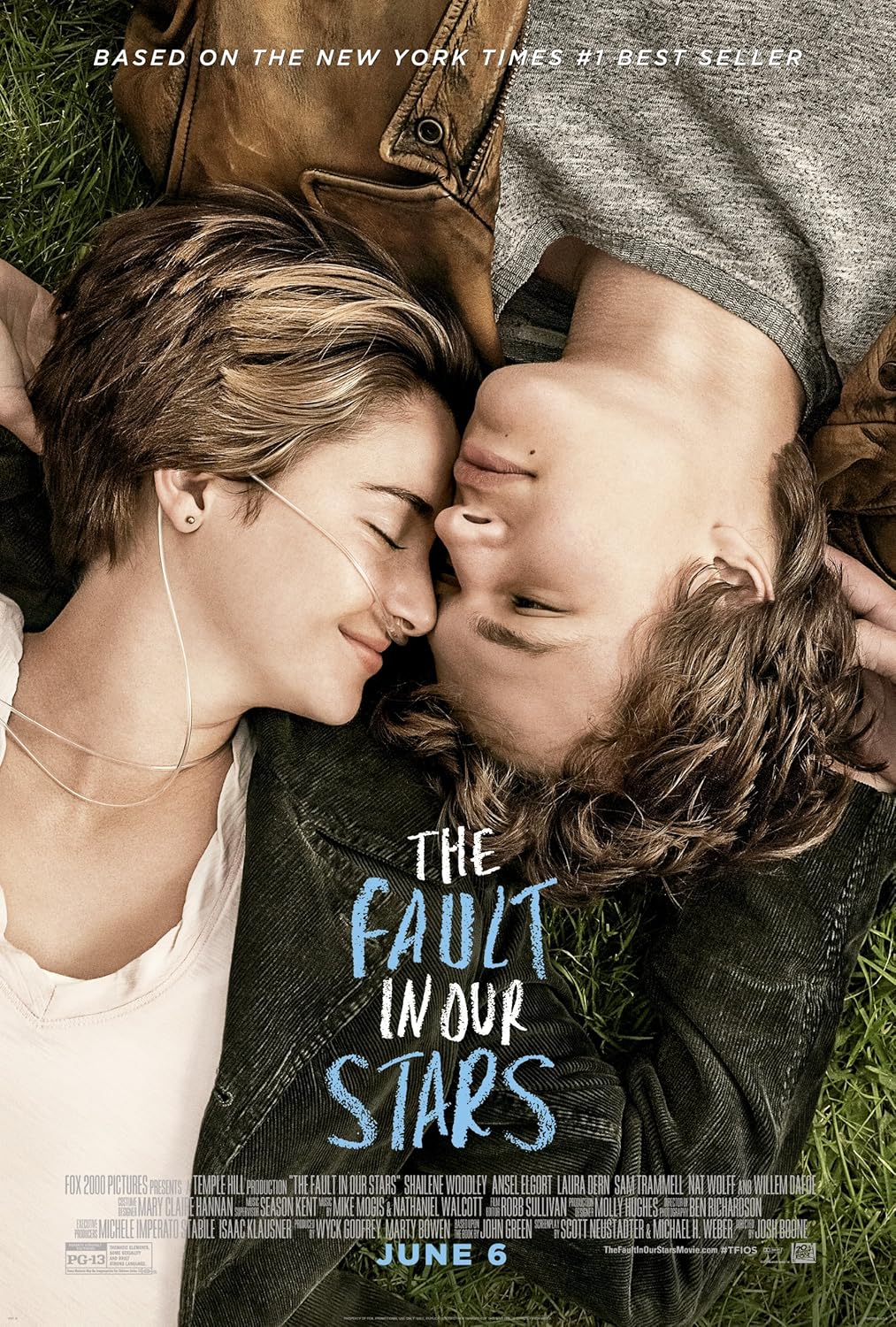
Starring: Shailene Woodley (The Descendants), Ansel Elgort (Divergent), Nat Wolff (Admission), Laura Dern (Jurassic Park), Sam Trammell (True Blood), Willem Dafoe (Platoon)
Director: Josh Boone (Stuck in Love)
Writers: Scott Neustadter & Michael H. Weber ((500) Days of Summer)
Runtime: 2 hours 6 minutes
Release Date: 6 June (US), 19 June (UK)
As if creating a compelling love story wasn’t already a hard enough task, the concept of trying to craft one where your leads are slowly dying seems excruciatingly difficult. But much like the protagonists of The Fault in Our Stars, this is a film that isn’t afraid of insurmountable feats. It stands tall and does its best to tell the story it wants to tell, and despite the odds it comes out a winner.
As mentioned above, The Fault in Our Stars deals with the sensitive subject matter of cancer. But rather than using this concept for overwrought schmaltz, the film goes for a jovial but grounded tone. The film’s story always tries to look on the bright side of life, but it never tries to sugar coat every moment. Whenever I felt the movie was getting a little too trite, they would always reel it back in and drop some heavy stuff. This balanced approach makes the film feel that much more genuine, for what is love and life but a series of ups and downs? I will admit that I think the film does go on a little too long and could have been trimmed a bit here or there, but otherwise the film feels well paced and structured. It’s a film that manages to hit all the emotional beats it is going for, and that is surprisingly rare for most movies in general these days.
Besides a strong and convincing script, every great love story needs its leads and Fault in Our Stars has wrangled together a winning couple in Shailene Woodley and Ansel Elgort. The film ultimately belongs to Woodley, who brings a genuine heart to every moment. There was never a second where I doubted her performance, her personality outshining her character’s affliction and hitting every beat with just the right amount of warmth and honesty. I can’t quite say the same for Elgort, whose overeager optimism occasionally made him feel like a person too good to be true. But every time I began to lose faith in him, Elgort would say or do something that just made him endearing enough, and his strong chemistry with Woodley cannot be denied. The rest of the cast works fine as well. Nat Wolff provides some fun relief as the bland Isaac, even though his character’s arc seemed blatantly obvious from the moment he opened his mouth, whilst Laura Dern manages to squeeze in a real genuine moment between her and Woodley near the close of the film. Willem Dafoe’s role is very brief, but as always with Dafoe he is a magnetic presence whenever he is on screen, especially when playing a bitter bastard like he is here.
The Fault in Our Stars is a sweet but genuine love story, one where the heavy subject matter works to its advantage rather than the other way round. The film ultimately works due to Woodley and Elgort’s fantastic chemistry, supported by a well-crafted screenplay and simple but effective direction, managing to keep the schmaltz levels to the absolute minimum. It will certainly be a tearjerker for some, but the film’s final triumphant message means that you shouldn’t be too depressed when you leave the theatre.
Starring: Jay Baruchel (This Is the End), Gerard Butler (300), Cate Blanchett (Blue Jasmine), America Ferrera (Ugly Betty), Craig Ferguson (Kick-Ass), Jonah Hill (22 Jump Street), Christopher Mintz-Plasse (Superbad), T.J. Miller (Cloverfield), Kristen Wiig (Bridesmaids), Djimon Hounsou (Gladiator), Kit Harington (Game of Thrones)
Writer/Director: Dean DeBlois (Lilo & Stitch)
Runtime: 1 hour 42 minutes
Release Date: 13 June (US), 11 July (UK)
How to Train Your Dragon was a humungous step forward for the folks at DreamWorks Animation. After years of providing Shrek and Shrek-like films, the studio proved they could make a more mature animated film that was more about heart than pop culture references. With that said, I was immediately wary when they announced a sequel. The first film worked so well as a self-contained story, and continuing with no purpose other than the allure of the box office is never how a good sequel comes to fruition. But after finally seeing the finished product, my heart rests easy. How to Train Your Dragon 2 doesn’t just meet expectations. It defies them.
The film’s story avoids the easy option of just doing the same film again but bigger, and does what all great sequels are supposed to do: widen the scope of the world and bring the characters on a raw emotional journey with high stakes. Unlike most sequels that play it safe, How to Train Your Dragon 2 takes some pretty big risks with the storytelling, making for a much more thrilling but also darker film. The Empire Strikes Back constantly popped in my mind as the film went on, but in very much a good way. But with that said, the film never looses the heart-warming charm that made the first film so endearing. The humour remains strong but avoids being too cartoony, and that grimmer tone just makes the triumphant moments that much more powerful. The pacing is expertly balanced, moving from character building to action with nary a fault, and because of that there is never a single dull moment to be had. In a nutshell, How to Train Your Dragon 2 does everything a sequel is supposed to do to near perfection.
If I had any fault with the first film, it was that the character of Hiccup was somewhat of a generic kids’ film protagonist: the clever but bumbling neurotic that doesn’t fit in and no one listens to. The character ultimately works thanks to his relationship with his dragon Toothless, and this time around Hiccup has far more to worry about than fitting in. The film is ultimately Hiccup’s coming-of-age story, and the arc plays out beautifully thanks to the strong writing and Jay Baruchel’s vocal performance (on a side note, it was amusing to finally see a film call out Baruchel on his odd voice and mannerisms). America Ferrera gets a little more to do as Astrid than she did in the original, but like with the last film I wish there was more time to develop her and Hiccup’s relationship. Jonah Hill, Christopher Mintz-Plasse, T.J. Miller and Kristen Wiig all return also, and whilst they basically do the same shtick they were doing last time, it still feels fresh enough and they remain a fun presence; similar comments can be made about Craig Ferguson’s Gobber. Gerard Butler’s Stoick remains a gruff but appealing character, but is also allowed some true emotional moments as well that round him out in many ways. On the new blood front, Cate Blanchett’s Valka feels like a strong addition and provides a lot of the whimsical moments the series does so well, whilst Kit Harington as Eret is a somewhat inconsequential but fun character to add to the mix (and also a role that finally allows Harington to play someone other than Jon Snow or characters exactly like Jon Snow). Where the film falters somewhat is in the villain Drago, played by Djimon Hounsou. Whilst there is a little bit more to him than just “evil madman who wants to take over the world”, it still never feels quite enough to make him feel like more than just a menacing face.
The first How to Train Your Dragon was lauded for its beautiful animation and incredible use of 3-D, and the same can be said for its sequel. The quality and fluidity of the animation is awesome, rendering this beautiful and varied world in much better detail. Whereas the first film was about impressive fire effects, this one animates water, ice and snow to almost photo-realistic levels; whenever a character isn’t directly on screen, you could mistake some of the environments for reality. The 3-D pops just as much as the first, making those flying sequences just as exhilarating as you remember. The production design remains strong, especially in all of the imaginative designs of the new dragon species, with both them and the locations having a very strong Miyazaki influence to them. Finally, John Powell’s score is just as excellent as his work on the first, providing strong retoolings of the original’s themes as well as some great new pieces.
How to Train Your Dragon 2 is exactly the kind of sequel you want but rarely ever get. The story never feels like a rehash and crafts a narrative that builds upon the strengths of the original, expanding this tale of a boy and his dragon into something far more spectacular. The characters are as endearing and memorable as ever, the action sequences are packed with energy and imagination, and the animation quality is easily the best DreamWorks has rendered to date. Aside from a somewhat weak villain and some minor niggles not worth mentioning, this is everything you want from a sequel, an animated film, and just an all-round great film in general. Ultimately, I think the reason both How to Train Your Dragon films work so well is that they’re not just films for kids. They’re films that anyone can enjoy for all the right reasons, and I think both of them are strong enough to become timeless classics that will be enjoyed for many generations to come.
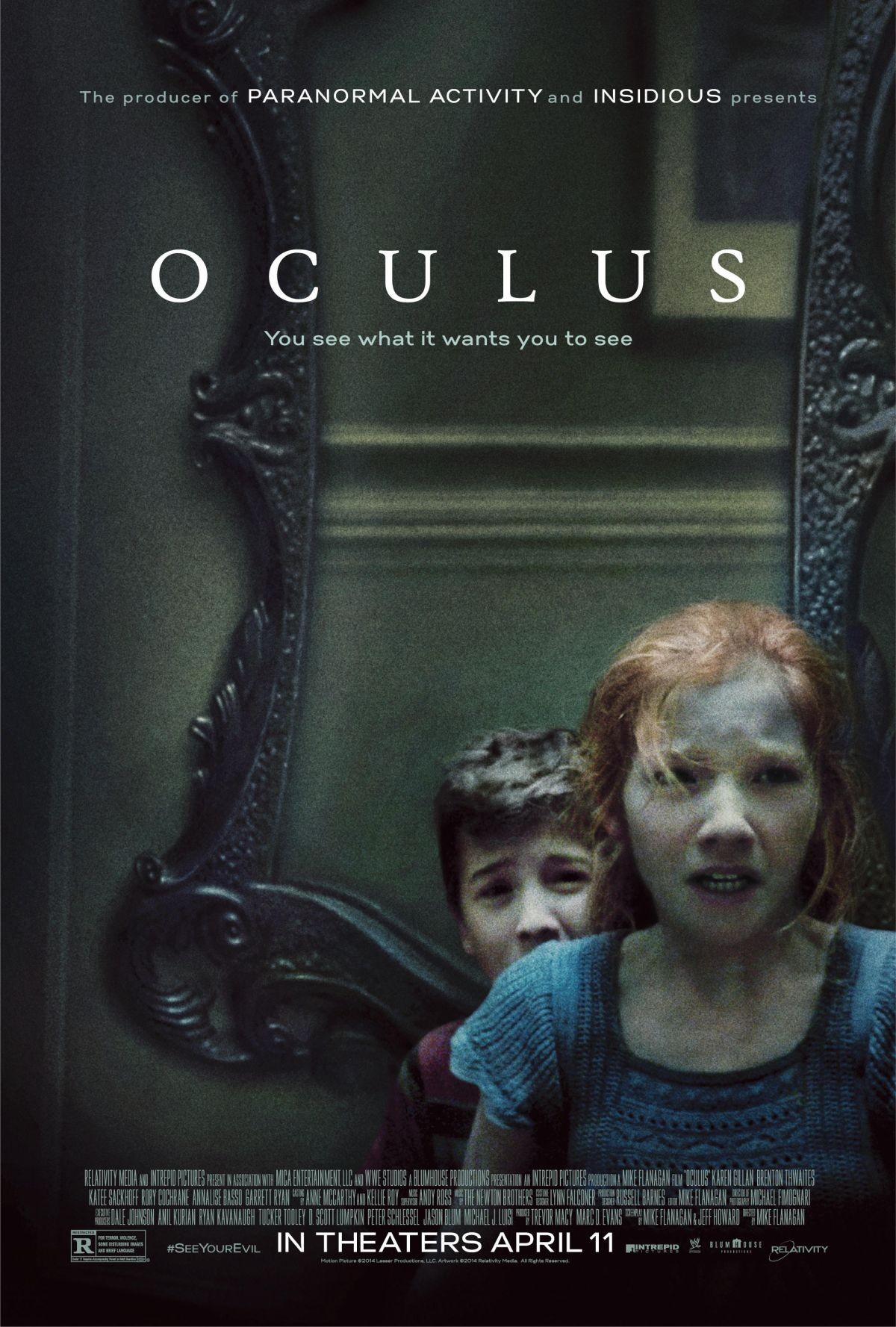
It’s very hard to impress me with horror films, usually because after watching so many I now know all the tricks. They’re fairly simple to make, but extremely difficult to make well, and most don’t cut the mustard. Every year, dozens of horror movies are released but maybe only one or two actually work for me, and even then I often appreciate them for anything but the actual scares. So how does Oculus fare in this crowded market?
Despite containing some gore and slasher elements, Oculus is a psychological horror film at heart; it wants to mess with your mind as much as it wants to shock you with horrid imagery. The film does have a good set-up and a haunting ambiance about it, helping proceedings greatly. The story is told through two simultaneous narratives, one in the past and one in the present but both following the same characters. These stories often reflect and even cross between each other in odd ways, creating a very disconcerting atmosphere and keeping you in the characters’ mindset of “What the hell is going on?” The story has a classic feel to it, but brings modern technology into the mix which it then uses to further f*ck with the characters; it’s nice to see a horror film actually use phones, computers and cameras to its advantage rather than disregard them. The exposition at times can be a bit clunky, as evidenced by an extended scene where Kaylie (Karen Gillan) literally talks to the camera and explains the history of this haunted mirror. I know they’re trying to get away with it because she’s recording all this information for safety, but it’s not exactly a sound way to get across your back-story. The somewhat stitled dialogue penetrates other scenes as well, such as a scene where Kaylie wakes from a nightmare and her fiancé decides to say, “It’s OK. It’s just one of your night terrors”. Yeah, like we didn’t get that. Also, some of the foreshadowing is a little obvious, including one detail that I saw coming a mile away that actually caps off the story, and the film runs just a little too long for comfort.
I’ve not really watched Doctor Who in a long time so I can’t judge Karen Gillan as a whole but here she’s effective, mainly because Kaylie is thankfully not written as some shrieking scream queen. She’s a confident and determined person, but she’s still human enough to be freaked out by all the events going on around her. Brendon Thwaites fares better here as Tim than he did as Prince Plot Device in Maleficent (yes, I’m still not over that), though his early scenes where he’s constantly doing the whole “rational explanation” bit that I so hate in modern horror films can be somewhat grading. Annalise Basso and Garret Ryan play Kaylie and Tim as their younger selves, and they are surprisingly much more convincing than most child actors. I think the film ultimately works because of the brother/sister relationship between Kaylie and Tim, a dynamic not seen in enough films in general, as they both bond and bicker like real siblings in the midst of this terrifying situation. Katee Sackhoff is allowed to show a lot of range here as the pair’s mother, switching from confident mother to paranoid wreck to possessed monster and doing all very effectively. Rory Cochrane as the father comes off as a little too much at points but still provides a good menacing presence, whilst every other character in the movie is basically just a plot point. I know films often have incidental characters, but when you introduce a character’s fiancé and they end up being a footnote in the plot it’s a bit distracting.
As I said before, Oculus’ atmosphere is thick. Whilst the scares themselves aren’t often anything that special, it’s the build-up and aftermath of them that really sinks in. This is thanks to simple but very effective cinematography and editing, timed acutely to the action and blurring the borders between past, present, imagination and reality. The film’s production design isn’t anything special with exception of the haunted mirror at the centrepiece of it all. The look of this thing strikes the right balance, being different enough to be more than just any old mirror but not so overly designed that you’d question why no one else thinks this thing is evil.
Oculus isn’t a game changer in any way for the horror genre, but it has enough going for it to be worth your time. The acting and characters are solid enough, the general idea of the story is captivating and the atmosphere of the piece is genuinely disconcerting. I just wished it trusted the audience a bit more and didn’t feel the need to feed us clunky exposition and make all the symbolism so blindingly obvious.
Starring: Jonah Hill (The Wolf of Wall Street), Channing Tatum (White House Down), Ice Cube (Boyz n the Hood), Peter Stormare (Fargo), Amber Stevens (The Amazing Spider-Man), Wyatt Russell (Cowboys & Aliens)
Directors: Phil Lord & Chris Miller (The LEGO Movie)
Writers: Michael Baccall (Scott Pilgrim vs The World) and Oren Uziel (Mortal Kombat: Rebirth) and Rodney Rothman (Grudge Match)
Runtime: 1 hour 51 minutes
Release Date: 6 June (UK), 13 June (US)
“Sequels, man. They’re rarely ever as good as the original,” said everyone ever. It’s a statement repeated so many times, the statement itself has become a cliché. But for every few inferior sequels, there is that one that equals its predecessor or, in super-special cases, surpasses it. So which camp does 22 Jump Street fall into? Comedy sequels are usually especially tainted to be terrible, so Phil Lord & Chris Miller were really going to have to pull something special to make this movie work. But remember: they are Phil Lord & Chris Miller, so why should we be worried?
Very much like how 21 Jump Street was aware of itself as a reboot of an 80’s property that no one cared about and played with it, 22 Jump Street is aware of itself as a sequel to a highly successful movie with a similar plot and bigger budget and they play with that. The story feels very similar to the first one, but they know it and they both make fun of it and play with your expectations at the same time. It’s a comedy goldmine that keeps giving every time you think it runs dry, though all the great non-meta humour also helps support the film and makes sure the film isn’t just a bunch of deconstructive, self-referential jabs at Hollywood sequels. Taking away the humour, the story itself isn’t quite as good as the first one but the movie works where it really counts, moving at a fast clip and never stooping to crass humour. Oh, and one more hyperbolic note: best end credits sequence from any movie ever. Ever!
The main reason 21 Jump Street worked was because of the fantastic chemistry between Jonah Hill and Channing Tatum and it’s just as sharp here, if not more so. Their bromantic relationship is played to the limits (and I mean THE limits), and the two never seem lost for words as they throw jokes back and forth. They’re a classic comedy duo for the modern age, and I’d love to see these two do more movies together. Ice Cube returns and is even funnier here in what might be the man’s finest performance, even managing to get in on the action this time around. Tatum has a fun subplot with Wyatt Russell as his new BFF, though its resolution feels a bit rushed. Hill’s relationship with new love interest Amber Stevens feels similarly cut short, but the jokes mined from that are so funny that it doesn’t matter. The villains are a bit weaker here than the first, with Peter Stormare’s one joke of being behind the times starts to run thin, but the film quickly wraps up before it starts to get grading. I also wish there was a bit more from cast members of the first film, as Tatum’s old nerd friends only have a couple of walk-ons and Brie Larson’s character isn’t even mentioned; a subject that could have made for a fun self-referential joke, but they totally pass it up. The movie is also super-stuffed with fun cameos, none of which I’ll spoil here, but rest assured they all work extremely well.
Action comedies need to deliver on the action as well as the comedy, and 22 Jump Street manages to deliver on both ends of the bargain. Whilst not exactly as spectacular as something you’d find in a straight-up action flick, the film does have some entertaining set pieces leading to a really fun climax at Spring Break. The cinematography is bright and colourful, and Mark Mothersbaugh’s music brings back a lot of the cues from the first one as well as some fun uses of popular tunes. The visual effects aren’t that important, but their use during the new drug trip sequence is really cheesy in a good way.
22 Jump Street transcends the expectations of the Hollywood sequel by picking it apart bit by bit and then reassembling it into something new but familiar. Everything you loved about the first one is here in spades, and is easily the best comedy of the year so far. Phil Lord & Chris Miller have managed to make two excellent movies in one year, certifying their status as a creative team that can’t be rivalled. Where the franchise goes from here is very much addressed in the film, but I do think it’d be best to stop now whilst they’re on a high or go in a totally new and insane direction for the follow-up. But as for where Lord & Miller go next with their career? That’s the question I wanted answered.
Maleficent, Disney’s reimagining of their beloved classic Sleeping Beauty focusing on it’s beloved antagonist, recently hit multiplexes across the globe to box office success but mixed reviews. What did I think of it?
To quote the late Roger Ebert’s classic review of North: “I hated this movie. Hated, hated, hated, hated, hated this movie. Hated it.”
But until I really thought about it, I couldn’t figure out exactly why. Sure, there were obvious things like the contrived and nonsensical plot, the bland and uninteresting characters, the terribly stilted dialogue combined with the flat direction of the actors, but there was something else deep within this film that just didn’t sit right with me. And when I finally figured it out, this film went from just another bad movie to quite possibly the worst film I’ve seen so far this year. And I saw Sabotage. But to do this, I’m going have to go into SPOILERS. So only proceed if you’ve seen the movie or you don’t plan on doing so. If it’s the latter, best keep it that way.
To give you an idea of what leads into this insanity, allow me to briefly recap the plot. The story opens with a young Maleficent, who’s now a fairy or something with massive wings and horns, flying around through the magical forest without a care in the world. She comes across a young boy with a horrifically overdone Scottish accent called Stefan, who tries to steal some glowing rock that never becomes important (my guess is it was some unobtainium). The two begin to bond through the briefest of montages, culminating in them sharing “true love’s kiss”. But Stefan’s lust for power, hinted at offhandedly when Stefan points at the castle and says, “I want to live there one day”, draws him away from Maleficent. Because all men are evil or some sh*t.
“You see that over there? That’s my poorly defined motivation sitting on that hill.”
So it’s years later and Maleficent has grown up into Angelina Jolie, causing her skin to become paler and bright red lipstick to be permanently stuck to her mouth. The king and his men come to her forest for its “treasures” (again, I’m pretty sure it’s unobtainium), but Maleficent and her not-Ents ward off the evil men and injure the king in the process. Now on his deathbed and without an heir, the king promises the crown to whoever can slay Maleficent. And who should happen to be in the room but Stefan, now played by District 9’s Sharlto Copley with an even more overdone Scottish accent, who I guess went from random farmboy to nurse to the king during…however long it’s been since he dumped Maleficent. With his “evil man” urges kicking in, Stefan sets off to the woods. And this is where it starts to get disturbingly bonkers.
I’m not sure what’s more disturbing: the wings, the horns, or those massive cheekbones.
Stefan reunites with Maleficent, who seems initially bitter about Stefan’s abandonment but then quickly forgives him for being such a power-hungry jerk. Actually, correction: the intrusive and unnecessary narrator tells us she quickly forgives him for being such a power-hungry jerk. After snuggling together by the lake, Stefan gives Maleficent a drink from his flask. But surprise! Stefan has pulled a Snow White on Maleficent and fed her a sleeping potion. Knocked out and I guess now numbed to any pain, Stefan initially plans to kill Maleficent in her sleep but can’t bring himself to do it. Instead, he simply chops off her wings and brings those before the king as proof that he “killed” her. Maleficent wakes up the next morning to discover her wings gone. She cries out in grief, now believing that “true love” is a lie and her path to the dark side begins.
Here’s where the disturbing symbolism kicks in…
If the whole subtext wasn’t made clear in that last paragraph, I’ll spell it out for you. Stefan seduces, drugs and rapes Maleficent. Not literally, but he might as well have.
(Feel free to burst into an overly jovial and awkwardly out of place rendition of “Once Upon A Dream” here to offset the dirtiness of that last statement.)
Wow. Just…just…wow. I never thought I’d see the day where the main motivation of the character of a Disney film is revenge for their metaphorical defilement. Words can barely describe it, but I’m going to try anyway.
Firstly, the lead-up to this event. Maleficent forgives Stefan for ignoring her and lusting after power instead of staying with her. Since when did one of Disney’s most iconic villains become one of those abused girlfriends who refuse to leave their dick boyfriends because “he didn’t mean it. He’s sorry. He really does love me.”? Even before we get to the wing cutting, I could tell something was up from that. The way the narrator tells us that “Maleficent forgave him for his follies”; it came off with a very disturbing vibe. Then Stefan drugs her with a potion that might as well be labeled “Ye Olde Rohypnol”. That doesn’t help sway this metaphor either.
It’s a real accomplishment when the malformed half-alien man you played is less disgusting of a character than this.
But now the “rape” itself. Several times before this, we’ve seen Maleficent fly around her forest and the sky. Her wings represent her freedom, her individuality, her feminine prowess and, most prominently, her innocence. When she does this for the first time as an adult, we get the sense she’s doing it to distract her from the fact she’s felt lonely since Stefan lost interest in her. It’s clear that she’s now a woman, but she still wants that “true love” promised to her as a child. So when Stefan returns to her, she forgives him because she thinks she’s going to get that love. But when Stefan her wings, he takes away what defines her and leaves nothing but an empty shell. The young girl who believed in true love has been destroyed, and she weeps and screams in agony when she realises what has happened to her. Stefan effectively robs Maleficent of her innocence.
Enjoy those wings while you can, Maleficent. Because soon the evils of man will rob you of your ability to escape.
Now let me make this clear: I’m not saying that turning Maleficent into a rape revenge story is a bad idea. If done in a way that lets it go balls to the wall and rip the source material to shreds the way someone like Neil Gaiman or Alan Moore might do, it has the potential to be an interesting deconstruction of the fairy tale. The problem is that it isn’t that at all. The filmmakers don’t have the balls to go through with it, and it just makes the film even more of a jumbled mess of ill-conceived ideas than it already is. If the story had been bright and whimsical but then after Maleficent loses her wings it becomes a darker story, I would have been more on board. But the film is still trying to appeal to the kids in the audience, throwing in bad comic relief such as the three fairies (who, by the way, have gone from the most competent characters in Sleeping Beauty to Three Stooges levels of buffoonish) and instead of an outright revenge flick we get a story about Maleficent learning to become good again through her sudden connection to Stefan’s daughter Aurora. Bull. F*cking. Sh*t.
Maleficent: mistress of all evil and reluctant nanny.
So you’re going to go as far as to have pretty obvious symbolism for rape in your kids’ movie, but then you’re going to sugarcoat it and turn it into a weak attempt at girl power? I’m sorry, I don’t buy it. If you want me to take that subtext seriously, you’re going to have to back it up and make this go in a far more destructive direction. For f*ck’s sake, Maleficent’s name is derived from the word ‘malefic’, which means ‘causing or capable of causing harm or destruction, especially by supernatural means’. Why isn’t she going all out crazy on Stefan and the humans, Magneto style? Why is her joy in causing Stefan pain so short-lived before she starts playing Fairy Godmother to Aurora for no adequately explained reason (I like to think Maleficent sees Aurora as the child she and Stefan never had, which is just another whole shade of wrong.)? It almost feels like the film was initially pitched as more aimed towards an older audience, but then Disney made them tone it down to have broader appeal. If the movie ever had an edge to it, it’s been lost and, much like Maleficent’s wings, any potential power the subtext could have had has been chopped off at the roots. If after all of that bad sh*t happened to her she became the exact character she was in Sleeping Beauty and stayed that way, making her outright villainous but still retaining that sympathy because we can get behind her motivations, this could have maybe worked. Say what you will about Oz The Great and Powerful, but when The Wicked Witch of the West turns evil in that movie she becomes fully evil. Here, Maleficent almost immediately regrets cursing Aurora and tries to reverse it but can’t, and the only way to break the spell is “true love’s kiss” which, because of her scorning, she made the breaker of the curse because she doesn’t believe it exists.
Oh yeah, the prince is in the movie. Basically he’s here as a plot device and as a way to rip off the end of Frozen.
But the main reason I take umbrage with this whole concept is because it shockingly comes across as both misandristic and misogynistic at the same time. Now there’s an oxymoron for you! The story paints all of the humans, but especially the men, as complete douches who want nothing more than to rule over everything, and it just comes across as shallow and lazy feminism. I know you can say it’s a fairy tale where everything is morally black or white, but if you’re going to try and give Maleficent all of these shades of grey, why not portray Stefan that way too? Why not make his motivations and character more complex and interesting, or give him a character arc beyond becoming MORE crazy and power hungry as the film goes on? Instead, Stefan becomes a cardboard cutout of a misogynist with nothing up for interpretation.
“Why am I evil? I don’t know. Testosterone or something, I guess.”
But by doing this, it all backfires in the message of the film’s face. The story makes Maleficent a woman scorned in order to give her motivation. But my question is: why, of all the things in the world, did they choose love? Oh right: because she’s a woman, and apparently that’s all they care about. By making her motivation so insultingly simple and belittlingly broad (in both senses of the word), it completely undermines the point it’s trying to get across. Maleficent is, essentially, trying to be a power fantasy for women who feel they’ve been wronged by men and wish they could take revenge; basically Sucker Punch but without the fetishistic tendencies.
I know what you’re about to say: “What about all the male power fantasy movies we always see? Why isn’t it OK for it to be flipped around on men for once?” I’m not saying that at all. I’m all for strong female characters. You don’t see enough of them and even when they try they usually get it wrong. Maleficent is one of the ones that gets it wrong. Instead of trying to subvert, it simply reverses the target. Instead of trying to take a more interesting view on the subject of an abusive relationship, it panders to the female audience for lazy empowerment. And that’s what I meant by that aforementioned oxymoron: it’s misandristic because it paints the male characters in such a despicable light, but it’s misogynistic because the film basically says, “If you wrong a woman, she will turn evil and become hell-bent on taking revenge on you”. Because all women who have an abusive boyfriend apparently become obsessed with causing them misery.
So Maleficent’s motivation went from being “angry because she’s not invited to a party” to “angry because her childhood sweetheart turned out to be a dick”. Not sure that’s an improvement.
What I’m trying to say is: after years of women being portrayed in films and other media as curvy objects meant to fulfil men’s sexual desires, wouldn’t you rather see the women try to take the high ground? Wouldn’t you rather see them be the better people instead of just throwing the hate back in the other direction? Because have both sides throwing venom at each other doesn’t solve the problem. Yes, men more than deserve some sh*t for how women are often treated, but not like this. Can’t we all just act like modern and civilised adults, put aside our grievances, and make something a bit more mature? And by mature, I don’t mean adult or dark. By mature, I mean balanced, thought-out, and provoking in the right way. Maleficent fails as a piece of feminist media because it doesn’t do anything to make itself better than chauvinists it’s fighting against, and by making its protagonist an allegorical representation of a rape victim it highlights this problem with flashing lights and diminishes any respect I could have had for the film. That’s why I find it more than just another poorly made Hollywood blockbuster. That’s why I find it far more egregious than boring trash like Pompeii or I, Frankenstein. Because it horrifically and shockingly fails to do what it’s trying to do. Because of this movie, I will never be able to watch Sleeping Beauty the same way again (for all the wrong reasons), and I’m dreading to think what warped subversion Disney and Kenneth Branagh’s Cinderella film will make when it is unleashed next year.
Starring: Angelina Jolie (Wanted), Sharlto Copley (District 9), Elle Fanning (Super 8), Sam Riley (Byzantium), Imelda Staunton (Harry Potter and the Order of the Phoenix), Lesley Manville (Vera Drake), Juno Temple (The Dark Knight Rises)
Director: Robert Stromberg
Writer: Linda Woolverton (Alice in Wonderland)
Runtime: 1 hour 37 minutes
Release Date: 28 May (UK), 30 May (US)
Reworkings of classic fantasy stories are all the rage these days. Whether it be Snow White, Little Red Riding Hood, Alice in Wonderland or The Wizard of Oz, there’s always some film that reinterprets an old tale or is a prequel or a sequel or whatever on the market. Sometimes they work, but a lot of the time they don’t. Maleficent is the latest in this trend, retelling the story of Disney’s own Sleeping Beauty, the twist here being that it’s being told from the perspective of that film’s villain; it’s basically Wicked, but with less interesting source material to work from. Based on the few things I’d heard about this film, I didn’t expect much from this film, but what I got was far worse than I could have possibly imagined.
Let’s all be honest here: the original Sleeping Beauty doesn’t hold up very well. Yes, the art direction and animation is beautiful and Maleficent herself remains one of Disney’s most iconic villains, but the story is incredibly bland and the characters are exactly the kind of one-dimensional dopes that Enchanted was making fun of. There is ample room for improvement and embellishment in this story, but Maleficent never really takes full advantage of this opportunity, instead making the bizarre decision to turn this simplistic fairy tale into what is essentially a kid-friendly version of I Spit on Your Grave. No, I am not kidding; more on that disturbing note later. The first act of the story tells Maleficent’s origins, casting her in a good light before showing her descent into darkness. The problem is that her motivations for turning evil are pretty weak and her transformation into the character we all know and love to hate could be kindly described as ‘out-of-f*cking-nowhere’. It would be fine if she then stayed evil throughout, but immediately the film starts backpedalling and goes “No, she’s still actually good. Honest!” By the end of it all, Maleficent comes off as misunderstood not because of her appearance or her actions, but because it’s bloody hard to actually understand what’s going through her head. One minute she’s cursing Aurora to eternal sleep, the next she’s saving her life because…because! The entire film is full on contrived writing and on-the-nose dialogue, making it hard to invest in the story, concluding in an ending that seems like it’s trying to come off as fresh and inventive, but it ends up feeling like a bad rip-off of the end of Frozen. Top it all off with terrible pacing and obnoxiously constant narration that spoon-feeds you the narrative, and Maleficent ends up doing little to make this tired old tale seem any more interesting and actually does more to destroy it.
Angelina Jolie seems to have been born to play Maleficent, and for a brief moment in the film she is truly great. When she’s allowed to go full on nefarious, she oozes with villainy and eats up every moment. Unfortunately, this is only for a few scenes because before and after these fleeting moments the character isn’t that compelling. The film’s way of making her a ‘tragic hero’ is ultimately by making her a woman scorned by romance because her childhood love Stefan (Copley) seduces her, drugs her and rips off her wings. Ignoring for a second the baffling and icky subtext of that entire sequence of events that I could easily write a venomous deconstruction of (it rhymes with ‘schmape’), it’s a poor motivation for this character to suddenly become evil, and her turn back to the light is even more poorly handled. Jolie herself seems to putting her all into it, but the material she’s given just doesn’t give her enough to stand on. Stefan himself is played completely for villainy, his own motivations being he wants the crown because…I guess all humans are meant to be inherently evil or something, and Copley plays the role incredibly hammy and with such a terrible Scottish accent that he seems to be choking on it; he ends up being less a threatening presence and more simply unintentionally hilarious. Aurora herself has been given barely anymore definition than she had in the original, with Elle Fanning playing the empty shell so overly whimsical that she looks more like she belongs in an ad for laundry detergent than a fantasy film. The fairies (Staunton, Manville and Temple), the most competent characters in the original film, have been completely reversed into bumbling waifs who end up being so useless that Maleficent herself ends up subtly doing most of the parenting herself. The idea of giving Maleficent’s crow Diaval a bigger role and making him human half the time is an interesting one, but Sam Riley isn’t given much more to do than be the voice of reason on Maleficent’s shoulder. And don’t get me started on what they’ve done to Prince Phillip (or, as I like to call him, Prince Plot Device), who arrives late in the second act to no fanfare, seems put in just to move the plot towards its majorly ‘revisionist’ climax, and somehow has even less of a character than he did in the original.
Director Robert Stromberg mainly has a background in production design, having won Oscars for his work on Avatar and Alice in Wonderland. Whilst it is painfully obvious the man has no flair for directing actors based on the flat or overdone delivery of the dialogue, at least the movie looks gorgeous. The cinematography and art direction are wonderfully done, capturing the unique style of the original Sleeping Beauty whilst injecting elements of dark fantasy and a healthy dose of Miyazaki-esque whimsy. The costumes are also well designed and fitting, especially those worn by the title character herself, the visual effects are well done (most notably any time Maleficent flies), and the score is fitting if overdone at points.
Maleficent is a baffling mess of a film. The story is contrived and achingly paced, the main character’s motivation is sudden and dripping with bewilderingly mishandled subtext that borders on offensive the more you think about it, and everyone else ends up feeling somehow even more of a bland caricature than the characters in the original. Maleficent was a fascinating character because we didn’t know much about her; she was a purely evil force of nature and that’s all we needed in such a simplistic story. But, like how every remake of a classic horror film does these days, by giving her a back-story and some sympathy the character’s allure gets completely destroyed. I get the impression that if handled by anyone other than Disney themselves, this could have been an interesting deconstruction of the fairy tale, but the whole affair seems neutered by the marketing machine that leaves a battered and confused pile of ‘what?’. All I can say nice about it is that it looks pretty, but looks alone can’t save anything. By the end of the film, I certainly wished the whole endeavour was just a bad dream.
Starring: Tom Cruise (Oblivion), Emily Blunt (The Adjustment Bureau), Bill Paxton (Aliens), Brendan Gleeson (The Guard), Noah Taylor (Vanilla Sky)
Director: Doug Liman (The Bourne Identity)
Writers: Christopher McQuarrie (Jack Reacher) and Jez Butterworth & John-Henry Butterworth (Fair Game)
Runtime: 1 hour 53 minutes
Release Date: 30 May (UK), 6 June (US)
Tom Cruise is at it again. Despite his age, he’s still pumping out movies as frequently as ever and, as of late, managed to keep them consistently good for the most part. Cruise is no stranger to sci-fi, but Edge of Tomorrow is possibly the most outlandish of his alien encounters yet. Does this bombast work to the man’s favour and create another hit, or has Cruise’s lucky streak hit a bumper?
The premise of a character stuck repeating the same events over and over again until they get it right is hardly a new one; Groundhog Day and Source Code are two obvious examples of this type of story. That doesn’t necessarily mean that Edge of Tomorrow is an unoriginal idea, far from it, though it’s hard not to have that kneejerk reaction. But whilst those previous films were a comedy and a sci-fi thriller respectively, Edge of Tomorrow is far more about the action, using the premise as much for creating spectacle as much as crafting funny and tense situations. The film manages to straddle a good tone, injecting just enough humour into the proceedings without losing the intensity of the story. The plot itself is well handled, never falling into the swamp of paradoxes and illogic that time travel stories can often get bogged down in. Other than one plot beat that made me go “Why didn’t you just do that earlier?”, the story manages to chug along at a good clip, allowing plenty of time for both the plot and the characters to develop. The time loop stuff is handled excellently too, mainly because the film never feels the need to always show the loop starting again, sometimes cutting back to the same situation repeatedly for dramatic and comedic effect. I also love a good movie with an ambiguous ending; it’s not exactly Inception, but I do really enjoy how they handled the last few seconds of the movie.
Tom Cruise, as reliable an actor as he is, does often feel like he’s playing the same character over and over with only slight variations. Surprisingly, Edge of Tomorrow eschews this and presents Cruise with a character I don’t think he’s really done since Rain Man: a jackass. Bill Cage is not the all-American badass with the sweet moves and the nice hair. He’s a selfish coward, one trapped in the last place he wants to be, and once stuck in his time loop he is both frightened and bemused by it. It’s great to see Cruise play vulnerable for a change, and he does it surprisingly well, but he also manages to remain a relatable and sympathetic character that you want to see become better; somewhat comparable to Sharlto Copley’s role in District 9. The role of badass is handled by Emily Blunt’s Rita Vrataski and she does that job gracefully, embodying that no-nonsense Ripley-esque demeanour excellently whilst not losing her own natural charm and comedic temperament. Her and Cruise’s relationship works brilliantly, mainly because it is refreshingly not played with attraction at the forefront. It’s rare to see a man and a woman star together in a movie and not have them hook up, and whilst near the conclusion of the story this is somewhat undercut, their relationship ends in a more debatable way that ultimately doesn’t totally undermine their camaraderie. It’s good to see Bill Paxton back, especially in a part so similar to his classic role of Hudson from Aliens, and the man remains as strangely endearing as ever. The rest of the cast isn’t as important but all do fine: Brendan Gleeson gets to be scowly and dim, Noah Taylor works as a good “plot exposition dumper”, and even Cage’s fellow soldiers feel just lively enough that you can remember them all (just maybe not by name), but the film ultimately belongs to Cruise and Blunt.
Edge of Tomorrow is a large-scale film in both story and budget, and for the most part it all works well. I really love the design and atmosphere of the film, crafting a future that seems plausible but still full of sci-fi goodies like mech suits and holographic displays; it’s kind of like Gears of War, but with less steroid abuse. The design of the aliens also feels very unique; mainly I’m glad not to see just the same insectoid blandness all aliens seem to be these days. The action sequences are fun and interesting, mainly because of the abilities the mech suits endow on our heroes, but spotty camera operation and quick editing sometimes spoils them. The visual effects look pretty convincing, mainly thanks to the grounded design of the picture, as is the sound design, and the score keeps the pace flowing but honestly isn’t that memorable.
Edge of Tomorrow manages to be smart and entertaining in equal measure; it’s a sweet blend of smart sci-fi ideas and spectacular action spectacle. The story is riveting and the central performances are top notch, making it a great excursion for those of you who love a good plot, but it’s also got plenty of explosions and gunfire for those looking for pure entertainment. It’s just an all-round solid blockbuster with only minor gripes to pick, which is surprisingly rare in the current cinematic landscape. If you want to go have some fun but don’t want to completely turn off your brain, Edge of Tomorrow should deliver that to you in spades.
Starring: Seth MacFarlane (Ted), Charlize Theron (Prometheus), Amanda Seyfried (Les Miserables), Neil Patrick Harris (How I Met Your Mother), Giovanni Ribisi (Avatar), Sarah Silverman (Wreck-It Ralph), Liam Neeson (Non-Stop)
Following up on a huge success is a daunting task no matter what field you’re in. After being a prominent figure on TV for a while with the likes of Family Guy and American Dad, Ted was the feature debut of Seth MacFarlane and it was a glorious one at that. It was funny, endearing and was a box office smash with a sequel on the way. But before returning to familiar ground, MacFarlane has decided to venture out into the frontier for A Million Ways to Die in the West. Does this sophomore effort firmly establish him as a talent to watch, or is it shaky enough to make Ted seem like a lucky shot?
Plot wise, Million Ways is pretty standard fare; from the start, it’s obvious how everything is going to play out. What separates the film is, of course, MacFarlane’s unique brand of humour, but unfortunately the comedy doesn’t always work mainly due to the inconsistent tone of the film. Whilst Ted had a very similar feel to MacFarlane’s TV shows so his humour translated with little effort, Million Ways plays it a little more serious and cinematic. When you get right down to it, the film is a sweet little love story surrounded by western trappings, but most of the jokes don’t mesh with the visual and tonal aesthetic. I get that they’re being on-purposely anachronistic, but a lot of the gags feel out of place or, even worse, really juvenile and unpleasant (laxatives and sheep dick, anyone?). Sure, there are plenty of laughs to be had, but there were no huge or quotable knee-slappers and for every chuckle I got there was a groaner or two that killed the vibe. The film is also somewhat hampered by poor structuring. For example, Giovanni Ribisi and Sarah Silverman’s characters and their subplot plays heavy in the first act of the movie but then they disappear until near the end and their story is wrapped up way too quickly, whilst Liam Neeson similarly disappears after one early scene before showing up for the final act. I will say the film is decently paced and I was never bored, but Million Ways has far too many bumps in the road for it to be a consistently pleasant journey.
Seth MacFarlane is certainly a very talented person, and after hiding behind a CG bear in his last outing he takes centre stage here to…mixed results. MacFarlane is not a terrible actor and he remains a charming and likable screen presence, but my issue is less with the performance and more with the character MacFarlane has written for himself. Albert Stark often feels less like a rounded comedic character and more like a self-insert ‘woobie’ of a protagonist; Stark is constantly told what a kind, funny, stand-up guy he is whilst he constantly makes dry remarks and observations, and beyond gaining a little courage and hindsight he doesn’t change much by the end. MacFarlane ultimately lacks edge and comes off as way too simpering for his own good. Charlize Theron is a far more interesting character, managing to balance the serious and the comedic very deftly, but despite good chemistry with MacFarlane I never really got why she fell for this guy beyond “he’s nice”. Ribisi and Silverman’s subplot is one ripe for comedy, but the film constantly throws them under the bus and feel somewhat pointless by the end. Neil Patrick Harris’ snooty Foy got the most laughs out of me, though I felt he lacked a proper comeuppance by the end, whilst Amanda Seyfried feels like little else other than a plot device (somewhat intentionally, sure, but still bland). Liam Neeson plays the whole movie straight, which certainly works in his favour, but he lacks enough screen time to become a truly threatening presence. The film is also chock full of cameos; some of them are funny, but many of them feel inorganic and stop the movie out of nowhere with no relation to what is actually going on.
Million Ways certainly makes the effort to look like a classic Western, and on a technically level it certainly feels much more unique than most comedies. The music creates the perfect vibe, the costumes and production design feel authentic to the period, and even the cinematography evokes the cowboy tales of old (though I think shooting on film rather than digital would have helped add to rustic aesthetic they were going for).
A Million Ways to Die in the West certainly isn’t a complete miss, but it barely passes by. The plot is basic and sloppy, the characters aren’t the best defined, and the humour throws far too many misses. But despite all of the obvious flaws I did find myself caught up thanks to MacFarlane and Theron’s chemistry, and there were just enough genuine laughs to keep me entertained. Fans of MacFarlane will probably enjoy it enough, especially those with less discerning tastes, but it’s nothing you need to see in the theatre and it certainly comes nowhere near the quality of the man’s previous efforts.









 Alternative Lens