X-MEN: DARK PHOENIX – an Alternative Lens review

Starring: James McAvoy (Split), Michael Fassbender (12 Years a Slave), Jennifer Lawrence (The Hunger Games), Nicholas Hoult (Mad Max: Fury Road), Sophie Turner (Game of Thrones), Tye Sheridan (Ready Player One), Alexandra Shipp (Love, Simon), Kodi Smit-McPhee (The Road), Evan Peters (American Horror Story), Jessica Chastain (Molly’s Game)

Writer/Director: Simon Kinberg (X-Men: Days of Future Past)

Runtime: 1 hour 54 minutes

Release Date: 5th June (UK), 7th June (US)

And so this is how the X-Men franchise comes to an end. After helping usher in the dawn of the modern superhero movie, the franchise has represented some of the best and worst the genre has had to offer, expanding and revolutionising in some entries whilst feeling like an outdated relic in others. With the property now officially back in the hands of Disney as part of their quest to create a monopoly on pop culture, 20th Century Fox has exhaled their last gasp of air (not counting the long-delayed The New Mutants) in the form of Dark Phoenix. What was at one point meant to be a new beginning for the franchise must now serve as its conclusion, and the final result is an absolute train wreck. It pains me to say it, but I think it’s true: X-Men: Dark Phoenix might just be the worst film in the franchise to date. Yes, worse than the one where Wolverine has his memory erased by amnesia bullets.

Picking up yet another decade after the prior instalment Apocalypse, Dark Phoenix was from the beginning made as something of a reprieve for the mishandling of “The Dark Phoenix Saga” in The Last Stand (a film co-written by this entry’s writer/director, so that’s totally reassuring). With this attempt, the filmmakers have learnt that this epic and beloved storyline from the comics deserves a film to itself, and not as a disparate subplot in an otherwise unrelated plot. Unfortunately, that’s about the only thing they’ve learnt. The screenplay is an utter shambles on every level, with its impatient pace and structural instability quickly allowing the story to unwittingly fall foul to every mistake The Last Stand made and more. There’s barely a moment to breathe from the word go as we are bounded from one plot point to another and characters disgorge horrendous dialogue. Most spoken words are just plain exposition, and any sense of character introspection takes the form of them just blurting out how they feel about themselves and others.

Barring a throwaway subplot about the progressing-but-precarious state of human-mutant relations (which seems to jump from “mutants are now superheroes and give speeches at the White House” to “let’s round them up at gunpoint and lock them in concentration camps” and back in less than a day), it doesn’t even thematically feel like an X-Men film anymore. If you removed the recognisable characters and iconography, this would just be a below-average alien invasion movie, and its slapdash attempt to cap off the franchise (on top of just being a rip-off of The Dark Knight Rises) feels cheap and unearned when the story it tells relates in no way to the themes and characters it began with. There are many adjectives one could use to describe Dark Phoenix, but the easiest and most damaging is that it’s boring, and I should not be saying that about the movie where a team of superpowered civil rights metaphors fights their friend possessed by a cosmic entity and a swarm of bullet-absorbing extraterrestrials.

The X-Men have always thrived in character-driven narratives, with their storylines centring their disparate personalities and interpersonal relationships no matter how outlandish or grandiose. That’s why “The Dark Phoenix Saga” in the comics was so effective in how it busted a hole in the team’s heart, and the lack of that character focus is why now both of its adaptations have fallen so short. Apocalypse did a subpar job of introducing the revamped X-Men line-up and the film does practically nothing to develop them or the remaining players from First Class. Sophie Turner is saddled with even less to work with than Famke Jannsen’s Jean Grey, and though she gives it her all in her performance the material is lacking on every level. We as an audience have barely gotten to know this version of Jean before her transformation into Dark Phoenix, and once again the shift lacks impact when she’s already been established as a troubled loner struggling with her powers as opposed to the comics’ more startling leap of “timid girl next door” to “vengeful intergalactic fire goddess”. But at least Turner has some character dynamics to play with, as the rest of the core team are nothing more than cardboard cut-outs here. Despite his relationship with Jean, Tye Sheridan’s Cyclops is given very little to do, whilst Alexandra Shipp’s Storm and Kodi Smit-McPhee’s Nightcrawler are basically just roster fillers. Even Quicksilver is shoved off to the sideline for most of the film with little fanfare (probably because they realised his powers make him a living deus ex machina), which is a shame considering Evan Peters is the only cast member who still looks like he’s having any fun.

When it comes to the returning cast, James McAvoy is given the most precedence in his final turn as Charles Xavier, but even he seems tired at this point. His character seems to have taken a sudden turn between instalments, capitulating to government requests and refusing to acknowledge his mistakes, and it not only lacks solid motivation but it feels totally out of step for the character; it gives him an arc, but an incredibly contrived one. Michael Fassbender doesn’t enter the picture until about halfway through as Magneto as he goes through yet another “I’ve reformed my ways but find myself pulled back into the conflict for revenge” plotline. Fassbender is as good as ever but he just doesn’t have much to do, barely even sharing much screen time with Xavier. Nicholas Hoult is kind of just there as Beast when he’s not acting totally out of character, whilst once more Jennifer Lawrence looks she’d rather be anywhere else than playing Mystique again. The only new major character is Jessica Chastain as the film’s villain Vuk, and the fact I couldn’t remember the character’s name until the credits should tell you all you need to know. Chastain’s talents feel utterly wasted as this bland and underdeveloped antagonist, with her and her fellow alien invaders lacking anything distinctive in their design or motivation; they’re basically just the Romulans from JJ Abrams’ Star Trek combined with tired Invasion of the Body Snatchers tropes. And people said Apocalypse was a forgettable and clichéd villain!

Longtime writer/producer of the series Simon Kinberg makes his feature directorial debut with Dark Phoenix, and his lack of experience behind the camera is blatantly evident. Everything about the direction in this film, down to even the basic blocking of scenes, is passable at best or amateurish at worst. There is a severe lack of action sequences throughout, and all of them in the first two acts are poorly choreographed and severely lacking in imagination, blinking by so fast and with little fanfare that they barely serve as a respite from the endless plodding exposition. Proceedings then take a sudden turn for the mean-spirited in the third act’s climactic train sequence (which was entirely and obviously cobbled together in reshoots by the second unit director), which is just a cavalcade of nonsensical CGI carnage so uncharacteristically violent that it makes Man of Steel look happy-go-lucky. On top of that, everything else about the film’s aesthetics is just plain awful. The cinematography is workmanlike and has a horribly oversaturated colour palette, the visual effects are mostly just an underwhelming cavalcade of outdated particle effects, the production design completely fails to capture the 1990s setting like the previous entries did for their decades, Hans Zimmer’s score is so indistinctive that it could have been composed by any number of his protégés and imitators, and the Frank Quitely-inspired X-Men costumes look so unappealing on camera that they’ll make you beg for the return of the old black leather uniforms.

X-Men: Dark Phoenix is an unmitigated disaster of a final entry to a tumultuous franchise that somehow laps The Last Stand’s dire attempt at the storyline. There isn’t a single element in this film that is salvageable, and the only reason it isn’t getting a lower score is because it isn’t actively offensive. In a year so full of long-running franchises coming to momentous conclusions, this 19-year-old saga that helped revolutionise superheroes on film and gave us some of the finest examples of the genre here receives the cinematic equivalent of a pauper’s funeral; an unceremonious, barebones affair that can’t pay proper tribute to a series so full of good memories. Once they’ve scraped away the aforementioned leftovers that is The New Mutants, I think it’s best that Marvel let the students of Xavier’s School for Gifted Youngsters mourn for a while before being reborn inside their cinematic universe. And who knows? Maybe, one day after the dust settles, we will get a good version of “The Dark Phoenix Saga” on screen. Third time’s the charm, right?

FINAL VERDICT: 2/10

cropped-screen-shot-2017-10-01-at-19-46-22.png

GODZILLA: KING OF THE MONSTERS – an Alternative Lens review

Starring: Kyle Chandler (Friday Night Lights), Vera Farmiga (Source Code), Millie Bobby Brown (Stranger Things), Bradley Whitford (The Cabin in the Woods), Sally Hawkins (The Shape of Water), Charles Dance (Last Action Hero), Thomas Middleditch (Silicon Valley), O’Shea Jackson Jr. (Long Shot), Ken Watanabe (Inception)

Director: Michael Dougherty (Trick ‘r Treat)

Writers: Michael Dougherty & Zach Shields (Krampus)

Runtime: 2 hours 11 minutes

Release Date: 29th May (UK), 31st May (US)

You’d think making a Godzilla movie that stands up better against a series of bonkers monster movies starring guys in rubber suits blindly thrashing at each other would be easy, right? Sadly, the world doesn’t work that way. Whilst the 2014 Gareth Edwards film did give us a fresh perspective on the pop culture icon and was above and beyond Roland Emmerich’s disastrous 1998 attempt, it featured a very camera-shy titular monster and instead focused on unengaging human characters with barely a character trait to share between them. Fans have been clamouring for a modernized all-out brawl featuring their favourite Godzilla creatures in the vein of Destroy All Monsters for years, and with King of the Monsters that is certainly what they’ve been promising. The final result is a gonzo B movie spectacle that lacks much substance but is instead packed to the brim with action spectacle.

Whilst it respects much of the mythology set up by its predecessor, this sequel tonally shifts away from the dour grounded approach of Edwards’ film and takes on a style closer in spirit to its sister production Kong: Skull Island. Whilst there is some build-up of tension before proceedings really kick into high gear, the film embraces showing the monsters right off the bat and relies much more on intensity rather than mystery to keep up the suspense. The plot is a fairly standard sci-fi adventure with very few surprises, and much of the narrative is conveyed through the cast barking exposition at each other between action set pieces. Whilst this approach is somewhat regressive and has definite room for improvement in areas like character motivation and world building, the new direction not only feels like a call-back to the similarly ludicrous plots of the old Toho productions but also just feels more honest. When you look at them on paper, both this and its predecessor have about the same amount of depth. However, whereas the prior film cloaked itself in an austere mood in a shallow claim at artistry, this one embraces its narrative simplicity and is unashamed of being a big dumb summer blockbuster. The film is not without some depth, coating its MacGuffin-led save-the-world plotline with environmental messages and mythological allegories that give proceedings an appropriate level of gravitas, whilst there are also plenty of nods to the classic films in both plot and design that’ll give hardcore Godzilla fans something to feel smug about.

The previous film often attempted to compare itself to Jaws, focusing on the human protagonists and eschewing showing the monster until necessary, but forgot the reason it worked in Jaws was that the characters were vibrant and interesting apart from the whole shark business. Like with the plot, King of the Monsters eschews such pretentions and packs the cast full of stock genre characters bolstered by the natural personalities of the actors playing them. Kyle Chandler is the nominal lead as Dr. Mark Russell, and though he brings a lot of energy and charm to his performance the character is somewhat thinly developed with a standard “dead child has given me a pessimistic view of the world” backstory. Vera Farmiga has a lot more to play with as his estranged wife Emma and presents a fascinating moral conundrum, but the plot moves far too quickly for her motivations to get the fleshing out they desperately require; as is, her character’s decisions lack impact when we don’t have proper context. Millie Bobby Brown is also engaging as their daughter Madison but her impact in the plot is relegated only to the final act, leaving her character rendered to a mere plot device until then.

Much of the supporting cast is made up of great character actors clearly having a good time, but there’s so many of them vying for attention that the aforementioned exposition scenes often feel crowded. Bradley Whitford and Thomas Middleditch add some fun comic relief but one of them could have easily been dropped, the returning Sally Hawkins feels frankly superfluous when her plot roles could have been carried out by any number of other characters and, despite giving a magnetic sarcasm-filled performance as usual, Charles Dance’s antagonistic Colonel Jonah is never given an opportunity to truly shine. Once again, Ken Watanabe easily steals the film as Dr. Serizawa, adding much needed gravitas and pathos to even the most ridiculous situations; if only he could be in every monster movie.

When the action in 2014’s Godzilla actually occurred, it was a glorious display of modern special effects that gave fans exactly what they’d been asking for. It was just a shame that it was a very short-lived joy. With King of the Monsters, they’ve not only upped the number of monsters on display but also greatly increased their screen presence. There are multiple incredible action sequences featuring these phenomenally-realised creatures threatening humanity and battling it out with each other, and most of the time it is an awesome spectacle that indulges in the sugar-addled childlike joy these movies should inspire; no movie has done it quite this well since Pacific Rim. Unfortunately, low lighting and obscuring elements like rain or fog sometimes obscure the action, along with some occasional claustrophobic cinematography and choppy editing. However, for every moment that is incomprehensible, there are at least five that are gorgeous and will inspire copious amounts of fan art. The CGI is impeccable and the creature design work is phenomenal, giving even the most ridiculous monster designs a tactile sense of verisimilitude. The film’s ultimate secret weapon is composer Bear McCreary, who not only orchestrates some fantastic original music utilising Japanese taiko music as inspiration, but also finally incorporates cues from the classic Godzilla theme into the score for an extra boost of fan service. Plus, his and Serj Tankian’s cover of Blue Oyster Cult’s “Godzilla” over the credits is, for lack of a more polite expression, f*cking badass.

Godzilla: King of the Monsters is not going win over everyone. It’s an inherently preposterous movie that makes no apologies for itself, and yet that lack of guilt is exactly what makes it so fun. Whilst it could stand to develop its characters better and not so heavily rely on genre tropes, it understands the Godzilla mythos better than any prior version made outside of Japan. Whilst the 2014 film was merely a tribute to the 1954 original, King of the Monsters celebrates every incarnation of the monster in a haphazard but awe-inspiring way. Legendary’s Monsterverse may have been cooking on a slow burn until now, but with this film it finally feels like they’ve nailed down the approach for future efforts, and hopefully they continue to improve and top themselves with next year’s long-awaited rematch between Godzilla and King Kong.

FINAL VERDICT: 8/10

cropped-screen-shot-2017-10-01-at-19-46-22.png

ALADDIN – an Alternative Lens review

Starring: Will Smith (Men in Black), Mena Massoud (Run This Town), Naomi Scott (Power Rangers), Marwan Kenzari (The Mummy), Navid Negahban (American Sniper), Nasim Pedrad (Saturday Night Live), Billy Magnussen (Game Night)

Director: Guy Ritchie (Sherlock Holmes)

Writers: John August (Big Fish) and Guy Ritchie

Runtime: 2 hours 8 minutes

Release Date: 22 May (UK), 24 May (US)

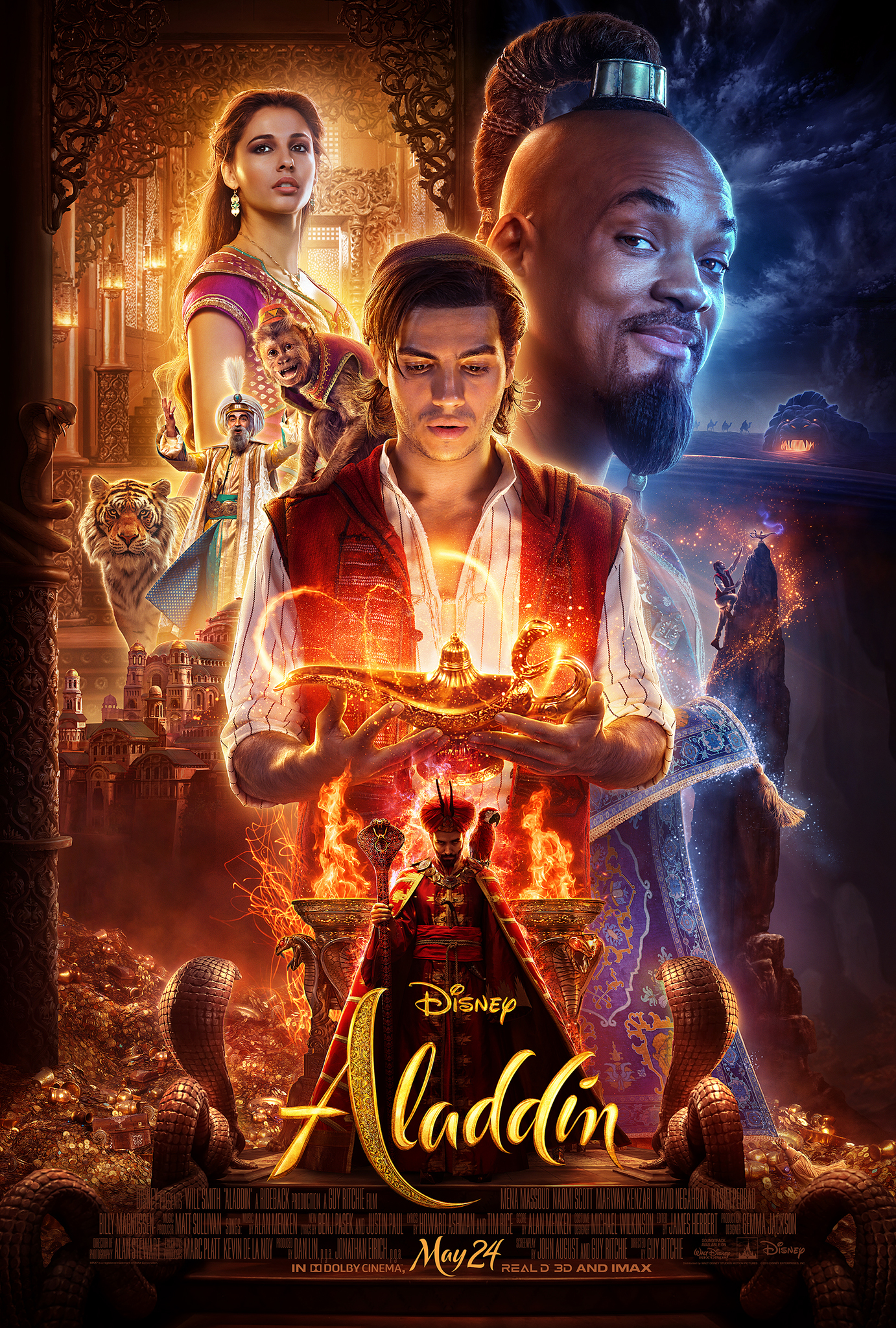
Disney aren’t going to stop making live-action remakes of their animated classics. They just aren’t. Unless the world suddenly runs out of childhood nostalgia, we will keep getting these movies no matter what, and they will keep making billions of dollars. It’s futile to complain about their mere existence at this point so, instead of beating an undead horse, let’s at least try and judge the movie that we’ve got in front of us. This month on the docket for a makeover is Aladdin, which, though it makes sense popularity-wise to remake, is also one of the more difficult. The 1992 original’s charm relies so much on its vibrant animation and high fantasy concepts that recreating those visuals in live-action is a recipe for disaster, and trying to present a Genie that can stand up to the late Robin Williams borders on disrespectful. But, in all honesty, this new Aladdin is far from the disaster it could have been. It’s still not particularly remarkable, but you won’t hate yourself while you’re watching it. Hardly a compliment, I know, but bear with me here…

2019’s Aladdin follows the broad strokes of the original film very closely, and that’s certainly not a bad thing considering how tight and definitive that telling is. This version has a slightly more contemporary sense of humour, and the love story takes on something more akin to a romantic comedy than a Disney romance, but otherwise this is the story you know and love. It knows not to mess with the well-laid foundations, and instead focuses on updating the smaller details and adding some modern depth. This is an approach that many of the previous Disney remakes have taken and it has its pros and cons. Most of the smaller changes, like some slight reordering of scenes and clarifications to the rules of the world, are pretty pedantic and just make things more complicated. The bigger differences are laid in the film’s themes which, in addition the core messages of being yourself and the responsibility of having power, now includes feminist and anti-authoritarian subtext to Jasmine and Jafar’s storylines. Whilst these ideas are welcome and don’t damage the overall story, they are handled in a fairly perfunctory and on-the-nose way. We shouldn’t be congratulating a movie for simply doing the right thing like having stronger female role models or adding political allegories. Those kind of layers should be a given, and the appraisal is then based on how well they accomplish those tasks, and that’s where Aladdin falters. I could go on, but I’ll summarise it so: if you had a problem with the updates made in the Beauty and the Beast remake, you’ll have similar issues here. If you can get past the triteness of those changes, you’ll otherwise find an entertaining if slightly artificial romantic adventure that kids who’ve never seen the original will certainly have a fun time with.

Of all the times to remake Aladdin, I’m glad it was at least done now rather than any time sooner, given that this film would probably look a whole lot whiter if they did; remember, it was only nine years ago that Disney still thought casting Jake Gyllenhaal in a Prince of Persia movie was a good idea. Relative newcomer Mena Massoud makes for a charismatic Aladdin, retaining the character’s bravado and cockiness whilst also upping his awkward factor when dealing with romantic situations; he’s basically a Hugh Grant character in Arabian dress. Naomi Scott often steals the show as Princess Jasmine, lending strong credence to the character’s newly fleshed-out political aspirations. Though the writing occasionally reverts the character back into a damsel for arbitrary reasons, Scott’s performance remains consistent and the film really comes alive when it just lets her go full ladyboss.

Marwan Kenzari is fine as Jafar, but the character has lost a lot in translation. Deciding to nix the queercoding and redefining him as more of a political schemer with inadequacy issues is a fine enough concept, but it never feels like they got further than that basic idea. Navid Negahban’s Sultan feels like a huge downgrade, completely losing the character’s comedic aspects and rendering him a mere chess-piece character with little personality. Instead, they decide to give more character development to Numan Acar’s head guard Hakim, but only suddenly during the third act to give Jasmine a chance to flex her powers of persuasion; it’s a fine enough moment, but it lacks any tangible preamble. Abu and The Carpet are handled pretty much identically to how they were in the original, whilst Iago has lost the Gilbert Godfreid wisecracks in favour of a more grounded approach; he’s now basically just a really smart parrot. In regards to the new characters, Nasim Pedrad is amusing as Jasmine’s handmaiden Dahlia but she’s relatively thankless, while Billy Magussen as suitor Prince Anders is basically pointless. He’s introduced as a Scandanavian stereotype, has two brief scenes, and then promptly disappears from the movie; methinks there’s a lot of his scenes of the cutting room floor.

But even with all of that said, the mere idea of a new Aladdin rests on the quality of whoever is playing the Genie, and trying to imitate Robin Williams’ iconic work is practically impossible; go ask Dan Castellaneta. In all fairness, Will Smith is mostly trying to do his own thing, and when the film allows him to he actually works surprisingly well. Smith is basically just doing his character from Hitch again but with magic powers, and when he’s playing into that smooth matchmaker persona the character begins to take on his own identity. His comedic chemistry with Massoud is charming and genuine, and of course he brings his Fresh Prince swagger to the musical sequences, but that only makes it all the more frustrating when the film does force him back into doing Williams’ shtick. Those moments are when the film feels most desperate, and frankly I wish they had leaned harder into Smith’s new take rather than constantly trying to remind us that this is Disney’s Genie and not so much Will Smith’s Genie.

Guy Ritchie is certainly an odd choice to direct any Disney movie, let alone an Aladdin remake, but you’d be hard pressed to even recognise this as a Ritchie production. I’m thankfully this isn’t another horrible mash-up of style and time period like King Arthur: Legend of the Sword, but instead it just feels like another Disney factory line product; if you’d told me this movie was directed by someone like Rob Marshall, I probably would have believed you. The film does a decent job of bringing the world of Agrabah to life in regards to atmosphere and vibrancy, though the city sets too often feel like a backlot and make the city seem a lot smaller than it ostensibly is. The CGI was the cause of a lot of backlash pre-release (yes, I’ll admit I made my own Genie/Tobias Funke meme), but the final results are far better than those in the trailers. Smith’s Genie for the most part looks convincing in motion, though obviously nowhere near as malleable and imaginative as his hand-drawn counterpart. Other CG characters like Iago, Abu and The Carpet are consistently strong, and effects-heavy sequences like the escape from the Cave of Wonders and the “A Whole New World” sequences are well executed.

Speaking of that classic song, all of the classic numbers are here relatively intact and just as catchy as ever. Massoud proves himself a capable singer with his rendition of “One Step Ahead”, and he and Scott absolutely nail “A Whole New World”, whilst Smith definitely leaves his signature mark on “Arabian Nights”, “A Friend Like Me” and “Prince Ali” alike. Your mileage with his songs will vary on how much you genuinely love Will Smith as a musician and/or how much you ironically enjoy hearing classic Disney songs interrupted by Will Smith-isms (seriously, he sounds like he’s ready to break right into “Gettin’ Jiggy Wit It” at any moment). However, there are new verses added here and there to the originals, along with a whole new song for Jasmine “Speechless”, courtesy of The Greatest Showman songwriters Benj Pasek and Justin Paul. Though “Speechless” itself is a fine enough song and Scott performs the hell out of it, it and the other tweaks stylistically don’t blend well with the work done years ago by Alan Menken, Tim Rice and the late great Howard Ashman.

The new Aladdin is far from a bad movie. It’s too full of energy and charm to be bad. It’s clear that everyone involved is putting in the effort, and for solid stretches it’s actually very enjoyable, but that’s mostly because of how much it loyally follows the original. At that point, when you can just as easily watch the 1992 film, getting the same experience and feeling without all the superfluous new stuff, why even bother? If you’ve enjoyed Disney’s previous remakes, you’ll probably have a lot of fun with this one, but I don’t think this version is likely to supplant the classic in anyone’s mind. If you didn’t like most of the prior reimaginings, you’ll probably find similar problems here, and I can’t blame anyone for feeling these productions are cynical and unnecessary because…well, they kind of are. When it comes down to it, this new Aladdin is like seeing a new production of your favourite stage musical. The show on paper is still great, but you know you’ve seen a better version of it before.

FINAL VERDICT: 6/10

cropped-screen-shot-2017-10-01-at-19-46-22.png

ROCKETMAN – an Alternative Lens review

Starring: Taron Egerton (Kingsman: The Secret Service), Jamie Bell (Snowpiercer), Richard Madden (Cinderella), Bryce Dallas Howard (Jurassic World), Gemma Jones (Bridget Jones’ Diary)

Director: Dexter Fletcher (Eddie the Eagle)

Writer: Lee Hall (Billy Elliot)

Runtime: 2 hours 1 minute

Release Date: 22nd May (UK), 31st May

The music biopic has really gotten stagnant, hasn’t it? It feels like only yesterday I was talking about Bohemian Rhapsody (which, in retrospect, I think I was way too kind to). More than any other genre, it is one too easily abused in a paint-by-numbers fashion, riding mainly on the popularity of its featured star and all of the nostalgia that comes with them. If you want a thorough deep dive into the homogeneity of these films, I highly suggest watching Patrick Willems’ video essay on the matter, but for now does Rocketman overcome the tired tropes of a dozen similar films before it? Broadly speaking? No. However, it does at least give them a pretty makeover and adds plenty of energy and heart to the mix.

When it comes to telling the story of Elton John, Rocketman does so once again in the expected manner. We start at his humble beginnings, follow him through his discovery of his talents and the chance encounters that lead him to stardom, then see all the mistakes he makes along the way that causes his friendships and careers to crash, before coming to terms with his issues and coming back into the spotlight before a still picture montage of the rest of his life brings us to a close. If you claim that description is a spoiler, then you have never seen a music biopic in your life. The storytelling isn’t always neat, with certain aspects of John’s life brushed over through montages and throwaway lines, whilst other elements like his brief sham marriage given a fleeting spotlight without much point. I didn’t know much about Elton John’s life and career before seeing the film, but I could still tell where everything was going ages before it happened; it certainly does not pass the Walk Hard test.

With that said, the film ultimately overcomes those tropes because of how it handles its tone and themes. This is a bright and buoyant movie that approaches the material with an eye for the fanciful, breaking reality consistently through dreamlike embellishments and non-diegetic song sequences; it is as much a jukebox musical as it is a biopic. It has a sense of style and identity most examples of the genre don’t, but it also doesn’t forget to show the darker and more debaucherous moments. It’s hard not to compare Rocketman to Bohemian Rhapsody given they share so many qualities (most notably in direction, as Dexter Fletcher was the one who jumped in on the latter to replace an “indisposed” Bryan Singer), but when it comes to being honest Elton John clearly has a better sense of perspective than the surviving members of Queen. Whilst the film surely has its fabrications and simplifications, it certainly has no qualms about showing John’s darker side and delving into his sexual exploits. For those worried about this being a straightwashed affair, this is by no means an extremely explicit film, but neither it’s certainly not some coy wishy-washy drivel made to appease the squeamish and/or homophobic. In other words, Rocketman overcomes its more staid aspects by imbuing it with Elton John’s best qualities: showmanship, enthusiasm, flamboyance and heart.

Taron Egerton has proven himself time and again to be an actor worth watching, and with his performance as Elton John he firmly plants himself as one of this generation’s greats. He creates a compelling character separate from his real-life inspiration, thankfully avoiding just doing an impression of John, and sinks his teeth into both his hidden sensitivies and his darkest impulses. Rocketman at its core is about a man learning to understand and love himself in spite of the circumstances, and that journey works because Egerton never shies away from showing John as arrogant, indecent or feeble. It’s easily Egerton’s finest performance to date, and up there with some of the best portrayals of famous musicians ever. The supporting cast also performs admirably, even if their characters sometimes feel a bit arch in comparison to Egerton. Jamie Bell is sweet and understated as John’s co-writer and best friend Bernie Taupin, serving as a voice of reason whilst avoiding being just a moralising tool. Richard Madden as duplicitous manager John Reid is just the right level of despicably charming (and a far cry from Aiden Gillen’s more sympathetic portrayal of Reid in Bohemian Rhapsody), whilst Bryce Dallas Howard is the personification of passive-aggressive in all the right ways as John’s mother.

Given his previous experience with musicals like Sunshine on Leith, Dexter Fletcher’s style is a perfect fit for Rocketman. The musical sequences are the film’s highlights, full of dazzling choreography and seamless transitions to and from the diegetic elements. The song choices from John’s vast catalogue are well implemented into the narrative, moving the narrative and characters forward effectively without feeling forced. These sequences are ably bolstered by the fact that Egerton is a fantastic singer as well as an actor. Again, he doesn’t try to impersonate John’s vocals, but his spirit is definitely intact and he makes all of the songs feel fresh and his own. The film also features the original track “(I’m Gonna) Love Me Again”, a duet between John and Egerton, and it’s a perfect tribute to John’s legacy. The film absolutely nails its period setting, with the work done to recreate John’s legendary costumes being absolutely impeccable, whilst the editing both moment-to-moment and structurally is inventive and cohesive (unlike a certain biopic that somehow won an editing Oscar…).

Rocketman doesn’t even come close to changing the game for music biopics, but it’s far from a cynical experience. The spirit of Elton John oozes from every frame of this candid journey through his tumultuous career, even when it regrettably bows to tired genre conventions. Take away Egerton’s performance as both an actor and a singer and the film would easily fall apart, but with him it’ll soar right into the hearts of even the most jaded audiences. I think as a genre we need to start innovating more when it comes to biopics of all kinds but, if we have to keep sticking to formulas like this, I demand that all of them at least approach their material with as much exuberance and earnestness as Rocketman. 

FINAL VERDICT: 7.5/10


cropped-screen-shot-2017-10-01-at-19-46-22.png

JOHN WICK: CHAPTER 3 – PARABELLUM – an Alternative Lens review

Starring: Keanu Reeves (The Matrix), Halle Berry (Monster’s Ball), Laurence Fishburne (Ant-Man and the Wasp), Mark Dacascos (Cradle 2 the Grave), Asia Kate Dillon (Billions), Lance Reddick (The Guest), Angelica Huston (Addams Family Values), Ian McShane (Hellboy)

Director: Chad Stahelski (John Wick: Chapter Two)

Writers: Derek Kolstad (John Wick) and Shay Hatten and Chris Collins (Sons of Anarchy) & Marc Abrams (Entourage)

Runtime: 2 hours 10 minutes

Release Date: 15th May (UK), 17th May (US)

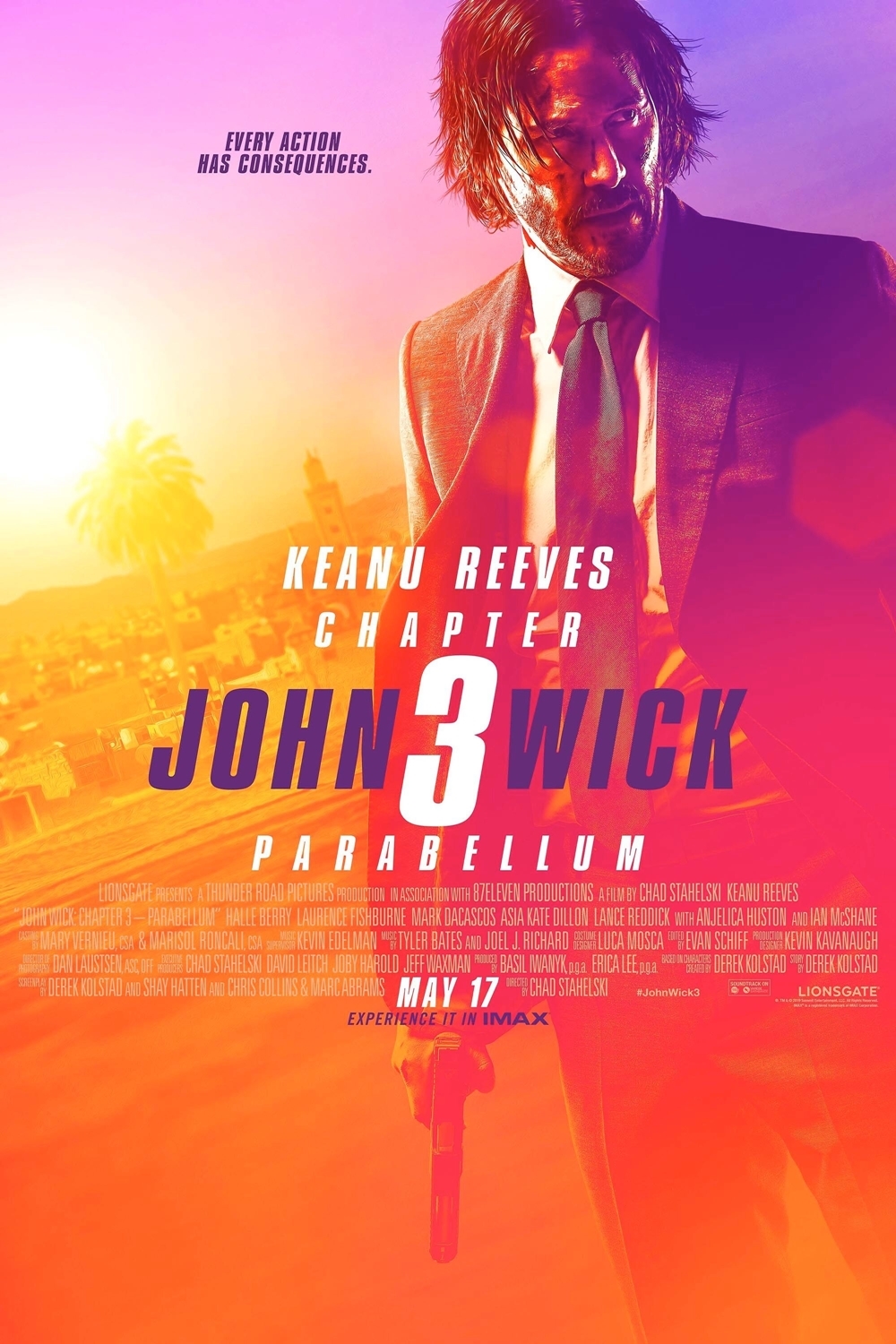
It’s hard to believe that in just five years, John Wick has risen up from its humble beginnings as a sleeper hit to become one of the premier action franchises that every other film in the genre is trying to copy. They are admittedly trashy experiences at heart, but they present it all in such a slick and immaculate fashion that it never once feels downmarket; they’re like fast food made by gourmet chefs. Now reaching its third instalment and with a Latin subtitle for good measure, the stakes have never been higher for Mr. Wick. Will the world’s greatest assassin come out on top again, or has this seasoned warrior finally run out of bullets?

Picking up immediately after the shocking conclusion to Chapter 2, Parabellum finds John Wick left with little but his wits and a few small favours. That’s not to say this third instalment is a back-to-basics adventure. On the contrary, the film only further expands the mythology of the assassin underworld, and even answers some of the questions from the previous films (like finally explaining how the gold coins actually work). With that said, whilst that expansion adds whole new layers to the story world, there are signs that the concepts are starting to be stretched thin. With every new conceit introduced, it only comes with a slew of further questions, and there are only so many times you can excuse an illogical moment with rule of cool before you’re starting to abuse the system. Thankfully there’s nothing that completely breaks that suspension of disbelief, but at this point I’d rather they stop trying to dig deeper and simply find new ways to explore the concepts they’ve already introduced; you can only spin so many hats before it all falls apart. Otherwise, the storytelling and pacing is just as efficient and smooth as ever with nary a scene wasted, and with plenty of room made for this story to keep on strolling along.

By this point, John Wick has pretty much surpassed the like of Neo and Theodore “Ted” Logan to become Keanu Reeves’ most iconic role in a storied career full of classic characters. Whilst we do learn a little more about Wick’s backstory, he’s still the stoic single-minded badass we’ve come to love, and I wish Reeves could just play this role forever; I mean, Tom Cruise is two years older and doing crazy sh*t like this on the regular. The returning cast is as fantastic as ever, with thankfully more given to Lance Reddick’s Charon and Laurence Fishburne’s Bowery King this time around, but it’s the new faces that really steal the show in Parabellum. Halle Berry is finally given the action movie role she deserves and kicks all sorts of ass with her canine companions, though her screen time is fairly limited; perhaps a spin-off is in order? Asia Kate Dillon makes for a compelling villain as The Adjudicator, sitting out the action but still leaving a strong impression with their restrained delivery and icy glare, making for an antagonist I hope returns so they and Wick can have a proper showdown. However, the film’s standout is easily Mark Dacascos as the exuberant Zero, delivering a performance that is equal parts scary and funny and more than keeping up with Reeves on the action front. With this role alone, Dacascos makes a strong case for a second chance at stardom. Top it all of with fun smaller turns from the likes of Angelica Huston, Jerome Flynn and Jason Mantzoukas, and this is one diverse and stellar cast for an action movie.

The bonkers action set pieces are what everyone ultimately comes to a John Wick movie for, and Parabellum does not disappoint in offering yet another dose of ultraviolent goodness. The action kicks in practically from the word go, and though much of the essential gunplay and fistfights play out as expected, there’s still loads of new tricks the third chapter has up its sleeves. From a gruesome yet hilarious showcase of knife throwing to entire action sequences on motorcycles and horseback, it’s hard to think where else this franchise can go without diving into Fast & Furious territory, but I’m sure the filmmakers will think of something. Otherwise, from the moody neon-lit cinematography to the brooding score, there is no mistaking this for anything other than a John Wick movie.

John Wick: Chapter 3 – Parabellum delivers more of what you want from the franchise without innovating in any particularly notable way. This is about as polished as action movies come, and expecting any more out of this film almost feels like nitpicking at this point, but this franchise needs to avoid resting on its laurels. It already does everything to such a high standard that it makes most other action movies look lazy by comparison, but even a five-star restaurant with a perfect selection of dishes needs to shake up its menu to stay relevant. For the moment, Parabellum gets by on its style and execution, but should another instalment come around, what I really want it to do is surprise me.

FINAL VERDICT: 8.5/10

cropped-screen-shot-2017-10-01-at-19-46-22.png

POKÉMON: DETECTIVE PIKACHU – an Alternative Lens review

Starring: Ryan Reynolds (Deadpool), Justice Smith (Jurassic World: Fallen Kingdom), Kathryn Newton (Blockers), Suki Waterhouse (Assassination Nation), Omar Chaparro (How to Be a Latin Lover), Chris Geere (You’re the Worst), Ken Watanabe (Godzilla), Bill Nighy (Shaun of the Dead)

Director: Rob Letterman (Goosebumps)

Writers: Dan Hernandez & Benji Samit (One Day at a Time) and Rob Letterman and Derek Connolly (Kong: Skull Island)

Runtime: 1 hour 44 minutes

Release Date: 10 May (US, UK)

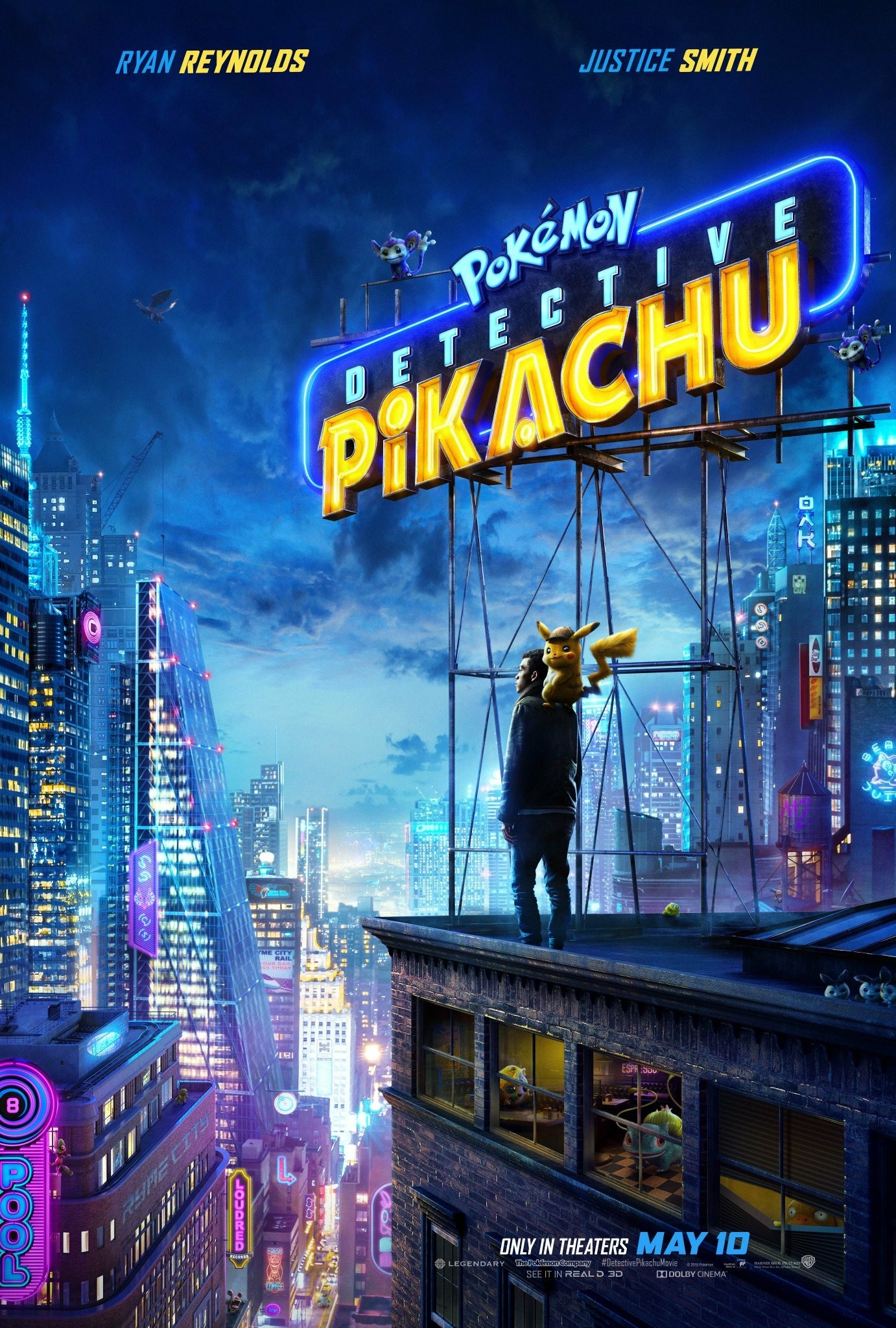
Pokémon has now been a pop culture staple long enough to be worthy of nostalgia. That just made you feel old, didn’t it? Well, prepare to feel young again, as Pokémon: Detective Pikachu practically feels designed to mine you for all your love for the franchise, whether you left it behind in your childhood or still hold onto it dearly. It feels like we go through this conversation every year or two, but there really has been a lot of hope since that first trailer that Detective Pikachu will be the first video game movie to knock it out of the park. Having now seen the final product, I’ll say this much: it’s not a home run, but its batting average is more than strong enough to secure a tidy victory.

Now Pokémon has a lot of pros and cons going into the process of live-action adaptation. On the good side, it’s a video game property that’s had mainstream attention like no other. On the bad side, it’s one that is only fully understood by those who really, really like it (I know I faced difficulty even explaining the basics to my parents as a kid). Luckily, Detective Pikachu does a satisfactory job of laying out all the key world building early on for the uninitiated, though there’s still a lot of minutia that only the established fans will fully understand. There is some interesting exploration into facets of the universe like the nature of Pokémon evolution and the bond between humans and Pokémon, but it’s all fairly surface level. Ultimately, this is a film more concerned with bringing the world to life rather than contemplating what it all means, and for the first film in a franchise it’s an acceptable choice. However, next time around, I hope they dig a lot deeper and find something more to say about the rich playground they have been afforded.

The film’s plot cribs a lot from similar detective-based kids movies, specifically Who Framed Roger Rabbit and Zootopia, but through its smart use of the property and its self-deprecating sense of humour it manages to cover its tracks fairly well. The filmmakers clearly love the property and know how to tell jokes about it that will resonate with fans whilst also addressing the absurdity of it (which I think the clueless parents in the audience will appreciate). It’s accomplishes the perfect balance between funny and cute, and there are plenty of comedic sequences that will have kids and fans giggling in their seats. On the negative side, most adults and/or Pokémaniacs will be able to piece together the mysteries pretty easily, and the rushed third act ends up leaving a lot of loose threads hanging and emotional beats lacking in impact, but in the moment it’s hard to care because of how utterly adorable the experience is. In terms of adapting a video game into a movie, this is the first one to have all the right pieces in all the right places, but there’s still plenty of room for improvement.

Whilst not especially a standout in the original games, Pikachu became a worldwide icon through their starring role in the anime, so centring the first live-action Pokémon movie on a Pikachu is a smart move. Essentially doing a kid-friendly riff of his real-life persona, Ryan Reynolds’ performance as the titular electric mouse is a funny and adorable character from the moment he scampers onto screen, and his trademark facetious sense of humour gives the film just enough of a naughty edge without going overboard into crassness. His chemistry with Justice Smith’s Tim Goodman is extremely strong and endearing, which is a good thing because Goodman on his own is unfortunately a little bit of a generic protagonist. There’s enough character development and backstory there to make you care, but it’s all fairly generic daddy-issue stuff that isn’t given enough of a fresh twist. Then again, when your main point of comparison as a Pokémon protagonist is Ash Ketchum, Tim Goodman is still something of an upgrade

Kathryn Newton comes off a lot better as aspiring reporter Lucy, having not only a cute repartee with Goodman and Pikachu but also with her partner Psyduck, but unfortunately outside of her the supporting cast all feel a little undercooked. Ken Watanabe feels wasted in a thankless supporting role that doesn’t call for an actor of his calibre, but at least his relationship with his Snubble is kind of cute. Bill Nighy flits between disinterested and camp as city benefactor Howard Clifford, Chris Geere as his son Roger goes through a complete personality shift between his major appearances, whilst Suki Waterhouse practically fades into the background as bodyguard Ms. Norman until the third act; methinks a lot of her scenes ended up on the cutting room floor. It’s a real shame considering how full of colourful characters the Pokémon world is, and throughout the film I couldn’t help but want for Team Rocket to jump on screen and inject a little theatricality into the mix

What ultimately keeps Detective Pikachu engaging even when the story sags or the characters fall flat is the impeccable world building and aesthetics. Though obviously just a CGI-filled London at points (they don’t even try to hide some of the landmarks), Ryme City still manages to feel like a vibrant and lived-in place, and the integration of Pokémon trivialities into the world feels seamless. The design and visual effects work that has gone into bringing the Pokémon to life is phenomenal, perfectly balancing that line between faithful and photorealistic, and proves you can make any far-out concept work in live-action with enough skill and confidence. There are a lot of great action set pieces, especially towards the second half, though it will leave fans hoping for more Pokémon-on-Pokémon action feeling a little disappointed. The cinematography is vibrant and sweeping, lending a great deal of verisimilitude to this exaggerated world, and Henry Jackman’s score is full of energising compositions laced with plenty of familiar music cues from across Pokémon history laced in.

Pokémon: Detective Pikachu succeeds not just because it understands its source material, but knows how to translate its inherent charm from something that works as a video game into something that works as a movie. It’s not a particularly profound or deconstructive piece of cinema, but it’s clearly not trying to be. This is a kids’ movie first and foremost, and for good or ill it throws almost all of its eggs into the baskets marked “cute” and “cool”. Though not as clever as the Paddington films or most Disney productions, it is smart enough to avoid pandering to its young audience and makes up for its shortcomings with a vividly realized story world and a bucket load of adorable creatures. If you’re not going into this as a fan of Pokémon already, you may want to knock a point off my final score, but if you are a fan you are almost certainly going to enjoy yourself. Now that the stage has been set and the basic formula proven strong, the opportunities for sequels and spin-offs to continue testing the waters are potentially endless. This may not be the perfect video game movie but, in all honesty, it would not surprise me if a future instalment in this new potential franchise turned out to be that lightning bolt Iron Man we’ve all been waiting for. 

FINAL VERDICT: 7/10

cropped-screen-shot-2017-10-01-at-19-46-22.png

BOOKSMART – an Alternative Lens review

Starring: Kaitlyn Dever (Short Term 12), Beanie Feldstein (Lady Bird), Noah Galvin (Assassination Nation), Billie Lourd (Star Wars: The Force Awakens), Skyler Gisondo (Vacation), Jessica Williams (The Incredible Jessica James), Lisa Kudrow (Easy A), Will Forte (MacGruber), Jason Sudeikis (Horrible Bosses)

Director: Olivia Wilde

Writers: Emily Halpern & Sarah Haskins (Trophy Wife) and Susanna Fogel (The Spy Who Dumped Me) and Katie Silberman (Set It Up)

Runtime: 1 hour 42 minutes

Release Date: 24th May (US), 27th May (UK)

Coming-of-age stories are a great topic for filmmakers making their debut to explore, as reflecting on their view of adolescence is a great way for both them to find their perspective on the world and for audiences to gain an understanding of their cinematic voice moving forward. Actress Olivia Wilde now follows the path of many directors before her with Booksmart, and if this film is any indication of what she has to bring to the landscape, her voice is one that deserves more opportunities to be heard.

Though Booksmart may on the surface just seem like a gender-flipped retread of Superbad (I mean, Beanie Feldstein is for real Jonah Hill’s sister, so that’s extra ironic) and hits on similar themes of conflicted friendship and the hesitance to embrace the unknown future, but that’s a point that could be made about nearly every “last night before the end of high school” movie ever. What films of the genre really need to become defining is feel like an honest portrayal of the era they are set in and bring a unique perspective to these universal themes. Luckily, Booksmart accomplishes both of those tasks. Though somewhat exaggerated for comedic purposes, the film does feel like an sincere depiction of the teenage experience in 2019 and, though sometimes a tad laborious in reminding us, the progressive sex-positive feminist viewpoint of our protagonists is one historically unexplored by a genre overloaded with anxiety-ridden teenage boy outcasts wanting to get laid.

Films like this ride or die on the characterisation and chemistry of their main characters, and both Kaitlyn Dever and Beanie Feldstein make for a memorable duo as Amy and Molly. They come across like authentic long-time friends right from their first interaction, and their respective anxieties in this transitional stage of life feel genuine and relatable. Though they work off each other fantastically on a comedic level, it’s the dramatic moments between the two that really crackle. A particularly gut-punching exchange between the two of them late in the second act not only serves a showcase for the two actors, but for the script’s whipsmart dialogue and makes for an instantly iconic moment of directing from Wilde.

The film would function well enough with just their performances, but Booksmart’s supporting cast is chockfull of memorable supporting characters. From Skyler Gisondo’s cringe-inducing turn as culturally appropriative try-hard rich kid Jared, to Jessica Williams as one of the coolest cool teachers in film history Miss Fine, right down to the smallest of parts like Eduardo Franco’s goofy mature student Theo, there hasn’t been a coming-of-age ensemble quite as diverse and uniquely memorable since Fast Times at Ridgemont High. There are so many to choose from, but my personal MVP is absolutely Billie Lourd as the manic and unpredictable force that is Gigi, and from this performance alone she deserves to become a bigger star.

The only characters I found somewhat problematic were Noah Galvin and Austin Crute as a pair of ridiculously flamboyant theatre majors, which is a real shame considering how honest and maturely it handles the sexuality of Dever’s character. It really does feel incongruous to have this realistic and respectful depiction of a lesbian teen that avoids all of the stereotypes, whilst on the other side of the room there are these two swishy stereotypes that even most contestants on RuPaul’s Drag Race would call “a bit much”.

Booksmart is an unapologetically bawdy but smart and touching reflection of what female adolescence means today; it’s like if Lady Bird was written by Sarah Silverman. There’s no guarantee that it’ll become a timeless classic like many other films of its ilk, but it certainly deserves to reach the audience it’s clearly aimed at. Female audiences deserve their own sex comedies too and, along with Greta Gerwig’s aforementioned film and last year’s underrated Blockers, it looks like we’re finally getting the progressive coming-of-age films we need right now. Beyond the film itself, Wilde’s ability to direct actors and balance comedy with drama is absolutely evident right here in this debut, and I anxiously await what she does with her talents in the future.

FINAL VERDICT: 8.5/10

cropped-screen-shot-2017-10-01-at-19-46-22.png

LONG SHOT – an Alternative Lens review

Starring: Charlize Theron (Mad Max: Fury Road), Seth Rogen (Pineapple Express), June Diane Raphael (The Disaster Artist), O’Shea Jackson Jr. (Straight Outta Compton), Ravi Patel (Transformers), Bob Odenkirk (Nebraska), Andy Serkis (Black Panther), Alexander Skarsgaard (The Legend of Tarzan)

Director: Jonathan Levine (50/50)

Writers: Dan Sterling (The Interview) and Liz Hannah (The Post)

Runtime: 2 hours 5 minutes

Release Date: 3rd May (US, UK)

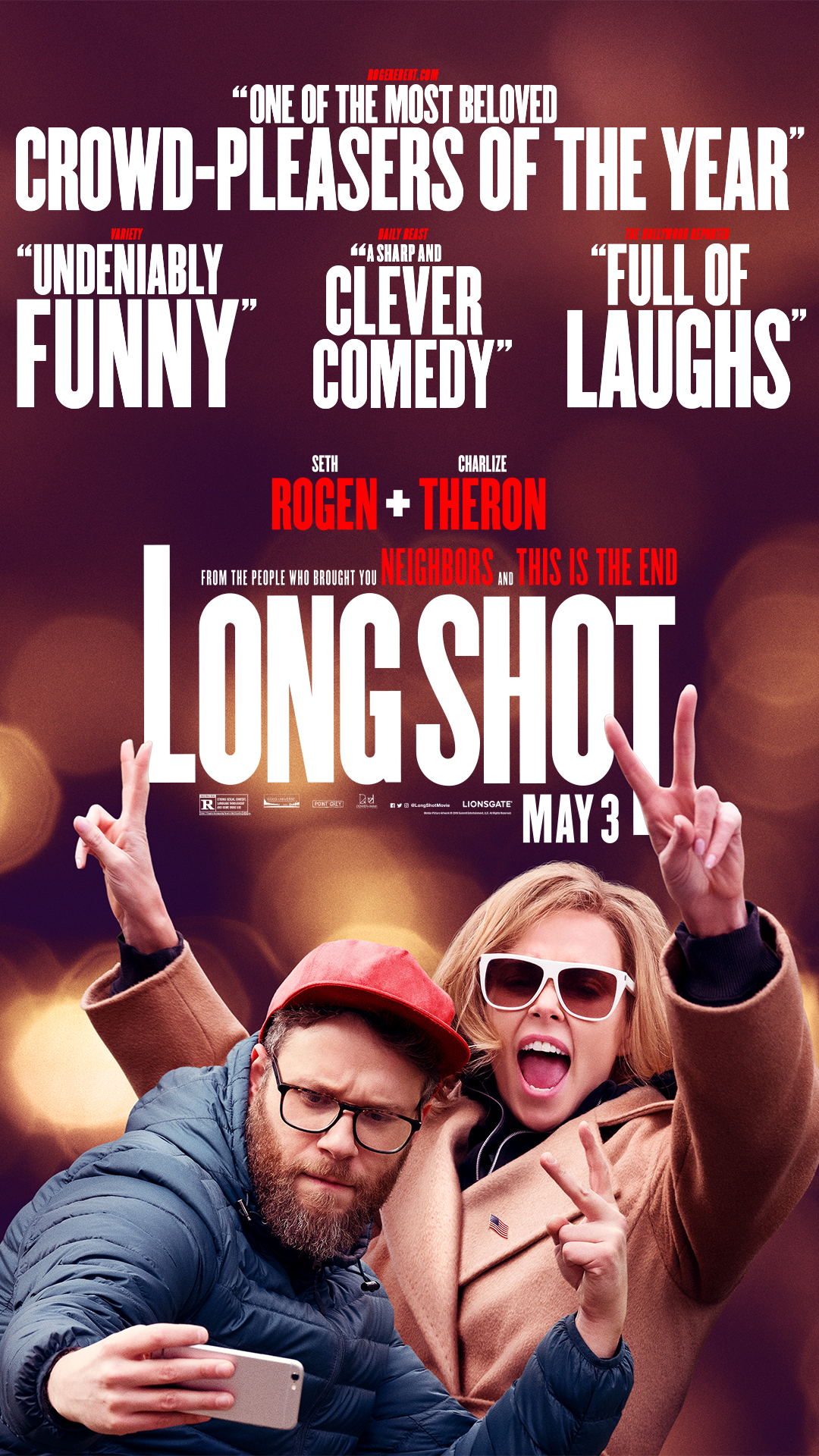
The traditional romantic comedy formula has become pretty rote by now, to the point we’ve seen multiple satires like Isn’t It Romantic? and They Came Together that take their own stabs at the clichés of the genre. However, rarely are the best modern rom-coms the ones that completely buck the formula or make light of it. Instead, they tend to be films that follow the trend but bring a unique perspective or topical subject matter to the table, and Long Shot is one of the best examples of the subversive yet traditional rom-com in a long time.

In essence, the movie is yet another riff on the classic social class mismatched romance dating back to My Fair Lady, and it is very much aware of that comparison right down to it directly cribbing from the Pretty Woman soundtrack. Where Long Shot gains its unique voice is by structuring the narrative around an on-the-nose but nonetheless biting and hilarious commentary of contemporary American politics. The film functions as an interesting dialogue about expected talking points like the glass ceiling on female politicians and the corruption of the right wing, but also less discussed issues like political compromise and opening a dialogue with ideological opposites. Yes, there are plenty of the sex and drug jokes you’d find in a modern comedy, but they are smartly woven in without feeling like a sudden tonal shift; in the best of cases, many of these scenes that may at first seem like humorous nonsequiturs ultimately prove to be plot-essential. It’s a bizarre mix of highbrow and lowbrow comedy that makes the film palatable for a winder audience, and may even get a more apolitical audience member to finally care about some of the bigger questions.

We’ve seen plenty of disparate couples who somehow end up falling in love regardless since the dawn of the genre, but none have been quite so seemingly incompatible yet perfect for each other like Charlize Theron and Seth Rogen. Given the film’s mash-up of political drama and stoner comedy, Theron and Rogen are practically perfect representatives of those disparate worlds. Though they absolutely perform as well as you’d expect when playing to their well-established strengths, their performances truly shine when they go against type. Theron has never quite gotten the chance to let loose in a comedy quite so effectively before, humanizing what could have easily been just a caricature of a democrat, and portrays her with a believably human conflict of balancing her ambitions with her morals. Likewise, Rogen is absolutely believable as a weary whistle-blowing journalist, and does have fantastic job of balancing that anger with corrupt politics with his expected penchant for weed and pop culture. Their chemistry is absolutely through the roof from the beginning, to the point where can’t imagine this film working with any other pair of actors. Seriously, I want these two to now be in more films together. I don’t know what those films would be, but I want to see them pronto. Seriously, they are adorable together.

But even beyond our two comically incongruous lovebirds, the supporting cast is full of great turns from unexpected places. O’Shea Jackson Jr.’s turn as Rogen’s longtime friend is funny and charming before seamlessly transitioning to poignant and grounding, Alexander Skarsgaard’s hilarious pastiche of a Justin Trudeau-esque Canadian politician provides some great moment of uneasy humour, Bob Odenkirk’s self-obsessed president manages to be a spot-on takedown of the current commander-in-chief without retreading the same tired jokes, and an unrecognisable Andy Serkis is deliciously slimy as a conservative media mogul that simultaneously channels both Rupert Murdoch and Steve Bannon into a squeamishly toady villain.

However, even the best romantic comedies have their chink in the armour. There are many kinds of problems that these films can fall ill to, and in the case of Long Shot it’s a variation on the asshole character that only serves to get in the way of our heroes’ love. Here, that role is played by June Diane Raphael as Theron’s main campaign adviser. The character comes off as too cartoonishly dismissive right from the off, to the point where you either suspect she may make a treasonous turn later on, but the character ultimately doesn’t go through any kind of arc or comeuppance. In the end, she’s just someone to antagonise Rogen throughout and constantly be the voice blaring, “You two don’t belong together,” and as cliché as it would have been for her to go turncoat or have a day-saving change of heart, it would have at least been something. Fortunately, it’s an irksome hiccup that thankfully doesn’t tamper proceedings too much.

Long Shot is a breath of fresh air for both genres it represents, bringing a brazen fearlessness to political commentary and progressive class to the stoner comedy. This is some of the best work both Theron and Rogen have delivered in recent memory, proving themselves talented in both of their comfort zones and beyond. More importantly, the film addresses our current political climate in a brash but honest manner, helping shine a light on our problems and how to improve upon them in a smart but accessible fashion. It’s a movie that has a little something for everyone without losing its identity, and deserves to become the Notting Hill of this generation.

FINAL VERDICT: 9/10

cropped-screen-shot-2017-10-01-at-19-46-22.png

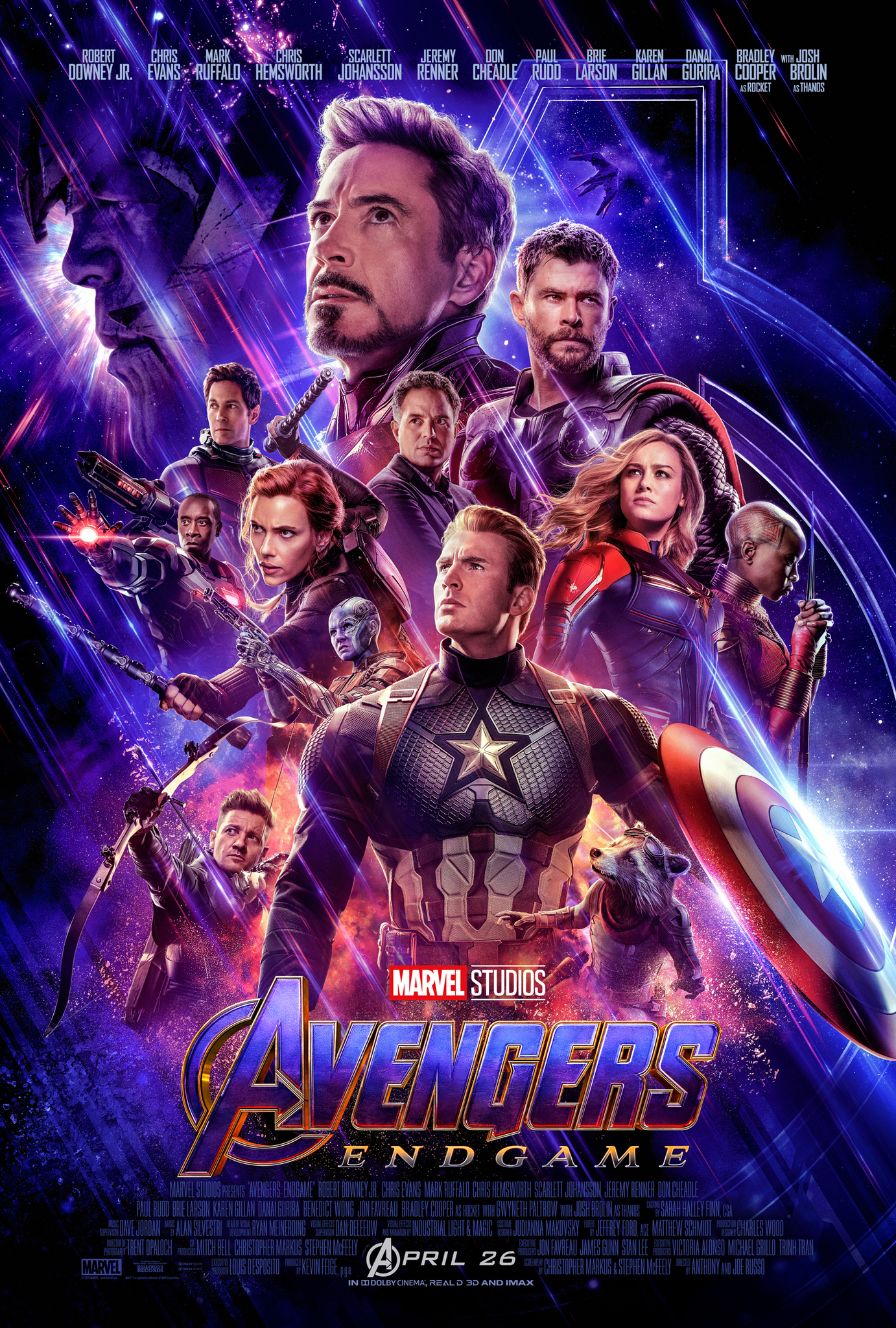
AVENGERS: ENDGAME – an Alternative Lens review

Starring: Robert Downey Jr (Sherlock Holmes), Chris Evans (Snowpiercer), Mark Ruffalo (Begin Again), Chris Hemsworth (Rush), Scarlett Johansson (Ghost in the Shell), Jeremy Renner (The Hurt Locker), Don Cheadle (Hotel Rwanda), Paul Rudd (Role Models), Brie Larson (Room), Karen Gillan (Jumanji: Welcome to the Jungle), Danai Gurira (The Walking Dead), Bradley Cooper (A Star is Born), Josh Brolin (Sicario)

Directors: Anthony Russo & Joe Russo (Captain America: Civil War)

Writers: Christopher Markus & Stephen McFeely (Pain & Gain)

Runtime: 3 hours 1 minute 

Release Date: 25 April (UK), 26 April (US)

I can’t review Avengers: Endgame. Not like I usually do for other films. Well, maybe “can’t” isn’t the right word, because I technically could. The immature part of my mind wants to let loose and gush like the fangirl I unashamedly was as I watched it, but that wouldn’t be fair to those who haven’t seen it. Saying anything about this movie would doubtlessly give something away. I could take it slow and try to avoid stepping on the mines, but as hard as I try there’ll always be a mine I didn’t notice, and the safest thing to do is not even try and cross that field. I guess what I should say is this: I won’t review Avengers: Endgame.

If you’re just looking for a simple yay-or-nay recommendation, here it is: it’s amazing. Pays off in practically every way you could want to. There’s no other movie quite like it, and I doubt there ever will be again. See it as soon as you can and on the best screen you can (I saw it in IMAX, and it was so worth it!). Go in as blind as possible and just enjoy this cinematic landmark in all of its glory. With that said, the cynical side of me knows talking about this movie right now is what’s going to drive traffic, and I do want to write something whilst this in this state of elation from having just watched it for the first time, so here goes…something.

The Marvel Cinematic Universe has done a remarkable job of translating the essence of comic book storytelling into the language of cinema. There have been some translation errors, mainly in how the truncation of the narrative flow often means less opportunity to go on exploratory tangents and a stricter focus on the central plot. It’s been a staggering journey in retrospect to have watched the MCU grow from the ground-laying solo adventures of Phase One, build to an industry-defining moment with The Avengers, branch out in new and exciting ways through Phases Two and Three, all leading to this very moment. Many have compared the bigger Marvel movies like Civil War and Infinity War to the universe-spanning event comics of their source material, but in comparison to Endgame they feel like meagre tie-in miniseries.

This is a film every bit as sprawling and vast as any universe-spanning crossover, balancing an ever-expanding cast of characters, a cavalcade of locations, clashing tones and genres, and pretty much every other variable you can think of, and yet somehow it all adds up. You’d never would have thought it, but there is not a single prior film in this franchise that ultimately pay off in this film, so if you’ve skipped out on any entries over the years or decided not to revisit certain films because you “don’t think they’ll be important”, I’d recommend you do some revision beforehand. I know that’s kind of an elitist thing to say, but that’s how the comic books worked too. Endgame can be enjoyed by fans who’ve only followed the adventures of their favourite characters through this saga but, if you want to understand the full extent of what this story means, having prior investment in every corner of this universe is going to give you the ultimately desired payoff.

I think there are a lot of people, even those who like these movies, who have misdiagnosed the secret behind the success of the MCU. Some just shrug and point to the spectacle of the action sequences and the special effects, but for as good as these elements are in most Marvel films you can get those moments in so many other blockbusters. Others, and especially cynical Hollywood types, think the formula lies solely in their pioneering work with universe-building, but we’ve seen what has happened with failed franchises that thought fan service and foreshadowing was the magic bullet. All of that is merely the cement holding together the house that is the Marvel Cinematic Universe, and you wouldn’t try making a house entirely out of cement, would you? The actual building blocks, and the real reason audiences have stuck around for a decade, are the characters.

It’s hard to think back now to all of these characters and remember where they started. The warmongering puckish billionaire, the meek scientist with anger issues, the arrogant prince from another dimension, the sickly but goodhearted kid from Brooklyn; all of them have evolved so much right before our eyes. Like all good storytelling, it all comes back to seeing relatable people grow and change over time, and where better to test the metal of these characters and reveal their truest potential than in the direst of situations? I can’t describe exactly what happens to these characters in Endgame, or even definitively say who is or isn’t in it, but I will say that everyone gets what they need in proportion to their importance to the plot and the MCU as a whole. Maybe your favourite character doesn’t get as much screen time as you’d like, or the film misses the occasional opportunity for an arc payoff, but when put into perspective it’d be unreasonable to expect even more.

Endgame clocks in at just over three hours and still feels like a mad dash to the finish line. The fact is does have as many breathers for character development and tension releasing is a wonder of storyline construction, and only made possible by all of the extensive work done by its predecessors. This is a movie overflowing with content, all delivered in a frenzied manner that no other film would even think of attempting, and yet it still feels emotionally satisfying and worthy of eleven years of build-up? That is a flipping miracle, and to ask for any more from it would risk encumbering the film with more weight than it can handle. People often bemoan how blockbusters seem to be getting longer and longer these days, but Endgame absolutely earns its gargantuan length and there’s nary a moment of it that isn’t captivating, so watch your liquid intake or be prepared for the hardest workout your bladder has ever had.

And that’s all I can say. I have witnessed not only what will doubtlessly be one of the best films of 2019, but a milestone of cinematic achievement in all disciplines, and I can’t even begin to get into detail. Writing this review has made me feel like Roy Batty at the end of Blade Runner, trying to impart the monumentality of what I have witnessed, knowing I cannot possibly do it justice and resigning myself to my fate. Luckily, all you have to do to understand my current state of mind is to go see the film yourself.

No film has quite made me feel so emotionally in awe since The Lord of the Rings: The Return of the King, and that was just the third entry in a trilogy. Avengers: Endgame is the finale to a twenty-two part saga stretching over a decade of storytelling, spanning multiple characters, filmmakers, tones and even genres, and concludes in a manner befitting that magnitude. I am exhausted, folks. Three hours of fangirling nearly non-stop has left me drained. That said, as soon as Marvel announces whatever they are planning next, count me ready to go this rollercoaster all over again.

FINAL VERDICT: 10/10!

cropped-screen-shot-2017-10-01-at-19-46-22.png