AD ASTRA – an Alternative Lens review

Starring: Brad Pitt (Inglourious Basterds), Tommy Lee Jones (Men in Black), Ruth Negga (Loving), Liv Tyler (The Incredible Hulk), Donald Sutherland (The Hunger Games)

Director: James Gray (The Lost City of Z)

Writers: James Gray & Ethan Gross (Fringe)

Runtime: 2 hours 4 minutes

Release Date: 18th September (UK), 20th September (US)

We like to think of outer space as this awesome unexplored frontier, and that adventuring through it would be this grand adventure full of excitement and wonder. In reality though, knowing the real science of space travel, going on an intergalactic trip would actually involve a lot of down time spent isolated in the middle of a vast void. Sounds a lot more harrowing when you put it like that, eh? Ad Astra is a film absolutely aware of the realities of this potential future, tapping into that sense nothingness to craft a sci-fi tale that asks the age-old question of “are we alone in the universe?” in more ways that one.

The marketing for Ad Astra has been purposefully obfuscating, selling the picture as more of a straightforward futuristic action movie. However, the final product is actually far more in the vein of the contemplative sci-fi flicks of the 1970s like Solaris or Silent Running. This shouldn’t be too much of a surprise to fans of director James Gray’s other work, but those expecting something as thrilling as Gravity or Interstellar may be left wanting. Fortunately, those willing to accept Ad Astra’s real mission will find a film that is deep, engrossing, and wrought with emotional depth. The story is simple and engaging, but theme and emotion take precedence, as the film tackles subjects like loneliness, psychology, work addiction and childhood trauma in a brutally honest but ultimately optimistic fashion.

That’s not to say the film is completely without respite from its sorrowful musings. Though it moves at a deliberate pace, the story is solidly structured and doesn’t bog itself down with needless detail, relegating much of its extensive world building to background details and assumed familiarity. The result is a film that takes its time, but is just brisk and efficient enough to never bore. This also means that when the action does finally hit, there’s a weight to it; it functions as a tension breaker rather than just something to keep the audience awake. When you take away all the space-faring bells-and-whistles, Ad Astra is the story of a man contemplating how his relationship with his father has shaped him and his world, and it’s one that anyone with their own parental struggles can find something to relate to.

For a career as varied and well-regarded as Brad Pitt’s, it’s surprising to realise he’s never really stepped his foot in the realm of science fiction before. However, what’s not surprising is that Pitt knocks it out of the part. Whilst his presence in the pop culture often has him pegged as a charming heartthrob, the actor has a knack for handling disturbed and off-putting characters, and here he delivers his best performance of that type since Fury. As Major Roy McBride, Pitt is cold and contemplative, brought to a near emotionless state by his trauma, but there’s a sadness and frustration that bubbles to the surface in key moments.

Pitt carries much of the film on his own, with even major supporting cast members like Liv Tyler and Donald Sutherland getting fleeting screen time (there’s even a bizarre cameo about two-thirds in by a certain comedienne, so look out for that). The only other cast member who gets ample time on screen is Tommy Lee Jones as Roy’s estranged father Clifford, but he totally kills it when he gets the chance. Jones is often typecast as the same gruff sardonic hard case in everything, but here is far from that, instead revelling in playing a deranged but dedicated scientist that is simultaneously menacing and pitiful; it’s easily his most distinctive performance in recent memory.

There are so many cinematic depictions of the future that it’s impossible to count all the variations, but Ad Astra is certainly one of the more distinctive. It balances the scientific and the fantastical elements of its world perfectly, creating something that seems utterly tangible yet also otherworldly; basically imagine a slightly more grounded depiction of the future from the original Total Recall. The technical presentation across the board is absolutely top notch, from Hoyte van Hoytema’s gorgeous cinematography to the near-flawless CGI work that makes every fantastical image seem oh-so-tangible.

The visual effects are especially key in selling the film’s action sequences, which whilst few and far between are thoroughly fantastic. From the opening antennae sequence, to a buggy chase across the Moon, to the final confrontation in deep space, the only moment that breaks this illusion that this is all movie magic is one slightly tacky-looking CG beard towards the end. The film’s audio is also equally impressive; Max Richter’s score is haunting and ethereal, whilst the sound design utilises the silence of space to phenomenal effect.

Ad Astra is a kind of movie you rarely see anymore, using blockbuster assets to tell an arthouse story, but it’s a superb original blend that we need more of in our increasingly homogenous film landscape. It wears its references on its sleeves yet still stands out from its peers, and the film deserves plenty of recognition come awards season for its technical achievements alone. It may not be a crowd pleaser and could leave some feeling deflated or even depressed, but for those willing to take this journey, it’s an emotional rollercoaster you won’t soon forget.

FINAL VERDICT: 9.5/10
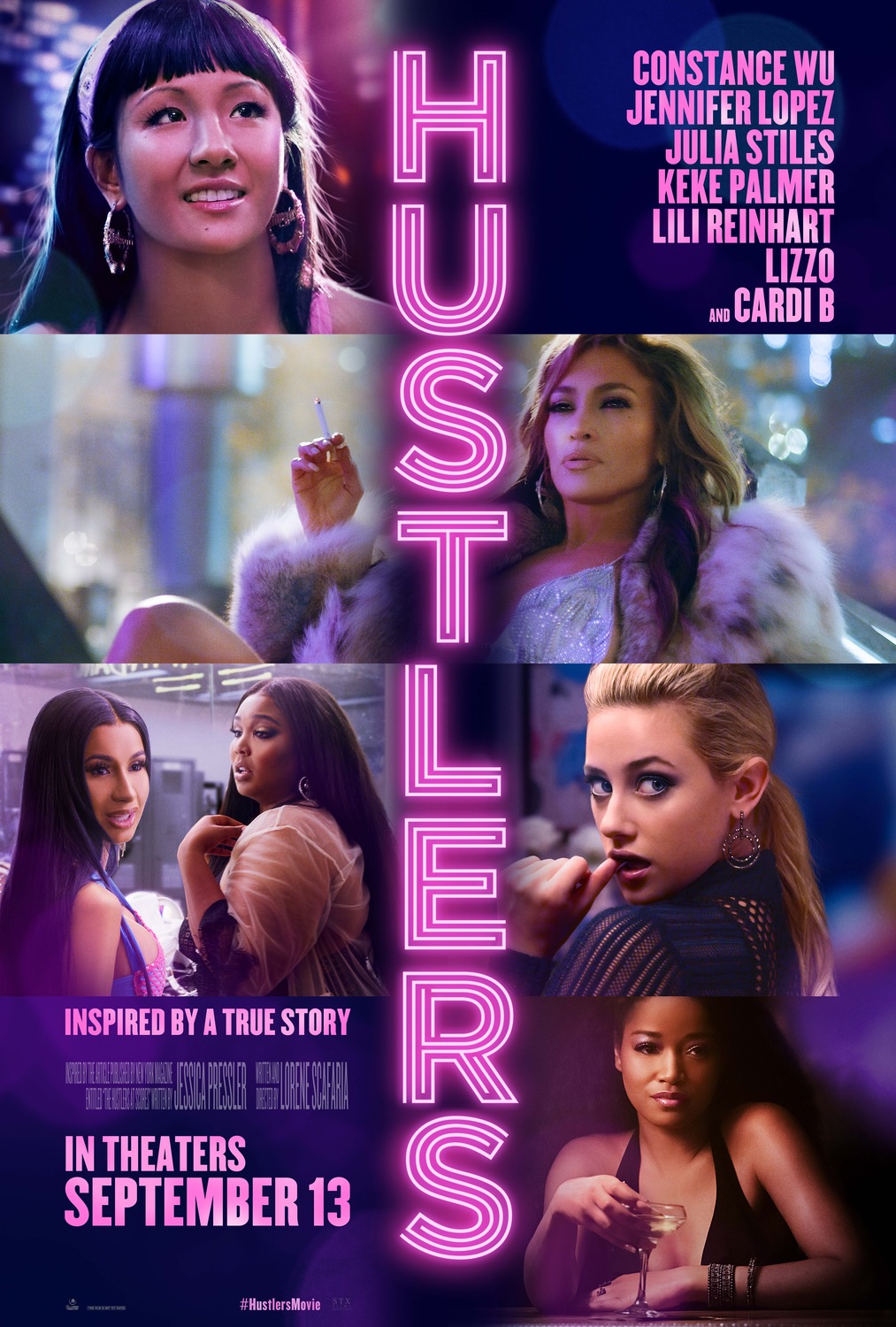
HUSTLERS – an Alternative Lens review

Starring: Constance Wu (Crazy Rich Asians), Jennifer Lopez (Second Act), Julia Stiles (The Bourne Identity), Keke Palmer (Scream Queens), Lili Reinhart (Riverdale), Cardi B, Lizzo (UglyDolls), Madeline Brewer (The Handmaid’s Tale), Mette Towley, Trace Lysette (Transparent) 

Writer/Director: Lorene Scafaria (Seeking a Friend for the End of the World)

Runtime: 1 hour 50 minutes

Release Date: 13th September (US, UK)

Crime films have often been the domain of the boys, but in recent years we’ve begun to see more female-centric entries in the genre; Widows, The Kitchen and Ocean’s 8 just to name a few. But even amongst those examples, Hustlers proves itself a step above by putting its femininity and sexuality at the forefront, making for a familiar yet unique experience that anyone who loves a good rise-and-fall story is absolutely going to dig.

Hustlers works fantastically as a companion piece to The Big Short (that film’s director Adam McKay is also a producer on this), switching perspectives from the financial dealmakers who saw it coming to the those on the lowest rung affected by its ramifications. It perfectly balances that line between saying screw you to the rich and spoiling itself in the glamour of the lifestyle, serving as a perfect catharsis for anyone still righteously pissed off by the whole ordeal. The film is structured and paced very much like any Martin Scorsese picture in the same vein, with a similar wit and self-awareness as it cuts around time and contradicts itself between the retelling and the truth. There are times where it occasionally lacks juicy detail, and by the end of the second act the story starts to grow a little stagnant, but luckily things escalate quickly towards the end. There’s a lot to take away from Hustlers, but more than anything I’m just glad to see a film about sex workers that is clever, well-made and far from exploitative of the community. We need more stories with a sympathetic pro-sex work perspective, and hopefully this is just the first in a new line of thinking on the subject for film.

For any film of this style, you need a strong cast of capable and confident actors, and Hustlers has them in spades. Taking the lead as Destiny is Constance Wu, who is absolutely ideal for the role as a smart but struggling and insecure young woman. Her comedic background definitely helps give her a charismatic spark, but Wu also impresses dramatically and is the glue that holds the movie together. With that said, it’s hard to deny that Hustlers ultimately belongs to Jennifer Lopez as the loving but conniving Ramona Vega. In easily her best performance since Out of Sight (and perhaps even ever), Lopez owns the screen from the minute she struts in. She absolutely brings new energy to the typical “charismatic head criminal who lures the hero in with promises of fortune” role, mainly by how she righteously frames their activities as a middle finger to the Wall Street yuppies who caused the crash in the first place. It’s a rich and captivating performance from beginning to end, and Lopez deserves serious awards consideration for her efforts.

The rest of the cast is strong across the board, but none get quite as much depth or screen time as Wu or Lopez. Keke Palmer and Lili Reinhart are good foils as their fellow conspirators, with Reinhart especially shining with a running gross-out gag that never fails to get a laugh, but their respective subplots are often forgotten about. Julia Stiles is as fantastic as you’d expect as the journalist chronicling the events, with her dryness making for a good counterpoint to the crazy situations she finds herself learning about, but again she lacks detail beyond her usefulness to the plot. Cardi B, Lizzo and Trace Lysette are also a lot of fun as fellow strippers, but fans of theirs may be disappointed to learn they essentially only have extended cameos, and are completely absent from the film by the end of the first act.

In regards to aesthetics, Hustlers certainly has visual flair. The film’s appreciation for Scorsese pictures extends here too, with the similar use of long tracking shots to establish ambience and character. The film is often awash in bright one-tone fluorescent lighting, which absolutely gives the film that seedy neon edge, but it also continuously runs the risk of causing colouring detail problems; unless you’re watching on a 4K HDR TV, home video versions of this are probably going to have a lot of washed-out sequences. The editing is also excellent, with some clever use of cross and match cutting, and the film’s soundtrack is packed full of contemporary pop and hip-hop tracks that perfectly compliment the film’s late 2000s/early 2010s setting.

Hustlers is like if The Wolf of Wall Street had a baby with Dead Presidents, but was high on Pain & Gain during the pregnancy. Its sex-positive feminist perspective is a breath of fresh air amongst typically macho crime dramas, and shines a much-needed spotlight on an often-disparaged community. Funny, brutal and heart wrenching all at once, this is a film any fan of the genre can appreciate, but is also very accessible to audiences who may usually shy away from these stories. It’s not exactly a shoo-in for Oscar season, but with the right campaign and critical buzz it deserves to at least be considered. It’s frankly disrespectful to constantly have to compare female-led films to their more prevalent male counterparts, but for all intents and purposes Hustlers stands as the Goodfellas of the women’s crime subgenre, and will probably hold onto that title for a solid spell.

FINAL VERDICT: 9/10

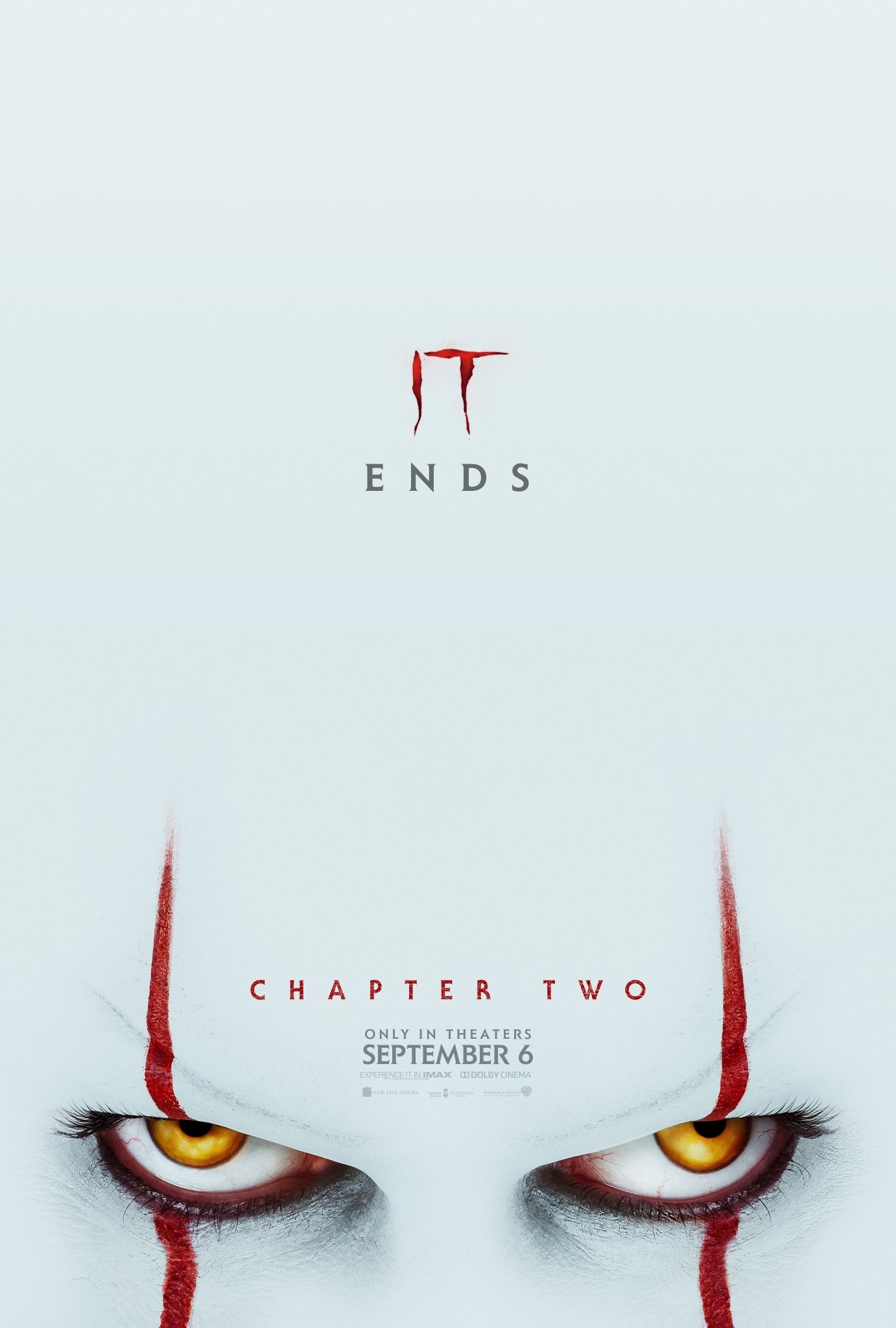
IT CHAPTER TWO – an Alternative Lens review

Starring: James McAvoy (Split), Jessica Chastain (Molly’s Game), Bill Hader (Barry), Isaiah Mustafa (Shadowhunters), Jay Ryan (Beauty & The Beast), James Ransone (Sinister), Andy Bean (Power), Bill Skarsgård (Assassination Nation)

Director: Andy Muschietti (Mama)

Writer: Gary Dauberman (Annabelle)

Runtime: 2 hours 49 minutes

Release Date: 6th September (US, UK)

When people talk about Stephen King’s It, much of the praise lies during its segments set during the Losers’ Club’s childhood encounters with the unsettling Pennywise. The second half, focused on the characters now as adults, is generally where fans of the book and the 1990 miniseries say things begin to fall apart. So whilst it was a smart decision for the filmmakers of the 2017 film adaptation to focus exclusively on the childhood storyline for the first instalment, they ultimately just kicked the can on tackling the trickier subject matter. Now with critical acclaim and box office success raising the stakes for Chapter Two, the big question surrounding the film is not only how it brings this tale of childhood trauma and fear to a close, but also how it addresses the issues that made its source material a disappointment to many. In execution, It Chapter Two does an admirable job of elevating its subpar inspiration into something engaging, but it can’t help but pale in comparison to its predecessor.

As an adaptation of the novel, Chapter Two stays faithful in spirit to the original story and boldly includes even some of the zanier concepts many filmmakers would try to avoid, but it also makes smart and welcome changes where it counts. The film is even keenly aware of its shortcomings and expectations, as dramatised through a running joke with novelist Bill (McAvoy) being consistently reminded that his stories often don’t have satisfying endings (which could apply as a criticism of any number of King novels). The story has been streamlined without losing its identity, though it does overlook some key aspects of the novel that were hinted at in the first instalment. Despite running close to three hours, It Chapter Two rarely suffers from pacing issues and is far too bonkers to ever be considered boring. The film’s main shortcoming is that it hits too many of the same beats as the first, especially as the formula of “character is alone, sees or hears something strange, gets drawn in with increasing tension, then something scary jumps at them before going away” gets picked for all its worth. However, when the film dives into new territory and embraces the nutty aspects of the source material, it begins to stand out. At moments, this is easily one of the more bizarre and outrageous blockbusters in recent memory, and I wish it embraced that side of itself more rather than rehashing what worked before.

What secured the first chapter of It as an instant classic was the fantastic performances of its lead cast of child actors, who all return here and are as solid as ever during flashback sequences. However, much of the film is focused on their adult counterparts, and they are unfortunately not quite as consistently solid. James McAvoy’s Bill is a bit of mixed bag, fluctuating between decent but underwhelming and cartoonishly crazed; it often reminded me of his performances in Split and Glass, and not in a good way. Isaiah Mustafa is also a bit off as Mike, with the character’s fanaticism played a bit too on the nose, and despite his character’s key role in the plot he again disappears for much of the story’s second act. Jay Ryan is decent enough as the now-handsome Ben, but there’s very little evidence of Jeremy Ray Taylor’s performance in his characterisation, with his personality now whittled down to merely “has a crush on Beverly” in the present-day storyline.

On the opposite end, James Ransone is not only fantastic as the adult Eddie but does an uncanny job of incorporating Jack Dylan Grazer’s mannerisms into his performance, absolutely making the character his own whilst respecting the work of his counterpart. Jessica Chastain similarly captures the core of Sophia Lillis’ Beverly whilst also extrapolating on her, giving further depths to her continued traumatised existence. However, the film’s MVP is easily Bill Hader as Ritchie. Not only is he a believable analog to Finn Wolfhard’s performance and brings much of the film’s humour, but he also puts in a tortured and relatable dramatic performance that many audiences may not have seen Hader pull off. Whilst the handling of his subplot is clumsy from a storytelling perspective (it’s hard to address without spoiling, but it’s another example of Hollywood trying to have its cake and eat it), Hader absolutely nails it from a performance perspective, and I hope this nets him more serious consideration for dramatic roles. Returning as Pennywise, Bill Skarsgård is as eerie and grotesque as ever but, even as the film goes deeper into the history and rules of the titular creature, his performance remains relatively unchanged from the prior film. If you’ve seen the first film, you know what to expect from Pennywise and the results are still satisfyingly gruesome, but I wish the character was given more opportunity to evolve rather than deliver more of the same.

The first It was one of the more visually arresting modern horror blockbusters, and those same sentiments can be shared for Chapter Two. Though it lacks the rich shadows and distinct foreboding camerawork that cinematographer Chung-hoon Chung brought to the first, Checco Varese does a decent job of emulating his style and brings a more dreamlike aesthetic to the picture, whilst Benjamin Wallfisch’s score continues to bring that perfect blend of horror movie creepiness and John Williams-like whimsy. Where this film really shines over the first is in its creature design, bringing new demented forms of Pennywise to the screen that are sure to inspire new nightmares for audiences. The visual effects that bring them all to life are equally impressive, and there’s nary a sign that extensive work has gone into de-aging the young cast for the flashback sequences.

It Chapter Two is a solid conclusion to the story began by its predecessor, but it is fighting an uphill battle right from the get go. As an adaptation of a notoriously kooky and unsatisfying half of an otherwise compelling novel, it manages to both excise and embrace its inspiration’s shortcomings in clever ways, but it can’t help but pale in comparison to the first. It Chapter One stands on its own as a gripping and haunting piece of horror cinema, whilst Chapter Two is incredibly beholden to the accomplishments of that film, and I can’t see future audiences watching it in isolation in the way the first part absolutely can; it’s more of a companion piece or an expansion pack than a full-fledged successor. Ultimately, what It Chapter Two does is prove no story, no matter how inherently wacky and absurd, can’t be mined and improved into something better, and hopefully that’s a lesson future Stephen King adaptations can use as a blueprint. Now…Maximum Overdrive remake, anyone?

FINAL VERDICT: 7/10