TEENAGE MUTANT NINJA TURTLES: OUT OF THE SHADOWS – a review by JJ Heaton

Starring: Pete Ploszek (Teen Wolf), Noel Fisher (The Twilight Saga: Breaking Dawn Part Two), Jeremy Howard (Galaxy Quest), Alan Ritchson (The Hunger Games: Catching Fire), Megan Fox (Transformers), Stephen Amell (Arrow), Will Arnett (The LEGO Movie), Brian Tee (The Wolverine), Tyler Perry (Gone Girl), Gary Anthony Williams (The Boondocks), Sheamus (The Escapist), Laura Linney (The Truman Show)

Director: Dave Green (Earth to Echo)

Writers: Josh Appelbaum & André Nemec (Mission: Impossible – Ghost Protocol)

Runtime: 1 hour 52 minutes

Release Date: 30 May (UK), 3 June (US)

Can we please all drop the pretence and admit it: Teenage Mutant Ninja Turtles is a bloody stupid concept. It’s highly entertaining and a large part of nostalgic pop culture for many, but even its creators don’t take it nearly as seriously as some of its fans do. The original comics were made as a satire of Frank Miller’s run on Daredevil in the 1980s, and from there it unexpectedly exploded into a phenomenon that engulfed the western world for close to a decade. Its popularity has never waned not only thanks to recent reinventions of the franchise for a new generation, but because fans of the original have stayed vocal in the geek community. With all that said, that doesn’t excuse how much of a disservice 2014’s Teenage Mutant Ninja Turtles was to the franchise. It was a mess of a film with an indecisive tone, a series of baffling changes to the series mythology that only made it stupider, a story that forced in unneeded tropes like heroic destiny, and a focus on the lame and miscast human characters rather than the heroes in a half-shell the audience paid to see. But for all its faults, the Turtles themselves were decently realized as characters and the action was at least entertaining from a mindless point-of-view, showing there was at least some potential for the movie to plausibly work. It was just about successful enough to warrant a sequel, but if the fans are to be won over the filmmakers are going to have to knuckle down and finally give them what they want. And with Teenage Mutant Ninja Turtles: Out of the Shadows, I think they’ve done just about as good a job as they could.
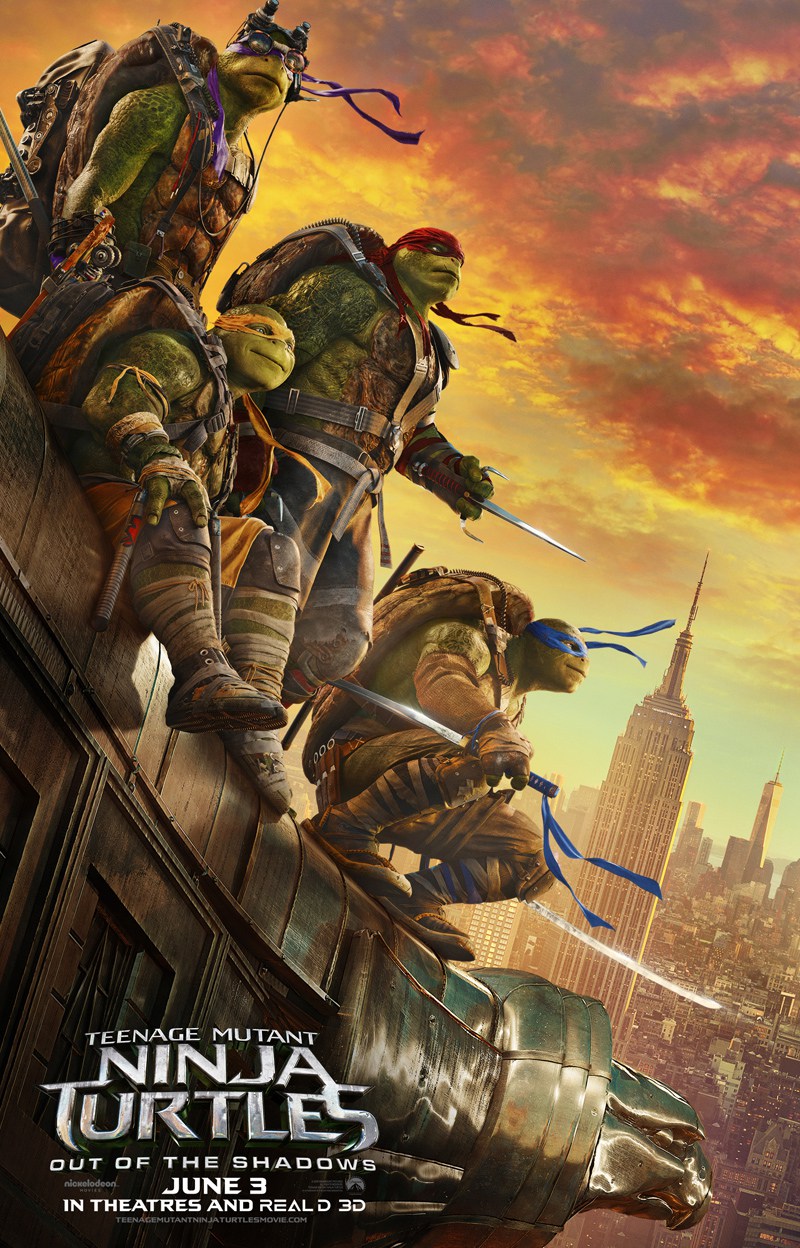
teenage-mutant-ninja-turtles-out-of-the-shadows-poster

What really sunk the first film is that it couldn’t quite decide if it wanted to be a grounded reinterpretation of the property or just a goofy summer blockbuster, in the process making a film too self-serious to enjoy but also too juvenile to have respect for. All TMNT fans have ever really wanted is a straight-up live action adaptation of the 80s cartoon, and that pretty much is exactly what Out of the Shadows is with everything good and bad that comes with that. Any attempt at being something deeper has been thrown out of the window in favour of finally embracing the ridiculous nature of the source material, and with that one simple but key decision everything else falls into place. Yes, the plot is a simple fetch quest that could have easily been pulled from any number of episodes of the cartoon, but that’s what it’s trying to do. Yes, the science makes absolutely no sense and concepts like dimensional gateways and brain monsters controlling mechs are completely at odds with much of the rest of the movie, but compared to the insanity of other parts of the TMNT world it’s practically restrained. It also makes the smart decision of not dwelling too much on the mistakes of the past; the Turtles’ botched origin isn’t mentioned beyond a quick throwaway line, William Fichtner’s character doesn’t even get acknowledged, and the creepy way Michelangelo and Will Arnett’s Vern would ogle April (Megan Fox) is incredibly downplayed. There’s a real sense that the filmmakers have actually listened to fan complaints and tried to rectify them as best they can. Not every mistake can be fixed since it still has to serve as a sequel and many problems are deep within that first film’s DNA, but as a post-mortem clean-up job I think they’ve done admirably in delivering all fans really wanted: a fun adventure with the Turtles that embraces everything they love without the need to be ironic or ashamed.

Unlike last time where our title heroes took backseat to April and Vern, the Turtles are unquestionable the main characters in their own movie here. The film starts and ends with them, they have an important impact on the plot beyond being living MacGuffins, and they even have understandable internal conflicts and emotional growth drawn from their distinct personalities. Sure, their development isn’t much more involved than learning to accept themselves and their place in the world, but even something simple like that is enough to allow the audience to better invest in these characters. The human characters are now where they belong as supporting players and, though still not especially compelling, at least they don’t eat up half the runtime. Megan Fox is still incredibly out of her depth as April O’Neill and Will Arnett can be obnoxious as Vern Fenwick, but in their new positions they fit more comfortably into the movie and don’t distract from what we can to see.

On the new character front, it’s a bit of a mixed bag. Stephen Amell may be a decent enough actor, but as Casey Jones he feels incredibly miscast. He certainly has the physique for the role and Amell at least looks like he’s at least enjoying himself, but simply lacks the laid-back charisma the character calls for; take the exact same script and give it to someone like Chris Pratt, and you’d have a more faithful representation of the character. Laura Linney frankly feels wasted as the generic police captain who turns from bitter and stern to supportive and trustworthy after one inspirational speech, and whilst Brian Tee’s interpretation of the Shredder is certainly a lot closer in spirit to the original character he’s constantly sidelined by the other villains in the movie; he never even gets involved in a major action sequence and is relegated to barking orders. Luckily, Shredder’s lack of presence is at least made up for by the many other villains in the movie, who are all not only far better than the pitiful excuse for villains last time but outrageously so. Bebop & Rocksteady are easily the most fan-requested characters to appear in a TMNT movie, and here they are given justice with lots of screen time and two major action sequences revolving around them; their dumb but happy-go-lucky personalities serving as a very apt metaphor for the film’s mentality. In a similar vein, Krang is finally given the big screen treatment and not much is sacrificed in the translation, complete with an enormous mech to fight the Turtles with and a certain “technological dome” at his disposal. He’s not in the film as much as many would like, but he’s great whilst he’s there and there’s certainly plenty of possibility for him to do more in future instalments. And, whilst I may be embarrassed to say it, I thoroughly enjoyed Tyler Perry as Baxter Stockman. He may be playing the stereotypical nerdy scientist complete with big glasses and bowtie, but he’s clearly aware of what kind of movie he’s in and is having so much fun hamming it up that it becomes infectious.

If there’s one thing I will say in the first movie’s favour, it’s that the action scenes were a lot better done there. Jonathan Liebsman may be a thoroughly bland director, but he at least had experience in directing action, whilst Dave Green is a relative newcomer with only a few shorts and a found footage movie under his belt. The action here is by no means incompetent or unoriginal, but it lacks the ferocity and visceral impact the first film had, mainly because it relies less on martial arts and more on causing mayhem. Fitting in with the lighter tone, the film’s look is significantly brighter with highly saturated colours and a far more outlandish approach to production design and visual effects. Not only does the CGI on the Turtles look more seamless but their designs have been noticeably streamlined to be a teeny bit closer to their classic look, thankfully looking less like roided-out Shreks this time. Similarly, Bebop & Rocksteady and Krang have both received updates to their appearance but are still instantly recognisable as those characters, proving they aren’t impossible to realise on screen and providing hope even more of the wackier side characters from TMNT lore could make the jump to the big screen. Honestly, at this point, introducing Ace Duck wouldn’t be too much of a left turn.

I was on the fence for the entire movie about whether Teenage Mutant Ninja Turtles: Out of the Shadows was a genuinely enjoyable dumb movie or just better in comparison to the lacklustre previous film…and then the end credits happened. I won’t say much more, but the moment they kicked in I not only grinned like a seven-year-old but I felt affirmed in my opinion on the film. Is this film ridiculous and stupid? Yes, but it’s clearly meant to be. Will people who don’t care about the franchise enjoy it? Probably not, but it’s certainly not made for them. Judged just like any other movie, this is garish disposable nonsense, but doing so would be snobbish and ignorant. This is a movie that looks at how crazy the source material is, sees how rabid the fan base is for it to be unleashed in all its insanity, and actually has the guts to say “F*ck it! Give them what they want!” without an ounce of shame. It is most certainly junk food cinema, but not the kind you immediately regret after consuming. This is the kind of absurd escapist movie experience that is enjoyable and even healthy in small doses, but it would be advisable to balance it out with something a little healthier on the brain. If you’re not at all invested in Ninja Turtles, you can easily knock a few points off my score. But if you grew up with even an ounce of these characters in your life, and you’re willing to admit to yourself that the franchise is inherently ridiculous, I suggest you at least give this movie a chance. Is this the perfect Ninja Turtles movie? No, but there is no such thing in existence. Perhaps barring the original 1990 film version, I’d say this is the best realisation of the franchise in cinema history, especially taking into consideration it’s a sequel to arguably the worst realisation of the franchise in cinema history. For that, I think this movie at least deserves a hearty proclamation of the Turtles’ immortal words: COWABUNGA!!!

FINAL VERDICT: 7/10
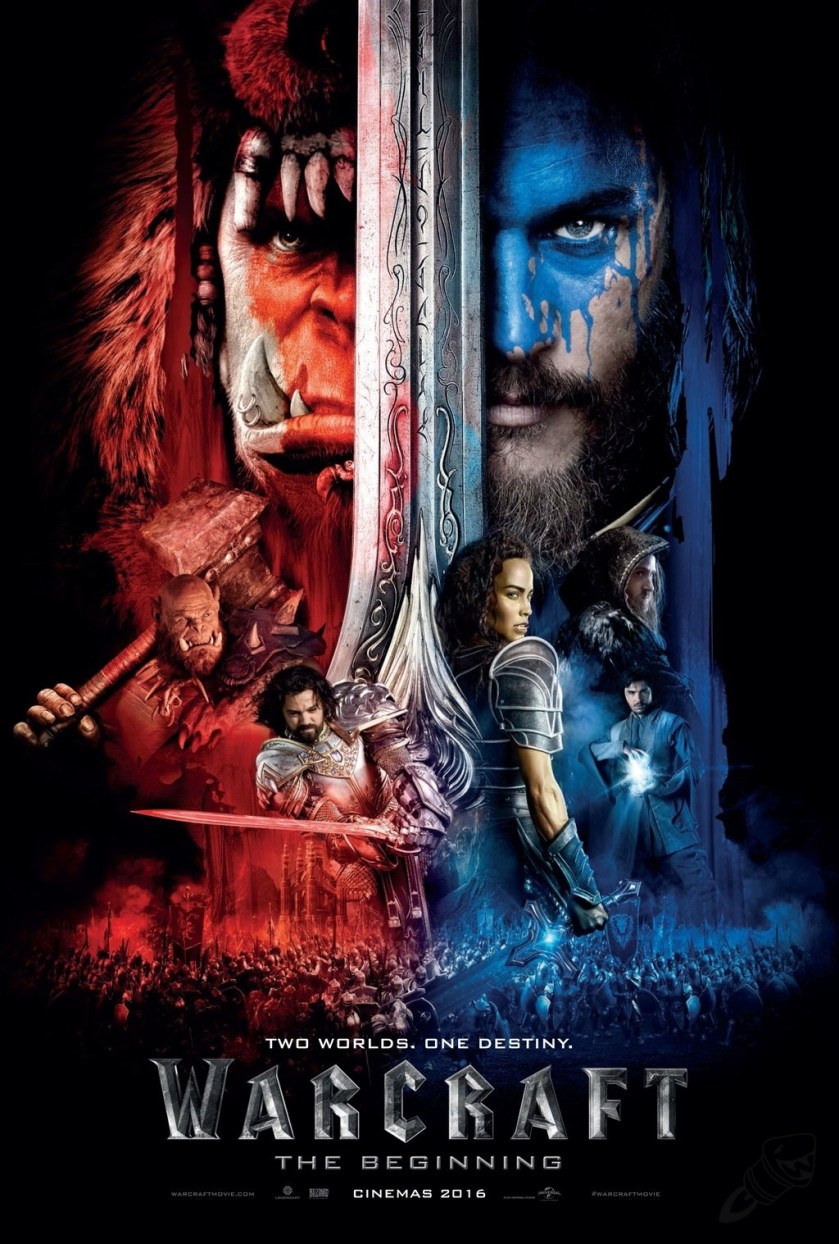
WARCRAFT – a review by JJ Heaton

Starring: Travis Fimmel (Vikings), Paula Patton (2 Guns), Ben Foster (Lone Survivor), Dominic Cooper (The Devil’s Double), Toby Kebbell (Dawn of the Planet of the Apes), Ben Schnetzer (Pride), Rob Kazinsky (Pacific Rim), Clancy Brown (Highlander), Daniel Wu (The Man with the Iron Fists), Ruth Negga (Agents of S.H.I.E.L.D.)

Director: Duncan Jones (Moon)

Writers: Charles Leavitt (Blood Diamond) and Duncan Jones

Runtime: 2 hours 3 minutes

Release Date: 30 May (UK), 10 June (US)

Warcraft is a film that has a lot riding on it in the video game community, for it has long been the project eyed as the one that might finally break the video game movie curse. It’s got its creators Blizzard Entertainment supporting it, a wonderfully talented director and massive fan of the property in Duncan Jones, and a budget that is more than ample enough to bring the world of Azeroth to life in an accurate and fantastic manner. All it now has to do is have a well-told story and strong characters…and that’s unfortunately where Warcraft hasn’t quite nailed it.

509284

From a basic story perspective, Warcraft is a solid fantasy adventure that relies on tropes of the genre but also puts some unique spins on those elements to create something fresh. Most importantly, it eschews the traditional good vs. evil conflict and adds dimensions to both sides of the conflict between the Alliance and the Horde. It shows that our heroes can be prejudiced and susceptible to corruption, and that our supposed villains can value friendship and honour. In a similar vein, neither side feels like they dominate the other; victory and tragedy occurs on both sides, and by the conclusion there is no finite victory. It’s not quite Game of Thrones levels of complex, but it does genuinely keep you on your toes about which side will win and leaves plenty of interesting avenues to explore in potential sequels. Regrettably, however, a lot of the execution feels fumbled. The story’s pacing is far too fast, especially in the first act as it rushes the audience into the plot without much introduction to key characters and elements of the mythos. Once the film settles in and the story begins to ramp up, it does begin to flow a lot more smoothly, but the hasty introduction makes it hard to be invested earlier on. It does feel like a lot was cut out to make for a breezier runtime, but in the process it’s made the story feel sloppy and overstuffed. The tone of the film is also somewhat inconsistent; at some points it embraces the sillier elements of the lore through comedic asides or references to the game, but at others it takes everything desperately serious in spite of the ridiculousness of the situation.

Having said that, the real stumbling block for Warcraft is in its desperate lack of character. Many of the main characters, especially those on the Alliance side, don’t get much personality or development, too often motivated by the necessities of the plot rather than their natural motivations. Travis Fimmel’s Lothar suffers from this the most, being introduced suddenly with little fanfare despite ostensibly being the main character and his only reason for fighting being a bland son he only shares a handful of lines with. There’s a lot of great potential for a complex character in him, but it feels like they haven’t gone much deeper than you’d see on a brief character summation. This wasted promise is similarly felt in Ben Foster’s conflicted guardian Medivh and Ben Schnetzer’s inexperienced mage Khadgar, who are also too thinly drawn to become invested in their characters. Because of this, there are some big moments in the story that fall flat or don’t impact quite the way they should. It wants us to care about the fates and relationships of these characters, but it simply hasn’t set them up well enough for the audience to do so. In an odd switch to the norm, the Horde characters are far more fleshed out and compelling to watch, especially in the conflicts of loyalty displayed by Toby Kebbell’s Durotan and Paula Patton’s Garona. Motivated by his devotion to his wife and newborn son, along with a strong friendship with fellow orc Ogrim (Rob Kazinksy), Durotan possess everything that all of the characters in Warcraft should have by default. Garona is similarly fascinating as the bridge between the two sides, with all including her unsure of where her alliances fall, and the way her story plays out makes for a tragic character with fantastic promise in further stories.

If nothing else, Warcraft easily takes the title of most accurate visual translation from video game to motion picture. Though I’m not a huge fan of the franchise, the iconography on display from certain sets, creatures, props and costumes feel ripped right out of any of the games, and though many look garish and impractical on first glance they quickly become just another part of the outlandish grandeur of the production. The visual effects are also impressive and look spectacular in motion, even if the orcs never look 100% realistic. There are times when the movie just looks like a cinematic from the games when there’s nothing but CGI characters on screen, but when paired with massive armour and humongous swords of the Alliance characters it all surprisingly melds together. Top it all off with some beautifully sweeping cinematography (that sometimes even mimics the camera of the classic Warcraft games) and a suitably epic score from Ramin Djawadi, and you’ve got a film that certainly looks and sounds epic even when it doesn’t quite feel epic.

Sadly, Warcraft isn’t going to be the film that becomes the blueprint for video game movies moving forward, but it is at least a solid step towards that eventuality. As a translation of the source material, it has all of the elements it needs to be a genuinely great film but it still hasn’t quite grasped that key component: audience investment, and how that differs between the two mediums. In a video game, investment becomes easier because we are in control of far more of the action; we bring far more of our own personality into the experience. But in a film, it’s up to the filmmakers to craft the journey and, through careful manipulation of emotion, make us care about events on screen we have no control over. As much as Warcraft has tried to create a richly detailed world and complex characters to inhabit it, it hasn’t quite done enough to make a passive audience emotionally connect with it. When a video game film can finally grasp that, then we might have finally reached zenith we’ve been waiting for. Regardless of its final quality, I will make this final statement: if you want to see more good video game movies, please go see Warcraft for no other reason than to support an honourable effort and show Hollywood that they are a viable commodity. If you don’t, its failure will be written off as another example that “video game movies don’t work” and we’ll never get anywhere. They haven’t nailed the formula yet, but they are damn close. We just need to give them a few more chances.

FINAL VERDICT: 6.5/10

ALICE THROUGH THE LOOKING GLASS – a review by JJ Heaton

Starring: Mia Wasikowska (Crimson Peak), Johnny Depp (Black Mass), Helena Bonham Carter (Les Miserables), Sacha Baron Cohen (The Dictator), Anne Hathaway (Interstellar), Rhys Ifans (The Amazing Spider-Man), Stephen Fry (Sherlock Holmes: A Game of Shadows), Alan Rickman (Die Hard)

Director: James Bobin (Muppets Most Wanted)

Writer: Linda Woolverton (Maleficent)

Runtime: 1 hour 53 minutes

Release Date: 27 May (US, UK)

Tim Burton’s Alice in Wonderland has a very peculiar place in film history in retrospect. Hitting cinemas right in the wake of the success of Avatar, its similar extensive use of CGI and 3-D led to it grossing over a billion dollars worldwide despite an incredibly divisive reception from critics and audiences; some were dazzled by its visuals, whilst others called it Hollywood nonsense that completely misunderstood Lewis Carroll’s work. Whilst it does certainly have fervent fans to this day, for a movie that did so well at the box office it has faded from public perception quite quickly; then again, so has our fascination with CGI and 3-D. But a highly profitable movie, no matter how bad, is practically guaranteed a sequel and so now we have Alice Through the Looking Glass. Six years later, will everyone who loved the first one come back to Wonderland, or has any love for that film already been lost to the passage of time?

alice_through_the_looking_glass

One of the many problems with Burton’s Alice is that it took a book that didn’t really have a story and gave it elements like a heroic prophecy and a good vs. evil conflict. It treated Carroll’s world as if it had some deep mythology in the vein of Lord of the Rings when really it was just a series of bizarre non-sequiturs with adult undertones; in other words, it missed the bloody point and ended up being a generic fantasy film. This sequel continues heading even further away from the source material to create an entirely new story with concepts never even touched upon in the books. Like a science fiction show that’s jumped the shark after running out of ideas, Alice Through the Looking Glass puts time travel at the forefront of its story as our heroine jumps through the history of Wonderland to save the life of the Mad Hatter. Now, barring a few pointless detours like Alice finding herself in an insane asylum in a PG-rated rip-off of American McGee’s Alice, from a structural perspective the film is at least competently crafted. The pacing never drags, the tension is constantly rising, and it at least has a good heart with its message about how we can’t change the past and that the present should be cherished whilst it can. It’s all perfectly fine, but again the point must be made: this doesn’t belong in Alice in Wonderland. If this were its own fantasy world with the same story but different characters, it would be a perfectly acceptable movie. But because it bears the Alice name but uses none of the source material beyond characters and locations, it only further proves how little respect the filmmakers have for the original work.

The original version of Alice is somewhat of a blank slate; she’s a normal person like us lost in this peculiar world, and we relate to her because she’s just as confused by what she sees as we are. In yet another example of not getting it, Burton’s Alice was forced into a chosen one archetype but given no real agency in the plot or a personality beyond a strong determination to be kind of weird and awkward. Here, Alice is at least more of a proactive presence in her own story but she’s still about as fascinating a character as a teacup (and not even a decorated one). The film tries to convince us she’s this go-getting ship captain who wants to break the gender barrier, but we’re still not given much reason why and Mia Wasikowska again doesn’t help much with her vacant, uninspiring delivery; she’s like a female Keanu Reeves. Johnny Depp thankfully doesn’t get as much chance to chew the scenery as the Mad Hatter like last time (probably because his buddy Burton is now in the back seat), but he’s still the bizarre mix of gaudy design and inconsistent accents he was last time. Most of the rest of the supporting cast is also relegated to a mere sideshow, with Anne Hathaway’s White Queen being the only other one with any relevance to the plot; to see greats like Stephen Fry, Michael Sheen and the late Alan Rickman relegated to mere footnotes is quite disappointing. But on the bright side, the film does at least have decent antagonists with the return of Helena Bonham Carter as the Red Queen and the introduction of Sacha Baron Cohen as the physical manifestation of Time. Baron Cohen is easily the most interesting aspect of the movie, stealing every scene he’s in with his erratic personality and his Werner Herzog-inspired accent. He’s also not painted as an obvious villain; like the construct he represents, he’s a good thing or a bad thing depending on the situation at hand. Sure, this does open the floodgates for a metric ton of time puns, but the fact that Time himself is as perturbed by them as we are does create some levity. Meanwhile, Bonham Carter was one of the few bright spots of the first film and here she’s just as loud and spoilt as ever, but they’ve gone through the effort of giving her an actual character arc and surprisingly ends up being the emotional core of the story; it’s perhaps a little haphazardly done, but the thought is still appreciated.

From a visual perspective, Alice Through the Looking Glass is a bit of a mixed bag. There’s a lot of great work from a design perspective and there are really imaginative visual ideas like literally travelling through the seas of time or the world being eaten up by rust; well done to whoever came up with all the time travel concepts. However, not only is there a lot recycled from the first film, it suffers from the same overreliance on CGI as its predecessor. After seeing how Disney could so amazingly render photorealistic environments and seamlessly integrate human elements into them with The Jungle Book, to watch this film and be constantly so aware that I’m really watching two actors on a green screen just doesn’t cut it anymore. For the most part, I felt less like I was witnessing an imaginatively-realised world like Pandora and more like I was watching The Adventures of Shark Boy and Lava Girl; it’s not that bad, but in comparison to its peers it looks really outdated.

I don’t hate Alice Through the Looking Glass. I don’t even question why it exists (easy answer: money), nor am I really surprised by its quality given the first film. I’m just kind of saddened that this is what’s deemed acceptable. The works of Lewis Carroll have been better adapted before, Disney themselves have better adapted them before, and yet what is offered to us in his name is something that with a few basic rewrites could be made to be something completely different. Beyond the continued sullying of classic literature into generic glop for the masses, this is still a pretty meh excuse for a fantasy film, and even the new elements I did appreciate about it I think would have been far more interesting if used as the basis of a new story rather than bolting them onto a world they never belonged in. I think at this point it’s unrealistic to think this film will go over as well commercially as the first, but if it makes even half as much as Alice in Wonderland it will still be deemed a success. Sigh. What a sad world we live in.

FINAL VERDICT: 4/10

THE NICE GUYS – a review by JJ Heaton

Starring: Russell Crowe (Gladiator), Ryan Gosling (Drive), Angourie Rice (These Final Hours), Margaret Qualley (The Leftovers), Matt Bomer (In Time), Kim Basinger (Batman)

Director: Shane Black (Kiss Kiss Bang Bang)

Writers: Shane Black & Anthony Bagarozzi

Runtime: 1 hour 56 minutes

Release Date: 20 May (US), 3 June (UK)

When you go see a Shane Black movie, you know from just his name what you’re going to get: a familiar but cleverly woven plot, witty dialogue, constantly bickering characters, some explosive action, and all of it set at Christmas. If you’re a serious cinema buff, you worship at this guy’s altar, and if you’re not then I’m sure you’ve at least seen Lethal Weapon or something. Black may deliver a similar product every time, but that product is always of quality and that’s because he’s a master at what he does. After finally breaking into modern Hollywood blockbusters with Iron Man 3, it seems Black has taken his newfound clout to pursue a passion project. And so now we have The Nice Guys, and it couldn’t be more of a Shane Black film if it tried.

the-nice-guys-poster

The Nice Guys, like all of Black’s work, shares many similarities with other films in his own filmography. Here, it takes the caper comedy hijinks of Kiss Kiss Bang Bang and gives it the chemistry and grit of Lethal Weapon, all wrapped up in the typical Raymond Chandler-esque mystery plot he so often homages. Outside of Black, there are also a few dashes of LA Confidential and Boogie Nights to the plot thrown in for good measure, adding up to create a film that is just like every Shane Black film but still somehow its own unique beast. What starts as a simple missing person investigation evolves into a madcap adventure across Los Angeles, subverting many clichés of the genre along the way as it takes its digs at the depraved side of popular industry and the flawed judgement of the justice system. Sure, the film hits every beat of the buddy cop movie right on point, but every other beat has a unique twang that could have only come from the pen of Black; a perfect example of why following the formula isn’t always a bad thing. The pacing is airtight, keeping the mystery alive with healthy breaks for gunfights and punch-ups, and never does a scene go by without some quotable remark or memorable piece of physical comedy. All in all, you’re going to be perfectly satisfied by the experience if you know what to expect.

But what always truly defines a Shane Black film is its mismatched pair of protagonists. Murtaugh and Riggs, Hallenbeck and Dix, Slater and Madigan, Caine and Hennessey, Lockhart and Gay Perry; all great examples of that lovable dynamic copied by many but so rarely perfectly imitated, and I think Jackson Healy and Holland March should be added to that list. Russell Crowe and Ryan Gosling are perfectly cast and make for an instantly entertaining duo as the roughneck Healy and bedraggled March respectively, constantly trading barbs and making each other look like idiots through their misguided shenanigans. Crowe makes for an intimidating presence as he very straightforwardly informs his foes how he’s going to ruin their day, but he also brings a lot of depth to the role as a man who honestly wishes he could help in a way other than punching. Gosling is similarly troubled and brought down by the world, but he instead deals with it all through booze and confusing humour, providing witty comic relief that will have you both laughing with and at him. But there is a surprise third wheel to the usual two-hander formula, and that comes in the form of the wonderful Angourie Rice as March’s smartarse daughter Holly. Rice brings an intelligence beyond her years to a role that could have easily been annoying and superfluous but she ends up stealing away many scenes from the Hollywood superstars, actually solving the case half the time whilst Crowe and Gosling find themselves lost in their own idiocy; the Penny to Gosling’s Inspector Gadget. Margaret Qualley is also an entertaining presence as the elusive centre of the caper Amelia, and when is it ever a bad idea to add the baritone awesomeness that is Keith David to your movie? If there are any weaknesses in the cast, it would have to be Kim Basinger’s Judith Kutner. It’s not down to Basinger’s performance, but for a character so pivotal to the plot she’s introduced practically halfway through and only gets two scenes, ending up doing far more of her plot-important activities off-screen.

Whenever you see a movie set in the 1970s, it usually feels like they’re overdoing it even when it’s good. But here in The Nice Guys, it never feels overbearing. From the fashion and culture to the music, this is clearly a period film but it never feels the need to shove it down your throat. From a technical perspective, this is a film that could have easily been made forty years ago with its grainy sun-soaked visuals and the controlled grit of its camerawork; only rarely does the spell break and you remember you’re watching a 2016 film. The film’s soundtrack makes great of use of some classic period tunes, and the funk-filled score by John Ottman and David Buckley compliments the rest of the music impeccably.

The Nice Guys is a yet another jewel on the crown of Shane Black’s gleaming crown of a career, once again reaffirming himself as one of cinema’s darlings. It’s a wickedly entertaining ride that feels familiar but under the hood is a noticeably different beast to any of its creator’s other works. Crowe and Gosling are a perfectly matched duo that I’d love to see collaborate again whether in a sequel or a completely unrelated venture entirely, and someone please give this Angourie Rice girl more movies to steal the show in. But now that Black is moving onto his new entry into the Predator franchise, all I can wonder is how he’s going to incorporate Christmas into that movie.

FINAL VERDICT: 9/10

X-MEN: APOCALYPSE – a review by JJ Heaton

Starring: James McAvoy (Wanted), Michael Fassbender (Shame), Jennifer Lawrence (The Hunger Games), Oscar Isaac (Drive), Nicholas Hoult (Mad Max: Fury Road), Evan Peters (American Horror Story), Sophie Turner (Game of Thrones), Tye Sheridan (Mud), Kodi Smit-McPhee (The Road), Alexandra Shipp (Straight Outta Compton), Olivia Munn (Magic Mike XXL), Rose Byrne (Bad Neighbours)

Director: Bryan Singer (The Usual Suspects)

Writer: Simon Kinberg (X-Men: Days of Future Past)

Runtime: 2 hours 24 minutes

Release Date: 18 May (UK), 27 May (US)

Here’s a fun fact: the X-Men film franchise is now 16 years old. That’s twice as old as the Marvel Cinematic Universe so far. Since the first film came out in 2000, we’ve seen three different actors play Spider-Man, two Batmen, two Supermen, two Daredevils, three Punishers, and two Fantastic Four line-ups. Sure, the series has had its ups and downs and there’s been a few retcons along the way, but to see a film series stay alive this long whilst maintaining a semblance of continuity is unheard of. I believe that’s mainly down to how much source material there is to draw from, with decades of stories yet to be plundered that would make for awesome movies. Apocalypse finally gives us one of the X-Men’s biggest villains on screen, but is bigger necessarily better?

cf7kkqeuuaeqame

From a scale perspective, this is easily the largest X-Men film to date. There are more characters, more locations, and more stakes than ever. Whilst previous films focused on the socio-political struggle between humans and mutants with some action sequences thrown in, Apocalypse is basically a Roland Emmerich disaster movie with superpowers; landmarks are destroyed, the fate of humanity is at hand, and only the merry band of mutants can save the day. It really is a massive film, but that’s unfortunately its biggest downfall. There’s a lot of great stuff that both fans of the films and comic book aficionados are going to love, but there’s so much that a lot of it gets lost in the shuffle. It doesn’t suffer from a jumbled narrative the way Batman v Superman did, nor does it haphazardly throw characters and references for ill-conceived fan service like The Last Stand. Everything in the film from a story perspective works at least competently, but there’s rarely a moment to breathe in everything going on. The film flows well but it does drag on a bit, mainly thanks to some plot detours that could have been circumvented with a few minor changes. The story also suffers from a lot of logic issues given the large time gaps in between films (e.g. how can the teenage Cyclops and Havok be brothers when Havok was already an adult during First Class 20 years prior?). However, from a pure spectacle perspective, Apocalypse does deliver a lot of solid action and embraces the comic books more than ever in ways that I’m sure will please fans who’ve been less than impressed with its predecessors’ more grounded approach.

Whilst the movie doesn’t fully deliver on story, it makes up for a lot of it with its characters. This trilogy that began with First Class has always focused on the relationship between Professor X, Magento and Mystique, and their respective actors continue to excel in these now-iconic roles. Jame McAvoy fully completes his transformation into the Charles Xavier we know from the original films, shedding his boyish charm and becoming the inspirational leader we’ve all come to know. Michael Fassbender finds more hidden depths in Magneto as he struggles with his own conscience, resulting in easily the film’s most heart-wrenching moments, and Jennifer Lawrence’s Mystique continues to evolve as she comes to terms with her status as a hero in the mutant community after Days of Future Past. Evan Peters’ Quicksilver also returns in a much bigger role this time around after stealing the show last time, and not only is Peters still fantastic in the role they’ve somehow found a way to top his standout scene from the previous film. In terms of the new cast, the easy standouts are Sophie Turner, Tye Sheridan and Kodi Smit-McPhee as the younger versions of Jean Grey, Cyclops and Nightcrawler. Turner perfectly balances the line between fragility and power Grey has always laid on, Smit-McPhee brings some much needed humour to the proceedings, and they’ve not only finally given Cyclops screen time but they’ve also made him far less boring; it only took them five tries. Whenever the film finally takes a breather from the plot to develop character, it does so very well. Moments like Cyclops and Jean bonding over being outcasts or Mystique telling the younger X-Men about her experiences really add some much needed depth in between all of the carnage.

However, with a cast this massive there’s bound to be plenty of characters brushed over. Nicholas Hoult lacks anything meaningful to do this time around as Beast, and Rose Byrne’s Moira MacTaggart is only here to provide an exposition dump and wrap up a plotline from First Class. Some of the new characters also feel short changed; Alexandra Shipp gets a few moments to shine as Storm, but Olivia Munn’s Psylocke and Ben Hardy’s Angel have no real character and are really only there to look cool in action sequences. But the biggest disappointment is the titular villain Apocalypse himself. Oscar Isaac puts in a strong performance as the character and he’s certainly a worthy opponent on the battlefield, but he’s so all-powerful and beyond human emotion that he’s kind of uninteresting. He’s basically just an OP Magneto without the sympathetic back-story, and without that humanity his motivation ends up being nothing more than another bad guy with an Übermensch obsession.

Back in 2000, hardcore X-Men fans were upset that the film abandoned the traditional spandex costumes in favour of dull black leather; then again, these were mostly the same fans complaining about Hugh Jackman’s height. But over time the films have gradually seeded in more and more visual elements from the comics, and Apocalypse continues that trend even further. It’s still not quite 100% faithful in the way the MCU films are, but seeing Psylocke in a comics-accurate costume or Jean Grey use her powers to her full potential finally shows the stigma towards the source material’s more outlandish elements is fading away. After dealing with both the 60s and 70s in previous films, Apocalypse tackles the 1980s just as well with plenty of period detail in the set design and costumes; it also makes the film visually look even more like a Chris Claremont-era comic come to life. With all of the different powers on display amongst all of the wanton destruction, this is also easily the most effects-heavy X-Men film and the spectacle of it all certainly sells the scale. There are moments where it can become too busy with CGI, but then you get Quicksilver’s showstopper and you’ll forgive any slightly shoddy digital stand-in. John Ottman returns for his third stint as composer on the franchise, once again bringing back his awesome theme from X2 along with some new tunes that perfectly fit the film’s tone.

There’s a scene in X-Men: Apocalypse where several characters go to see Return of the Jedi and walk out debating which of the Star Wars movies is best. The argument comes to a close when Jean Grey says, “I think we can all agree the third is the worst.” Now this is probably meant as another stab in the gut for The Last Stand, but it unintentionally also works as a metaphor for this film in comparison to First Class and Days of Future Past. Apocalypse has a lot of great moments that rank amongst the best in the franchise’s history, but it doesn’t quite add up into a satisfying whole. It’s overstuffed with content, resulting in a lot of wasted potential and a lack of definition, but it’s entertaining to watch for sure and it further opens up the potential for this franchise to expand in exciting ways. But perhaps for the next instalment, taking a step back from the epic might be the best idea. Not every superhero movie needs to be about the end of the world, and the X-Men have always been better as allegorical commentary rather than visual spectacle. Let’s focus back on the characters, tell a simple story, and just let the X-Men be X-Men.

FINAL VERDICT: 7.5/10

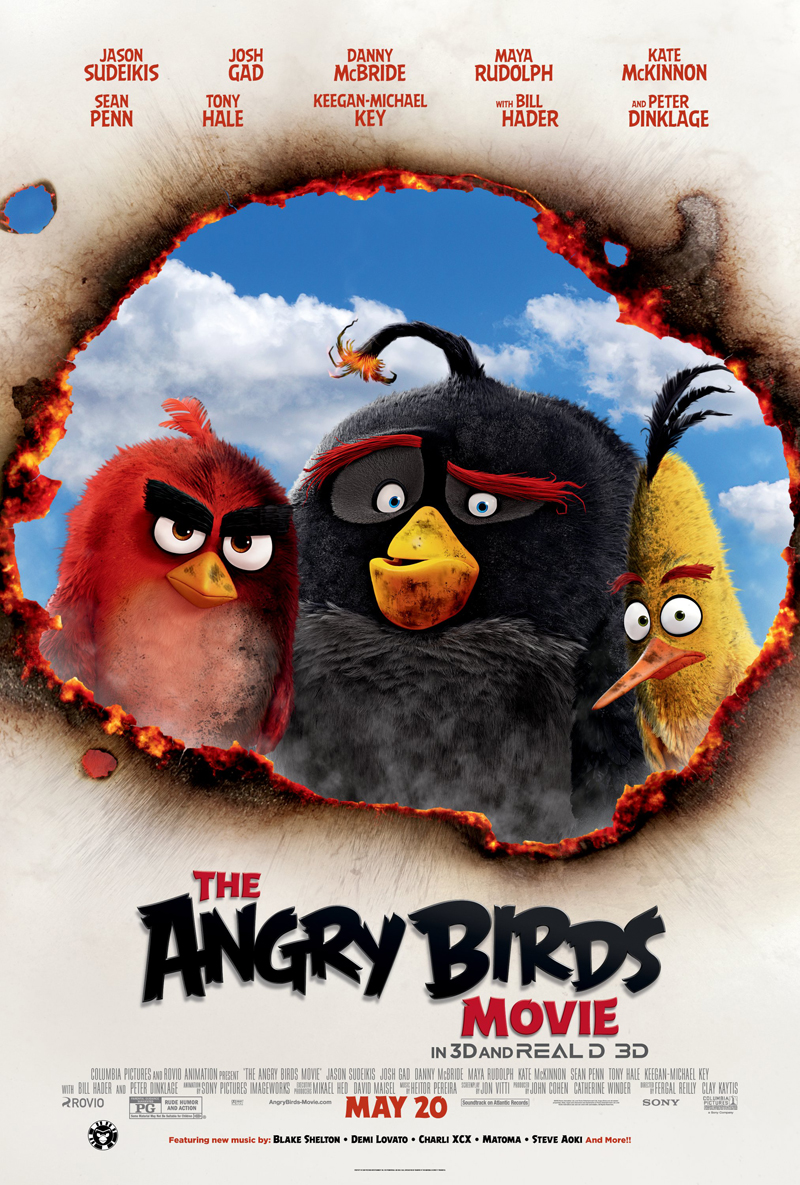
THE ANGRY BIRDS MOVIE – a review by JJ Heaton

Starring: Jason Sudeikis (Horrible Bosses), Josh Gad (Frozen), Danny McBride (Pineapple Express), Bill Hader (The Skeleton Twins), Maya Rudolph (Bridesmaids), Peter Dinklage (Game of Thrones), Sean Penn (Milk)

Directors: Clay Kaytis & Fergal Reilly

Writer: Jon Vitti (The Simpsons Movie)

Runtime: 1 hour 37 minutes

Release Date: 13 May (UK), 20 May (US)

Of all the video games to adapt into a movie, Angry Birds doesn’t exactly seem like an obvious candidate. So many games have grand stories and vast worlds that would be incredible to explore in a cinematic fashion. Angry Birds is just a fun distraction to fiddle with whilst sitting on the bus. The timing is also against the film’s favour, with the game’s popularity having waned in recent years and now relying on spin-offs with Star Wars and Transformers to stay afloat, but that’s not entirely the film’s fault. Creating an animated film can take a long time and, in the amount of time it has taken for The Angry Birds Movie to be realised, trends have moved on. But with that amount of time, the filmmakers have spent it wisely by crafting a quality product rather than rushing out a quick cash-grab.

Print

From a story level, The Angry Birds Movie fleshes out the barebones premise of the game into a fairly standard kids’ movie story. You’ve got the outcast nobody likes who discovers something bad is going to happen but nobody believes him because they don’t like him, and then the outcast and all those who hate him have to make up and set aside their differences against the now obvious threat. Sound at all familiar? There is rarely a story beat that is unpredictable and the structure is tight if a bit bland, but built on top of that basic foundation the filmmakers have added a lot of strong humour. The film isn’t so much trying to be like Disney or Pixar, instead opting for more of a zany Looney Tunes-esque tone that relies far more on comedy than story. Yes, the jokes mostly rely on puns and pop culture references, but there’s also a lot of great sight gags, exaggerated visual comedy in the Wile E. Coyote vain, and even some subdued innuendo for the adults. Not every joke sticks, but they land consistently enough to keep you engaged and none are groan-worthy enough to ruin it. If you’re expecting an animated film that’s going to move forward the genre, you’ll be disappointed. But if you’re just expecting to be entertained for an hour and half, The Angry Birds Movie does that admirably enough.

Like many animated films, The Angry Birds Movie has assembled an all-star cast to voice its many characters; so many, in fact, that you’ll certainly be reading the credits going “Wait, they hired that guy to just do that?” Jason Sudeikis makes a decent protagonist as Red, and it’s great to see the outcast character like this be disliked for actually being an asshole rather than just being different or misunderstood, but he never quite sells the “angry” part of the title. He certainly has a lot of apathy and pessimism, but Sudeikis ultimately feels like he’s fighting against the script in order to make himself more funny and likable; he’s just too nice a guy for the character. Josh Gad and Danny McBride are solid supporting characters as the speed demon Chuck and explosive Bomb, with Gad’s character in particular pushing the boundaries of family entertainment with some suggestive humour about his, ahem, preferences; I’m surprised they could get away with as much as they do and still get a U rating. Bill Hader is thoroughly entertaining as the villainous pig Leonard, Peter Dinklage steals the show whenever on screen as the pompous Mighty Eagle, and the fact they hired Sean Penn to voice a character who communicates entirely in grunts is a joke that never gets old.

There’s not a lot of initial material to work with from such a simple mobile game, but the filmmakers have used every bit of it in constructing the film version. From a visual perspective it looks exactly like the source material but embellished and given dimension. All of the birds look like they do in the game and have all the same abilities, the architecture of the pigs’ world is just as rickety and haphazard, and even the game’s music is woven into the film’s score in a subtle but noticeable way. The animation is top notch with lots of great detail with the texture work whilst simultaneously remaining very cartoony, but it’s the way it’s used to enhance the comedy that ultimately makes the movie work. In a similar vein to Hotel Transylvania, the film translates a lot of the timing and movement of 2D animation into a 3D environment, making for visual humour that is fast and funny in all of the right ways. All of these great elements come together brilliantly in the film’s third act that literally becomes a fully-realised version of the video game, combining gorgeous animation with wicked-sharp humour to create a thoroughly diverting finale.

I don’t know how long it’ll hold the title considering both Warcraft and Assassin’s Creed are on the horizon, but The Angry Birds Movie is easily the best video game movie to date. The competition isn’t exactly that hard to beat, but it’s an accomplishment nonetheless especially given the barebones nature of the source material. It’s simplistic to a fault and the humour is only slightly racier than a typical Saturday morning cartoon, but it does all of those things with effort and conviction. It is clear Rovio didn’t want to make something just to for the money; if they did, they’d have rushed something out years ago. They wanted this to be a quality film and the time spent has paid off in spades. Whether anyone exactly cares enough to stop playing on their phones and get to the cinema to watch it may be a different story.

FINAL VERDICT: 7/10

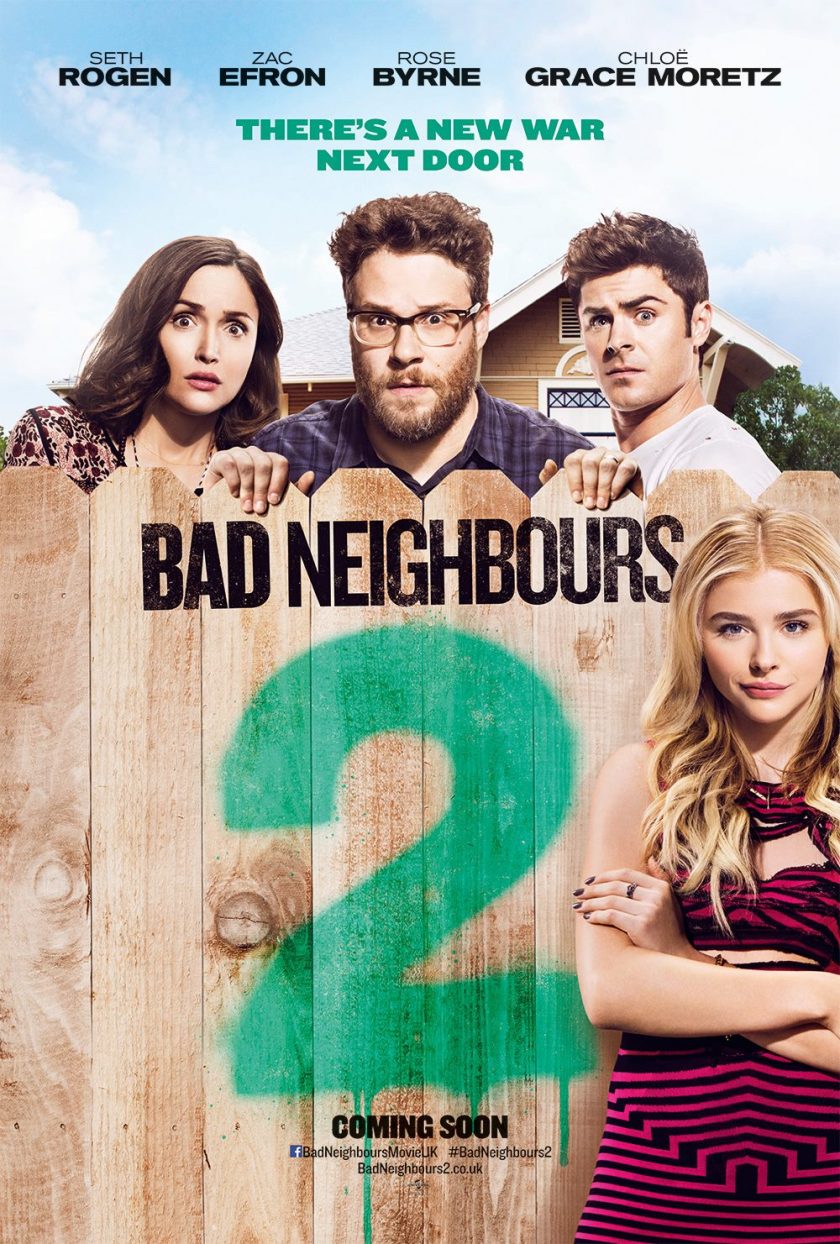
BAD NEIGHBOURS 2 – a review by JJ Heaton

Starring: Seth Rogen (The Interview), Zac Efron (Me and Orson Welles), Rose Byrne (X-Men: First Class), Chloe Grace Moretz (Hugo), Ike Barinholtz (Sisters), Dave Franco (21 Jump Street), Kiersey Clemons (Dope), Beanie Feldstein

Director: Nicholas Stoller (Forgetting Sarah Marshall)

Writers: Andrew J. Cohen & Brendan O’Brien (Bad Neighbours) & Nicholas Stoller (The Muppets) & Seth Rogen & Evan Goldberg (Superbad)

Runtime: 1 hour 32 minutes

Release Date: 6 May (UK), 13 May (US)

Bad Neighbours (or simply Neighbors in the US) was a surprise hit back in 2014, giving a fresh spin on the frat house comedy by humanising both sides of the conflict. It was a raunchy comedy that actually had something to say about the nature of maturity and the fleetingness of college party life, surprisingly resulting in one of Zac Efron’s best performances of his career. But now we have a sequel, and we all know how comedy sequels usually turn out; you can literally count all of the genuinely good ones on one hand. But Bad Neighbours 2 (AKA Neighbors 2: Sorority Rising) falls into a difficult position, because in many ways it does do some different and admirable things compared to the original, but in other ways it is still a lesser retread of the first film.

neighbors-2-poster-25676483810-f0337672d4-o

Structurally, the two films are practically identical: the Radners (Rogen and Byrne) find new neighbours that could cause them problems, they try to work it out but things go awry, and then the two sides battle it out through a series of pranks and property damage. Like the original, the film does a decent job of giving the opposing side, in this case Chloe Grace Moretz’s upstart party sorority, motivation for their actions. By bringing in subjects like feminism and the gender bias of American college society, Bad Neighbours 2 again shows a little more depth that you’d expect from a comedy full of gross-out humour. The way the movie continues Zac Efron’s storyline is also an excellent and natural extension of his arc from the first film, continuing to show how difficult it can be for aimless young adults to transition into regular society. Unfortunately, the film falls apart because not only does a lot of the connective tissue feel recycled from the last film, it simply moves too fast for anything to actually sink in. Whilst the first film had many memorable scenes of hijinks ranging from the frats annoying the Radners with their Robert de Niro impressions to a full on brawl through the frat house, Bad Neighbours 2 barely has any. Many of the individual jokes scattered throughout are worth a laugh and the film does admittedly manage to get a few more gags out of the airbag stunt from the original, but pacing-wise the film feels a little uneventful and the climax is disappointingly resolved with very little physical conflict. It is somewhat refreshing to see a comedy like this end with a more intellectual and positive resolution, but it doesn’t exactly make for great entertainment.

Seth Rogen and Rose Byrne made for a surprisingly effective comedy duo in the first film, and that wonderful chemistry does carry over into the sequel as they constantly question their legitimacy as parents. However, their characters don’t really go anywhere that interesting this time around, their growth this time around feeling like a baby step compared to the evolution they went through last time around from trying to recapture the glory of their youth to accepting their position as responsible adults. Here, it feels like they’ve backpedalled into that irrational state they were in last time before reverting back to slightly more mature. As mentioned before, Zac Efron remains an entertaining presence as the jock manchild Teddy as he struggles to comprehend he’s now an adult and regresses back to his old ways by helping out the sorority girls, but the resolution to his issues comes a little too out of leftfield; I almost wish the movie was more his belated coming-of-age story rather than another parents vs college kids scenario. Dave Franco comes back in a smaller role, and what they’ve done with his character I have to admit is a brave and bold move that’s equally touching and hilarious; it may feel a bit out-of-nowhere at first, but think back to the first movie and it totally makes sense.

But where the film ultimately falls flat is with Moretz and her sorority sisters. Sure, Moretz herself is an entertaining presence and proves herself just as capable at comedy as Efron did in the original, and the sorority’s motivation to defy the sexist system is certainly bolder than the frats’ “become party legends” plan. But that film not only built up a better camaraderie between these kids, but also a strong relationship with the Radners. Here, the two sides are at odds pretty much from the word go, and though Rogen and Byrne do initially sympathise with the girls’ problem there’s never that moment where they actually connect the way Rogen and Efron did. This would have been a great opportunity to build up that kind of relationship between Byrne and Moretz’s characters, but it’s only kind of done off-hand at the last second. Furthermore, the other sorority characters lack the identity that the side frat characters had in the first; even minor players in that film like Christopher Mintz-Plasse and Craig Roberts had something to them. Here, the only others that get prominent roles are Kiersey Clemons and Beanie Feldstein, but in writing this review I’m actually struggling to remember any really defining moments for these characters.

I know I’ve been very critical throughout this review, but I did enjoy myself watching Bad Neighbours 2 far more than I didn’t. There were plenty of jokes that did make me laugh that I’d rather not spoil, and I can at least commend the film for trying to be socially relevant like its predecessor with its messages about female empowerment. The problem is that it does so far more haphazardly with a wonky and rushed story that lacks the character depth that made the first movie more than what it seemed on paper. There’s enough that works here for it to be an enjoyable enough experience, but I do feel like this is a movie I’m going to mostly forget about by summer’s end.

FINAL VERDICT: 6/10