Starring: Jason Bateman (Horrible Bosses), Rebecca Hall (The Town), Joel Edgerton (Warrior)
Writer/Director: Joel Edgerton
Runtime: 1 hour 48 minutes
Release Date: 7 August (US, UK)
Joel Edgerton gets kind of a bad rap, and I think that’s a shame. He often gets lumped in with “generic” actors like Sam Worthington or Liam Hemsworth or Jai Courtney, but I don’t really see the similarities other than that they’re all Aussies. Sure, he’s made some questionable acting choices like Exodus or The Thing prequel, but films like Warrior, Zero Dark Thirty and The Great Gatsby show he has far more range than just being another generically good-looking white guy to shove in action fodder. Now he’s branching out to directing, which is a move that is either met with great praise or indifference depending on the final product. The Gift is that first one. A well-crafted and effective thriller, it’s a potential sign of great things to come from Edgerton.
The Gift is an incredibly hard film to talk about because to really explain why it’s so good, I’d have to ruin half the plot. I don’t want to do that, so please excuse my incredibly vague praise. For a film with a deliberately slow pace and a lack of action (the height of physical intensity is a brick being thrown through a window), The Gift is an incredibly tense and gripping thriller through just simple character interaction, not too dissimilar to classic Alfred Hitchcock pictures like Rear Window. The story has its predictable moments, but like all good thrillers it knows how to play with your expectations and switches up the game every time you think it’s over. The film builds from just an awkward situation to possibly something deeper and darker, but the film’s greatest strength is that it leaves a lot of the digging to the audience. Edgerton knows when to leave things quiet and let the situation play out, allowing the audience to not only figure it out but also interpret what they think is really going on. The film’s final moments are highly ambiguous, which may frustrate some viewers who want a definitive answer, but it perfectly wraps up a very well played game of cards and fits perfectly in with the film’s twisted view. Again, without saying too much, it’s ultimately the “boy who cries wolf” story taken to its final destination and a cautionary tale about how one insignificant moment in one person’s life can drastically alter another’s. Read into that what you will.
With a film that relies this heavily on character, you’re going to need some damn fine performances and the triple threat of Jason Bateman, Rebecca Hall and Edgerton himself are certainly up to the task. Bateman is another actor most people underestimate, mainly because he’s usually typecast as yet another variant of Michael Bluth from Arrested Development. But when allowed to do something a little different, he can be phenomenally good and here he gets that chance. Like the film’s plot, the characters of The Gift are very ambiguous and Bateman’s character very much fits that description. From moment to moment, you either sympathise with this guy or hate his guts, and that game of flip-flop is what helps keep the tension so high. Edgerton casting himself in a supporting role is a smart move that allows him to focus on directing, but he’s no slouch in his performance. His character of Gordo is meant to be hard to read and Edgerton does a good job of balancing the line between disturbing creep and well-meaning simpleton. He’s a peculiar guy, but there’s a lot of sympathy in him too that makes him relatable. I’ve known people like this; heck, I’ve probably been this guy to someone in some way. Rebecca Hall acts as mediator between these two personalities, and she does a great job of being the audience perspective in this increasingly uncomfortable scenario.
This has been a hard line to balance on, but ultimately the takeaway from this should be that you should see The Gift. It’s a solid and nail biting thriller made out of a seemingly unexciting situation, and one that offers a unique perspective in a genre that has gotten all too predictable. It’s not Gone Girl good, but for a late summer release from a first-time director it’s highly impressive. I don’t see Edgerton getting signed on to direct the next Hollywood blockbuster, but if he keeps putting out little movies as good as this I’ll happily go see them.
FINAL VERDICT: 8/10
P. S. : I’ve put the trailer here as usual, but if you’ve not watched it I’d urge you actually not to. I went into the movie pretty cold, and I think that’s the best way to watch it.
Starring: Miles Teller (Whiplash), Kate Mara (Transcendence), Michael B. Jordan (Fruitvale Station), Jamie Bell (Billy Elliot), Toby Kebbell (Dawn of the Planet of the Apes), Reg E. Cathey (House of Cards), Tim Blake Nelson (The Incredible Hulk)
Director: Josh Trank (Chronicle)
Writers: Jeremy Slater (The Lazarus Effect) and Simon Kinberg (X-Men: Days of Future Past) & Josh Trank
Runtime: 1 hour 40 minutes
Release Date: 6 August (UK), 7 August (US)
The Fantastic Four haven’t had it easy in Hollywood. Sure, the two films directed by Tim Story from the mid-2000s weren’t the worst the genre had to offer, but as adaptations of Marvel’s first superhero family they were a complete disservice with poor storytelling, even worse pacing, and some bafflingly poor casting choices. But even then, that’s not arguably the worst thing they been associated with. Remember that low-budget Fantastic Four movie they joked about in the fourth season of Arrested Development? That wasn’t just a joke. That actually happened! Watch if you don’t believe me:
But now a decade after they originally messed it up, 20th Century Fox is taking another stab at making a Fantastic Four movie with a drastically different tone, a younger cast, and a fresh director in the form of Chronicle helmer Josh Trank…and yet still they just can’t catch a break. Ignoring the frankly disgusting amount of backlash against Michael B. Jordan being “wrong” to play Johnny Storm because of his melanin levels (geez, it’s 2015. Are we still on this?), the film has been plagued by reshoots, a very late marketing campaign, and vague reports of Trank being difficult on set. I’ve been an avid defender of this project from the word go, but as it went on even I got a bit nervous. Now having seen the result of their labours, I can safely say, “Damn it! The haters were right this time!” Much like the team itself, Fantastic Four is a noble experiment gone horrifically wrong and yet another embarrassment for the much-loved comic book.
The film draws most of its inspiration from the “Ultimate Fantastic Four” reimagining of the story, so the complaints about changes like the younger cast and retooled origin should be quelled. One of the main ideas it draws from this run is treating the story as less fantastical and as more of a hard science fiction story. It’s an interesting point of view on the material, viewing the story and characters in more of a real world context and how they would fit into our reality, much like what Man of Steel did. But just like Man of Steel, sloppy execution ruins it. Of all of Fantastic Four’s problems, all of them link back to its incredibly uneven pacing. The first half of the movie is actually pretty decent, slowly building up to the event when they get their powers and actually getting to know the characters a bit. Sure, it essentially takes them half the movie to get them their powers, but the slow burn gave it more of that sci-fi feel and was a nice change of pace compared to the rushed origin in the 2005 version. During this time, they also manage to actually make sense of some of the more silly aspects of the source material; for instance, they better explain why each of them gets drastically different abilities, and also why certain less qualified characters like Johnny (Jordan) and Ben (Bell) tag along. But once they finally get their powers, the movie then takes a complete left turn into awesomeness…for about ten minutes, then takes another left turn and promptly implodes. There’s a small stretch where the film turns into a David Cronenberg-style body horror flick and, as drastic a shift and as out there as it is, it’s really unique for a superhero film and I’m surprised they had the balls to do it. I was all amped up for where they were going to take it from there, but then the aforementioned implosion happens and the movie becomes an utter mess. The pacing picks up rapidly, almost like they’re trying to make up for lost time, and rushes towards its climax so fast that it’ll take you a few minutes to comprehend that the movie is over. The jargon-heavy dialogue suddenly becomes incredibly on the nose, with plot and character developments merely stated instead of naturally woven in, and the characters go from being three-dimensional people to static chess pieces that only move to advance the now paper-thin plot. All semblance of character and atmosphere and tone and detail gets jettisoned, which in turn actually makes the good first half of the movie not only feel like a distant memory but also irrelevant; there’s even a few subplots that are set up in the first half that are completely forgotten and unresolved by the end. It really does feel like someone cut a good 20-40 minutes out of the movie, and then shot some new scenes and dialogue to cover up the seams in the most slipshod way. I don’t know whom to blame, but something just went disastrously wrong here and I don’t think I can adequately explain it without going deep into spoiler territory.
The cast of Fantastic Four has some really high calibre players and a few of them get time to shine, but those that do are flattened into nothings by the midway gearshift. Miles Teller makes an excellent Reed Richards at the start, playing the character as this socially awkward and self-absorbed genius bordering on autistic. His performance reminded me a lot of Jesse Eisenberg in The Social Network, in that both of their characters are really fascinating to watch even if you don’t always agree with or even like them. Michael B. Jordan is also great as Johnny Storm, squashing the haters and proving he was a great choice to play the cocky hothead, getting in the film’s best lines and providing some relief during the more reserved first half. All of this is pretty much made null and void in the middle when they become bland shells of their former selves, but it was nice while it lasted. The rest of the cast, try as they might, don’t fare as well. Kate Mara’s Sue Storm is so constantly apathetic and cynical that you never really get to know much about her beyond one brief conversation with Reed, and she spends so little time with Johnny that them being siblings is a fact you might easily forget. Similarly, Jamie Bell’s Ben Grimm is absent for most of the film’s first half and his friendship with Reed is only explored on the surface level. The scene where Reed first sees what’s become of Ben after the accident is actually genuinely gut wrenching and emotional, but nothing like that is ever explored afterwards and it just feels like a waste. Toby Kebbell’s Victor Von Doom is set up quite well as this pessimistic anti-authority figure with a superiority complex, but once he is reintroduced as the villain they spend no time on him whatsoever. They don’t explain what he’s been up to, what exactly he’s planning to do, how his powers work, what exactly motivated him to enact his vague plan, he barely even exchanges dialogue with his former colleagues; it’s like Venom in Spider-Man 3, but much, much worse. Reg E. Cathey’s main role as Franklin Storm seems to be to spout important sounding exposition (because I guess they couldn’t afford Morgan Freeman or something, because he’s the king of that), but he does share a few good moments with Johnny and their father-son dynamic is probably the most genuine of the character relationships. Lastly, and certainly least, Tim Blake Nelson’s Harvey Elder is a cookie-cutter banality of a secondary antagonist. The whole “government wanting to use experiment as weapon” story is already played out as it is, but it’s especially played out here and Nelson’s performance is so drab and unimaginative that you wonder why they hired an actor of his skill level for such a thankless role.
Josh Trank’s Chronicle was a really imaginative look at the superhero genre from a unique perspective, and the idea of that mind taking on an established property like Fantastic Four has some great possibilities. What exactly happened to that guy, I don’t know, because this movie honestly looks like it could have been made by anybody. It’s all competently shot and edited, but there’s no real sense of unique flair to it. I guess it’s kind of hard to nail down Trank’s style from only one film (and a found footage film at that), but this is starting to make me think Chronicle’s strength was in its writing and actors rather than its direction. But maybe this could be the hands of some outside interfering force, as can be seen in the film’s few fight sequences. Whilst Chronicle’s action was creative and wild and took full advantage of its characters’ abilities, the action in Fantastic Four is incredibly generic and the unique power set of its characters feels drastically underutilised. There are a few inspired moments like Sue using her force fields to fly or Reed stretching his facial features to disguise himself, but otherwise they use only the most obvious applications of these powers. The CGI is very inconsistent throughout, ranging from pretty good to “is that even finished?” Rendering The Thing in CG rather than as a practical effect is actually a rare case where the computer beats doing it for real, as it allows them to realize the true scale and impact of the character, and the effect is genuinely well done. But Johnny’s full body fire and Sue’s shields only look passable at best, whilst the rendering of the alternate dimension they visit often looks the CGI backdrop covering up a green screen that it is; the worst part is the glowing green energy seeping in the ground, which looks like somebody playing with various bloom effects in Adobe After Effects. Even the film’s score is bland, and I should not be saying that about a score co-written by Philip Glass, one of the great composers of our time.
Fantastic Four is an absolute mess, but I’ll at least concede that it’s an interesting mess. It doesn’t merely feel like some paint-by-numbers superhero film that some studio pumped out just to compete with Marvel Studios. Somewhere hidden within this jumbled heap is the spark of a great idea crafted by people who actually cared, but somewhere along the way something happened. I don’t know if it was studio interference or mere incompetence, but something went wrong and the whole film suffers for it. The first half of the movie is pretty decent, even brilliant at times, but all goodwill is lost by the end and now I’m somewhat pining for the days of Michael Chicklis in a rubber orange rock suit; at least his version of The Thing had a more defined personality. I’m not angry at Fantastic Four. I’m just sad and disappointed. I’m sad and disappointed because this movie didn’t just shoot itself in the foot. It shot itself in the face. Repeatedly.
Starring: Tom Cruise (Edge of Tomorrow), Simon Pegg (The World’s End), Rebecca Ferguson (Hercules), Jeremy Renner (Avengers: Age of Ultron), Ving Rhames (Dawn of the Dead), Sean Harris (Prometheus), Alec Baldwin (Beetlejuice)
Writer/Director: Christopher McQuarrie (Jack Reacher)
Runtime: 2 hours 11 minutes
Release Date: 30 July (UK), 31 July (US)
19 years on, and the Mission: Impossible series is still running as fast as Tom Cruise’s little legs can carry him, which is mainly down to how it reinvents itself with each instalment. Every film has its own style and tone with each director who has taken the helm, ranging from intense spy thriller to OTT action romp to hijinks-filled adventure comedy. However, Rogue Nation is a little different by not being a complete overhaul. It feels like more of a refinement of the formula created in Ghost Protocol with trace elements of the other films in the series. The final result is a familiar film but one done to perfection, and could well with time become the best of the franchise.
Rogue Nation starts off sprinting into an early action sequence before starting the main story, kicking us right back into danger and reintroducing us to the returning players. It’s a brief but fantastic piece of action that perfectly sets the tone for the movie, but once the actual narrative kicks in it only gets better. The Mission: Impossible series’ main flaw so far is that their actual plots are actually pretty forgettable; it’s always some generic villain scheme involving arms dealers, double-crosses and sneaking into parties. Whilst this fifth instalment has a lot of these same elements, they are wrapped around a far more cohesive and interesting tale with plenty of surprises. Rather than just an excuse to string together a series of set pieces, the story is actually compelling in its own right thanks to sharp writing, compelling characters and even a little political commentary. It’s overall a film about why the IMF is necessary despite their risky operation, and a cautionary tale against giving governments unchecked power to police the world. It’s not anything that’s going to set the world on fire, but it’s simple well-paced blockbuster entertainment that is enthralling from start to finish and you can’t ask for much more than that.
Say what you will about Tom Cruise as a person, but he is a capable and dedicated actor who puts his all into every performance. His character’s exact personality has shifted somewhat with the series’ ever-changing perspective, but here it feels a lot more solidified. Ethan Hunt is a brilliant and determined agent, one willing to put everything on the line for the mission, but that doesn’t mean he’s not a little bit obsessive and difficult to work with. It’s the most nuanced portrayal of the character thus far, and Cruise is as game as ever for whatever stunt he has to pull next. But one of the great things about Ghost Protocol is that it made the team aspect important again, and that trend continues in Rogue Nation with the most returning characters thus far in the series. The ever-lovable Ving Rhames returns as Luther Stickell in his most prominent role since the original and he’s as charming as ever; he’s not in on the action as much, but he’s great when he’s there and it wouldn’t be a Mission: Impossible film without him. Simon Pegg’s Benji continues to gain more prominence since his minor role in M:I III, tagging along with Hunt for the entire journey, and continues to provide great comic relief and most of the film’s heart; a scene where he staunchly decides to stick by Hunt despite his reluctance is a humorous and genuine moment amidst the chaos. Jeremy Renner returns as Brandt from Ghost Protocol and takes a slightly more ambiguous role as he is caught between his friendship with Hunt and his new overlord at the CIA (played by the ever-enjoyable Alec Baldwin). He’s mostly in the backseat for this adventure, but seeing him teamed up with Rhames in a surprisingly funny buddy cop dynamic makes it worth it. Sean Harris’ Lane is definitely one of the more interesting villains the franchise has had on paper, but I found his performance to be a little too reserved and stoic; he’s certainly a step above Dougray Scott and Michael Nyqvist, but he’s nothing compared to Phillip Seymour Hoffman’s menacing turn in M:I III. But the real standout that everyone should be talking about is Rebecca Ferguson as the elusive Ilsa Faust. Serving as somewhat of a skewed mirror of Hunt, Faust is just as focused and skilled as our hero but perhaps a little more willing to cross the line, and Ferguson fulfils that role with gusto. I hope she’s a character that returns for future adventures, and I’m sure Ferguson is going to start getting offers for all the major franchises soon enough.
Christopher McQuarrie showed he could pull off grounded action with Jack Reacher, but here he shows he can play with the big boys too. Whilst Rogue Nation doesn’t quite have that standout set piece like the Dubai sequence from Ghost Protocol, it has action in spades and it’s spread far more evenly and generously throughout the picture. From the much-advertised plane sequence to chases by foot, car and motorbike, Rogue Nation has a bit of everything and it’s all executed near-flawlessly. Whilst the cutting in some hand-to-hand fight scenes does feel a little choppy, the cinematography and editing is seamless in every other aspect and lets you take in all the unfolding carnage; it’s definitely worth the extra dough for the IMAX experience. The production design is sleek but grounded, the stuntwork is top notch across the board, and Joe Kraemer’s score is familiar but heart pumping and kicks in at all the right moments. Like he did with Reacher, McQuarrie knows the value of silence and lets action play out without music when it’s not needed; it’s a restrained approach that’s actually far more intense than the usual musical bombardment.
Mission: Impossible – Rogue Nation isn’t a major game changer for the franchise or action movies in general, but it’s a rock solid piece of entertainment nonetheless. It’s the perfect coalescence of nearly two decades of storytelling, refining the formula down to its greatest pieces and delivering everything it promises. This is a series that shows no signs of stopping, and if it can keep up this quality of output then I see no reason why it should. Keep on running, Mr. Cruise. Just keep on running.
Starring: Adam Sandler (Happy Gilmore), Kevin James (Paul Blart: Mall Cop), Michelle Monaghan (Kiss Kiss Bang Bang), Josh Gad (Frozen), Peter Dinklage (Game of Thrones)
Director: Chris Columbus (Home Alone)
Writers: Tim Herlihy (Grown Ups 2) and Timothy Dowling (Role Models)
Runtime: 1 hour 46 minutes
Release Date: 24 July (US), 12 August (UK)
I know it’s pretty easy to write off any movie starring Adam Sandler at this point, but Pixels actually showed some promise. It’s got a great premise for a movie with strong potential for nostalgia and creativity, it’s based on a plotless but visually rich short film, the supporting cast has a good mix of dramatic and comedic actors, and it’s directed by an actual filmmaker. Sure, Chris Columbus hasn’t directed a good film in over a decade, but he’s got some truly classic films under his belt (Gremlins, The Goonies, Mrs. Doubtfire, Home Alone, the first two Harry Potter films) and he’s far better than any of Sandler’s usual dial-a-schmuck hacks. I am an ever an optimist when it comes to upcoming films, and in spite of all red flags I try to go into a film with an open mind and ignore any bias. But nope. The warning signs were really that obvious from the start. Pixels doesn’t just suck. It is an appalling, degrading and offensive piece of film that only gets worse the more you think about it.
Of Pixels’ many, many, many, many, many problems, most of them stem from its trite, incoherent screenplay that feels like a first draft written over a weekend that wasn’t even briefly proofread. The plot is an absolute mess on all fronts, ricocheting from set piece to set piece, with no articulate internal logic that causes the film’s rules to constantly change and break for no apparent reason. For example, they establish trophies are awarded to the winning side of each game; for us, they take the form of game characters like the Duck Hunt dog and Q-Bert. But later on, it’s revealed cheating was used to win the second game and the aliens revoke humanity’s win. So if that’s the case, why did they award us with Q-Bert in the first place, and why does he still stick around after this revelation? The movie is full of nonsense like this. Subplots are introduced and then forgotten about, characters change motivation and personality on a whim, and everything else is just a pile of meaningless clichés. The film is unevenly structured and poorly paced, taking far too long to set up before breezing into its second act, and then suddenly it’s the big final battle and then it’s over; it completely negates any feeling of tension or impact. A lot of this could be excused if the movie was actually funny, but Pixels makes the same mistake so many modern comedies inexplicably make: it’s not at all funny. There are a few chuckle-worthy lines here and there, but those are random isolated moments that have no impact on plot and were probably adlibbed on set. Any of the big set piece jokes or running gags that drive the plot just fall completely flat, and most of the jokes that aren’t sexual or scatological are just a bunch of 80s references. This brings up another major conundrum: what is this movie’s target audience? Most of the jokes are far too juvenile for a discerning adult, but so many of the references are to things a child is going to have no frame of reference for. I’m sure some of them will get stuff like Pac-Man and Donkey Kong, but what 12 year old is seriously going to laugh at references to Fantasy Island, Max Headroom and Hall & Oates? I’d be impressed if a kid even knew what one of those things was. I guess you could say the filmmakers were…out of touch? [Apologies. Obvious joke was obvious.]
As much as everyone rags on him, Adam Sandler is not talentless. Give him a good script and a talented director and he can really put in a good performance; I urge anyone who hasn’t seen Punch-Drunk Love to give it a shot and see proof of that. No, Sandler’s main problem is that he’s just lazy and his performance in Pixels is no exception. He’s just playing the same “sad sack loser with a heart of gold” that he always plays; a guy who we’re ostensibly supposed to like but who goes through absolutely no change because he’s apparently perfect already. It just screams of arrogant, smug superiority, and yet he’s probably still the best character in the movie. Kevin James thankfully isn’t relying too much on his weight from humour here, but without that he has absolutely nothing to work with and all you’re left with are his lacklustre acting skills. Michelle Monaghan does her best with the awful material given to her, but there’s just no getting around the fact her character is shallowly written and her chemistry with Sandler is completely non-existent; seriously, all this guy does is play video games and insult her, but somehow she’s won over by him? Peter Dinklage feels utterly wasted playing an insufferable d-bag who does nothing but spout dated slang and casual insults of all types; at one point, he completely screws over the planet for no other reason than arrogance and shows absolutely no worry or remorse about it, and he’s supposed to be one of the good guys. But while Monaghan and Dinklage simply look too good to be here, Josh Gad completely embarrasses himself in a stereotypical nerdy role so offensive it makes the cast of The Big Bang Theory look perfectly restrained; he’s so cringe-inducingly unfunny and derogatory that it’s close to the geek equivalent of blackface. Pretty much everyone other noteworthy actor in the movie has absolutely nothing to do. Brian Cox’s grumbling admiral seems to be set up as some secondary antagonist but then completely disappears come the third act, Sean Bean’s role is so insignificant it’s barely above a cameo, and why the f*ck is Jane Krakowski even in this movie? She’s an incredibly funny actress who could have done so much to liven up this mess, and yet she has only about six irrelevant lines and none of them contain jokes.
Now I normally don’t dedicate an entire paragraph to one aspect of a film like this, but this irked me so much it needs to be said: Pixels’ attitude towards gender politics is insulting on a degree I can’t possibly express properly, but I’m going to try. This is essentially going to be a mini-essay in the middle of my review with some spoilers, so go skip ahead if you—actually, no. Don’t skip ahead. This is important. OK, so there’s this whole subplot with Josh Gad’s character obsessing over this female ninja character from some made-up video game; his character is literally introduced making advances towards an arcade cabinet. That part’s just insulting to the nerd in me, but bear with me now. During the big final battle when all the game characters attack Washington DC, that same game character is among the invading forces and attacks Gad. But then Gad makes some bullsh*t plea to her about how he’ll always love her or something and then, out of bloody nowhere, she falls in love with him. OK, that’s mostly just god-awful sh*tty writing, but wait for it. So now the ninja girl is fighting with the humans for whatever reason, but when the aliens are defeated and they all turn to pixels, she dissipates too and leaves Gad all sad. OK, now here’s where it gets bad. Remember that whole Q-Bert trophy thing I mentioned earlier? So right at the end of the movie, Q-Bert turns into the ninja chick with absolutely no explanation as to why and she and Gad hook up. Sandler even quips, “Doesn’t anyone else find this weird? She was Q-Bert a second ago!” Yes, Mr. Sandler, but “weird” is kind of an understatement when you consider these two disgusting truths. Number 1: THE MOVIE IS LITERALLY SAYING SHE IS A TROPHY TO BE WON!!! And Number 2: THIS ENTIRE RELATIONSHIP HAPPENS WITHOUT HER UTTERING A SINGLE LINE OF DIALOGUE!!!!! She has no discernable personality, Gad shows no sign of appreciation for her outside of her looks, and did I mention SHE IS LITERALLY AN ITEM?????!!!!! I can’t…I…what is…what were they…F*CK!!!!!!!!!!…
[clears throat] Sorry about that. I think I’ve made my disgust clear. Back to the review.
Now, in case you thought I couldn’t mine some positive points out, I do have a few. Henry Jackman’s John Williams-inspired score is quite good, there’s a good selection of 80’s cheese classics on the soundtrack, and the visual effects used to bring all these video games characters to life are quite spectacular…at first. It’s basically the same effect over and over again, and once you’ve seen it that’s it; they don’t do much more with the concept. The cinematography is interesting during some of the action sequences, where camera angles and scene blocking often imitate the layout of the game being emulated, but otherwise it’s just the same bland camerawork you see in every modern comedy. The real culprit though is the editing, which kills the comedy almost as much as the script. The timing of cuts is just completely off most of the time, ruining a joke that might have worked by cutting off too quickly or letting something sit far too long. It’s like the editor didn’t know what was supposed to be funny and what wasn’t. Then again, neither did I most of the time.
Pixels is an utter travesty on every level, and what few bits of praise I can give it are insignificant compared to the mountain of things it just plain gets wrong. There’s a really cool idea for a movie hiding in here, but all potential has been dismembered and what’s left is a shambling deformed monster that needs to be put out of its misery. It’s a film that commits the ultimate crime: it’s insulting. It’s insulting to its source material, it’s insulting to fans of that source material, and it’s insulting to its audience’s intelligence. Video games still don’t get the respect they deserve in popular media, and this film is doing its reputation absolutely no favours. So please, if you consider yourself a gamer, watch pretty much any other movie involving gaming instead. Watch great movies like Scott Pilgrim vs The World, or WarGames, or The Last Starfighter, or Tron, or Wreck-It Ralph, or just wait for the Ready Player One movie to be made already (if they f*ck that up, we’re doomed). The Wizard and Gamer are far better movies about gaming than Pixels. Most films based on video games are better than Pixels; even Uwe Boll movies are funnier than this (unintentionally, but still). What more can I possibly say? This has got to be one of the worst summer blockbusters I have ever seen, and the fact it involves so many properties I love makes firing this bullet particularly painful. Say it with me now, people: F*CK THIS MOVIE!!!!!!!!!!
Starring: Paul Rudd (This Is 40), Michael Douglas (Basic Instinct), Evangeline Lilly (The Hobbit: The Desolation of Smaug), Corey Stoll (Non-Stop), Michael Peña (End of Watch), Bobby Cannavale (Blue Jasmine), Tip “T.I.” Harris (Identity Thief), David Dastmalchian (The Dark Knight), Judy Greer (Jurassic World)
Director: Peyton Reed (Bring It On)
Writers: Edgar Wright (Hot Fuzz) & Joe Cornish (Attack the Block) and Adam McKay (Anchorman: The Legend of Ron Burgundy) & Paul Rudd (Role Models)
Runtime: 1 hour 57 minutes
Release Date: 17 July (US, UK)
Ant-Man has been a long time coming, having been first announced before even the first Iron Man was released with Edgar Wright at the helm. After a series of setbacks due to Marvel and Wright’s ever-changing schedules, the film finally went into production…just as Wright decided to leave over the oft-used reason of “creative differences”, leaving the film in the hands of Bring It On and Yes Man helmsman Peyton Reed; an odd choice, yes, but then again Captain America: The Winter Soldier was directed by the same guys who gave us You, Me & Dupree, so go figure. But behind-the-scenes drama shouldn’t matter. How’s the final product? In short: pretty damn good.
Getting the negative out the way quickly, the plot of Ant-Man is overly familiar as it’s essentially the same as the first Iron Man: tech genius builds awesome suit, protégé wants to use it as a weapon against genius’ wishes, causing action-packed hijinks to ensue. It’s not a cut-and-dry carbon copy, but the resemblance is noticeable and the story goes pretty much like you’d expect. However, strong characters and a whole lot of wit can always save a familiar story, and luckily Ant-Man has that in spades. It has an energetic pace throughout even the static second act, and it’s the film’s whip-smart sense of humour that keeps everything so tight and snappy. Though not an outright comedy, all of the gags (both visual and verbal) have been written and directed with expert timing and precision; Wright may not be director here, but his influence is clear in this department. Ant-Man also positions itself as a heist film, adding a unique flavour previously unseen in the MCU, using the tropes of the genre to create fun set pieces that take advantage of Ant-Man’s powers and also satirizes them for great comedic effect; these are the best parts of the film and I hope they get expanded upon should there be a standalone sequel. In regards to connections to the rest of the Marvel Cinematic Universe, they are there but not pivotal. There are some small appearances by familiar characters, repercussions from previous films are felt and tiny details that may pay off later, but overall Ant-Man stands on its own two feet as a fun and entertaining action-adventure.
I don’t think anyone would immediately jump to Paul Rudd when they think of “action hero”, but he proves he’s got the chops as Scott Lang. But like Robert Downey Jr. and Chris Pratt before him, Rudd’s personality really drives the film more than his ability to throw punches. However, I do feel his motivations could have received greater focus. The “deadbeat dad trying to reconnect with his kid” routine may be familiar territory, but we haven’t seen it yet in a superhero film and there are certainly some great opportunities there. However, the whole angle is hastily set-up and they don’t do nearly as much with it as they could; Lang only spends one scene with his daughter before becoming Ant-Man, and then he doesn’t see her again until the big climax. It relies too much on a past relationship the film doesn’t show us, and it ultimately means it doesn’t hit the heart the way you feel it should. It’s not a fault of Rudd, who’s clearly putting his all into the performance, but I feel there were some nuances missing in the writing of his character. Luckily, other than a somewhat wasted Corey Stoll playing the clichéd “evil scientist using technology for profit” as Darren Cross (he’s basically just the same character Jeff Bridges played in Iron Man), the supporting cast is full of fantastically written characters performed by equally brilliant actors. Michael Douglas’ performance as Hank Pym really nails the brilliant but off-kilter nature of the original character, and the way they handle his back story as the original Ant-Man is fantastic; now I really want Marvel to make an Agent Carter-like spin-off all about his adventures. Douglas’ connection with Evangeline Lilly’s Hope van Dyne is the real emotional core of the film, and Lilly herself proves to be a capable badass with strong potential for future stories. Judy Greer and Bobby Cannavale don’t get much screen time, but it’s nice to see the estranged ex-wife and new husband characters not be played as total d-bags. But the real breakout star of the show is Michael Peña as Lang’s heist buddy Luis. His role is small, but every scene he’s in is guaranteed to make you laugh, and his chemistry with Rudd and fellow burglars T.I. and David Dastmalchian is through the roof. I won’t say anymore, but trust me: it’s some damn funny sh*t.
Shrinking isn’t a concept new to film, whether it be The Incredible Shrinking Man or Honey, I Shrunk the Kids, but I don’t think it’s ever been put to such imaginative and action-packed use as in Ant-Man. All of the action scenes involving the size-changing powers are what really makes the film so much fun. These scenes are fast-paced, wonderfully choreographed, and brought to life with a fantastic mixture of practical and visual effects; it’s great to see miniature photography isn’t dead yet, and hopefully this’ll keep it alive. The cinematography and production design doesn’t particularly stand out but does fits nicely into the overall Marvel aesthetic, whilst Christophe Beck’s score is a nice throwback to the music of 60s and 70s heist films; expect lots of trills and loud horns.
Ant-Man doesn’t change the wheel for superhero films, but it’s certainly a lot of fun and a welcome addition to the MCU. It’s a film that really takes advantage of its hero’s powers to full effect, and its great sense of humour makes it perfectly clear they know the premise is ludicrous and are just having fun with it. A lot of the core plot structuring and character beats may be played at this point, but it’s presented so well that it’s never too much of a problem. I don’t when Marvel would have time to do it in their packed schedule, but I’d love to see a direct sequel (or maybe even a prequel with Pym?) that can iron out the kinks and deliver another wacky heist adventure with these wonderful characters. But if Scott Lang just remains a roaming player of this ever-expanding universe, I’d be happy too. Just find a way to put more Michael Peña in somewhere, because there’s so much more to mine there.
Starring: Seth MacFarlane (Ted), Mark Wahlberg (Transformers: Age of Extinction), Amanda Seyfried (Les Miserables), Jessica Barth (Ted), Giovanni Ribisi (Avatar), Morgan Freeman (The Dark Knight)
Well, this is somewhat of a milestone: Ted was my second ever review on this blog and now, almost three years later (geez, I’ve been doing this too long), I’m reviewing the sequel. In case you don’t remember my opinion of the first, I liked it quite a bit. It was a funny original concept that got a lot of laughs as well as a good heart. Then A Million Ways to Die in the West happened. I personally just thought that movie was okay, but the rest of the world pretty much dismissed it as dogsh*t and people began to question Seth MacFarlane’s cinematic capabilities. So what does he do? Go back to the well, of course, to create a comedy sequel. Those always work, right? To answer my own rhetorical question: no, that’s actually a fairly rare occurrence. What were you thinking, me? No, you shut up. Anyway, the review.
If I wanted to be quick and lazy about this review, I could easily just sum up Ted 2 as “more of the same” and move on. But I like to be a teensy bit more professional that that, so let’s dig deeper. The film is very similar to the first on a structural level, right down to the climax being essentially the same with a Comic Con coat of paint; it’s not Hangover Part II degrees of note-for-note and they at least seem aware of it, but it’s still a little disconcerting. Whilst the first film was more of a rom-com with a slight fantastical twist and MacFarlane’s unique brand of humour, this sequel has slightly higher ambitions: it wants to make a statement about civil rights. It’s a lofty idea with a lot of potential for social satire and, whilst its heart is certainly in the right place, it ultimately doesn’t say or do anything you wouldn’t expect. It doesn’t dig nearly as deep as you could into the absurd concept of an animate inanimate object fighting to prove it has a conscience, and all you’re left with are the expected messages about humanity and compassion and whatnot. I’m not exactly expecting high art, but something with a little more introspect and focus would have been appreciated. Focus is the key word there, as that is something Ted 2 lacks a lot of. For a film coming close to two hours in length, there is a lot of padding and almost none of it is even plot-related. The film has far more Family Guy-style non-sequiturs than its predecessor and, whilst some of the film’s best gags are found in these moments, they do nothing to move story or character forward. The first film did a far better job of working its humour into the narrative, whilst here they pretty much have to stop the movie every time they want to tell a joke. A lot of it is hilarious, sure, but once you stop laughing you realise how inorganic it is on a writing level. It’s overall a fun ride, I laughed consistently throughout, I was never bored, but I feel like they could have done so much more and were happy to simply coast.
Seth MacFarlane and Mark Walhberg’s chemistry is what really made Ted feel real, and that’s just as true here. Neither is being pushed particularly hard on a dramatic level and Wahlberg still looks a little confused at times by the words coming out of his mouth, but what comes out is still worth a bag of laughs. However, Wahlberg’s role feels a little short-changed mainly due to that horrible sequel trend: a major character gets ditched between films and their absence is then poorly and unconvincingly explained. In this case, it’s Mila Kunis’ Lori, who essentially gets thrown under the bus and treated like she was a terrible person, which will feel totally unjustified to anyone who’s seen the first film. Amanda Seyfried does her best to fill the gap and avoids feeling like a cheap replacement, but Kunis’ absence is still missed and I wish the writers could have come up with a better way around the issue. Jessica Barth returns as Ted’s now-wife Tammi-Lynn, but despite her character having far more agency in the plot she’s absent for the second half of the film, whilst Giovanni Ribisi is just repeating the same shtick as last time but with a Jheri curl wig. Like the first, the film is also chock full of cameos both old and new; I won’t say anymore than that, but one particularly skilled actor pulls out a box of tricks for the film’s best non-sequitur moment.
On a technical level, Ted 2 looks about the same as the original. The CGI effect to create Ted still looks seamless and the animation is fantastically vivid but, like most comedies these days, the film lacks visual flavour. There are some eye-catching moments like a gratuitous opening dance number and an Anchorman-esque brawl in the climax, but it’s otherwise the same static cinematography, bright colour palette and repeated scene transitions over and over again. Even the music is practically indistinguishable from the first.
In many ways, Ted 2 feels less like a sequel to a movie and more like another episode of a TV show: it tells its own story and has plenty of new material, but it also feels like it’s following a pre-established formula, tired catchphrases and all. That’s not to say it’s a particularly bad episode. It’s just not one you’re going to remember as an all-time classic. It has a lot of good pieces to it, but as a whole it’s far less than the sum of its parts. On the comedy sequel scale, it’s far better than most of its brethren but that’s hardly an excuse to celebrate. Seth MacFarlane still knows how to tell a good joke, but I just wish he challenged himself a little more rather than simply rest on his laurels. This is a better movie than A Million Ways to Die in the West, sure, but at least that movie tried something a little different; it failed, but it did so uniquely. Ted 2 passes the test, but only by the skin of its teeth.
Starring: Arnold Schwarzenegger (Predator), Emilia Clarke (Game of Thrones), Jason Clarke (Zero Dark Thirty), Jai Courtney (Divergent), Matt Smith (Doctor Who), J.K. Simmons (Whiplash)
Director: Alan Taylor (Thor: The Dark World)
Writers: Laeta Kalogridis (Shutter Island) & Patrick Lussier (Drive Angry)
Runtime: 2 hours 6 minutes
Release Date: 1 July (US), 2 July (UK)
Remember when Terminator meant nothing but excellence? Well, maybe I don’t because I wasn’t alive when either of the first two films came out, but at one point Terminator meant something more. The Terminator was a groundbreaking film in 1984, launching the career of James Cameron and solidifying Arnold Schwarzenegger’s status as a cinema icon forever, whilst Terminator 2: Judgement Day upped the ante spectacularly to create one of the best sequels ever made and one of the few that arguably surpass the original. But then Cameron left the franchise having said everything he needed to say and it all went downhill. Terminator 3: Rise of the Machines was a serviceable action film but was essentially a less inventive remake of the second film, and Terminator Salvation was an admirable attempt at shaking up the formula that ultimately fell apart due to sloppy execution. Now the franchise is once again trying to resurrect itself with the unfortunately titled Terminator Genisys (becoz pour leeteraci iz kewl) and they’re pulling a JJ Abrams’ Star Trek-style reboot to do it. Should we be glad that the T-800’s promise to be back has been fulfilled, or should this franchise have said “hasta la vista, baby” a long time ago?
Though positioning itself as a soft reboot, Genisys relies too heavily on franchise lore to be immediately accessible to complete novices, so either do your homework or prepare to be lost. But for fans of the franchise, the first act of the film is an entertaining trip down memory lane as the story begins by showing events only mentioned in the first film before proceeding to accurately recreate moments from the first film shot-for-shot, making that moment when it segues into new territory that much more impactful. However, as promising as those first 45 minutes or so are, Genisys quickly buckles under its own ambitions. The plot begins to take some less interesting turns, playing with the mythology in less interesting ways, and tangles around with the timeline so much that you swear that massive holes of logic are starting to be created; it doesn’t necessarily break the rules of the franchise, but it does bend them to the point of instability. The film becomes less focused on narrative and more about jumping from one ridiculous action piece to the next, and in doing so becomes so overblown that it loses a lot of the Terminator essence it was so accurately tapping into beforehand. It becomes far too sleek and bombastic, forgetting about the simplicity and grit of the original Cameron movies in favour of giant explosions and visual effects; even the effects-heavy T2 kept itself far more grounded. This complete loss of the point of the franchise is confirmed in the film’s final moments, which eschews the series’ usually bittersweet endings in favour of a bright and happy conclusion devoid of foreboding or tension. Yes, Terminator has always had an optimistic message about overcoming what seems inevitable, but it never forgot that danger is always on the horizon. Genisys, meanwhile, ends in a way so rosy that it’s even harder to imagine how they plan to continue (which they already are apparently) than any of the previous films’ straw-grasping attempts. It’s so disheartening to see a film that has so much potential and briefly fulfils it before chucking it all away in favour of mindless action.
Through both the good and bad moments of Terminator Genisys, Arnold Schwarzenegger remains a bright spot of joy throughout. His portrayal of this film’s T-800 is familiar but unique, retaining the previous versions’ key characteristics but with new quirks added from this character’s age and experience. There is a genuine paternal connection between him and Emilia Clarke’s Sarah Connor, and his deadpan delivery of comic relief is constantly priceless. Clarke’s Sarah is also well done, emulating Linda Hamilton’s performance but making it her own; she’s not exactly the same but, considering her radically different back-story and upbringing, she doesn’t have to be. Jason Clarke (no relation to Emilia) does the best job he can as this film’s John Connor, but he’s given very little to work with and his character arc feels abrupt and ill-explained. J.K. Simmons is as great as always, but he feels spectacularly underutilised in a subplot that ends up going absolutely nowhere. Similar sentiments can be made about Dayo Okeniyi’s Danny Dyson, who’s set up and then almost immediately forgotten about despite his key role in the creation of the film’s villain/MacGuffin, and Matt Smith in a key but thankless role that in no way demands an actor of his stature. But the real downside on the acting front is Jai Courtney’s Kyle Reese. Not only is Courtney as bland as ever, he utterly fails to capture even an ounce of the character so memorably played by Micheal Biehn that he ultimately feels like a totally different person. His chemistry with Emilia Clarke is completely non-existent, so much so that I was convinced they were going to take a left-turn and not have them become a couple. His lacklustre performance ultimately sinks the film a great deal, as he is the main driving force behind the plot and the source of the film’s attempts at sentimentality.
As mentioned before, the film does a fantastic job of recreating scenes from the first Terminator by accurately mimicking the cinematography and editing of that film. Even the new scenes in the first act keep this general aesthetic, giving the film that authentic Terminator feel. But, again as mentioned before, the film then completely drops it and goes full modern blockbuster: quick cuts, fast and fancy cinematography, a shiny colour palette, and an overreliance on VFX over practical stunts. It goes from having a borrowed but nicely retro style to looking like every other action film on the market, and something as iconic as Terminator shouldn’t look like anything other than itself. The effects themselves aren’t even that impressive, looking barely improved from T2’s decades-old technology, whilst Lorne Balfe’s score does a decent job updating Brad Fiedel’s classic themes but the original compositions are ultimately forgettable.
Terminator Genisys starts off strong but then completely shoots itself in the foot by the halfway point by forgetting about what it’s meant to be. The film’s first act remains a nostalgic treat for long-time fans of the franchise and Schwarzenegger is as great as ever, but the convoluted narrative and focus on explosive action over clever storytelling ruins what had the potential to be a return to form for the long-suffering franchise. There is clearly love for the material present in Genisys, but it never fully grasps what makes the franchise tick. As much as we think of Terminator for its action, quotes and overall pop culture impact, there is far much more to it than that. Terminator is more than just disposable popcorn entertainment. Like how a T-800 is a complex machine disguised as a human, The Terminator and T2 are smart observations on humanity’s self-destructive nature that sends a hopeful but pragmatic message about the future disguised as mindless popcorn entertainment. Terminator Genisys, however, is the same on the inside as it is on the outside, and that’s a damn shame.
Another year, another Edinburgh Internationa Film Festival. This year, I saw over twice as many as I did last time, and now I’m going to review them all for you. OK, here we go…(takes huge, huge breath)
Amy
Release: 3 July (US, UK)
Fascinating and heartbreaking look into the career of Amy Winehouse by the makers of Senna. Fantastic use of archive footage and voiceover interview to weave a tragic tale of fame, drugs and music. A bit overlong maybe, but definitely a fascinating watch regardless of your interest in subject matter. 8/10
The Marriage of Reason & Squalor
Release: 11 June (UK, as TV series), TBC (US)
A bizarre and confusing piece of surrealist comedy that’s so impenetrable that I couldn’t tell if it was self-aware about it’s insanity or not. All you need to know is that the main character is called Chlamydia and it features Rhys Ifans with a giant prosthetic head growth and a nasty combover. If that sounds like’s it’s your bag, then go ahead. It’s just not mine. 3/10
She’s Funny That Way
Release: 26 June (UK), 14 August (US)
Amusing but flawed throwback comedy caper from Last Picture Show and Paper Moon director Peter Bogdonavich. Some strong lead performances from Imogen Poots and Owen Wilson sweeten the deal, but the plot is heavily reliant on coincidence and is perhaps too old-fashioned for its own good. Fantastic cameo at the end though. 6.5/10
Narcopolis
Release: TBC
Interesting concept gone bad from poor execution in this sci-fi thriller. The pacing is drab, the plot incredibly predictable (including all the huge “twist” moments), and the whole production has an amateurish veneer despite the presence of the legendary Jonathan Pryce. 4/10
Sunshine Superman
Release: 22 May (US), TBC (UK)
Fascinating and heartfelt documentary about the origins of BASE-jumping. Has a strong Man on Wire feel to it with its strong emotional ties, and the archive jumping footage is a wonder to behold. 8/10
The Road Within
Release: 17 April (US), TBC (UK)
Fun and uplifting road trip comedy about young people with disorders. A little clichéd and overdramatic at points, but features some great performances from Robert Sheehan, Dev Patel and Robert Patrick. 7/10
Make Up Room
Release: TBC
Interesting concept for a bottle film about a Japanese porn shoot that is ultimately undermined by a lack of conflict. Some of the characters and situations are amusing, but there is little tension and any semblances of discord are quickly resolved or forgotten about. Also, for a film about the porn industry, it’s surprisingly tame for the most part. Watch either Boogie Nights or Lovelace instead. 5/10
The Messenger
Release: TBC
Robert Sheehan’s second film at this year’s fest, and unfortunately this Sixth Sense-like supernatural thriller is the far weaker of the two. The performances across the board are acceptable at best, the production values are almost non-existent, and the plot is a meandering mess that drags painfully through the paper thin premise and then ends just when it starts to get interesting. 3/10
Uncanny
Release: TBC
Effectively an American indie version of Ex Machina, this sci-fi flick makes up for its minimal production values through a smart and witty script and excellent performances from Mark Webber, Lucy Griffiths and David Clayton Rogers. Though the aforementioned Alex Garland film is superior, that shouldn’t stop you from giving this twisted look into artificial intelligence a go. 8.5/10
The Legend of Barney Thompson
Release: 24 July (UK), TBC (US)
This year’s Opening Night Gala is the directorial debut of The Full Monty and Once Upon a Time star Robert Carlyle, this Glasgow-set dark comedy about a barber-turned-accidental serial killer is a consistently amusing romp. Ably supported by a strong cast including Ray Winstone and a nearly unrecognisable Emma Thompson, there is certainly some directorial skill in Carlyle’s bones. 7.5/10
Franny
Release: TBC
Richard Gere takes a darker turn in this dramedy about a philanthropist trying to deal with his crushing guilt. Gere himself sells the film as he flits from warm and generous to depressed and desperate, and Theo James surprisingly turns in a decent performance for once. Dakota Fanning feels a little underutilised though. 7/10
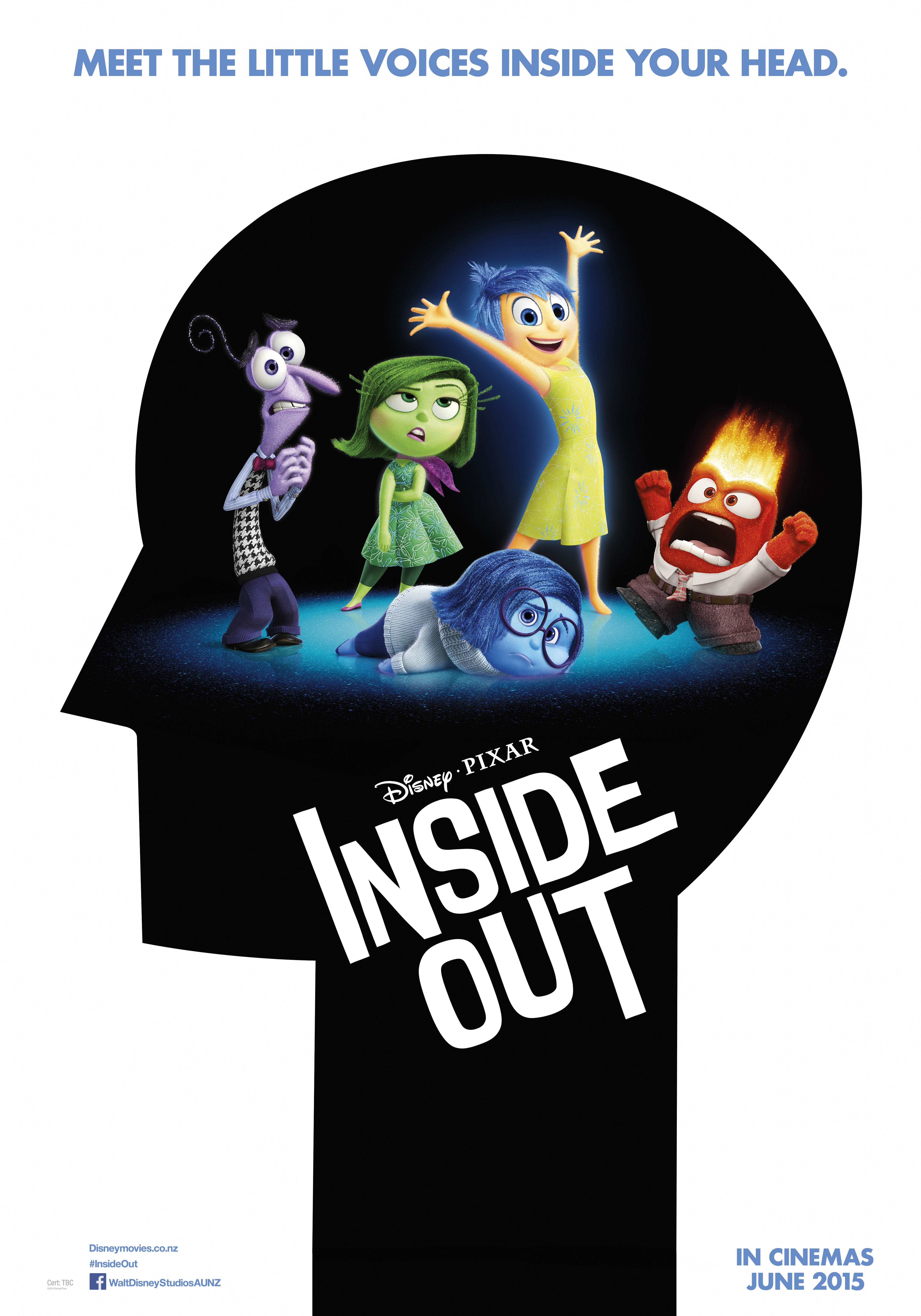
Inside Out
Release: 19 June (US), 24 July (UK)
I already did a full review on this one (which you can read here), but here in short: Pixar is back on it’s A game and I couldn’t be happier! 10/10
Turbo Kid
Release: 28 August (US), TBC (UK)
Simultaneously cute and disgusting, this 80s throwback picture is a fun amalgam of Mad Max and BMX Bandits that features power armour, dismemberment, cheesy dialogue, a synth soundtrack and Michael Ironside as the villain. What more could you want? 8/10
Future Shock! The Story of 2000AD
Release: TBC
Fascinating look into the trials and tribulations of Britain’s most successful comic imprint featuring a great deal of contribution from talents like John Wagner, Neil Gaiman and Dave Gibbons. Especially fun when they rip into the Sylvester Stallone Judge Dredd movie for a bit. 7/10
The Diary of a Teenage Girl
Release: 7 August (US, UK)
Humorous and insightful dramedy about the sexual awakening of a teenage girl. With a fantastic lead performance by Bel Powley and supporting turns from Kristen Wiig and Alexander Skarsgaard, Diary of a Teenage Girl is a coming of age tale that delivers a strong message about sexual identity for both the young and those who remember being young. 8/10
The Incident
Release: TBC
A dull and limp excuse of a drama, The Incident barely has enough plot to cover a short film and yet meanders on for a whole 90 minutes, and what plot is there is incredibly mundane and borders on first-world problems. Achingly slow pacing, bland performances and a perplexing lack of direction, this is one incident you should definitely avoid. 1/10
Chuck Norris vs. Communism
Release: TBC
An inspiring and thrilling documentary about censorship during Communist-run Romania, Chuck Norris vs. Communism shines a light on a little known part of history and illuminates how the power of cinema can inspire a nation, even if it is just a silly Chuck Norris movie. With great use of interviews and recreations, any lover of cinema really should give this one a watch. 9/10
The Overnight
Release: 19 June (US), 26 June (UK)
Proudly crude and hilarious whilst doing so, The Overnight is a night of debauchery that will make you cringe yet unable to turn away. With go-hard-or-go-home performances from Adam Scott and Jason Schwartzman, this comedy is certainly not for the prudes but should be a heck of a time for everyone else. 8/10
Misery Loves Comedy
Release: 14 April (US, internet), TBC (UK)
Whilst certainly an interesting subject for discussion and a lot of great talent is involved, Kevin Pollack’s documentary about the source of a comedian’s soul ultimately takes too long to answer its own question by meandering into other subjects. That and some of the talent involved just aren’t that funny (I’m looking at you, Nick Swardson). 6/10
Bereave
Release: TBC
An interesting though ultimately unfocused look at love and life at old age, Bereave is mainly so watchable thanks to fantastic lead performances from Malcolm McDowell and Jane Seymour. Seriously, this might be the most McDowell has given a sh*t in years. Take what you can get whilst you can before he falls back into dreck again. 6/10
Brand New-U
Release: TBC
A boring, repetitive and confusing sci-fi thriller, Brand New-U seems more concerned with showing you pretty images than telling a cohesive narrative. The director seems to be trying to go for an arsty detached look at sci-fi in the vein of 2001, but this effort lacks character, emotional investment, and pretty much everything needed to make a worthwhile film. 1.5/10
Welcome to Me
Release: 1 May (US), TBC (UK)
Kristen Wiig’s turn as a mentally disturbed woman who wins the lottery and uses her money to fund her own talk show is a darkly funny satire of the television industry. Wiig’s deranged but sympathetic performance carries a lot of the film’s weight effortlessly, but a star studded supporting cast including the likes of Linda Cardellini, Wes Bentley and Joan Cusack certainly don’t hurt. 8/10
Swung
Release: TBC
This film about swinging and other alternative sexual avenues mainly falters from a indecisive tone. It seems to start as a comedy but then gradually gets more serious and depraved until there’s nothing really to laugh at. Similarly, the plot feels unfocused with various threads unresolved and the moods of our main characters flit on a dime between scenes. The aforementioned The Overnight tackles this subject with better humour and depth. 4/10
Hector
Release: TBC
I usually find stories about the homeless to be condescending and flat, but this drama starring the wonderful Peter Mullan definitely doesn’t fall into that trap. Following his journey from Scotland to London to reach a homeless shelter for Christmas, Mullan’s heartfelt performance holds together the somewhat episodic narrative to create something certainly worthwhile. 7/10
The Wolfpack
Release: TBC
Fantastic documentary about the most sheltered group of children you can imagine and how movies inspired their lives. Equally disturbing, funny and heart-warming, there’s no movie quite like The Wolfpack out there. It has to be seen to be believed. 9/10
Scottish Mussel
Release: TBC
Generic Romantic Comedy #137 with a Scottish twist. Predictable down to the tiniest plot detail, actress Talulah Riley’s directorial debut at least has its heart in the right place. On a side note, Morgan Watkins’ American accent is so bad that I was convinced it would turn out he was faking it the whole time, but that unfortunatly did not happen. 5/10
Cop Car
Release: 7 August (US), TBC (UK)
Two kids steal the wrong cop car in this Kevin Bacon-starring comedy-thriller. Infused with a youthful energy and a Coen Brothers-esque wit, Hays Wellford and James Freedson-Jackson’s performances are uniformly excellent and believable in their childlike musing; they’re a bit stupid, but not much more so than the average kid. Kevin Bacon is equally funny and terrifying as the cop on their tail, and Shea Whigham’s brief but memorable role fits that description too. Director Jon Watts has recently been chosen to direct the new Spider-Man film and, with this film as evidence, I’d say the wall crawler is in strong hands. 9/10
Fresno
Release: TBC
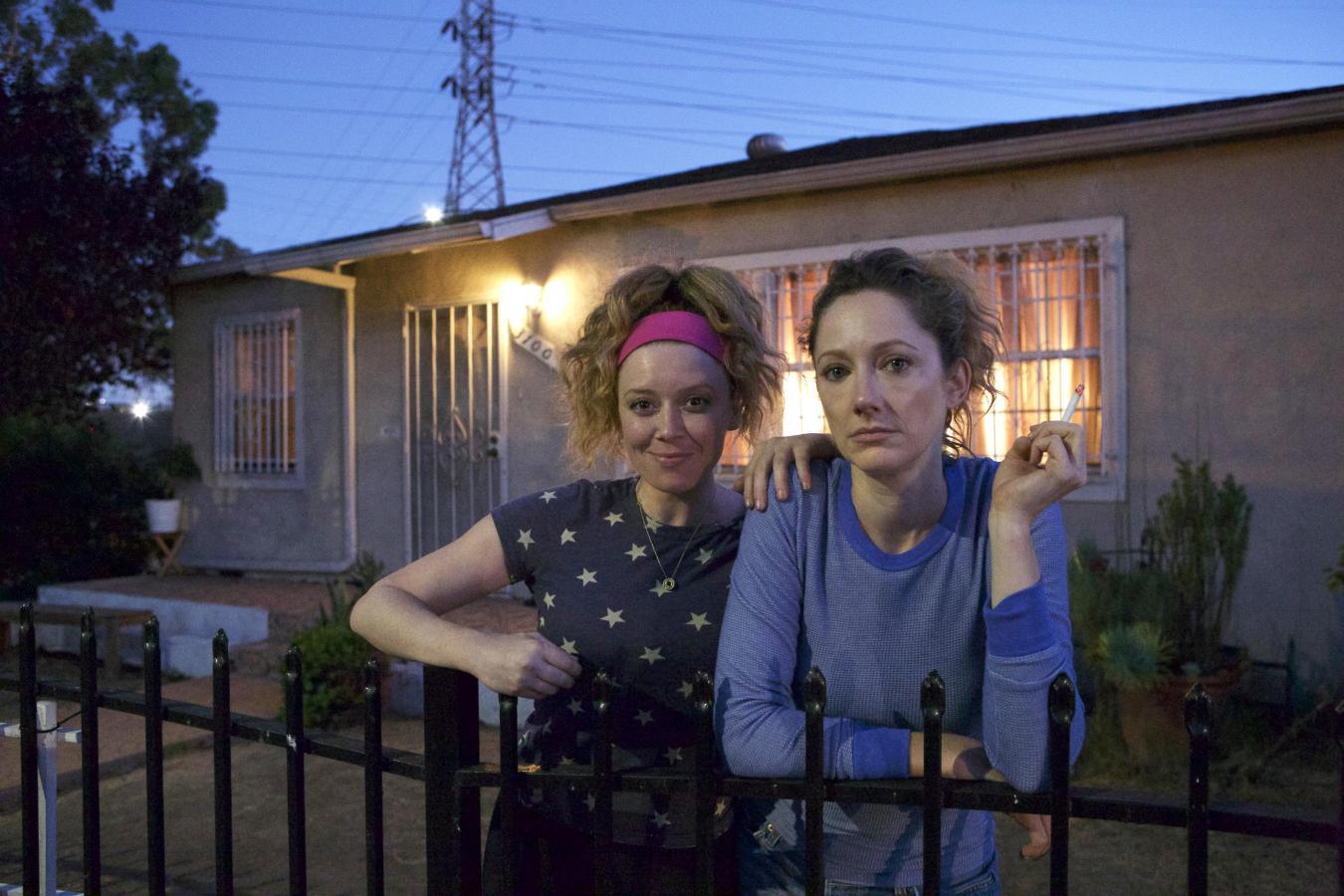
Occasionally funny but tonally confused caper comedy. Judy Greer and Natasha Lyonne have great chemistry and are believable as sisters, plus a great supporting cast including Aubrey Plaza, Ron Livingston and Fred Arminsen, but the plot is thin and meanders about with several dark subjects like murder and theft treated far too lightly. 6/10
You’re Ugly Too
Release: 24 July (Ireland), TBC (US, UK)
Aiden Gillen delivers a strong leading performance as a recently released felon forced to take care of his niece in this Irish drama. Gillen’s repartee with the young Lauren Kinsella is charming, holding interest through the film’s slower moments and the somewhat unsatisfactory conclusion. 6.5/10
Iona
Release: TBC
This year’s Closing Gala features Ruth Negga as a mother who runs away with her son to the Scottish isle of Iona to escape a violent tragedy. Negga’s lead performance is strong, but the film’s deliberately slow pacing and dour tone make the film a hard sit and the resulting drama feels stilted and stretched too thin. 5/10
Black Mountain Poets
Release: TBC
Quirky British comedy about mistaken identity, sisterhood and poetry. Alice Lowe and Dolly Wells’ chemistry holds the film tightly together and there are some truly funny moments (Lowe reading a Tesco receipt like a poem is particularly hilarious in its awkwardness), but some shoddy filmmaking (like obvious cuts in the middle of the same shot) does dampen the fun. 7/10
Dope
Release: 19 June (US), 4 September (UK)
A hilarious and thoughtful coming of age tale about identity, Dope tells a story from a truly unique perspective whilst dealing with familiar tropes in fresh ways. Shameik Moore’s lead performance is a revelation that reveals a potentially bright future, whilst Rick Famuyiwa’s vibrant direction and sharp writing keeps the movie rolling at an energetic pace. Truly a film whose title accurately describes its title (in the positive use of the word). 8.5/10
Sleeping With Other People
Release: 11 September (US), TBC (UK)
Jason Sudeikis and Alison Brie’s fantastic lead performances keep alive this otherwise fairly familiar romantic comedy set-up. There are certainly some clichés subverted and a handful of laugh-out-loud moments, but the general tone tells you how this is going to end up. Certainly a fun watch, but not a must see. 7/10
Maggie
Release: 8 May (US), 24 July (UK)
Arnold Schwarzenegger delivers a surprisingly restrained and heartfelt performance in this zombie-infused drama about a father slowly losing his daughter to the undead disease. The connection between him and Abigail Breslin is often very touching and the drama of Breslin’s humanity slowly deteriorating is genuinely sad, but the plot is thinly spread and the pacing drags too often. Might have worked better as a short film. 6.5/10
Starring: Amy Poehler (Parks & Recreation), Phyllis Smith (The Office), Bill Hader (The Skeleton Twins), Mindy Kaling (The Mindy Project), Lewis Black (Hannah and Her Sisters), Kaitlyn Dias, Diane Lane (Man of Steel), Kyle MacLachlan (Twin Peaks)
Directors: Pete Docter (Up) and Ronaldo Del Carmen
Writers: Meg LaFauve & Josh Cooley and Pete Docter
Runtime: 1 hour 34 minutes
Release Date: 19 June (US), 24 July (UK)
It’s kind of hard to believe, but the last really great Pixar movie was Toy Story 3. That was five years ago. In the meantime, we got the unnecessary cash grab Cars 2, the decent but highly underwhelming Brave, and the fun but not very ambitious Monsters University. Combine that with the behind the scenes trouble on their long-delayed The Good Dinosaur, and all has not seemed well at the house that gave us Toy Story. Some have even begun to wonder if Pixar has lost their magic touch. But fear not, dear readers. Pixar has not lost any of their talent, and Inside Out is very convincing proof that these minds still have a few ideas to share.
The concept of diving inside the human mind isn’t an entirely new concept, with prior examples including the sitcom Herman’s Head or the Beano strip “The Numskulls”. However, Inside Out’s take on the concept is all its own and the film’s vision of the mind is full of wonderful concepts that play with memories, emotions, personality, dreams and much more. The story is very traditionally Pixar in regards to tone and heart, but it’s a formula that still works beautifully in their hands and Inside Out may be their most emotionally arresting film since Up; there are multiple opportunities for you to cry, and you will take them. It’s a story that I’d rather leave for you to discover, but I will say that this may also be Pixar’s most adult film to date. Not in the sense that it’s dark or unsuitable for children, just that not only does it deal with far more abstract concepts than most kids’ films, but because I think a more mature audience will actually get a bigger emotional kick out of it than kids will. Children will certainly relate to a lot of what is going on in Riley’s (Dias) head, as the film taps into a lot of relatable childhood experiences, but the adults in the audience will see it from a different perspective: one of nostalgia and reflection. It’s this small but important divide that really makes Inside Out not only a film for all ages, but will certainly make it a film where, years from now, kids who see it today will look back as adults and be able to enjoy the film on a far deeper level.
I don’t think you could have gotten more perfect casting than the actors chosen to represent these five emotions if you tried. Amy Poehler’s Joy is an engrossingly bouncy presence that literally lights up the environment, imbuing the character with such a beaming personality that borders on aggravating. She’s like that friend you have who is overly optimistic even in the worse situations. That can either be encouraging or drive you insane, and Poehler’s performance balances that line expertly. On the other end of the emotional spectrum, Phyllis Smith’s Sadness is a hilariously melancholic character thanks to her terrifically deadpan delivery, crafting a character that could be best summed up as her character from The Office mixed with Marvin from Hitchhiker’s Guide to the Galaxy. These two get most of the story’s focus, and their naturally conflicting outlooks create for both great comedy and (fittingly enough) emotional drama. Lewis Black’s Anger is definitely the most quotable character, his bursts of fiery rage filled with frustrated observations, whilst Bill Hader’s Fear is a delightfully nervous wreck. Mindy Kaling’s Disgust definitely gets the short shrift of the bunch, but she gets just enough to avoid being completely useless, whilst Diane Lane and Kyle MacLachlan as the parents are smaller parts but are key to some of the films best comedic and heartfelt scenes. Last but certainly not least, Kaitlyn Dias does a tremendous job as Riley herself, flipping naturally between emotions as they swap control without any of it feeling jarring or unnatural; you could cut out all of the story going on in her head, and her performance would feel just as complete.
Pixar really knows how to make a colourful and memorable world, and Inside Out is no exception. The way such intangible concepts have been realised as locations, characters and props into a believable environment is a marvel unto itself. Sure, some of the concepts are a little more obvious (the train of thought is a literal train, for instance), but others are so fascinatingly accomplished and the way all these different parts of the mind work together and sometimes clash with each other is truly inspiring stuff. The visual design is fantastic too, with all the different characters feeling distinct and easily recognisable, and the colour pallet difference between the mind and the real world helps distinguish these two environments. The quality of the animation here is yet another step up for Pixar, with such fine detail in textures and fluid movement creating a wonderfully vibrant and engaging picture, whilst Michael Giacchino once again knocks it out of the park with a beautifully diverse and energetic score that expertly accentuates the unfolding story.
Inside Out is not only Pixar’s best film in years, but may also end up being among their finest ever. It’s a film that ticks every box a great animated film needs to: an engaging story, rich characters, imaginative world, emotional depth and, most importantly, timelessness. It’s a film that will make you feel every emotion at one point or another (or perhaps all at once), and one that I’m sure generations of families will return to again and again just like all of Pixar’s other classics.
FINAL VERDICT: 10/10!
P.S.: The preceding short film Lava is also an absolute joy. Won’t say much more, but it’ll give you a strong emotional connection with the most unlikely of things.
Starring: Chris Pratt (Guardians of the Galaxy), Bryce Dallas Howard (The Help), Vincent D’Onofrio (Full Metal Jacket), Ty Simpkins (Iron Man 3), Nick Robinson (The Kings of Summer), Omar Sy (X-Men: Days of Future Past), Jake Johnson (Let’s Be Cops), Irrfan Khan (Slumdog Millionaire)
Director: Colin Trevorrow (Safety Not Guaranteed)
Writers: Rick Jaffa & Amanda Silver (Rise of the Planet of the Apes) and Derek Connolly (Safety Not Guaranteed) & Colin Trevorrow
Runtime: 2 hours 4 minutes
Release Date: 11 June (UK), 12 June (US)
For kids of my generation, Jurassic Park still stands as one of the Holy Grail films of our childhood. It made dinosaurs cool again, it’s immensely quotable, and the story and effects still stand up to this day. It’s a pity then that The Lost World and Jurassic Park III never lived up to the original’s standards; even as a kid, I found them lacklustre. A fourth film has been bandied about ever since the third instalment, but now 22 years after the original (wow, that makes me feel old) they’ve finally delivered on that promise with Jurassic World.
Picking up in real time since the first film (and sidestepping any acknowledgment of the others, so don’t worry), the park is now fully operational and packed full of tourists ready to become dino-chow. This is such a strong idea for a sequel that you almost wonder why they never did it before, as it majorly raises the stakes of the story by adding a much greater potential body count. This sequel is also much bigger on action, with far more elaborate chases and dinosaur battles that border on insane by the film’s intense climax. It’s well paced, full of solid action and comedy bits, plenty of fun references to the original film and, most importantly, retains the heart of the original film that the sequels often lacked. However, there are unfortunately a fair few problems. Firstly, the whole “fully-operational park” idea feels undercut when, other than one particularly cool bit involving pterodactyls, the story never takes too much advantage of this and instead remains focused on a small set of characters again. Not that I was asking for a Roland Emmerich-style cast of thousands film, but it’s hard to ignore considering that the place is packed with all these innocent lives and yet we still spend most of the time just following a handful of people through the jungle again. But even with that narrow focus, the story feels a little cluttered, especially considering the film never really decides who the film belongs to: Owen (Pratt), Claire (Howard) or Zach and Gray (Robinson and Simpkins). This results in the narrative being thinly spread and some subplots that don’t end up going anywhere, like Zach and Grey’s parents’ divorce or Zach’s girlfriend for example. But the story’s main problem is that it deals with a lot of clichéd themes and ideas, some held over from the previous films (risking lives in the name of money, “some things should be left to nature”) and others new here but still tired in films generally (government/military wanting to weaponise feral creatures). Ultimately, the film doesn’t have anything new to say about the series on a thematic level that hasn’t already been hammered into our head, instead relying on the same “science is cool but also dangerous” message as all the others, and after such a long wait it’s disappointing that the franchise hasn’t matured on this level more.
With Guardians of the Galaxy, Chris Pratt showed that he had potential as a leading man and he affirms that with his role in Jurassic World. Sure, it’d be nice to see him play something other than a wisecracking, womanising manchild in the body of a badass, but he’s just too darn good at it to not take advantage. Bryce Dallas Howard’s role is a little clichéd at first as the “workaholic who thinks of everything unemotionally and ignores family for work”, but she does evolve over the film into a tougher character and her chemistry with Pratt is strong (if a little sporadic). The rest of the cast doesn’t stand out as much, though I found this was more down to writing than acting. Ty Simpkins and Nick Robinson are pretty good as Howard’s nephews, but the film doesn’t give them enough to do and their relationship with each other, Howard and their parents is a bit undercooked. Vincent D’Onofrio is always great and he gives it his all, but he’s stuck with the old “military man obsessed with exploiting tragedy for his own benefit” routine and he ends up feeling like a walking cliché, whilst Omar Sy and Jake Johnson get their fun moments but are ultimately pretty disposable.
On a technical level, Jurassic World perfectly captures the feel of the Spielberg original. Whilst a lot sleeker than its forbearer, the fingerprints of Jurassic Park are clear in the film’s aesthetic design. The cinematography is vivid and engrossing, picking up intensity in the action sequences with some impressive long takes that enlarge the experience. Michael Giacchino does a great job of picking up John Williams’ themes and making them his own, crafting a score that is both familiar but different, and the sound design on all the dinosaurs is as imposing as ever. Whilst there are some uses of animatronics here and there, Jurassic World definitely relies far more on CGI than the original. Luckily, technology is now up the task of doing things like extended close-ups on dinosaurs and the effect is ultimately pretty seamless, though some more practicality may have upped the nostalgia factor.
Jurassic World is ultimately a fun summer blockbuster ride and certainly a far more worthy successor to Jurassic Park than the other sequels, but still pales in comparison to the original. The core idea of the movie is great and it’s backed up by strong performances by Pratt and Howard along with some good action beats and a nice handful of nostalgia, but the somewhat unfocused narrative and hackneyed themes do dampen the fun. However, whilst certainly not as good as the original, it’s also good to bear in mind that it’s a different film; what makes it different doesn’t necessarily make it worse, it just makes it its own movie. Colin Trevorrow’s passion for the material certainly comes through and I continue to be interested in his career, but compared to his debut feature (the criminally underseen Safety Not Guaranteed) it’s a step up in scale but a step back in originality. There’s certainly a lot to like in it and a less discerning audience can probably get over a lot of its problems, but it’s just something to bear in mind. Let’s just hope it’s not another twenty years before they take another stab at the property.






 Alternative Lens