MAZE RUNNER: THE SCORCH TRIALS review

Starring: Dylan O’Brien (The Internship), Kaya Scodelario (Moon), Thomas Brodie-Sangster (About a Boy), Aidan Gillen (Game of Thrones), Giancarlo Esposito (Breaking Bad), Ki Hong Lee (Unbreakable Kimmy Schmidt), Rosa Salazar (Insurgent), Patricia Clarkson (Easy A)

Director: Wes Ball (The Maze Runner)

Writer: T.S. Nowlin (The Maze Runner)

Runtime: 2 hours 11 minutes

Release Date: 10 September (UK), 18 September (US)

Of all the YA novel adaptations, The Maze Runner was far from the worst but it wasn’t any good either. It had an intriguing premise, but its approach to storytelling was so preposterous and full of teasing that it made Damon Lindelof’s writing seem straightforward. It was a film that basically felt like just a set-up for a sequel, and now we have one in the form of The Scorch Trials. Whilst it’s a marked improvement over its predecessor, it’s only better in that it has gone from stupid to generic.

Picking up right where the first film left off, The Scorch Trials answers some of the questions raised in the original but leaves other to continue alluding. Thankfully it doesn’t dwell on its mystery as much this time, instead becoming more focused on a simple action-adventure “go from A to B to C” plot. Whilst this does make the story less aggravating to pick apart, it now leaves even less impact. For the most part, The Scorch Trials is an incredibly predictable movie because it relies too much on tropes and borrows too many ideas from other films. The first act set in a military base/research facility is near identical to the first half of Michael Bay’s The Island, and then the film introduces zombies but has absolutely no new ideas about what to do with them. The story is basically just a flimsy thread linking together a series of action sequences, and what isn’t action is just characters explaining the plot to each other; the bland and predictable dialogue doesn’t help much either. However, the film’s third act is surprisingly strong thanks to a decent character twist and a considerable raising of the stakes. Sure, it does end up raising even more questions, but at least the film gives a stronger idea of what the next film is going to be.

Another big flaw with the first Maze Runner were the incredibly bland characters, and that’s still a major downfall of The Scorch Trials. Dylan O’Brien’s Thomas is still an incredibly bland Mary Sue figure; we’re constantly told how important and special he is, yet he has no discernable characteristics other than being the hero. Kaya Scodelario is again given nothing to do as token girl Teresa but provide vague hints to Thomas about their past, but the indication that she’ll become more important next time is at least alleviating. Thomas’ other friends feel even drier than they did the first time around, essentially being relegated to his cheering squad, so much so that I forgot why some of them were even there; they dedicate this huge scene to one side character’s death, and he was so generic and unimportant that it wasn’t until checking IMDb that I realised he’d been in the first movie the whole time. In terms of new blood, there are some bright spots. Giancarlo Esposito and Rosa Salazar are welcome additions with a lot of potential, but the film doesn’t give Esposito much to other than again further advance the plot. There are even more recognisable faces here this time around like Barry Pepper, Lilli Taylor, Nathalie Emmanuel and Alan Tudyk, but a lot of them feel like either throwaways or people they hired now just because they’ll become important later. Unfortunately, the main sour spot is Aidan Gillen as the film’s new antagonist Janson. Gillen gives a fine enough performance, but the character is such an obvious Evil McVillainbad from the start and yet they keep trying to hide it during the first act. Casting directors, please remember The Ben Kingsley Principle in future: if you want to keep the identity of the villain a secret, don’t hire an actor well known for playing a villain!

The Scorch Trials is a visually well-crafted film but, like elements of the plot, that’s mainly because they’ve borrowed ideas from other works, especially video games. The film’s production design and creature effects feel directly ripped from The Last of Us, whilst the visual of cities drenched in sand kept bringing to mind Spec Ops: The Line. There’s a lot of action in this instalment and, whilst most of it is well shot and choreographed, the lack of character investment takes away a lot of the tension. The CGI work is decent throughout, but it does feel overused; there’s a bit where they render a rat digitally to do something they probably just could have trained a real rat to do.

Maze Runner: The Scorch Trials isn’t the frustrating experience that its predecessor was, but it doesn’t do much to elevate the franchise. Instead of trying to fix its problems, it merely ignores them and focuses instead on non-stop action scenes. Like the first film, it too often feels like they’re making up the story as they go, but instead of constantly throwing illogical twists at the audience they just give us yet another chase sequence. It’s overall a more tolerable experience than The Maze Runner, but I don’t think anyone unconvinced by the first film will suddenly become invested after watching the follow-up. The third film, The Death Cure, is already confirmed, so now all we can do is hope they don’t make the stupid decision to split it into two films.

FINAL VERDICT: 5/10

LEGEND review

Starring: Tom Hardy (Inception), Emily Browning (Sucker Punch), David Thewlis (Harry Potter and the Prisoner of Azkaban), Christopher Eccleston (Thor: The dark World), Taron Egerton (Kingsman: The Secret Service), Chazz Palminteri (The Usual Suspects), Paul Bettany (Avengers: Age of Ultron)

Writer/Director: Brian Helgeland (Payback)

Runtime: 2 hours 11 minutes

Release Date: 9 September (UK), 2 October (US)

The Kray Twins’ story may have already been adapted to film in 1990’s The Krays starring Gary and Martin Kemp as the gangster brothers, but theirs is a story worthy of a modern telling. If nothing else, it’s a chance for Tom Hardy to take on another challenge all great actors crave for: to play two characters simultaneously. And whilst Legend is certainly a great addition to the showreel for Hardy, as a film it’s a little uneven.

Focused on the Krays’ lives during Reginald Kray’s (Hardy) relationship with Frances Shea (Browning, who also acts as narrator), the film covers the essentials of their rise and fall as well as their troubled relationship. When focused on this key bond, Legend shines as an engaging character piece about brotherhood and unconditional love. This is helped greatly by the biting dialogue and strong tension, allowing for scenes that can quickly go from funny to violent and back again without at all feeling jarring. There are plenty of scenes on their own that are really strong pieces of work, especially any scene that resorts to the brutal, but unfortunately as a whole the film doesn’t quite add up. It feels structurally imbalanced, with a first half that feels too fast and brushes over plot developments through narration and a second half that drags to an anti-climactic finish. For a film that crosses the two-hour mark, the film is just too dense and could have used a little reorganisation of priorities and maybe a trim as well.

Tom Hardy is one of the best actors working today not to have an Oscar nomination, and his performances in Legend are certainly at least worth considering for the honour. Hardy does a great job of making both Ronald and Reginald distinctive characters with different speech patterns and facial expressions, making them easy to tell apart even without Ronald’s glasses. He plays off himself so well that it’s easy to forget it’s all an illusion, especially when the twins engage in fisticuffs with each other. A cast of strong supporting players surrounds Hardy and Hardy, though it’s a shame so many of them are underutilised. Christopher Eccleston’s Scotland Yard investigator feels like an important character who keeps being treated like a side note, whilst Chazz Palminteri and Paul Bettany are great in their roles but only get two or three short scenes each. Taron Egerton is also great as one of Ronald’s boy toys, but he’s mostly relegated to comic relief asides. However the real down note is Frances as played by Emily Browning, an actress I have never particularly rated. Her character is already too much of a cipher on paper until the third act, but Browning’s monotone voice and inanimate doll-eyed face don’t help matters at all; the fact she’s also narrating the entire story in that same monotone voice isn’t a plus either.

For all its problems, you cannot fault Legend’s technical package. The film looks authentically 60s British thanks to strong production design and costumes. Dick Pope’s cinematography is excellent, making especially good use of long takes in a manner similar to Goodfellas. Carter Burwell’s score is period perfect, playing like a mix of classic gangster and James Bond, and the soundtrack choices are also well selected.

Legend reminded me a lot of American Hustle: lots of strong elements together in one movie, but it never all quite sticks together. It’s certainly worth a watch of Hardy’s performances alone, but those expecting something on par with the gangster films of Martin Scorsese or Guy Ritchie will probably be disappointed.

FINAL VERDICT: 7/10

THE VISIT review

Starring: Olivia DeJonge (The Sisterhood of Night), Ed Oxenbould (Alexander and the Terrible, Horrible, No Good, Very Bad Day), Deanna Dunagan (Running Scared), Peter McRobbie (Lincoln), Kathryn Hahn (Tomorrowland)

Writer/Director: M. Night Shyamalan (The Sixth Sense)

Runtime: 1 hour 34 minutes

Release Date: 9 September (UK), 11 September (US)

It seems like the world has given up on M. Night Shyamalan. After showing so much promise with his early work like The Sixth Sense and Unbreakable, his career has just been on a gradual downward slope since then (OK, to be fair, After Earth was better than The Last Airbender, but after that there is no way but up). But in a thankfully surprising turn, Shyamalan has taken a moment to reflect and done something he should have done a long time ago: go back to basics. Rather than attempt another big budget disaster, he has instead teamed up with Blumhouse to create The Visit, a found footage horror/thriller. Not exactly a revolutionary idea, but it’s exactly the kind of simple project that Shyamalan needs to rehabilitate himself and, in a twist worthy of the man himself, The Visit turns out to actually be a pretty decent movie.

The Visit is fairly light on story, mainly being a set-up for a series of escalating creepy scenes, but there’s just enough plot to remain engaging and the more relaxed structure fits the documentary-style approach. Apart from the occasional false scare the movie doesn’t waste time, and is very snappily paced with just the right amount of slower moments to build suspense and character. But what’s most surprising about The Visit is its self-aware tone; unlike The Happening, Shyamalan’s actually trying to be funny on purpose this time. There is a surprising amount of humour in the film and, whilst some of it comes off as a bit forced and awkward, it’s refreshing to see a horror movie with some lighter elements. The part of this that works best is how Becca (DeJonge) draws attention to the filmmaking techniques she’s utilising; the film even includes some intentional mistakes like Becca having to remind her brother (Oxenbould) not to look into the camera or restarting an interview question. It adds some authenticity to the film as a mockumentary, and at times it almost feels like Shyamalan is making fun of himself. Like a lot of Shyamalan films, there is a twist in the third act and, though not completely original and conceivably predictable, it does at least make sense and add up with the rest of the movie.

Actors often struggle in Shyamalan films due to his occasionally stilted dialogue and odd directional choices, but thankfully all off-kilter performances here are intentional. Olivia DeJonge and Ed Oxenbould make a believable brother-sister team and their clashing personalities provide some relief from the more eerie moments. They even get their own mini-arcs in the story, though they do feel a little underdeveloped; Oxenbould’s germophobia is only brought up twice before he has to confront it, and him getting over it happens off screen. Deanna Dunagan and Peter McRobbie aren’t exactly subtle in their creepiness, but they’re just normal enough at points to make you wonder exactly what is wrong with then and they both get their more emotional moments; the scenes where DeJonge interviews Dunagan are especially well executed. Kathryn Hahn’s role is small but integral, using her comedic chops to add further levity to her scenes, but also providing strong dramatic work especially in her bookending scenes with DeJonge.

Found footage is a worn-out and thankfully dying gimmick at this point (even Paranormal Activity is finally calling it quits next month), and that’s mainly because most films that use it are doing it not for creative reasons but simply to save costs and cover up incompetence. Whilst I’m sure budget reasons were part of it, The Visit’s approach to the method not only makes sense within the story but is also executed with effort. By writing Becca as an aspiring filmmaker, the cinematography’s cinematic framing gives it a more polished feel without losing authenticity, balancing that fine line between looking too professional and too lazy. Other than the opening and closing credits, it’s a movie that believably could have been made by this teenage girl (in a good way), resulting in some of the best use of found footage since Chronicle.

The Visit isn’t on par with Shyamalan’s early work nor does it excuse his recent atrocities, but going from dreadful to pretty good is still an enormous leap to accomplish. It’s a surprising film on many other levels, from its tongue-in-cheek tone to its effective use of the found footage format, and proves that a filmmaker whose fallen from grace as much as Shyamalan can bounce back if given the chance. I wouldn’t say the man is back, but he’s certainly on his way there.

FINAL VERDICT: 7.5/10


FINAL VERDICT: 7.5/10

ME AND EARL AND THE DYING GIRL review

Starring: Thomas Mann (Project X), RJ Cyler, Olivia Cooke (Ouija), Nick Offerman (Parks and Recreation), Connie Britton (American Ultra), Molly Shannon (Analyse This), Katherine C. Hughes (Men, Women & Children), Jon Bernthal (The Wolf of Wall Street)

Director: Alfonso Gomez-Rejon (The Town That Dreaded Sundown)

Writer: Jesse Andrews

Runtime: 1 hour 45 minutes

Release Date: 12 June (US), 4 September (UK)

Me and Earl and the Dying Girl is so simple that it’s actually hard to describe without sounding like I’m struggling for words (because I kind of am). That has nothing to do with the quality of the film which, to quickly get it out of the way, is absolutely wonderful. What I mean is that it’s hard to explain how such an unassuming little indie flick can actually seem much more than that when everything I come up with to explain why it’s so good in this opening statement just makes it seem like an unassuming little indie flick. I feel like I should just stop there and tell you to go watch it, but I’ve already started writing so I might as well at least try.

If I wanted to unimaginatively narrow in explaining what Me and Earl and the Dying Girl is, I’d say it’s The Fault in Our Stars mixed with Be Kind Rewind. It’s an inadequate description that makes it seem unoriginal, but the main point being that it’s like those movies but better than both of them combined. I like The Fault in Our Stars, but as much as the movie wants to convince you it’s totally sincere there are parts that come off as totally saccharine (I’m looking at you, Augustus “Quirky Cute Mr. Perfect” Waters). Here, there isn’t a speck of sappiness or fantasy. It’s harsh reality, but not one without joy and hope. There’s an air of typical indie movie quirk to the whole thing, but none of it ever feels like an affectation to make the movie look more hip. It’s a movie about making movies that constantly references classic movies, but it never feels the need to be too clever or pretentious about it (maybe because the characters themselves know that their movies suck). It’s not really just a film about friendship or death, but a perfect summation of the mentality of a high schooler, flaws and all. In that regard, it reminded me of a lot of John Hughes’ work (especially The Breakfast Club), but it never ever feels like a pale imitation of his formula like so many other teen movies are.

What really sells Me and Earl and the Dying Girl are the fantastic performances from the entire cast, especially the three main leads. Like the story, these characters are seemingly average on the surface but reveal far deeper layers underneath; they’re stock movie characters, yes, but ones that feel like they could exist in our world. Thomas Mann has been around for a while but he’s never gotten a chance to dig his teeth into a role until now. His role as Greg seems like the typical high school outcast on the surface, but ultimately he’s a far more complex individual than that; he can be weird, even outright despicable from a certain point of view, but it never fails to keep him sympathetic. RJ Cyler’s Earl at first looks like he’s just going to be the funny sidekick, but his friendship with Greg is a fascinating subject that even they don’t fully comprehend and the way the film explores what friendship truly is is where the real heart of story comes from. Olivia Cooke is a stunning revelation as Rachel, the eponymous dying girl herself. She’s melancholy and bitter, but never in a way that feels spiteful; she’s just a girl going through an understandably traumatic experience that no one else she knows truly understands. Her and Mann’s chemistry is simply captivating in its sincere awkwardness, and the fact they never go down the romantic route (which the film constantly reminds us it will not do) is nonetheless refreshing. Nick Offerman is still the monotone ball of humour that he usually is and his role as Mann’s bizarre stay-at-home dad fits nicely in with his filmography, and Connie Britton as his mother is nagging and overly concerned in all the right ways. Molly Shannon’s performance as Cooke’s wino mother feels a little obvious a characterisation, but again they never go too far with it; a scene where Mann interviews her for a movie he’s making is really quite touching. Jon Bernthal’s small role as a high school history teacher is a surprisingly good change of pace from his usual persona, and holy sh*t when did Bobb’e J. Thompson suddenly get so big?

If that fact that this movie is so good that I can barely comprehend why I loved it so much doesn’t give you any indication of my opinion, then clearly either this review is far more rambling, incoherent and repetitive than I thought or you didn’t even bother to read it. Despite being cobbled together from so many familiar pieces, Me and Earl and the Dying Girl feels wholly unique and is one of the best movies of the year. It’s deceptively simple, and that’s maybe why I’m having such a hard time telling you why it’s so amazing. Maybe I’m just so attached to it because I see so much of myself in it, but I believe lots and lots of people are going to find something they can relate to here. This is probably a weird description, but the best way I can sum it up is that it’s a movie that feels real whilst never forgetting that it’s a movie. Does that make sense to anyone other than me? Ah f*ck it, just go watch the movie yourself and hopefully you’ll get what I’m talking about.

FINAL VERDICT: 10/10!

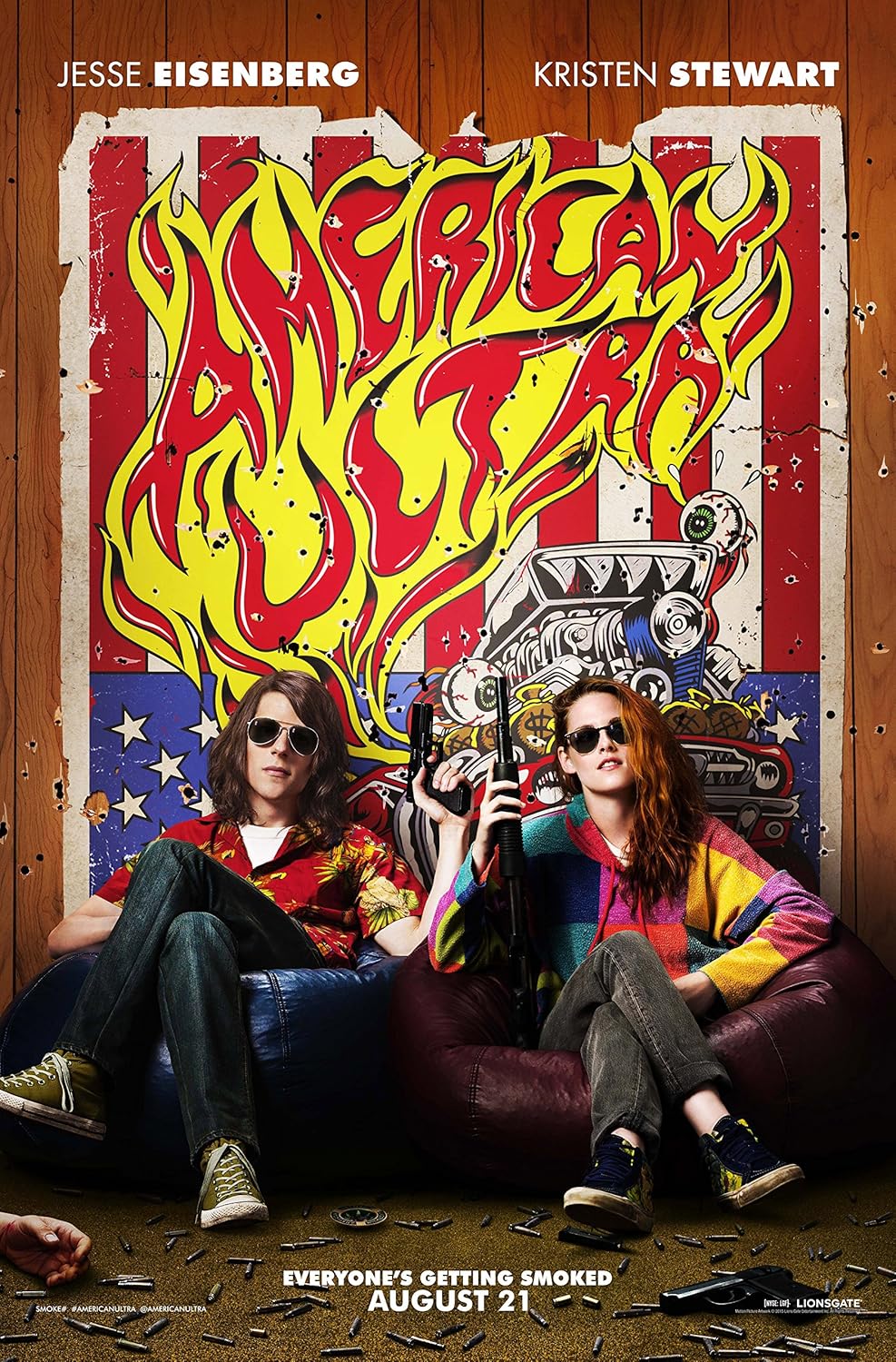
AMERICAN ULTRA review

Starring: Jesse Eisenberg (The Social Network), Kristen Stewart (Snow White & The Huntsman), Topher Grace (Spider-Man 3), Connie Britton (Nashville), Walton Goggins (Predators), John Leguizamo (Romeo + Juliet), Tony Hale (Arrested Development)

Director: Nima Nourizadeh (Project X)

Writer: Max Landis (Chronicle)

Runtime: 1 hour 35 minutes

Release Date: 21 August (US), 4 September (UK)

American Ultra itself isn’t too dissimilar to its protagonist: it has the ability to do some incredible things, but it’s hampered by how incoherent it is. It’s a film that’s trying to straddle multiple lines at once and fails to balance on any of them, resulting a film that could have been great if it just went that extra mile and dared to be different.

The “sleeper agent” story is well-trodden ground with great examples like The Bourne Identity and The Long Kiss Goodnight, so American Ultra already has a lot going against it from the start. Though the approach of telling the story with a confused stoner as the badass killer is novel, the film doesn’t take much advantage of this new angle other than having Jesse Eisenberg being bemused by his actions and spouting a typically awkward quip after each kill. The story plays out as you’d expect with no real surprises (even the moments that are supposed to be surprises), leading to a sequel hook for a movie that sounds far better than the one we actually got. The film is efficiently short but still drags in the first half, the action scenes are far too brief and don’t go anywhere near as wacky as they could, and other than the occasional funny line most of the humour falls flat. However, the main problem American Ultra has is that it just can’t decide on a tone. The film flits from goofy stoner comedy to tense thriller to wacky shoot ‘em up from scene to scene, and none of these different facets are strong enough on their own to be entertaining. If the film had just been straight-up ridiculous entertainment from beginning to end, I would be far more forgiving of the film’s more generic aspects, but American Ultra just doesn’t have the guts to go full bananas.

Jesse Eisenberg and Kristen Stewart played off each other very well in the underrated Adventureland, and that chemistry still works here for the most part, but the material just isn’t as strong. Their early scenes as a bizarre but cute couple feel genuine and sweet, Stewart especially shining with her usual brand of awkward but somehow absorbing charm, but when the plot actually kicks in their relationship becomes less and less compelling. This especially becomes clear during a mid-plot reveal that splits them apart, and it comes off just as contrived and annoying as when they pull this trick in every bad romantic comedy ever; if they just calmed down and talked like sensible people, then there wouldn’t be a problem (then again, they’re not exactly normal people). Topher Grace comes off as far too goofy and inept to be a credible villain, Connie Britton’s character kind of becomes superfluous after kickstarting the plot, and the film just doesn’t have much to do for the rest of its decent supporting cast; why even hire Tony Hale if he’s not going to do anything funny?

Despite being sold as such, American Ultra is surprisingly light on action for an action-comedy and what’s there isn’t that interesting. Though a lot of the methods of killing are done with unconventional things like spoons and frying pans, none of it is done with much flair or excitement. The way the action is shot is also peculiar. Despite most of it being filmed from a good distance and edited smoothly, it’s still shot with a bunch of superfluous shakycam that only distracts from the action; it’s a pointless stylistic choice, especially when it’s clearly not even needed to cover up anything. The whole movie just has a cheap, slapdash look to it; other than a visually unique trip to John Leguizamo’s UV-lit drug den, most scenes take place in barren-looking buildings and streets that could use a few more decorations or an extra or two.

On the outside, American Ultra looks like a wacky mash-up with unique ideas, but underneath it doesn’t actually have anything new to say; it is the cinematic equivalent of a hipster. Though Eisenberg and Stewart’s on-screen dynamic is mostly compelling and it does have flashes of brilliance, the film just plays it far too safe and always takes the easy road instead of embracing the lunacy. In a year where batsh*t insane action films like Mad Max: Fury Road and Kingsman: The Secret Service exist, even taking American Ultra’s more modest ambitions into account it still comes up short.

FINAL VERDICT: 5/10


FINAL VERDICT: 5/10

STRAIGHT OUTTA COMPTON review

Starring: O’Shea Jackson Jr., Corey Hawkins (Non-Stop), Jason Mitchell (Contraband), Neil Brown Jr. (Fast & Furious), Aldis Hodge (The East), Paul Giamatti (Sideways)

Director: F. Gary Gray (The Italian Job)

Writers: Jonathan Herman and Andrea Berloff (World Trade Center)

Runtime: 2 hours 27 minutes

Release Date: 14 August (US), 28 August (UK)

The fact that Straight Outta Compton isn’t aimed at my demographic isn’t lost on me. I certainly know who N.W.A. are and like some of their songs, but neither was I clamouring to see a movie about their life story. But the key to a great movie is making it interesting for anyone, not just those familiar with the subject matter, and Straight Outta Compton accomplishes that excellently. Musician biopics aren’t anything new, but this one makes a mark by being one of the first ones about a hip-hop group. But to simply call it a biopic is underselling the movie a bit, as it’s not only about N.W.A. and their work, but also about how their influence affected not only the music industry but also the culture in general around them.

The traditional rise-and-fall story of a music biopic is so ingrained in our minds at this point that it’s not even a surprise anymore, and Straight Outta Compton still follows that expected arc. It’s hard to argue when it’s a true story, but even with that said it was easy for even a layman to N.W.A. lore like me to see where the story was going. The film pulls the “pause for effect when somebody’s about to name something important” trick a few too many times for comfort, and when they bring out the old “indicate a character is sick by having them cough constantly” bit it was almost starting to feel like a parody. However, the film ultimately works despite these flaws. Firstly, despite the film’s almost two and a half hour run time, it’s snappy and well paced enough that you probably won’t notice. That break-neck pace means certain things feel a little glossed over (and certain other major, more suspect events completely omitted), but everything important impacts in all the right ways and keeps you invested in the story. But what ultimately makes the movie work on a story level is how it melds N.W.A.’s story with the current events of the time and their impact on each other. N.W.A. was a group very much inspired by the environment they lived in, and through their music they not only showed the rest of the planet what their world was but also created a lot of discussion about authority and censorship. It’s these elements that make Straight Outta Compton more than just a biopic. It’s a time capsule of an important part of American culture that touches on subjects that are arguably just as relevant now as they were back then.

N.W.A., as the third word of their name implies, were very much a group based around attitude, and our three main players certainly have enough of it. The idea of casting the role of Ice Cube with his own son may seem like a stunt on first thought, but O’Shea Jackson Jr. not only manages to capture his father beyond mere looks, he’s actually a much better dramatic actor than Ice Cube has ever been; it’s hard to call that based on one performance, but I think he proves it. Whilst Straight Outta Compton’s depiction of Dr. Dre does sweep a lot of the nastier parts of the person under the rug, Corey Hawkins portrayal of the character of Dr. Dre is excellent throughout even if you can’t quite shake the feeling of whitewash (this is kind of inevitable considering both Ice Cube and Dr. Dre are producers on the movie). Jason Mitchell is the main standout as Easy E, giving the character a lot of troublemaker spirit whilst also nailing every dramatic scene thrown his way; it’s definitely a career-making performance. DJ Yella and MC Ren don’t get as much focus as the big three but Neil Brown Jr. and Aldis Hodge do well with what little material they’re given, and Paul Giamatti is perfect casting in the traditional “sleazy band manager” role.

In a movie about music you’ve got to have a great soundtrack. This movie does. Alongside playing all the hits from N.W.A. as well as Ice Cube and Dre’s solo careers, the film also has a great selection of songs from other period artists that help set the tone during the early scenes before the group makes it big. Matthew Libatique’s cinematography is appropriately gritty and impactful whilst also looking cinematically beautiful, helped along with period-perfect production design and crisp, neat editing.

Straight Outta Compton works as a movie for fans of N.W.A. and as a well-made film on its own. Even if you don’t have much interest in rap and hip-hop, it’s an enjoyable ride from start to finish thanks to its clever social commentary and all-around solid performances from a group of promising up-and-comers. If you’re a fan of Cube and the gang, you’ve probably already made up your mind about seeing it, but if you’re on the fence I recommend that you give it a shot.

FINAL VERDICT: 8.5/10

FINAL VERDICT: 8.5/10

TRAINWRECK review

Starring: Amy Schumer (Inside Amy Schumer), Bill Hader (The Skeleton Twins), Brie Larson (Scott Pilgrim vs. The World), LeBron James, John Cena (The Marine), Ezra Miller (The Perks of Being a Wallflower), Tilda Swinton (We Need To Talk About Kevin)

Director: Judd Apatow (Knocked Up)

Writer: Amy Schumer

Runtime: 2 hours 5 minutes

Release Date: 17 July (US), 14 August (UK)

There hasn’t really been an honest romantic comedy, at least for this generation. Even when trying to depict relationships in a realistic light, there’s always an aura of falsity to the proceedings, like the filmmakers want to make a blunt statement but also need to satisfy the audience with a happy ending. Trainwreck is that rare film that manages to do exactly that without feeling at all dishonest.

Whilst presented like a typical rom com with plenty of the clichés as garnish (set in New York, working at a magazine, obnoxious best friend, etc), Trainwreck sets itself apart with one simple question, “What if our heroine wasn’t looking for romance?” It’s an intriguing point of view for this story to take, and one fitting for our society’s increasingly permissive view of relationships. Whilst it does eschew a lot of the traditions of both love and the genre, it doesn’t necessarily say those ideals are wrong. It presents its core relationship in a sincere and realistic way, and any time it looks like it’s going to become too treacly or trite it swerves and surprises you. For example: you know that typical situation about two thirds through one of these movies where the couple has a falling out or some misunderstanding and they break up? You always want to say, “Just talk!”, right? Well, here they do! It doesn’t go well, but they at least tried. The film even has a third act race and a grand romantic gesture, but it always finds a way to make it work in context. It’s little touches like that that shows some effort and awareness of reality. But that’s not to say the film is a perfect example of the genre. The film is a good 10-15 minutes too long (a typical flaw with Judd Apatow’s work, but not quite so egregious here), certain scenes feel a little overlong due to obvious adlibbing, and some of the comedy does fall flat at points. But for every joke that fails, there’s at least one that gets a chuckle and there are some scenes that are laugh-out loud funny throughout. So yeah, it needs some polishing, but Trainwreck gets a lot of points purely for its honesty.

Amy Schumer’s been hanging around Hollywood a while now, and her first foray into the film spotlight is certainly a success. Her sense of humour is crude and her personality a little boorish, but it’s just the right amount to avoid being obnoxious. Her being flummoxed by the initial concept of romance seems a little OTT, but by the time she’s deep in there’s a lot of humanity there. Like with her excellent work on the screenplay, Schumer’s performance is genuine and consistently engaging and I’d love to see her get the chance to star in movies beyond her comedy roots; I really do think she has the chops to stretch further. Bill Hader is as hilarious as ever, just as unconventional a romantic lead as Schumer is, and their chemistry is palatable in all the right ways. Their relationship isn’t some destiny-laden, far-flung romance where they seem meant for each other. They’re just two people with radically different interests and professions that somehow find something that connects them. And you know what, that’s how life usually works! The rest of the film’s cast is generally good, with some surprise turns from the likes of LeBron James and especially John Cena; the scene with him and Schumer in the cinema keeps hitting and hitting with the jokes. Tilda Swinton feels a little underutilised and her character a bit wafty, as did Ezra Miller, but the focus is on Schumer and Hader and they did more than enough to compensate.

Trainwreck is a fresh and honest look at relationships and the romantic comedy in general, and a perfect showcase for Amy Schumer’s talents. Apatow’s best film since The 40 Year Old Virgin, it’s consistently funny and just sweet enough to be satisfying, but the traces of bitterness seeded throughout is what makes it such a unique movie. Whether you can’t get enough of romance or think it’s become stale, give this one a try and maybe you’ll see that sparks can still be made from this overworked genre.

FINAL VERDICT: 9/10

THE MAN FROM U.N.C.L.E. review

Starring: Henry Cavill (Man of Steel), Armie Hammer (The Social Network), Alicia Vikander (Ex Machina), Elizabeth Debecki (The Great Gatsby), Jared Harris (Sherlock Holmes: A Game of Shadows), Hugh Grant (Cloud Atlas)

Director: Guy Ritchie (Snatch)

Writers: Guy Ritchie & Lionel Wigram (Sherlock Holmes)

Runtime: 1 hour 56 minutes

Release Date: 14 August (US, UK)

2015 truly is the year of the spy movie. With Kingsman: The Secret Service, Spy and Mission: Impossible – Rogue Nation already released and Spectre still to come, there’s certainly no better time to be fan of international espionage. It’s a pity then that The Man from U.N.C.L.E., based on the classic 1960s television series, has kind of gotten lost in the shuffle. And it really shouldn’t be one to overlook because, whilst not quite as sharp as some of its brethren this year, it’s a more than satisfactory time at the movies.

It’s a Cold War era spy thriller, so the plot is almost self-explanatory: tension between Russia and US, threat of nuclear destruction, third party trying to spark conflict, yaddayaddayadda. It’s a formula that’s been old since even before the fall of the Berlin Wall, and The Man from U.N.C.L.E. doesn’t stray too far from it. Other than a decent third act twist, the story is pretty formulaic and, given common knowledge of world history, the likelihood of total annihilation occurring is unlikely from the offset. However, what the film lacks in substance it more than makes up for in style and execution. The Man from U.N.C.L.E. is breezily paced and well structured, creating for a light and fun experience that keeps good time and never becomes dull. There is a great balance of action and humour, and when the two are combined it creates for some of the film’s best moments. The third act feels a bit abrupt and the final moments setting up a potential franchise are a little cheesy, but by this point you will have either gotten caught up in the movie’s swing or you won’t have.

The Man from U.N.C.L.E. also benefits from a strong leading duo in Henry Cavill and Armie Hammer as CIA agent Napoleon Solo and the KGB’s Ilya Kuryakin respectively. Whether working together or against each other, these two are a magnetic presence and a great comic duo. Cavill’s suaveness is on in full force here and his bravado always brings a smile, creating a character that’s still cool even when engaging in less commendable situations; he really would have made a great James Bond. On the other side, Hammer pulls off the Russian accent surprisingly well and mines a lot of great deadpan material out of Kuryakin’s stiff and bitter persona. The two play off each other in the expected bickering manner, but never fails to amuse and the bond that forms between them feels genuine by the end. Also fantastic is the ever impressive Alicia Vikander, who unfortunately doesn’t get in on the action as much but serves wonderfully as a third foil between the ultra-egos of Solo and Kuryakin. Hugh Grant also shines in his small role as Waverly, but he gets nowhere near enough screen time despite his character being a major part of the show. The main flaw in the cast is the film’s villain as played by Elizabeth Debecki. She does a fine enough job with the material and pulls off the femme fatale role almost too well, but there’s not much on the page beyond that, and other than killing one minor character she doesn’t do much but stare and look pretty the rest of the time.

Guy Ritchie has always been a style over substance director, but his penchant is very well suited to a picture like this. The film very effectively imitates the style of 1960s films using old school techniques like whip pans, crash zooms and titled angles, as well as very effective and creative use of split screen. The action scenes are perhaps cut a little too quickly, but they’re all very well staged and memorable; an early car-to-foot chase is a major highlight. Aside from the all-around excellent cinematography, the period detail is also well captured in the film’s design with great sets and fabulous costumes, and the film’s soundtrack also nails the era with a wonderful selection of vintage tunes and a catchy score from Daniel Pemberton.

The Man from U.N.C.L.E. is not a movie you need to rush out and see, but if you’re even slightly interested in it or you’ve seen everything else on at the cinema right now, I’d definitely recommend giving it a go. It’s not a film that’ll set the world on fire nor does it stand out as much compared to other spy movies this year, but it has its own identity and packs in plenty of thrills and laughs. Henry Cavill and Armie Hammer’s chemistry is worth it alone, but the added 60s flair just sweetens the deal. I’m not certain what the film’s sequel prospects are, but colour me interested should Solo and Kuryakin team up once again.

FINAL VERDICT: 7.5/10