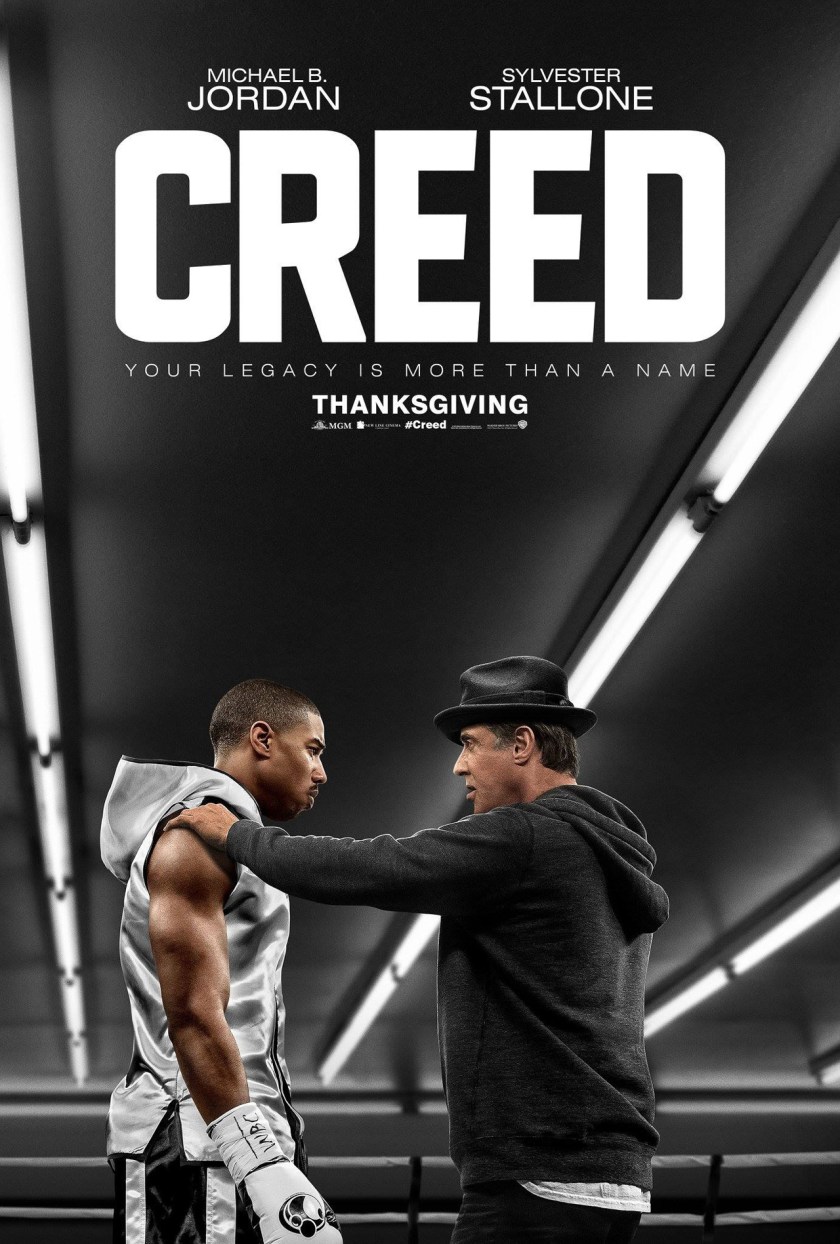
Starring: Michael B. Jordan (Chronicle), Sylvester Stallone (The Expendables), Tessa Thompson (Selma), Phylicia Rashad (The Cosby Show), Tony Bellew, Graham McTavish (The Hobbit)
Director: Ryan Coogler (Fruitvale Station)
Writers: Ryan Coogler & Aaron Covington
Runtime: 2 hours 13 minutes
Release Date: 25 November (US), 15 January (UK)
Like the Italian Stallion himself, the Rocky franchise just won’t stay down. The original 1976 film is a classic not only of sports movies but also of cinema in general; an underdog story that shows it’s not about winning, but about seeing it through to the end. After that, the franchise has had its ups and downs. Rocky II and III were decent sequels, IV is amongst the cheesiest 80s movies ever but enjoyable in its own way, V kind of sucks, and then Rocky Balboa closed out the franchise with true class…until now. However, Creed is less a continuation of the Rocky story and more of a new beginning within the same universe; similar in narrative and theme, but built for a new generation.
First and foremost, Creed has immense respect for the series legacy. Though not totally fuelled by nostalgia, there are loads of Easter eggs for Rocky fans to find throughout. It’s clear the filmmakers love these movies and want to make sure you know it, but they make sure to add plenty of new flavour too. The film’s story of Balboa training a protégé is actually most similar to the plot of Rocky V, but with the tone of the original and the style of Balboa. The main plot moves along similarly to the other films with similar narrative beats, but much like Star Wars: The Force Awakens it changes up the details just enough to remain fresh. Instead of a nobody given a miraculous shot at stardom, it’s about a man living in the shadow of his father and trying to follow in his path without relying on his name; it’s just as relatable a theme. The film moves along at a solid clip, perhaps a little too lengthy, but it’s paced well and never lets momentum slip for too long, ending on a note that perfectly sums up the film and the entire franchise in a nutshell.
Even though you know how this is probably going to work out, becoming invested in the story of Creed is simple and that’s because the characters are engaging and relatable. Michael B. Jordan is fantastic as Adonis Creed, a man just as determined as his father Apollo but replacing the character’s showmanship and cheer with understandable insecurity. There are small shades of Carl Weathers in Jordan’s performance, but Adonis is far more a character of the actor’s own creation and he does a fantastic job of portraying a stalwart but fearful young man; his reaction right before he’s about to go out for his first big fight perfectly encapsulates what’s going through his mind. Sylvester Stallone rarely flexes his acting muscles these days, but with Rocky being his creation he’s certainly not sleepwalking through this one. He slips back into the hat of Balboa as if the last film took place a week ago, playing the character with a similar mindset to when we last saw him but with an even greater awareness of his mortality. His relationship with Jordan is flawless and sells the film by itself, bantering back and forth and exchanging wisdom in human ways that never feel forced or cheesy. Stallone hasn’t given a performance this good since…well, the last Rocky movie, and it easily ranks up there with his career best. Tessa Thompson is a wonderful find as Jordan’s musician love interest Bianca, keeping the same emotional core as Rocky’s relationship with Adrian but with completely different character dynamics, but she’s also a very fascinating character on her own; you could make a whole movie about her story and it’d be compelling in its own way. The main weak spot of the film, however, is its adversary in Tony Bellew’s Ricky Conlan. He’s a menacing physical presence and the film attempts to give him some back story and motivation, but he doesn’t have that immediate iconic aura the way that adversaries like Clubber Lang, Ivan Drago and, yes, Apollo Creed himself had. Conlan’s hardly an important part of the film beyond being that final hurdle to cross, but he’s just a little too generic of a character.
Ryan Coogler proved his directing chops with the heart-wrenching indie drama Fruitvale Station, and with Creed he proves he can play in the big leagues too. The film has the confidence of a seasoned pro behind the camera, and every technical element delivers on all fronts. The cinematography remains simple and gritty during most scenes, but when it’s time to fight it gloriously shows off the spectacle by taking you into the ring and letting the action play out in long dynamic shots; it adds a visceral sense of realism even most of the good Rocky movies lacked. Backed up by crisp editing and crunching sound design, the boxing scenes are for once just as good if not better than the main drama. Special mention must also go to Ludwig Goransson’s excellent work on the score that only contains hints of Bill Conti’s classic compositions early on and slowly amps them up as the film continues, synchronising brilliantly with Adonis’ own progression as a boxer.
Creed is a more than worthy addition to the Rocky pantheon, paying respect to its forbearers whilst forging its own path to continue the story in new ways. Jordan and Stallone as a team are the true heart and soul of the film, complimenting each other spectacularly in one of the best mentor-student relationships in recent memory. Nobody was particularly asking for another Rocky movie, and though Creed shares its DNA it stands alone as a quality sports movie for this generation, and proves even tired franchises can be reborn with the help of a little youthful spirit.
2015 has been a pretty good year for movies, and 2016 is shaping up to be a quite a landmark year as well. So now it’s time for my annual tradition of counting down the movies I’m most looking forward to next year. As usual, let me set the rules:
Movies that release in the UK in 2016 but released overseas in 2015 aren’t on this list. They still count as 2015 to me, so don’t expect to see The Revenant, Creed or Spotlight here. If they’re good, they may end up on my Favourites of 2015 list come February.
This is going by what films are currently scheduled for released in 2016 with specific dates. There are certainly movies that aim to release in 2016, mainly awards-type movies, but they don’t have set releases yet and could fall into 2017. Several movies here may end up getting delayed as well (a few movies on this list were on my list last year but got pushed), but they have set releases as of this writing and therefore count.
This is not me predicting what will be the best movies of 2016. Several of what were my most anticipated of 2015 are going to end up on my most despised of 2015, and there are a bunch of movies here I do have serious doubts about. This is about me telling you what movies I’m most interested in seeing and hopeful of their quality. I can’t guarantee any of these movies will be good. You’ll have to see them yourselves when they come out.
And so, without further procrastination, my list:
25.Star Trek Beyond
Release Date: 22 July (US, UK)
Star Trek Into Darkness was a disappointment to many (even my appreciation of it has withered since my first viewing), but third act quibbles aside it still had a lot of what made JJ Abrams’ first film work. Though Abrams has been too busy in a galaxy far, far away to command the Enterprise again, Fast and Furious vet Justin Lin is certainly an interesting replacement to venture where no one has gone before. The trailer definetly indicates a further emphasis on action over diplomacy, something I’m sure certain Trek fans lament, but at least so far this looks like an original adventure rather than reheated memories of the series’ past.
24.La La Land
Release Date: 15 July (US, UK)
Following up an impressive directorial debut can be difficult; just look at Neill Blomkamp or Josh Trank. Hopefully, Whiplash’s Damien Chazelle can get over that stigma and deliver something special with this musical comedy. Casting Emma Stone and Ryan Gosling together for the third time means there’ll be at least some semblance of chemistry, and reteaming Chazelle and J.K. Simmons isn’t a bad sign either.
23. Jack Reacher: Never Go Back
Release Date: 21 October (US, UK)
The first Jack Reacher was a surprise to both fans of the novels and moviegoers alike who didn’t think Tom Cruise could pull off the role of the grizzled ex-military detective, and hopefully this follow-up can deliver the same mix of action, mystery and wit the first film had. The lack of Christopher McQuarrie behind the quill and camera is a disappointment, but The Last Samurai’s Ed Zwick isn’t a bad replacement and Cruise is as ready as ever to leap back into action hero gear.
22.Kubo and the Two Strings
Release Date: 19 August (US), 9 September (UK)
Laika’s crop of stop motion kids’ films are wonderfully twisted and unique in such a PC world, and after such an underappreciated movie like The Boxtrolls maybe this venture will get the company the respect it deserves. The film features a wonderful voice cast including Matthew McConaheughy, Charlize Theron and Rooney Mara, and I can’t wait to see how Laika depicts ancient Japan with their expressionistic eye.
21.Hail Caesar!
Release Date: 5 February (US), 22 February (UK)
The Coen Brothers aren’t untouchable filmmakers, but even their disasters are interesting disasters, so Hail Caesar should be one to watch regardless. Featuring an all-star cast including Josh Brolin, Scarlett Johanssen and Channing Tatum amongst many others, this comedy about 1950s Hollywood scandal should be an interesting mix of the Coens’ trademark wit and dark humour in a fascinating period of Tinseltown’s history.
20.Finding Dory
Release Date: 17 June (US), 29 July (UK)
Of all the films for Pixar to make sequels to, Finding Nemo would probably be near the bottom of the list and I’m worried this may be just director Andrew Stanton running back to safe territory after his trip to Mars in John Carter proved less than fruitful. The prospect of focusing on Dory is also worrying; as a side character she’s great, but a whole movie of her sounds like it could go all Jack Sparrow. But Cars 2 aside, Pixar’s previous trips back to the well have been at least pleasant, so hopefully this is a story that needs to be told rather than just another attempt at cash grabbing.
19.The BFG
Release Date: 1 July (US), 22 July (UK)
Adaptations of Roald Dahl’s children’s stories have proven difficult over the years, and it’s weird to think that the better ones like Willy Wonka and the Chocolate Factory and Fantastic Mr. Fox are the ones that stray further from the books. Steven Spielberg seems exactly the right type of filmmaker to adapt Dahl’s wonderful tale of a little girl and her gigantic friend to the big screen, and the brief teaser trailer certainly has the same magic as the source book. The film also being the posthumous work of E.T. scribe Melissa Mathison makes this a tearful reunion of director and screenwriter, and the spectacular cast of Mark Rylance, Rebecca Hall, Bill Hader and Jemaine Clement lends even more promise to this adaptation.
18.Fantastic Beasts and Where to Find Them
Release Date: 18 November (US, UK)
Speaking of going back to the well, it was only a matter of time before we returned to the Potterverse and I’m at least glad it’s for this rather than a reboot. Featuring an original story by J.K. Rowling (with the name only taken from a plotless textbook) and four-time Potter helmer David Yates returning to direct (who also has The Legend ofTarzan opening this year), Fantastic Beasts and Where to Find Them takes the appropriate prequel approach by telling a story with very little connection to Harry Potter’s adventures (as far as we know). All we can hope now is that doesn’t fall into the same traps as Star Wars and Lord of the Rings when it comes to prequels.
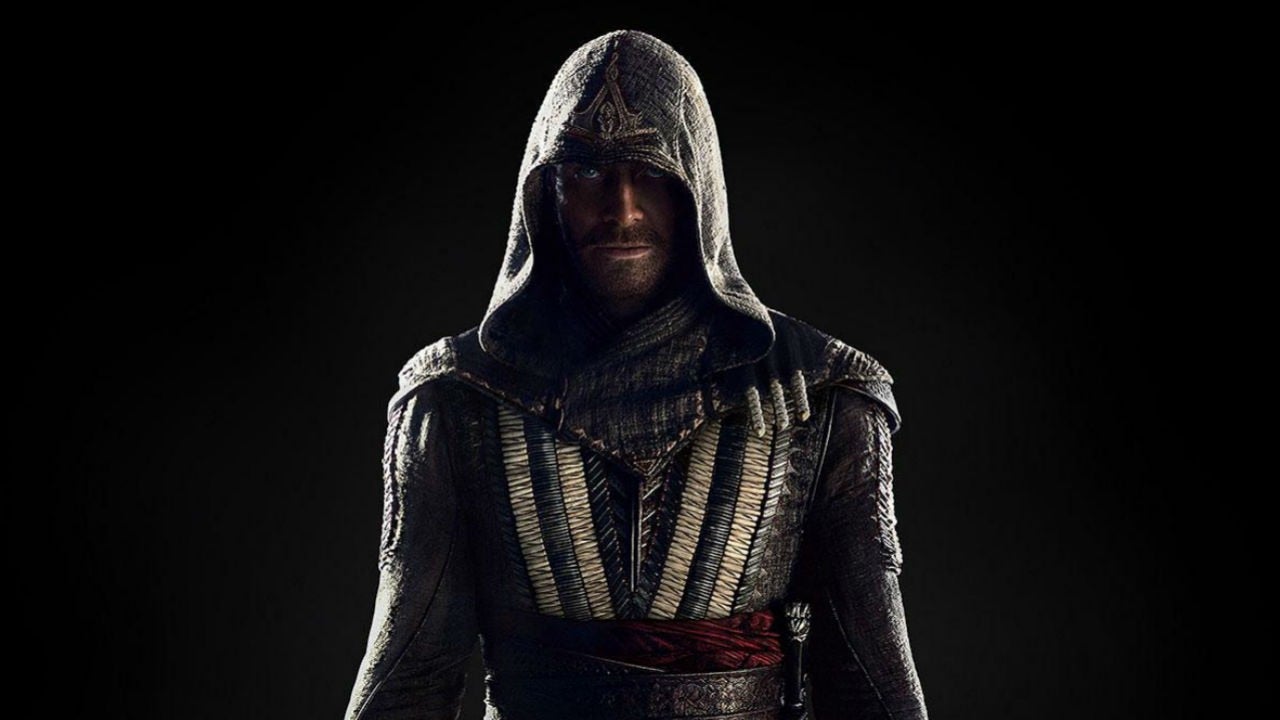
17.Assassin’s Creed
Release Date: 21 December (US), 30 December (UK)
2016 seems to be the year video games movies are trying to break out of their cycle of crap. With Ratchet & Clank, The Angry Birds Movie and another adaptation featured later on this list, perhaps now’s the time for video game movies to have their X-Men and break into mainstream popularity. Assassin’s Creed has promise as a movie from its interesting blend of history and sci-fi alone, but the talent they’ve assembled to create it almost seems embarrassingly overqualified. Macbeth director Justin Kurzel directs his previous collaborators Michael Fassbender (also a producer on the film) and Marion Cotillard in an original story with supposed continuity with the game series, and a great supporting cast like Brendan Gleeson, Jeremy Irons and Michael K. Williams means this could certainly have promise as an interesting film even to people who have never picked up a video game controller.
16.Kung Fu Panda 3
Release Date: 29 January (US), 11 March (UK)
This was going to make my most anticipated list last year until its delay right before the end of 2014, but now the adventures of Po can finally continue and answer the cliffhanger left at the end of Kung Fu Panda 2. These films are far better than the title would suggest and I would highly recommend them to anyone who’s written them off as silly kids’ movies, and with some luck this third instalment will contain the same mix of humour, martial arts, philosophy and heart its predecessors delivered in spades.
15.Passengers
Release Date: 21 December (US), 23 December (UK)
The Imitation Game’s Morten Tyldum directs this sci-fi romance that finally pairs Hollywood darlings Chris Pratt and Jennifer Lawrence in what sounds like a fascinating story about two people alone together on a spaceship full of people frozen in stasis, knowing they will die before the ship will reach its destination. This film is still a year out, but the concept of Pratt and Lawrence on screen together trading quips whilst in constant fear of their own mortality is enough to colour me intrigued.
14.Zootopia (AKA Zootropolis)
Release Date: 4 March (US), 25 March (UK)
After skipping 2015, Walt Disney Animation Studios returns for a double dip starting with this comedy adventure set in a world of anthropomorphic animals. The initial concept sounds basic on paper, but Disney has been great recently with taking simple concepts and putting a great twist on them, and with the respective directors of Tangled and Wreck-It Ralph steering the ship this has more than enough clout to be on your radar.
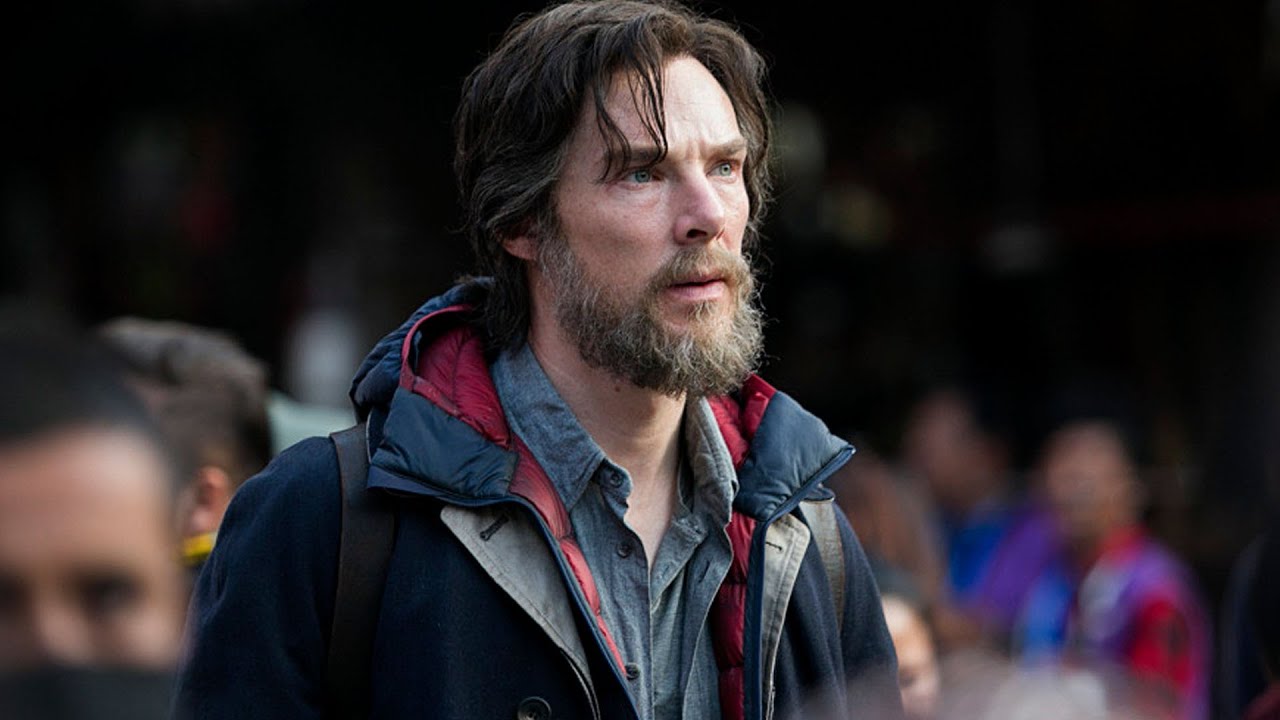
13.Doctor Strange
Release Date: 28 October (UK), 4 November (US)
It’s hard to say anything Marvel Studios does is gamble anymore after turning Guardians of the Galaxy and Ant-Man into box office smashes. At this point they’re more like escalating dares, and adapting the psychedelic mysticism of Doctor Strange is a pretty big dare on so many levels. Sinister director Scott Derrickson is certainly an odd choice as helmsman, but the casting of human otter Benedict Cumberbatch as the Sorcerer Supreme himself should help bring in an audience completely adverse to the bizarre concepts of Stan Lee and Steve Ditko’s quintessentially 60s creation.
12. The Nice Guys
Release Date: 20 May (US), 3 June (UK)
Shane Black returns to the director’s chair for this crime caper that basically looks like a grittier 1970s version of Black’s own Lethal Weapon and Kiss Kiss Bang Bang mixed with a little bit of LA Confidential. Ryan Gosling and Russell Crowe don’t immediately jump out as a natural pair on paper, but clashing personalities in a buddy environment is Black’s bread and butter and The Nice Guys looks like it will be no exception.
11.Ghostbusters
Release Date: 15 July (US, UK)
Ivan Reitman’s original classic Ghostbusters is one of my all-time favourite movies and a pop culture phenomenon that hasn’t waned since 1984. Rebooting the franchise is an idea considered blasphemous to most of its fans, but if you’re going to do it you’d better do something different and boy have they gone different. Genderflipping the Ghostbusters is a daring and controversial move that has the Internet in a fanboy whine crisis, but if it works it’s going to set a fascinating precedent for gender roles in future Hollywood blockbusters. The cast they’ve assembled is all around fantastic, and Bridesmaids helmer Paul Feig is the perfect choice to direct these funny ladies in their quest to bust some ghosts.
10.Midnight Special
Release Date: 18 March (US), 15 April (UK)
Yep, this was on my list last year and 2015 went by without it, but Jeff Nichols’ sci-fi drama is now on the docket for an early 2016 release, and the new trailer sheds some more light on the mysterious film. The John Carpenter influence Nichols has mentioned definitely comes through here and mixes well with the director’s own subdued style; it reminded me of Looper a lot in that way. This one definitely has a chance of being the year’s sleeper hit.
9.Warcraft
Release Date: 3 June (UK), 10 June (US)
I’m not at all a fan of the Warcraft video games, but I’m excited for this film for a number of other reasons. Firstly, it’s promising to be the new flagship fantasy franchise; with Middle-earth fully plundered, that’s something we could certainly use. Secondly, Moon and Source Code director Duncan Jones is behind the camera and I’m willing to support anything he does. But most importantly, Warcraft stands a chance of being Hollywood’s first great video game movie and, given the talent involved and the quality of everything I’ve seen so far, I’m on board to see how it goes. But if it fails, hopefully Assassin’s Creed will be there to pick up the pieces.
8.Moana
Release Date: 23 November (US), 2 December (UK)
Moana is the first CG animated film from The Little Mermaid and Aladdin directors Ron Clements & John Musker, and the concept of exploring Polynesian mythology through the eyes of Disney is a simple but alluring concept that could be one of the company’s most beautiful and unique films to date. That and it has Dwayne Johnson in it. Since when has his presence hurt a film?
7.The Jungle Book
Release Date: 15 April (US, UK)
Yet another film that was on my list last year and got pushed, and since then it’s rattled way up the ranks thanks to the fantastic trailer. The Jungle Book looks to be a visual treat on so many levels, and the fact every character and environment except Mowgli was rendered in CG is something that makes those images seem even more amazing. With a fantastic supporting cast and Iron Man director Jon Favreau behind the magic, The Jungle Book has the potential to elevate Disney’s recent obsession with adapting their animated classics into live-action.
6.X-Men: Apocalypse
Release Date: 19 May (UK), 27 May (US)
The First Class trilogy concludes next May with the arrival of ultimate X-Men villain Apocalypse, and sh*t is going to hit the fan. With a whole smorgasbord of mutants ranging from old familiars to younger versions of classic characters and even a few brand new ones, Bryan Singer has compared Apocalypse to a disaster movie and the prospect of a huge mutant on mutant battle could fulfil the promise that was botched in The Last Stand. It’s also going to be interesting to see X-Men in the 1980s, and where the franchise’s future will stand following all the carnage.
5.Batman v Superman: Dawn of Justice
Release Date: 25 March (US, UK)
Whilst this is a movie I’m still highly hesitant about, I can’t deny that I really, really can’t wait to see it. I’m still not sure about the overly serious tone, I felt they showed way too much in the most recent trailer (which I have NOT posted below in case you’ve missed it), and I’m very worried that DC is rushing to catch up with Marvel. But, on the other hand, the mere prospect of seeing The Dark Knight fight The Man of Steel is something that even with my concerns I cannot deny how awesome it sounds. Throw in the screen debut of Wonder Woman and Jesse Eisenberg as Lex Luthor (screw the haters, I think it’s a brilliant idea), and there’s more than enough to make me excited, even if cautiously so.
4.Suicide Squad
Release Date: 5 August (US, UK)
Now this I have a litle more faith in than Dawn of Justice. Suicide Squad seems to be DC’s answer to Guardians of the Galaxy: a ragtag team of second-tier characters with questionable morals, but drenched in the gritty aesthetic that DC are painting their films in. David Ayer’s dour sensibilities seem perfect for this type of Dirty Dozen story, and the cast is pretty impeccable (with the exception of walking potato Jai Courtney, but he could always surprise). I’m still not fully sold on Jared Leto’s Joker from a design perspective, but Margot Robbie as Harley Quinn is casting so perfect that I can’t really think of anyone better suited to the role.
3.Rogue One: A Star Wars Story
Release Date: 16 December (US, UK)
With The Force Awakens now confirmed as a successful return to form for the Star Wars franchise, it’s now much easier to get excited for the massive expansion of the universe that’s about to take place with the Anthology movies. First out of the gate is Rogue One, which tells the story of the group of rebels that stole the original Death Star plans (a story told several different ways in the Expanded Universe before, but no longer canon. Sorry, Kyle Katarn). Though I haven’t been hugely impressed by Gareth Edwards’ work on Monsters and Godzilla, he’s a director that certainly knows how to sell scale and magnitude, and the concept of a gritty war film in the vein of Saving Private Ryan and Black Hawk Down set within the Star Wars universe is irresistable.
2.Captain America: Civil War
Release Date: 29 April (UK), 6 May (US)
It’s heroes vs. heroes in the follow-up to The Winter Soldier, and the first stop on the road to Infinity War. Though the staggering array of characters crammed into this movie suggest this might as well be Avengers 2.5, this is still primarily Cap’s movie and to see resolution to his story with Winter Soldier and how he deals with this crisis of loyalty is going to be a moral dilemma that will divide both heroes and audiences. All that plus the introductions of both Black Panther and Spider-Man to the Marvel Cinematic Universe are more than enough to get excited for Civil War.
1. Deadpool
Release Date: 10 February (UK), 12 February (US)
Hardly a classy choice for most anticipated, but Deadpool has me excited more than any other movie in 2016 because it’s such a risky move. An R-rated action comedy based on a C-list comic book character full of self-referential humour and sex gags? It’s no wonder this film was in development hell for so long, but the fans have spoken and 20th Century Fox has finally listened. Ryan Reynolds is getting the second chance he deserves as Deadpool after getting f*cked over in X-Men Origins: Wolverine, and this could be his opportunity to finally escape from the toilet his career has been in lately (I mean, did you see R.I.P.D.?). It’s certainly going to be a divisive movie and if it bombs we’ll never see another like it, but if it pays off it’s going to open up a whole new world of possibilities for comic book cinema. Have your chimichangas ready, because we only have to wait til February for this monster to be unleashed.
Starring: Daisy Ridley, John Boyega (Attack the Block), Adam Driver (Frances Ha), Oscar Isaac (Inside Llewyn Davis), Harrison Ford (Raiders of the Lost Ark), Carrie Fisher (Return of the Jedi), Mark Hamill (Kingsman: The Secret Service), Lupita Nyong’o (12 Years a Slave), Andy Serkis (Dawn of the Planet of the Apes), Domnhall Gleeson (Ex Machina), Max von Sydow (Flash Gordon)
Director: JJ Abrams (Star Trek)
Writers: Lawrence Kasdan (The Empire Strikes Back) & JJ Abrams and Michael Arndt (Toy Story 3)
Runtime: 2 hours 15 minutes
Release Date: 17 December (UK), 18 December (US)
The moment Star Wars: The Force Awakens started, I felt 11 years old again. Seeing the opening crawl of a new adventure set in a galaxy far, far away almost brought me to tears, and the feeling was so overwhelming and unreal that if after the movie I suddenly woke up in bed, I would have genuinely believed what I had just witnessed was a dream. The Force Awakens gives you that amazed feeling throughout its running time, injecting you will both nostalgic nods to the series’ roots but also introducing new concepts that are certainly worthy additions to the lore. Is it a perfect movie? No, but really none of the Star Wars movies are, and any problems I have with it are buried beneath mounds of wonder and joy.
In many ways, The Force Awakens is structurally similar to A New Hope: there’s a MacGuffin both sides want, it ends up in the hands of someone outside the conflict, and then our hero is plucked from obscurity and begins their adventure. The movie returns to the more traditional Joseph Campbell hero’s journey rather than the prequels’ tendency to focus on the politics and intricacies of the world, but it still tells its own unique story is tonally similar to pieces of the other movies and combines them into its own unique beast. The Force Awakens runs at a breakneck pace, easily the most energetic and exhilarating of the series thus far and, whilst this is a welcome change from the plodding dullness of the prequels, it does sometimes feel a little too fast. In its hastiness to get from plot beat to plot beat, it does sometimes feel like details get brushed over or ignored; I’m glad the film doesn’t feel the need to stop the film to strenuously explain unimportant lore, but there are just a few moments here or there that just whooshed by with a “wait, what happened?” The Force Awakens also feels thematically like a continuation of the saga, with many pieces of iconography and character parallels made throughout, managing to just about balance that fine line between loving tribute and fan fiction indulgence. There are definitely elements that have been lifted from defunct elements of the Expanded Universe, as well as several fan theories being correct, but they are all executed in excellent and fitting ways; there are moments where I knew what was going to happen, but it never happened exactly how I thought. It doesn’t feel self-contained in the way A New Hope did, as there are a lot of unanswered questions left dangling for the next few films, but not in the way films like Prometheus or The Maze Runner did. It never feels like they are teasing or needlessly withholding information, and it’s all done in a natural way that intrigues and makes us want to know more rather than confuse or annoy.
The cast assembled for The Force Awakens is all around excellent amongst both returning players and the fresh-faced newcomers. Harrison Ford and Carrie Fisher are simultaneously just as you remember them and noticeably different, time definitely having had an effect on them both, but you would never guess that these actors haven’t played these roles in thirty years. The real focus of the film does however lie on its new characters, and Daisy Ridley and John Boyega make excellent leads as Rey and Finn, evoking that Star Wars character archetype without feeling like carbon copies of previous characters. They are both people conflicted about their place in the world and want to make a change, a mutual feeling that brings them together, and though they can be averse to facing up to danger they ultimately know what the right thing to do is. I feel they’ve only scratched the surface with these characters but in a good way, and I can’t wait to see how they continue moving forward. Adam Driver’s Kylo Ren manages to simultaneously be both an incredibly intimidating presence but also surprisingly relatable; moments of humanity shine through his menacing figure, but never in a way that detracts from his villainous persona. Oscar Isaac’s Poe Dameron evokes Han Solo whilst making the character his own with a unique sense of humour and a more amiable swagger, and his on-screen chemistry with Boyega makes them a pair I hope will go on more adventures together. Characters like Domnhall Gleeson’s Hux, Andy Serkis’ Snoke and Gwendoline Christie’s Phasma get a little less focus that I would have hoped and Max von Sydow is basically an extended cameo, but I’m sure several of them will get more time to shine in future films.
JJ Abrams is a Star Wars fan through and through, and in his technical vision for The Force Awakens that love shines through immensely. The cinematography is vibrant and flowing, taking every opportunity to soak in every environment and display the action in the most enthralling way it can; the days of static shots in front of green screens are over. The film’s overall design from the sets to costumes to props to creatures to visual effects is all absolutely top-notch, taking advantage of technological advancements in cinema without feeling indulgent and evoking the classic Star Wars look in a way not seen since 1983. The sound design is beautiful with loads of classic sounds bringing nostalgia to the ears and new ones that slot nicely into the universe, and do I even have to say that John Williams’ score is brilliant? I will admit there isn’t a piece of music that immediately jumps out like ‘The Imperial March’ or ‘Duel of the Fates’ just yet, but iconic status takes time and every single note of this score is undeniably the work of Williams.
Star Wars: The Force Awakens could be essentially described as the most expensive fan film ever made, but doing so would be a disservice to not only how good of a Star Wars movie it is but also how good of a film it is in general. It captures the magic of the original trilogy far better than George Lucas could ascertain and completely washes out the bad taste of the prequels without feeling the need to poke a dead horse. I can see even as a fan that this isn’t a perfect film and I’m sure there are even more problematic details I haven’t quite picked up on yet, but what this film gets right far eclipses its stumbles and I’m hoping they can iron out these little quibbles come the next instalment. The Force Awakens isn’t the best film of the year but it certainly is one of the best based purely on entertainment value and, though I don’t think it’s going to change cinema in any way close to the way Star Wars did back in 1977, it continues it its tradition of being a simple but powerful story that resonates far beyond a simple surface observation. The hype was justified this time, folks. Just enjoy it.
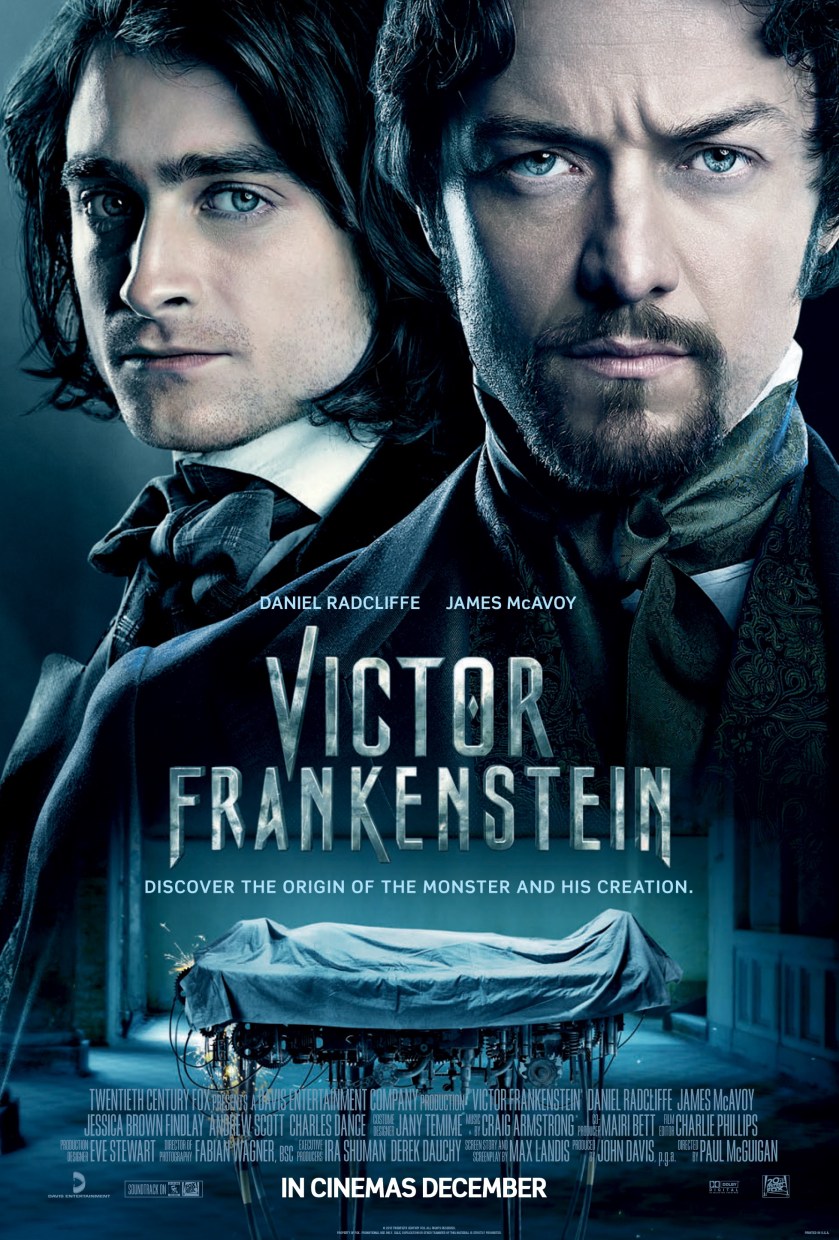
Starring: Daniel Radcliffe (Harry Potter), James McAvoy (X-Men: First Class), Jessica Brown Findlay (Downton Abbey), Andrew Scott (Spectre), Freddie Fox (The Three Musketeers), Charles Dance (Game of Thrones)
Director: Paul McGuigan (Lucky Number Slevin)
Writer: Max Landis (Chroncicle)
Runtime: 1 hour 50 minutes
Release Date: 25 November (US), 3 December (UK)
The story of Frankenstein is one of the most often told in cinema since the beginning of the medium, with the oldest adaptation dating back to 1910. Whether fully faithful to the book or going completely off-base, the story of the mad doctor and his creation is a permanent mainstay of world culture and new interpretations of the material are cranked out almost constantly; such is the fate of popular intellectual property in the public domain. Considering such, Victor Frankenstein has an incredibly difficult task standing out from previous adaptations and, whilst it does have some flashes of brilliance, it isn’t quite enough to fully instil life into the film.
Though the film is named after the doctor himself, Victor Frankenstein is far more Igor’s story than Victor’s. Those expecting a faithful adaptation of Mary Shelley’s novel won’t be satisfied, as this is one of those Frankenstein movies that takes the basic concept and then pretty much makes the rest of the story up. This is by no means a bad thing considering the most iconic film version of them all, James Whale’s 1931 classic starring Boris Karloff, is an incredibly loose adaptation itself and this frees Victor Frankenstein to take the story in new directions. However, other than the opening act that tells us Igor’s origin and his first meeting with Victor, from there the differences are far more present in the film’s tone and style rather than plot and ideas. Though the film sells itself as a reinterpretation of the classic story, there isn’t much subversion or new concepts introduced and the movie ends up going exactly where you expect it to go. It definitely feels like a hodgepodge of ideas taken from previous Frankenstein films (some are even directly referenced if you pay attention), and even if that’s the intention it doesn’t feel like a cohesive mash-up. The first act is strong as it builds up the relationship between Igor and Victor, but as the story progresses it gets gradually more and more ridiculous before ending in a rather pithy and disappointing climax and a light hook for a potential sequel.
What really holds Victor Frankenstein together are the central performances of Daniel Radcliffe and James McAvoy. Radcliffe takes the material perhaps a little too seriously in his role as Igor, but there is a lot of joy seeing this bedraggled cripple pull himself together and be the hero of the story. His early performance as the hunchbacked assistant, practically crawling on the floor due to his bulbous growth, is especially well done and he retains some ill posture even as he begins his road to recovery. McAvoy’s Victor Frankenstein definitely emphasises the ‘mad’ in ‘mad scientist’ as he bellows out his crazy ambitions in giddy excitement. It sometimes feels like McAvoy is just doing his best Robert Downey Jr impression, but his eccentric performance is constantly enjoyable and his chemistry with Radcliffe is buoyant and natural; I’d happily watch these two work together again no matter the film. However, the rest of the film’s performances aren’t so strong. Jessica Brown Findlay’s Lorelei is often referred to as a distraction from work by Victor, and she genuinely feels like that; a pointless subplot that doesn’t add much to the film other than act as Igor’s moral compass whenever Victor starts stepping over the line. Andrew Scott’s Inspector Turpin is a raving bible-thumper whose ineffectiveness as an officer of the law is almost as bad as his seething and turgid performance, Freddie Fox’s aristocratic villain is a pompous bucket of clichés, and what is it with Charles Dance popping up in reinterpretations of classic horror stories and then being completely wasted? Was Dracula Untold not enough or something?
Victor Frankenstein has a lot in common with Guy Ritchie’s Sherlock Holmes films on several levels. From the heightened depiction of Victorian London, the constant use of slow motion in action scenes and the overall boisterous and cocky tone, you could almost picture them taking place in the same universe. In spite of this familiar feel, the film’s technical aspects are well executed with lively production design and an appropriately bombastic score from Craig Armstrong. The effects work, however, is a little iffy. Whilst the overall design of the creatures are suitably grisly and a lot of the practical work is excellent, the visual effects work feels a little unpolished and doesn’t blend well with the tangible elements.
Victor Frankenstein isn’t by no means a horrible experience, but it is a rather underwhelming one. The film starts out strong and the chemistry between Radcliffe and McAvoy is electric, but it ends up disappointing by resting on the laurels of past interpretations. There are some fun ideas within Victor Frankenstein and I wish they had the guts to go batsh*t insane, but instead we have a perfectly acceptable but not at all remarkable film that could have been so much more. Oh well, at least it’s better than I, Frankenstein.
Starring: Noah Schnapp (Bridge of Spies), Hadley Belle Miller, Mariel Sheets, Francesca Capaldi, Alexander Garfin, Noah Johnston (Monsters University), Venus Schultheis, Kristen Chenoweth (Rio 2), Bill Melendez (A Charlie Brown Christmas)
Writers: Bryan Schulz & Craig Schulz & Cornelius Uliano
Runtime: 1 hour 28 minutes
Release Date: 6 November (US), 21 December (UK)
I personally never read many Peanuts strips or watched the specials much growing up, but through cultural osmosis I think everybody in the western world has some connection to the adventures of Charlie Brown & Snoopy. Charles Schulz’ timeless characters so perfectly sum up the essence of childhood, and that’s why they’ve survived so long in the public conscience. The prospect of doing a feature-length animated film is something I’m sure many fans of the strip were concerned would be a Hollywood cash-grab, modernising the material without any respect for what it truly means purely because it’s a brand. Thankfully, The Peanuts Movie is a far cry from that presumption and a true delight of an animated film.
Whilst The Peanuts Movie does have an overarching story concerning Charlie Brown trying to find a way to impress the new girl next door, it is divvyed up into segments that could almost work as classic Peanuts specials in their own right. There isn’t some grand adventure for Charlie Brown to go on or anything major at stake here. It’s just Charlie Brown dealing with the same problems and insecurities he’s always dealt with, and as an adaptation that’s all we could really ask for. Like Schulz’s original comics, it’s all about the little foibles of childhood and treating them as if they’re some sort of adventure, just like did as kids. There has thankfully been no attempt to modernise and the world is still as timeless as ever; everyone still uses landline phones, nobody talks about social media, and there are absolutely no modern pop culture references. It’s a film ready to stand the test of time by, like all great stories, being told completely out of time, and its messages are applicable to all kids and even anyone who remembers being one. It doesn’t have much of deeper morals than ‘be yourself’ and ‘don’t let people get you down’, but it goes about telling those messages in such a heartfelt and honest way that it should resonate even with adults; I’d be lying if I said I didn’t get a tiny bit teary-eyed.
With the exception of Kristen Chenoweth in the minor role of Snoopy’s imaginary girlfriend Fifi, there are no famous voices in The Peanuts Movie and the child cast brought together to bring these classic characters back to life is wonderful across the board. It’s hard to find a good child actor, and in animation it’d be so easy just to cast a bunch of adults doing kid voices, but they haven’t and it adds much more authenticity that way. Noah Schnapp’s Charlie Brown is appropriately downtrodden but sympathetic, never feeling false in his moments of despair even when tasked with Schulz’s classic comedically complex dialogue. The entire supporting cast is great whether in pivotal or minor roles, but special mention must go to Venus Schulteis’ exuberant and dumbfounded performance as Peppermint Patty and Francesca Capaldi making the most out of her brief dialogue as the target of Charlie’s affections. Sound bites of the late Bill Melendez have been utilised to voice the characters of Snoopy and Woodstock and it all feels seamless; given the gargantuan amount of Peanuts specials over the years, it’s not like they were short on material.
What really sells The Peanuts Movie beyond getting the spirit right is the loving way Schulz’s drawings have been recreated in 3-D animation. Much like how The LEGO Movie imitated the animation of a brickmation film, The Peanuts Movie has the same choppy animation frames and simplistic designs as the old specials. Though certain sequences are far more elaborate than anything from classic Peanuts, especially the Red Baron scenes, it’s still a delightfully charming effect that immediately brings a strong feeling of nostalgia to the eyes. There are certain parts of the movie such as Charlie’s daydreams that utilise the classic hand-drawn animation, but I’m sure even the most diehard Peanuts fan won’t be disappointed with the overall design of the film. Christophe Beck’s score is sweet and befitting of the film’s tone that also uses classic Peanuts themes like “Linus and Lucy” and “Christmas Time Is Here” to fun effect, and even the Meghan Trainor song “Better When I’m Dancin’” that’s played a couple of times throughout the film (the only modern element of the picture) surprisingly doesn’t distract from the film’s anachronistic world and even compliments the overall message.
The Peanuts Movie is this year’s Paddington: an adaptation of a childhood classic that could have easily been a disgrace to the property but is instead a loving tribute. It achieves excellence by knowing exactly what it is and not trying to be anything other than itself. The story is simplistic but executed perfectly, with enough heart and charm to make even the grumpiest of viewers crack a smile. It really is a nostalgia bomb of a movie whether you’re a Peanuts fan or just someone who has fond memories of being a kid, and I’m sure generations of children to come will acclimate to this film as many generations past have come to love the original stories.
Starring: Adam Scott (The Secret Life of Walter Mitty), Toni Collette (About a Boy), David Koechner (Anchorman: The Legend of Ron Burgundy), Emjay Anthony (Chef), Allison Tolman (The Gift), Conchata Ferrell (True Romance), Krista Stadler
Christmas movies are practically unavoidable at this time of year; whether you plan to or not, you’re bound to watch at least one during the holiday season. But even the classics run dry and there’s always a demand for new ones, and personally I like to find the more subversive films. Whether they be action movies, dark comedies or straight-up horror, it’s always nice to get a little variety in the festive movie experience. Krampus isn’t the first film of its type, we have plenty of Christmas-themed horror films like Black Christmas or Silent Night, Deadly Night or even other films about an evil Santa like the Finnish Rare Exports, but it’s the first mainstream studio one we’ve gotten in a while. Coming from Michael Dougherty, director of the cult classic Halloween film Trick ‘r Treat, the chance of seeing this guy bring horror to another holiday is an interesting prospect. The final result is, though certainly flawed, could become an annual viewing pleasure for the more demented Christmas lover.
The set-up of Krampus is fairly standard for a horror movie: there’s a bunch of people trapped in a house with monsters running around outside trying to pick them off, and to survive these disparate people have to put aside their differences and combat the common enemy. Mixing the conflict found in horror movies with the family bickering so many of us are familiar with during the holidays, however, is a novel concept and does provide some solid commentary on the turmoil and forced merriment of the season. The first act of the movie is well set-up with comedy evocative of National Lampoon’s Christmas Vacation before the horror slowly creeps into the story, gradually increasing tension until the film explodes into its true colours. The problem with the horror element, unfortunately, is that it’s very inconsistent about exactly what type of horror it is. The idea of an evil Santa Claus attacking a house with fiendish gingerbread men and killer toys is an inherently silly concept, but the way Krampus treats it flits from scene to scene. Sometimes it’s more of a standard horror movie, other times it’s a dark fairy tale, and then at points it turns into an Evil Dead-style goof-fest. All of these approaches are fine and executed well, but to suddenly go from the dread of a monster stalking the snow-covered streets to an evil teddy bear gnawing someone’s leg is kind of a tonal leap. Luckily, the ending is ultimately satisfying, if somewhat predictable, by neither going too sweet and Christmas-y nor leaving you with a gut-wrenching sadness; it’s exactly the right amount of twisted in a film still rooted in the holiday it is celebrating.
Krampus certainly has a solid cast for such a silly film, and though they deliver a lot of credibility along with solid performances, the characters they’re given are a little lacking in material. Emjay Anthony’s Max gets the most focus with his faith in Christmas being just the right amount of cutesy without being annoying, but whilst his story feels complete by the end everyone else feels like they had one but then they’re completely forgotten about when sh*t hits the fan. Adam Scott and Toni Collette having marital difficulties due to him being away all the time? Never resolved. Collette’s conflict with her uninvited and abrasive aunt? Kind of pushed to the side after one scene. The only other relationship that sees any sort of evolvement is Adam Scott and his brother-in-law (David Koechner playing essentially a variation on Randy Quaid from Christmas Vacation), but even then the resolution feels thrown in for the sake of holiday cheer. The only other character that feels really solid is Krista Stadler’s Grandma Omi. Whilst her insisting on speaking German despite the fact her character can clearly understand and speak English fine is a little odd, she plays the role of the wise old grandmother strongly and I wish there was a little more to her character.
Visually and aurally, Krampus balances being a Christmas film and a horror film extremely well. Everything has that holiday feel with a lot of greens and reds surrounded by heaps of white snow, and the use of classic Christmas songs in an eerie context ups the creep factor immensely. The opening credits sequence depicting a rowdy mob fighting over gifts set to ‘It’s Beginning To Look A Lot Like Christmas’ is an especially enjoyable oxymoron, and there’s a beautiful animation sequence when Stadler flashbacks to her previous encounter with Krampus. The movie is full of imaginatively designed creatures for our family to combat, all of them eerie twists on Christmas staples, and many of them rendered through cheesy but impressive practical effects. The design of Krampus himself is especially effective when he’s finally revealed, an imposing figure that embodies the film’s subversive nature in one simple but gruesome and memorable creature.
Krampus is a little confused on exactly what it wants to be and doesn’t take the time to effectively set up character, but if you’re in the mood for something more devious than It’s a Wonderful Life or A Christmas Carol this holiday season it’s certainly worth considering. A lot of thought and imagination has clearly gone into the production that makes certain sequences a blast to watch, but it doesn’t quite pack enough oomph for it to become a must-see. Still, if the concept alone is enough to make you curious, I do suggest giving it a watch whether it be this holiday season or one of the many to come in the future.
Starring: Raymond Ochoa, Jack Bright, Jeffrey Wright (Source Code), Frances McDormand (Fargo), Steve Zahn (Out of Sight), Sam Elliot (The Big Lebowski), Anna Paquin (True Blood)
Director: Peter Sohn (Partly Cloudy)
Writer: Meg LeFauve (Inside Out)
Runtime: 1 hour 40 minutes
Release Date: 25 November (US), 27 November (UK)
The Good Dinosaur has had a rough time on its way to the cinema. The film was supposed to come out in 2014 but, much like Toy Story 2 and Brave before it, the entire film was scrapped close to completion and begun over again due to it not meeting Pixar’s high standards (doesn’t exactly explain how Cars 2 got a pass, but now I’m just being mean). Watching the final film, there are definitely still signs that The Good Dinosaur was a problem child but within the somewhat messy final result are moments that truly shine.
The story of The Good Dinosaur is pretty simple even for a kids’ film. It’s your standard underdog tale of a kid going on an adventure to reunite with his family whilst overcoming his fears and making new friends; if you grew up on animated films, you’ve seen at least one with this exact plot. The film is incredibly formulaic and predictable, especially in the first act, with little to no deviation from the expected path. The film is also structurally wonky, with the second act being our heroes basically just meandering between different kooky side characters on their way to the actual plot. Where the film does show a unique identity is in its world and character dynamics. The story is set on an Earth where dinosaurs weren’t killed by the asteroid, now co-existing with the emerging human population, and it’s all handled with surprising maturity. Though the dinosaurs talk and certain species embody different human roles like farmers, cowboys, hillbillies and even cultists, they are still animals and behave as such. Apatosaurus protagonist Arlo and his human companion Spot are a fun twist on the usual ‘a boy and his dog’ dynamic, and it’s their heartfelt relationship that keeps the film moving forward and ultimately sells the story. A scene where the pair explain their back stories to each other with almost no dialogue is incredibly emotional, and the resolution to their friendship is equally as impactful. It’s a pity there aren’t as many scenes as good as those throughout the rest of the picture.
Compared to many of the great protagonists of Pixar’s past, Arlo really fails to stand out. Other than the typical underdog traits of being frail and easily scared, he lacks a distinctive personality that makes him more than just a cliché. Most characters of this ilk have at least some personal dream or special skill that raises them above mediocrity, but Arlo doesn’t have anything like that. It’s this blandness that makes the story’s first act feel especially dull, and it’s not until the relationship between him and Spot really starts to form that the film starts to feel like something more. Spot as a character is enjoyable to watch purely from an animation perspective, which is important as he has no dialogue beyond grunts, and through simple facial expression and body language he gets across far more character depth than Arlo can through actual words. The two make an enjoyable duo and their bond feels airtight by the film’s conclusion, but without Spot the narrative’s mediocrity would be even more abundant. The rest of the supporting characters are mostly just window dressing though strong vocal talent backs many of them up. Jeffrey Wright and Frances McDormand feel underutilised as Arlo’s parents, as well as his siblings who are basically just being there to hammer home Arlo’s weaknesses, whilst Steve Zahn’s villainous pterodactyl Thunderclap feels like an afterthought. Sam Elliot, Anna Paquin and A.J. Buckley are fun as a family of T-Rexes, though other than Elliot helping to drive home the film’s message about overcoming fear their subplot is completely superfluous. Director Peter Sohn completely steals the screen as the bizarrely hilarious Forrest Woodbush, but again his scene is mainly just there to be funny.
Though the story is lacking, on a visual level The Good Dinosaur is a feast for the eyes. The detailing in the environments is breathtaking, bordering on photorealistic at points, and though the more cartoony designs of the dinosaurs sometimes clash with these gorgeous vistas it remains a fantastically enjoyable experience to behold. The quality of the animation is also vivid, with Arlo’s gangly movements bouncing well off of Spot’s speedy reactions, and elements like rain and snow add to the tangibility of this world. The film’s score by Mychael Danna & Jeff Danna is a change of pace from Pixar’s usual use of either Michael Giacchino or Randy Newman, but it’s a welcome change as their gentle and airy sensibilities feel like a much better fit for the film compared to a more traditionally uplifting Disney score.
The Good Dinosaur ranks amongst Pixar’s lesser efforts but it’s still an enjoyable experience despite the familiarity. Much like Brave, it’s impressive that they’ve managed to make a workable film out of a troubled production, but in saving it they have relied heavily on formula. If you can get beyond the story’s triteness there are some funny and beautiful moments to behold that rank amongst the company’s most heartfelt scenes, but they do feel caked within a template that’s felt tired since the turn of the millennium. After a film like Inside Out that appealed so perfectly to both kids and adults and got across far deeper messages, it’s a little underwhelming to see The Good Dinosaur focus more on the younger demographic (then again, how many other Pixar films can claim to have a drug trip scene?), and I hope in their future efforts they continue striving to defy expectations rather than settle for simply fine.
Starring: Tom Hanks (Saving Private Ryan), Mark Rylance (The Other Boleyn Girl), Amy Ryan (Gone Baby Gone), Austin Stowell (Whiplash), Alan Alda (Tower Heist), Jesse Plemons (Black Mass)
Director: Steven Spielberg (Schindler’s List)
Writers: Matt Charman (Suite Française) and Ethan Coen & Joel Coen (No Country For Old Men)
Runtime: 2 hours 21 minutes
Release Date: 16 October (US), 27 November (UK)
There are generally two extremes of Steven Spielberg movies: crowd-pleasing feel good blockbuster, and heart-wrenching serious drama. Many of his films fall somewhere in between these two categories, but either way they are all easily recognisable as Spielberg films. Bridge of Spies falls in the middle but definitely sways more towards the drama but not without the hope and optimism you’d find in his more uplifting pictures.
Though the film’s subject matter deals with a lot of life-and-death situations in the midst of one of the most heated periods in international politics, Bridge of Spies is certainly not a rollicking thrill ride of a movie. It tells a story driven through words rather than action, its scenes consisting mostly of legal proceedings and negotiations, and to some that may be tiresome. But if you love strong dialogue and interesting character conflict, Bridge of Spies will capture your attention just as strongly as any movie filled with gunfire. It’s a long sit at nearly two and half hours and there are some subplots and side characters that end up going nowhere, but Spielberg’s direction and the witty dialogue of the Coen Brothers keeps the pace at just the right intensity to avoid tedium. But what really makes Bridge of Spies so enjoyable to watch is its uplifting themes about securing justice for all, remaining unflinching in the face of denial, and doing what’s right rather than doing what you’re told. The film certainly has its dark and intense moments, but Spielberg always imbues the story with that magical warmth that only he can bring to movies, closing the picture on a sappy but emotionally satisfying note.
Tom Hanks is a cinematic treasure and his honest persona is a perfect fit for the role of Jim Donovan. The character is an eternal optimist fighting only for what he deems fair, a lawyer in it for justice rather than winning, and whilst Hanks’ usual affability gels with this impeccably the scenes where he has to be more firm and persuasive are where he really shines as an actor. You really get the sense that this man would rather jeopardize the entire operation than concede a human life, and Hanks accomplishes this through a fine mix of likability and resoluteness. Spielberg has also assembled a fine collection of character actors to populate his supporting cast, but none of them shine as brightly as Mark Rylance’s performance as Soviet spy Rudolf Abel. His modest and often humorous performance provides a lot of levity, and the scenes between him and Hanks are pure gold on so many levels.
Spielberg’s style is so distinctive that you can easily break it down to its core elements, but it’s an approach to filmmaking so simple yet effective that it remains powerful all the same. The way he composes the camera in every shot, combined with Janusz Kaminski’s gorgeous cinematography, makes every movement flow and evolve with the action rather than the other way around. The period detail in the sets and costumes captures the Cold War era perfectly (e.g. expect a lot of suits and fedoras), and though this is the first Spielberg picture to lack a score by John Williams in a long time, Thomas Newman is a more than worthy replacement and crafts a score that is quintessentially Spielberg but still stands on its own.
Bridge of Spies is Spielberg through and through, and if you enjoy all his varying flavours of film then you’re definitely going to enjoy this one. The story is strong and uplifting, the performances from Tom Hanks and Mark Rylance are top notch, and it once again reminds us that Steven Spielberg is still the master. Though I certainly enjoy his more serious fare, I am glad he’s making a return to more mainstream movies for his next couple of films: adaptations of the classic Roald Dahl book The BFG and pop culture-savvy sci-fi novel Ready Player One (or, as I like to call it, Please Don’t Suck Please Don’t Suck Please Don’t Suck).
Starring: Jennifer Lawrence (Silver Linings Playbook), Josh Hutcherson (The Kids Are All Right), Liam Hemsworth (The Expendables 2), Woody Harrelson (True Detective), Julianne Moore (Boogie Nights), Phillip Seymour Hoffman (Capote), Elizabeth Banks (Pitch Perfect), Jeffrey Wright (Source Code), Natalie Dormer (Game of Thrones), Sam Claflin (Snow White & The Huntsman), Donald Sutherland (Invasion of the Body Snatchers)
Director: Francis Lawrence (I Am Legend)
Writers: Peter Craig (The Town) and Danny Strong (The Butler)
Runtime: 2 hours 17 minutes
Release Date: 19 November (UK), 20 November (US)
And so another franchise comes to an end… until the studio can figure out some way to make a prequel or spin-off within the next decade because, well, everyone else is doing it. At least I think it’s safe to say the story of Katniss Everdeen has come to an end, and I was amongst others hoping it would be an epic conclusion to the story. After Mockingjay – Part 1 proved to be boring for some with its focus more on the politics rather than the action, there was some hope Part 2 was saving all the excitement for an explosive finale in the vein of Harry Potter and the Deathly Hallows Part 2. However, to paraphrase T.S. Eliot, this is the way The Hunger Games saga ends, not with a bang but a whimper.
Mockingjay – Part 2 picks up right where Part 1 left off and continues on with the story like you never left with little to reintroduce you to the world; it’s like coming back to a movie you stopped watching halfway through. Part 2 is easily the most accurate page-to-screen translation of all the films, with nary a detail from the novel not present in some form. To those who know what’s coming, no major events have been changed and it ends exactly as it did in the book. It’s rare to see an adaptation this accurate, but Mockingjay – Part 2 is a case study in why novels are changed when adapted to movies. Every problem with this movie stems back to the decision to split the novel into two movies as, just like with Part 1, there are serious pacing and structural problems. Despite being mostly set within a war-torn city with danger around every corner, action scenes are scant to make room for more scenes of characters talking to discuss the nature of war and their evolving relationships within it. These scenes are fine and do build some nice character moments, but for every five of these scenes there’s only one brief action sequence and, as well done as a lot of them are, almost all of them could be cut with little impact. About half the movie is just set-up, then a quarter is the actual action broken up heavily with quiet moments, and then the last quarter is all epilogue; if you thought The Lord of the Rings’ endings dragged on you’ve seen nothing. Of all the movies in the franchise, this is the one that would have benefitted the most from cutting away from Katniss’ story to show more action with the war, but all you see of that is smoke and gunfire in the distance; it ends up making what’s supposed to be this final confrontation with thousands of lives on the line feel incredibly small. Apart from a few plot twists that were a bit mishandled I actually have no problem with the story of Mockingjay – Part 2. It’s well written on a dialogue and emotional level, it wraps up all loose ends, and it concludes on a satisfying if somewhat treacly note. I just have a problem with the way the story is told, and it is all because this two-hour plus movie should have been the final 45 minutes of a one-film adaptation of Mockingjay.
The Hunger Games has enjoyed a strong cast throughout (Liam Hemsworth withstanding, but the character of Gale was never good in the books either), and they all deliver great performances as expected. Jennifer Lawrence never fails to impress and, though her series highlights are behind her, she brings a solid send-off to the character of Katniss. Josh Hutcherson ends up being the main standout performer mainly given Peeta’s altered state after the events of Mockingjay – Part 1, and he sells his portrayal of a broken and confused young man unsure of his own sanity whilst also being a constant wildcard for the rest of the group. Special mention must also go to Elden Henson for his portrayal of Pollux, able to command so much emotion and sympathy without being able to say a single word, and to the ever-delightful Donald Sutherland as the villainous President Snow; I thought his final couple of scenes could have been handled a little more subtly, but he still remains a wonderful adversary throughout. It’s somewhat sad to say this is the late Phillip Seymour Hoffman’s last movie because he’s not in it very much, but given he passed away before finishing his scenes it’s understandable; the accommodations to the plot they’ve made due to this are relatively minor, but his presence is still sorely missed. Oh, and for Game of Thrones fans, Gwendoline Christie is in the movie…for one scene where she does nothing but stand still and exposit. Wow, what a way to waste your Brienne of Tarth.
Action in Mockingjay – Part 2 is limited, but what’s there is as well handled as the action in Catching Fire in terms of intensity and fury. Everything’s well shot and choreographed, with a chase and fight in the Capitol’s sewers that owes a lot to Aliens being the movie’s action highlight. The production design and costumes are exactly as you’d expect from the franchise with looming fascist architecture and a mix of dull blacks and greys for the rebels and extravagant outfits for the Capitol, though with the character of Tigress they’ve certainly outdone themselves on ostentation. James Newton Howard repeats a lot of the same themes from his previous scores for the franchise, but in doing so it does help call back to important moments without the need for flashback.
The Hunger Games: Mockingjay – Part 2 is a movie less than the sum of its parts, mainly because most of its parts were used to make the previous movie. It works perfectly fine as a conclusion to the story and fans are going to see it no matter what, but there’s too much fat and not enough lean for it to be a truly satisfying experience. I really would love to see if any fans will recut the Mockingjay movies together into one 3-hour film and if that will help alleviate all my problems, but this version of the story as it stands is far too bloated and frankly tedious to sit through at points. Cutting one book into multiple films has only worked once before with Harry Potter and it worked because it was done for creative reasons rather than just raking a stronger box office. Mockingjay didn’t need the multi-film treatment and it’s only hurt the franchise in doing so. It ends up feeling like the last hour of a really good party that’s starting to lose its lustre but the host won’t let you leave until you’ve said goodbye to everyone; it’s fine, but you wish you could have left a little sooner.
Starring: Michael Fassbender (Macbeth), Kate Winslet (Titanic), Seth Rogen (Knocked Up), Jeff Daniels (The Martian), Katherine Waterson (Inherent Vice), Michael Stuhlbarg (A Serious Man)
Director: Danny Boyle (Trainspotting)
Writer: Aaron Sorkin (The Social Network)
Runtime: 2 hours 2 minutes
Release Date: 9 October (US), 13 November (UK)
Steve Jobs is either a messianic genius or an arrogant tyrant depending on whom you ask. I can’t exactly hate the guy considering he’s partly responsible for the device I’m currently typing this review on, but even if he wasn’t a nice guy I find it’s always best to separate a man from his work; if we judged all accomplishments based on the people who did them, we’d probably disregard half of history’s great minds. Steve Jobs the film is an interesting look into said mind of the infamous creator of Apple, and one that thankfully doesn’t coat the departed innovator in any particular shade of paint.
Contrary to popular belief, Steve Jobs is not a biopic per se. Though aspects of Apple’s founding are covered in flashback sequences, it is essentially three long scenes that each take place before one of Jobs’ famous product launches. It’s structurally more reminiscent of a three-act play, with tension rising and falling within these separate pieces as individual sections that are only interweaved by brief newsreels covering the time gap. Story beats definitely carry between the three acts and tell a greater overall story together, but each of the sections function perfectly well on their own. The structure of each of the segments are incredibly similar and does result in some déjà vu as the second and third pieces progress, but the content remains strong enough that it never becomes a deal breaker. Typical of an Aaron Sorkin film, Steve Jobs is incredibly dialogue-heavy but it’s so incredibly well-written and performed that you forget most of the movie is just Jobs bickering with his subordinates. The film is full of captivating propulsive energy as each argument leads into the next, each line ripe with that repartee and wit that only Sorkin can pull off well without looking like an overly linguistic smartarse. But beyond the talk of operating systems and corporate jargon, Steve Jobs is a very sweet and endearing film about a man trying to come to terms with fatherhood in a way only Steve Jobs would do.
Michael Fassbender looks absolutely nothing like Steve Jobs but that should never really matter; remember, Ashton Kutcher looks almost exactly like Jobs and look how his biopic turned out. The job of a good actor is they inhabit the role so well that you forget that watching you’re watching isn’t real and, whilst Fassbender never quite breaks that boundary of reality, he delivers an incredible performance regardless. His Jobs is as pernickety, obsessive and unmanageable as you’d expect, but he also adds enough humanity and sympathy to his portrayal that you can understand his plight. Like all great films of this ilk, it doesn’t try to cast its focus character in a particular light but rather simply show you the man and lets you judge him for yourself. It doesn’t matter whether you like or hate Jobs as a person or a character; all viewpoints are valid. The supporting cast is also phenomenal across the board, with even smaller players like Jon Ortiz and Sarah Snook getting their moments to shine. Seth Rogen’s Steve Wozniak is a particular standout, performing as a character that allows Rogen to stretch into more dramatic fare without losing his loveable laidback persona, and he knocks out every argument he finds himself in with Fassbender. Kate Winslet loses herself in the character of Joanna Hoffman, balancing perfectly her loyalty to Jobs and her annoyance with his attitude, and Jeff Daniels’ John Sculley steals every single one of his brief scenes.
Danny Boyle is known for his distinctive style and, whilst Steve Jobs is certainly a far more reserved film visually that some of his other work, he does incorporate a lot of inventive ideas. Most notable is the evolution of the cinematography, with each segment being shot in a different format; 1984 is shot on 8mm, 1988 on 16mm, and 1998 is filmed digitally. Even to a layman, the visual difference should be noticeable and it gives each section a visual aesthetic that makes the time jumps even clearer. The camerawork beyond that is far more reserved than Boyle’s usual work, with far less handheld and odd angles in favour of simple static shot-reverse shot; it’s ultimately for the best, as this is a film where dialogue is king. The period detail in the costuming is also helpful in distinguishing the eras, and Daniel Pemberton’s score does a good job of keeping pace and tension especially during the more heated scenes. Also, any film that uses a Simpsons clip gains bonus points in my book.
Much like Sorkin’s The Social Network, Steve Jobs takes a story that doesn’t seem interesting at first and turns it into a captivating drama that even people with no interest in the subject matter will find fascinating. Sorkin’s writing is as engrossing as ever and makes as solid a match with Boyle’s directing style as he did with David Fincher. Fassbender’s portrayal of Jobs is amongst the finest of his career, and the supporting cast matches him at every turn. Whether you love him or hate him, this is exactly the calibre of film a man like Steve Jobs deserves and I don’t think any other attempt at telling his life story will match up to this.









 Alternative Lens