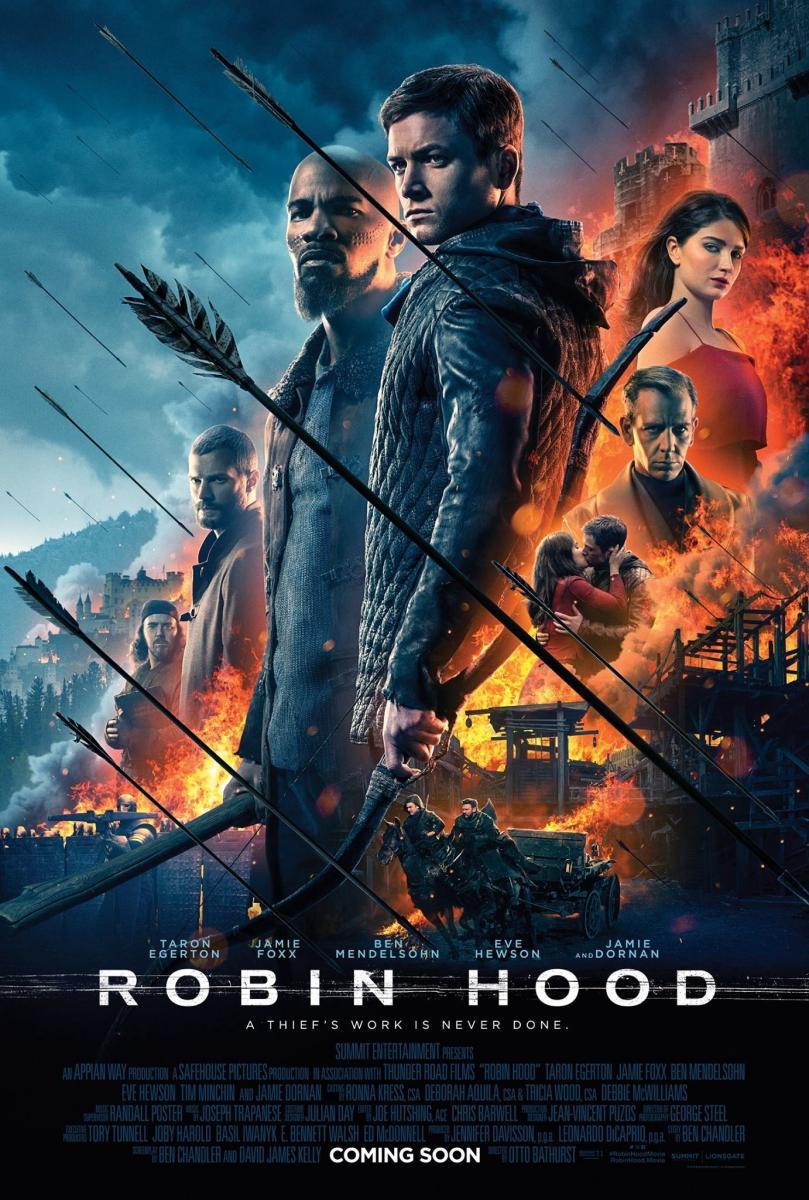
ROBIN HOOD – an Alternative Lens review

Starring: Taron Egerton (Kingsman: The Secret Service), Jamie Foxx (Ray), Ben Mendelsohn (Killing Them Softly), Eve Hewson (Bridge of Spies), Jamie Dornan (Fifty Shades of Grey)

Director: Otta Bathurst (Peaky Blinders)

Writers: Ben Chandler and David James Kelly

Runtime: 1 hour 56 minutes

Release Date: 21 November (US, UK)

In the age of cinematic superheroes, it seems like every studio has attempted to latch onto any intellectual property with even the vaguest similarities to comic book heroism, slap on the style and tropes of whatever are the most popular blockbuster motifs of the day, and call it a “reimagining”. We’ve seen this happen to the likes of King Arthur and Dracula, so it was only a matter of time before Robin Hood got the same treatment. In all fairness, Hood as a character better lends himself to the superhero mood than most, being an obvious point of inspiration for the likes of Batman and Green Arrow. But this new Robin Hood has far bigger problems than just being another movie chasing the Marvel train. No, it’s bad for reasons far beyond that.
Now the story of Robin of Locksley has been brought to us many times over since the dawn of cinema itself, so this new version already has a lot to tackle in regards to differentiating and comparing itself to nearly a hundred years worth of adaptations. The tack it decides to take is filling the film with some of the most blatant and unsubtle allegories imaginable. It’s no secret that some see Robin Hood as something of a revolutionary symbol in this age of financial inequality, but the film goes overboard to the point that it makes mother!‘s allegories seem subtle in comparison. Hey, ever thought that the war in the Middle East has some overlap with the Crusades, or that political and religious corruption has been a problem forever and not just a recent phenomenon? Yeah, no sh*t, but this movie seems to think these are new ideas and is a little too eager to make the paralleled clear.

The result is a film that indulges so much in trying to create an identity that it completely loses track of what it’s trying to be. At the most basic level, the film is just a ripoff of Batman Begins, but at the same time it’s lifting ideas wholesale from the likes of Gladiator, Black Hawk Down, 300, The Hunger Games and more, and none of it is done subtly. The storytelling is incredibly efficient but never gives enough time for development, leaving the characters to be defined solely by what we know about them from pop culture osmosis and whatever one or two “see, they’re edgy and hip now” quirks the filmmakers have given them. The plot is formulaic from beginning to end, at least until one final twist involving a whiplash-inducing character flip that also doubles as a Marvel-style teaser for the next movie, and by the point they’re just running over a dog they’ve already beaten to death. In short, it’s somewhat ironic that this film takes on the image of our current revolutionary movements, because under the skin it’s just a piece of lazy IP management made to try and pander to the masses and make a quick buck.

Taron Egerton showed great promise when he jumped into mainstream attention in Kingsman and he’s proven himself time and again since then. However as Robin Hood (or Rob as they keep calling him) he fails to make a good impression. He feels phenomenally miscast in a film where every performance already feels like they come from completely different movies, delivering a Robin Hood who is never particularly charming, intimidating or relatable. The script doesn’t help much, with the character on the page basically just being Bruce Wayne without the bat fetish, but Egerton fails to elevate the material in any notable way. Jamie Foxx’s performance as the film’s reinterpretation of Little John (who’s basically just Azeem from Prince of Thieves but now called “John”) is nearly as ridiculous as his role in The Amazing Spider-Man 2, over-delivering every line with a husky voice and forced inflection, and on reflection is far more of a proactive presence in the plot; seriously, John pretty much calls all the shots for the first and second acts and Rob just goes along with him.

Ben Mendelsohn makes for a serviceable but ultimately forgettable Sheriff of Nottingham, whilst Eve Hewson shows some promise as Maid Marian but the film quickly squanders that potential by giving her very little to do. Tim Minchin’s Friar Tuck feels like he’d be more at home in Mel Brooks’ Men in Tights, Paul Anderson’s Guy of Gisborne seems to think he’s in a Saturday morning cartoon, and for some reason they’ve set up F. Murray Abraham as The Cardinal like he’s supposed to be the Thanos of this series. However, the most confusing character is easily Jamie Dornan’s Will Scarlet. Starting off, he barely resembles the traditional character to begin with, but there is at least something interesting to him as a parallel to modern progressive politicians trying to play fair in a broken system. But come the third act, the character goes through that aforementioned whiplash flip, and the results are more confusing and hilarious than shocking. I certainly didn’t see it coming, but that’s only because it doesn’t really make much sense.

Just like how Venom recently brought back the aesthetics of bad mid-2000s superhero movies, Robin Hood still seems to think 300 is the height of coolness. Every action sequence in this film is a mess full of shaky-cam, close-ups, bad compositing, incoherent editing, and an overuse of speed-ramping effects; I’d thought we’d finally killed that trick in 2014. From a design level, the film is clearly trying to go for a timeless look by mixing and matching medieval design with modern elements, but it only looks cool in the same way certain things are cool to a 14-year-old boy. This is a film that features crossbows that fire like semi-automatic weapons and knights wielding riot shields and batons. If that doesn’t make you understand why this film is a bad idea, maybe this is something you’d actually enjoy. Also, just a really random note, but this film has a massive hard-on for jets of fire; I counted nearly a dozen going off in just one short scene.

Robin Hood is a microcosm of every bad idea Hollywood has ever had in trying to make an old property seem “hip for the kids”. It plays like a fan fiction written by an edgelord teen who’s seen The Dark Knight too many times and who knows what Anonymous is but doesn’t understand it. The film takes a story filled with classic tropes and just tacks on modern ones, the characters are flat and are either underacted or overacted, and every aesthetic choice made in direction and design feels a decade out of date. When is Hollywood going to learn that you can’t just repurpose classic stories like this and expect us to see them? Ridley Scott released his failed “reimagining” of Robin Hood just eight years ago and it didn’t work, so why did anyone expect this to play? Seriously, I hope the next time someone decides to make a Robin Hood movie, it’s because they actually have a really good idea for one and not just because some studio executive has a lack of imagination.

FINAL VERDICT: 3/10

cropped-screen-shot-2017-10-01-at-19-46-22.png

THE GIRLS IN THE SPIDER’S WEB – an Alternative Lens review

Starring: Claire Foy (First Man), Sylvia Hoeks (Blade Runner 2049), LaKeith Stanfield (Death Note), Stephen Merchant (Logan), Cameron Britton (Mindhunter), Vicky Krieps (Phantom Thread), Sverrir Gudnason (Borg McEnroe)

Director: Fede Alvarez (Don’t Breathe)

Writers: Jay Basu (Monsters: Dark Continent) & Fede Alvarez and Steven Knight (Eastern Promises)

Runtime: 1 hour 57 minutes

Release Date: 9 November (US), 21 November (UK)

Despite being by most accounts a pretty good film, David Fincher’s adaptation of The Girl with the Dragon Tattoo didn’t exactly set the world on fire. Maybe Sony overestimated the popularity of the books, maybe making an English-language version after the acclaimed Swedish-language film trilogy concluded was too soon for audiences; there is likely no one reason it failed at the box office. But Sony doesn’t seem to want to let the property die, and so after seven years they’ve instead churned out this soft reboot based on one of the books not written by original author Stieg Larrson at half the budget of the first. And you thought the order they adapted Dan Brown novels was confusing…

The Girl in the Spider’s Web never seems interested in answering whether the film is a true follow-up to Fincher’s film or not, and that makes it a confusing film from the off for both fans and newcomers. The events of not only Dragon Tattoo but its sequels have seemingly already occurred, and the relationship between Lisbeth Salander and Mikael Blomkvist is now in a completely different place than it was at the end of Fincher’s Dragon Tattoo, so a degree of familiarity with the property is expected. However, that doesn’t make this an easy entry point to the series, and fans will be confused about what exactly is canon or not. It’s like watching a reboot of your favourite TV show, but they’ve started the story at season four whilst still referencing events that happened in the first three; it’s a confusing approach to say the least.

But getting past the confusing continuity, the film as a standalone piece is a fairly run-of-the-mill thriller. There’s not a single element of the film’s plot that you haven’t seem used in other similar stories, making the proceedings fairly predictable right from the start. The film is paced well-enough, but it feels like a lot of detail has been trimmed to make that happen, leading to a narrative that hits all the right notes but never in a distinctive way. The stakes this time around are much higher this time around, with potential world-affecting consequences, but these only serve to rob the series of its more grounded identity. At the same time, Spider’s Web wants to make the story more personal for Salander, but this mashed with all the talk of nuclear weapons and international espionage makes for a mix that pushes the franchise in a far too Hollywood direction. The film far more resembles a Jason Bourne movie than a Scandinavian crime story, and these attempts to make the material more accessible to a wider audience have only made it more generic.

Claire Foy is an excellent actress and Lisbeth Salander is certainly an iconic character that she should excel at slipping into, but she unfortunately doesn’t fully embrace the idiosyncrasies of the character. Her performance is far less captivating and unique than either Noomi Rapace or Rooney Mara were in the role, and instead they’ve almost made her too relatable. This isn’t exactly helped by the script, which never quite does a good enough job of defining Salander’s motivations story or character-wise. She’s too anti-social to be likable, too righteous to be hateable, and not fascinating enough to compensate for either of those issues. In short, the character lacks enough definition to work as a standalone protagonist without prior knowledge of her previous exploits. For all her efforts, Foy feels more like she’s half-heartedly dressing up as Salander for Halloween rather than effectively playing her.

As for the rest of the cast, everyone else is serviceable but unremarkable. Sverrir Gudnason’s Mikael Blomkvist feels like an afterthought, kept around simply because of his presence in the previous stories but without anything important to add to the plot or his character development. LaKeith Stanfield’s role has potential but it doesn’t reveal itself until far too late into the film, whilst Stephen Merchant feels wasted in a role that could’ve been played by anyone. The only other performance of any remark is Sylvia Hoeks as the antagonist, even if it feels like she’s stepped out of a completely different movie, but she enters the plot far too late and her connection with Salander never feels truly genuine.

Director Fede Alvarez has previously proven himself to be a unique voice with Don’t Breathe and the remake of Evil Dead, but here any sign this was his work feels muted at best. Instead, the entire production feels like a poor imitation of Fincher’s aesthetic on Dragon Tattoo, right down to it again using a Bond-esque opening titles sequence but without the distinctive flair or energising music choice that made those credits memorable. Much like how Peter Berg couldn’t copy Michael Bay with Battleship and Tate Taylor similarly couldn’t copy Fincher with The Girl on the Train, Alvarez here has sacrificed his own voice and talents to fit the brief of a film he technically isn’t even making a sequel too, and the final product in the end feels like a film that belongs to no one.

The Girl in the Spider’s Web is like a passable but unremarkable episode of a TV show long past its prime. There’s nothing here you can’t get in a multitude of other better films, and its approach to its story world and characters makes it hard to recommend to either diehard fans or newcomers. I’m not sure what I would have done in Sony’s shoes (except, I don’t know, not make the movie) but this was certainly a unique but ineffective way to jumpstart the franchise. Perhaps the most sensible thing to do at this point is let the property rest and start again from the beginning in a couple of decades or so.

FINAL VERDICT: 5/10

cropped-screen-shot-2017-10-01-at-19-46-22.png

FANTASTIC BEASTS: THE CRIMES OF GRINDELWALD – an Alternative Lens review

Starring: Eddie Redmayne (The Theory of Everything), Katherine Waterston (Steve Jobs), Dan Fogler (Balls of Fury), Alison Sudol (Between Us), Ezra Miller (Justice League), Jude Law (King Arthur: Legend of the Sword), Johnny Depp (Black Mass)

Director: David Yates (Harry Potter and the Order of the Phoenix)

Writer: J.K. Rowling (Fantastic Beasts and Where to Find Them)

Runtime: 2 hours 14 minutes

Release Date: 16 November (US, UK)

There are a lot of reviews I’ve written over the years that I now disagree with, but few more so than my initial opinion on Fantastic Beasts and Where to Find Them. I came out of that film indifferent but still positive; not as good as any of the Harry Potter films, but still decent. After a few years and attempting to watch it again, I can safely say I was wrong. It’s a meandering and often boring exercise in pointless world building, and a clear example that J.K. Rowling has struggled in the transition from writing novels to writing screenplays. If I were to review the film now, I’d probably give it a 5/10. But the adventures of Newt Scamander don’t end there, as now we have four more promised instalments to experience, and there was a small amount of hope in me that Rowling and David Yates may have cracked the code this time. Sadly, that is not the case. Fantastic Beasts: The Crimes of Grindelwald not only fails to improve on the original, but also serves as an example of one of the worst exercises in genre storytelling and expanded universe franchising in recent memory.

Picking up nine months after the events of the first film, The Crimes of Grindelwald suffers from every ailment its predecessor had but to an even worse degree. The film lacks any sense of cohesive narrative flow, with about a dozen plotlines that only connect to each other in the most haphazard way, including several overlong flashback sequences detailing events that could have been exposited more concisely, all leading to an underwhelming climax that only delivers on “shocking” reveals and even more sequel-baiting. There is absolutely no discernable structure to the screenplay or any tangible sense of pacing, leading to an already long and drawn-out film only feeling longer. Take away all of the superfluous action sequences, and there’s only about enough meaningful plot here to cover the first act of any other movie, only making it clearer that the material has been stretched thinner to accommodate more movies. The Crimes of Grindelwald has marketed itself on its secrets, but every twist the film has to offer falls flat; those that aren’t predictable are only so because they’re so convoluted and ridiculous. The cacophony of carnage that is this film’s attempt at storytelling only further exemplifies that Rowling not only doesn’t know how to structure a screenplay, but has ran out of ideas of what to do with her own creation. There is ample room for exploring new territory in the Wizarding World, but what we have here is just a superfluous junk drawer of unnecessary lore facts that not even most Potter fans will find meaningful.

In all of the mess of the story, The Crimes of Grindelwald fails to even have a distinguishable protagonist, and considering the sheer cavalcade of disposable characters with silly names cavorting about this picture that shouldn’t be surprising. Eddie Redmayne’s Newt Scamander ostensibly fills that role, but in practice he doesn’t really do that much. The film makes huge leaps to keep him relevant, but the film never really justifies why he needs to be there beyond contrivances (seriously, why do the Ministry of Magic and Albus Dumbledore think the best person to essentially hunt down a terrorist is a socially-dysfunctional zoologist?). Once again, Scamander feels like a loose end in his own movie, and also yet again Katherine Waterston’s Tina Goldstein seems like a more appropriate leading role, but she has even less to do here than last time around and her chemistry with Redmayne continues to be dubious at best. Dan Fogler’s Jacob Kowalski continues to be the only likable character in this mess, but he amounts to little more than comic relief, and the way they’ve written themselves out of his arc in the first film is bafflingly underwhelming.

Alison Sudol as Queenie finally seems to have more of a point here, but her arc over the course of the film comes out of nowhere and yet is somehow predictable from her very first scene. Ezra Miller again feels wasted as Creedence, giving little to do despite much of the plot being built around his quest and the big secret around him, which only amounts to yet more empty promises. Callum Turner is drastically underdeveloped as Newt’s brother Theseus, Zoe Kravitz’s Leta Lestrange remains something of an enigma until the third act when her character turns into something out of a soap opera, and Claudia Kim’s role as Nagini is as problematic as you can imagine and (I keep saying this, don’t I?) amounts to nothing. They even make a big deal of throwing Nicholas Flamel into the picture, but he does absolutely nothing and him being Flamel isn’t even important; they just wanted a name fans would recognise and go, “I understood that reference!”

Now the big draws here are supposedly Jude Law as Albus Dumbledore and Johnny Depp as Gellert Grindelwald, but both are also thoroughly underwhelming. Dumbledore is barely in the film and Law’s performance is workman-like at best; he is neither a faithful progenitor to either Richard Harris or Michael Gambon’s performances, nor an original refreshing take on the beloved character. Depp fares better performance-wise, but for a film called The Crimes of Grindelwald he really doesn’t do all that much (and on that note, not really much of any Fantastic Beasts either. Why did they name this franchise after a textbook again?). After an admittedly fun opening escape sequence, all he does is hide in the shadows facilitating his needlessly complicated puppet master machinations so overwrought that he can’t even effectively rebuke his own henchman pointing out the holes in his plan. Also, it’s Johnny Depp, and we should all know better than to keep enabling him by putting him in more movies.

There’s not really much to say on a technical level here. It’s a well-crafted Hollywood blockbuster with all the fancy trappings that come with having access to millions of dollars and some of the best craftsmen in their various fields. The sets, the costumes, the props, the visual effects, the music; all are better than they have ever been. But there is one major flaw, and it’s once again something that affects the storytelling: the editing. This has some of the worst structural editing since Batman v Superman, with very little logical flow to when we move from one plotline to the next or sometimes even within the same plotline. It’s hard to explain effectively without showing you actual clips, but trust me: there is some amateurish snipping here that screams this was trimmed down from something even more unwieldy and cluttered.

Fantastic Beasts: The Crimes of Grindelwald is not only the worst thing to come out of the Wizarding World (yes, worse than The Cursed Child even), but the worst example of a prequel to a major franchise since X-Men Origins: Wolverine. This movie is the cinematic equivalent to reading Rowling’s tiresome retcon tweets: trite, laboured, unnecessary, and sometimes even offensive. It both fails as a compelling story on its own terms and as part of the universe it feebly attempts to expand, resulting in an experience that only the most diehard and forgiving Potter fan will find any enjoyment in. It’s hard to imagine how much more they can jump the shark with three more instalments to supposedly go, and given how unstoppable a phenomenon Harry Potter is we are all but guaranteed to get them. At this point, I’m only interested in this franchise to witness the train wreck, and the vindictive sadist inside me can’t wait to see the next collision play out.

FINAL VERDICT: 2/10

cropped-screen-shot-2017-10-01-at-19-46-22.png

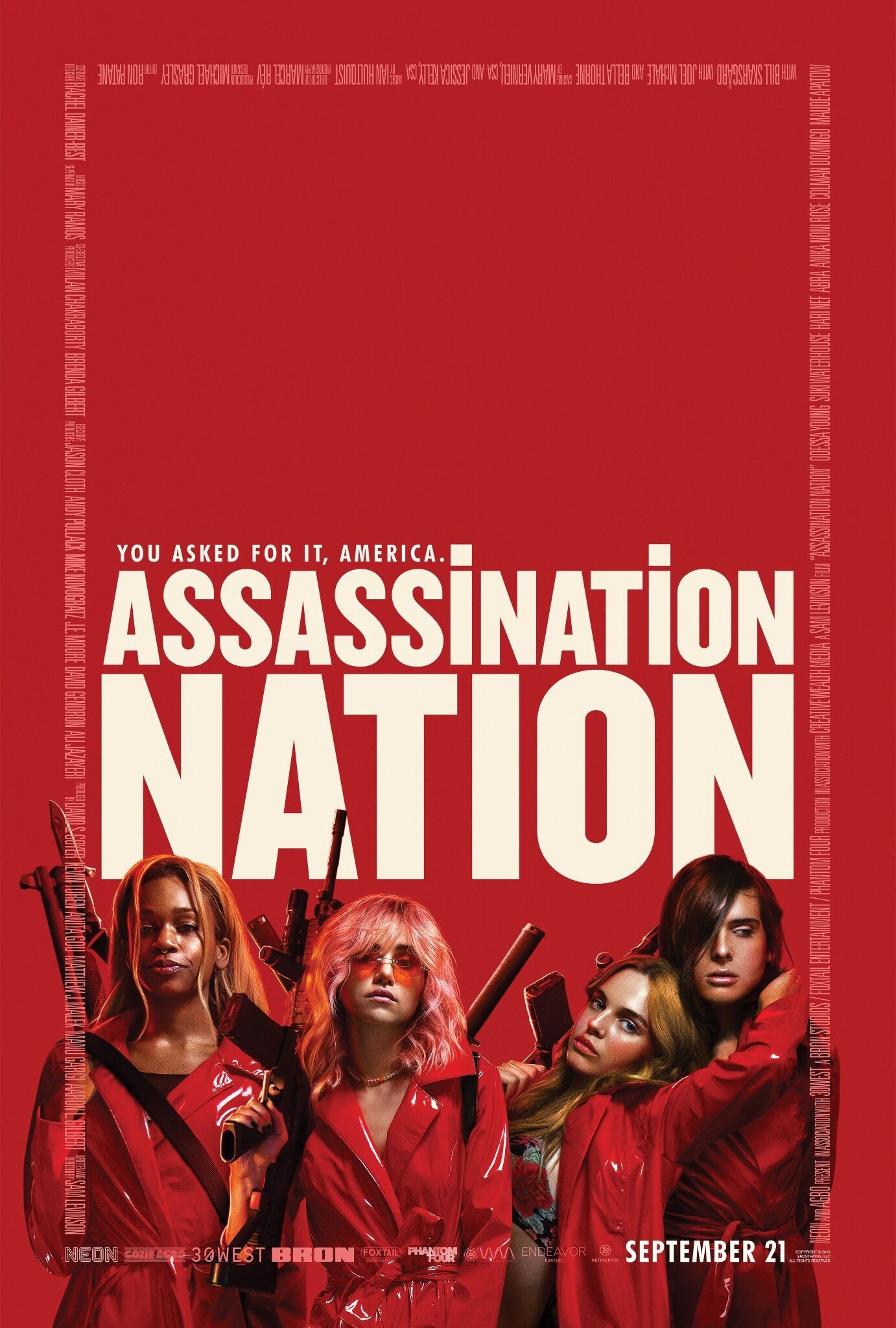
ASSASSINATION NATION – an Alternative Lens review

Starring: Odessa Young (High Life), Hari Nef (Transparent), Suki Waterhouse (The Bad Batch), Abra, Colman Domingo (Selma), Bill Skarsgaard (It), Joel McHale (Community), Bella Thorne (Blended)

Writer/Director: Sam Levinson (Another Happy Day)

Runtime: 1 hour 48 minutes 

Release Date: 21 September (US), 23 November (UK)

I’d say even the most tech-literate of us don’t fully comprehend the power of the Internet. Since it became practically a human right to have access to it, its presence has enlarged everything about human society and social interaction for both good and ill. It can be used as a tool to connect and educate, but it can be just as easily used to silence and destroy, and many people still haven’t caught on to how their littlest actions online can have grave consequences on others. Assassination Nation is the first movie to tackle the social media generation that clearly understands it, and uses it to paint a grim but heartfelt picture of where it could all end up.

It’s hard to pin down Assassination Nation using the typical Hollywood shorthand buzzwords, but if I had to I’d describe it as “Fast Times at Ridgemont High meets The Purge”. Right from the word go, opening the movie with literal trigger warnings for all the messed-up stuff that is about to happen, it’s clear that this is a movie that’s going to pull no punches. The plot is essentially a modernised take on classic tales of women accused of sin such as The Crucible or The Scarlet Letter, but instead of witchcraft and adultery we have doxxing and…well, maybe not everything has changed. The story world may feel highly exaggerated, but at its core this is a more accurate reflection of contemporary high school than most films, and it uses stylization to enhance reality rather than paint a false image. The storytelling isn’t always neat, with a lot of character development brushed past as the plot constantly ups the stakes, but the core messages of the film are always clear. Even as it reaches its finale, which comes all too quickly, Assassination Nation’s final moments feel like a more accurate reflection of our current times than any serious drama, and concludes with the most bizarre but apt end credits sequence since The Adventures of Buckaroo Banzai Across the 8th Dimension.

The four female leads of Assassination Nation are all perfectly cast and their chemistry together is through the roof, but the real standouts here are Odessa Young and Hari Nef. Young has to carry most of the film with some really heavy subject matter and she pulls it all off effortlessly. She has the difficult task of playing a character that often does the wrong thing but still comes off as relatable; considering empathy and forgiveness are key themes of the film, it’s damn key she nailed this part. Meanwhile, Nef is clearly having a ball playing essentially an exaggerated version of her real-life persona, but she still brings a lot of pathos to the character without ever turning her into a tragic victim. In fact, more often than not she has the upper hand and is brazen in her force of personality; in effect, the exact opposite of every trans character cliché and one we need to see more of. Suki Waterhouse and Abra get a little less to do, lacking the focused character subplots Young and Nef get to play with, but they inject high amounts of personality into the proceedings and the film wouldn’t quite be the same without them. Most of the other characters are caricatures without much development, but they serve their metaphorical purposes well as personified examples of every toxic subset of our culture. Bella Thorne is especially good as the typical airhead cheerleader but with a twist, whilst Joel McHale’s subversive performance means I’ll never be able to watch Community the same way again.

Director Sam Levinson (yes, son of Barry) reveals himself here as a director to watch with this sophomore feature effort, clearly laying down a distinct aesthetic that immediately sets him apart from his contemporaries. That’s not to say it’s entirely new visually, as the film employs indie film staples like a neon-heavy saturated colour palette and cinematography rife with stylish long takes, but Levinson uses these ideas to do more than just make the film seem more expensive. Instead, they are used with purpose and effect, as made clear in the film’s standout sequence involving a long take that darts in and out and around a home in a doll’s house fashion. Further to this, the movie uses its violence and gore to great effect, showing these horrific acts in all their details but without ever feeling like sick self-indulgence. There is a point to the alarming amount of violence on display, and it never feels like our heroes are enjoying themselves doing it; in the world they live in, it’s just what they have to do. The film also employs excellent use of popular music, with a soundtrack that reflects what modern high schoolers today would listen to rather than blaring out the overused rock tunes one might expect.

Assassination Nation is not a film for everyone. It is dark, violent, discomforting and often abhorrent, but it certainly isn’t false. It takes the world we know, blows it up to 11, shoves it back in our faces and asks us to deal with it. It has no clear answers to the problems it highlights, but it’s not the movie’s job to tell us how to fix issues like online privacy and toxic mob mentality; if the answers were that obvious, we would have fixed these issues long ago. But even in all its depravity, Assassination Nation somehow manages to remain hopeful and inspiring. For all it has to say about what is wrong with the world, it keeps a glimmer of hope alive that we can fix it, and in this day and age we need that kind of precautious optimism. If you struggle to even read Twitter without questioning how humanity ended up here, maybe sit this one out. But if you want to see a troupe of badass intersectional feminists fight back against the toxicity of online culture, this is the movie you have been waiting for. 

FINAL VERDICT: 9/10

cropped-screen-shot-2017-10-01-at-19-46-22.png

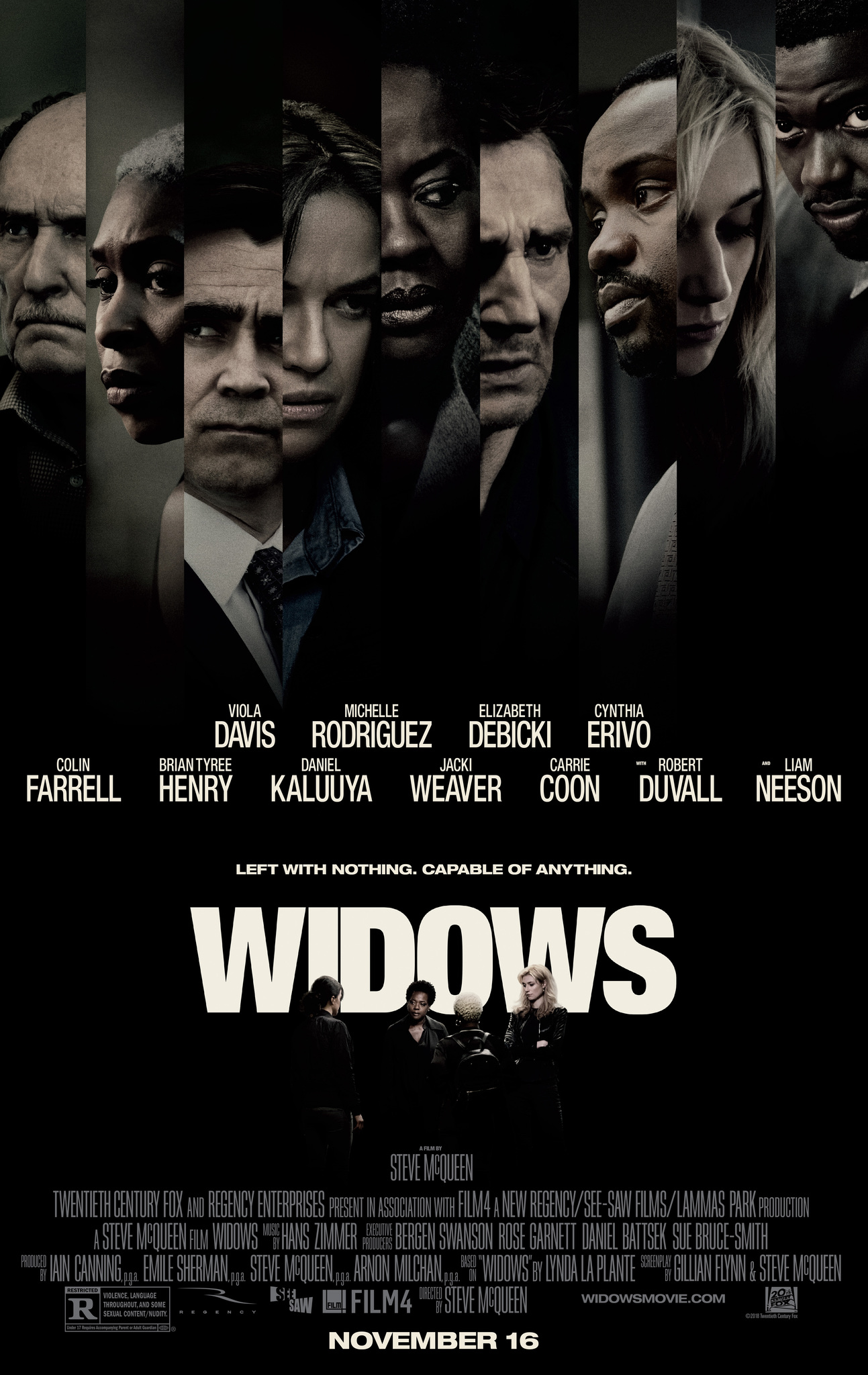
WIDOWS – an Alternative Lens review

Starring: Viola Davis (Fences), Michelle Rodriguez (Avatar), Elizabeth Debicki (Guardians of the Galaxy Vol. 2), Cynthia Erivo (Bad Times at the El Royale), Colin Farrell (Seven Psychopaths), Brian Tyree Henry (Hotel Artemis), Daniel Kaluuya (Get Out), Carrie Coon (The Leftovers), Robert Duvall (The Godfather), Liam Neeson (Silence)

Director: Steve McQueen (12 Years a Slave)

Writers: Gillian Flynn (Gone Girl) & Steve McQueen

Runtime: 2 hours 10 minutes

Release Date: 6 November (UK), 16 November (US)

It’s been a while since Steve McQueen (not that one) has graced our screens with another picture. After his Oscar-winning film 12 Years a Slave, you might have expected the director to immediately get his next project greenlit and off to the races for the next awards season, but that has proven not to be McQueen’s style. Instead, he’s taken his time with his newest venture, and he’s certainly gone for an out-of-the-box choice: an adaptation of a British TV show from the 1980s. But Widows is anything but McQueen giving in to Hollywood temptation. Instead, it is yet another testament to his ability as a filmmaker you cannot ignore.

I haven’t seen the original series, so I cannot judge Widows as an adaptation, but I presume most audiences probably won’t have even heard of the show anyway. As a standalone modern crime drama, Widows doesn’t exactly delve into territory that hasn’t been touched on in a variety of other films and TV shows. However, that doesn’t mean it has nothing to say or it isn’t an engaging story regardless. As apposed to some of its contemporaries that feel like they take place in some filmic heightened reality, the story and world of Widows is a very accurate echo of America today and reflects some very timely subject matter; corrupt politics, aggravated racial tensions, and women rising up to finish what the men couldn’t are all themes a modern audience can certainly relate to. Though one could call it a heist film, it avoids many of the structural tropes of the genre, with the actual theft itself downplayed in favour of focusing on the planning and background intrigue leading up to it. Though that lack of action may disappoint some, Widows clearly has greater motivations than being just another crime flick, and McQueen’s direction and thematic layering gives it an undeniably distinct flavour.

Much like his previous film, McQueen has assembled a gargantuan number of A-list players to fill out the cast, with even the minor roles filled with recognisable character actors. Everyone in the cast delivers top-notch work no matter how big their part, but at its core Widows belongs to its three main stars. The role of Veronica Rawlins feels tailor-made for Viola Davis, and she more than digs her teeth into this meaty material. Rawlins is a reserved and often unsympathetic protagonist, but the determination and raw emotional vigour Davis imbues her with makes her a compelling one no matter her situation. Michelle Rodriguez hasn’t been this good in years, managing to avoid being yet another futch tough girl as she’s often typecast and instead ably playing the struggling mother just trying to build a life for her kids. Elizabeth Debicki really gets to flex her chops here too, impressing the audience as much as the characters in-story as more than just the materialistic, submissive young woman everyone perceives her as.

Cynthia Erivo feels a little short-changed as the fourth wheel, not becoming relevant until quite late into the story and covering much of the same ground as Rodriguez’s character. I wish the film had given her more time to develop her, or maybe even a background more distinct than her fellow female felons, because Erivo’s performance continues to prove she is an actress to watch. The list goes on and on of actors to wax lyrical about their performances, because they’re all excellent, but I do really have to give special mention to Daniel Kaluuya’s performance as Jatemme. What could have been a generic enforcer role in another actor’s hands is made engaging and memorable by his twisted characterisation, and shows the young actor still has plenty of unique cards in his deck.

Whilst Widows is fairly light on action, that doesn’t mean what little is there isn’t well executed. McQueen makes ample use of his love for long takes in all manner of scenes, but their use in the spurts of action are especially distinct in how visceral they are shot; Sean Bobbitt continues to prove himself an excellent cinematographer. Though a long film and often drawn out for the sake of tension, there doesn’t seem to be a spare frame in the film’s tight editing, and the rollicking soundscape and Hans Zimmer’s subdued but effective score effectively amplifies the film’s sombre mood.

Widows proves once again Steve McQueen as a modern master of cinema, continuing to show his versatility in handling genre whilst not sacrificing the intricacies that defines all of his work. Though not as astoundingly provocative as his last picture, 12 Years a Slave is a tough act to follow, and Widows has far different intentions that it mostly succeeds in accomplishing. With its compelling timely themes and excellent performances from the whole cast, this is a film that will certainly get a fair amount of consideration once the race to awards season really kicks off.

FINAL VERDICT: 8.5/10

cropped-screen-shot-2017-10-01-at-19-46-22.png

OVERLORD – an Alternative Lens review

Starring: Jovan Adepo (Fences), Wyatt Russell (22 Jump Street), Mathilde Oliver (The Misfortunes of Francois Jane), Pilou Asbaek (Ghost in the Shell), John Magaro (The Big Short), Iain De Caestecker (Agents of S.H.I.E.L.D.)

Director: Julius Avery (Son of a Gun)

Writers: Billy Ray (Captain Phillips) and Mark L. Smith (The Revenant)

Runtime: 1 hour 49 minutes

Release Date: 7 November (UK), 9 November (US)

The concept of Nazi zombies is hardly an original one. Movies, TV shows, and especially video games, have already made the undead Third Reich a popular mash-up of two of pop culture’s most common adversaries. Overlord brings the concept into the blockbuster space, giving the ridiculous B movie premise the sense of scale and grandiosity of an A grade war flick. The result is a movie that’s certainly entertaining enough, but one that falls short in almost every area.

Overlord sticks to the basics of the classic man-on-a-mission army narrative, with the well-established mission of our ragtag team of heroes constantly impeded by increasing odds and, well, eventually the undead. On a story level, there isn’t anything too surprising to make Overlord stand out. The film is solidly structured and incredibly well paced, with the near two-hour runtime flying by breezily despite ample downtime. However, there are no real surprises or unique twists to either the war or zombie tropes it is playing with(unless somehow you didn’t know this movie had Nazi zombies in it, at which point I’d ask why you are even here). The film plays it straight as a serious action WWII flick for the first half, with only the excessive gore making it stand out; even then, it’s not that much bloodier than something totally serious like Hacksaw Ridge. This wouldn’t necessarily be a problem if the movie took a From Dusk till Dawn-style turn once the horror elements come into play, but the film’s tone doesn’t shift much after this reveal. It never goes far enough with its zanier elements, making it hard to embrace the ridiculous carnage of the third act when everyone is playing it so straight.

The characters of Overlord don’t stray far from their typical archetypes much either. You’ve got the sensitive rookie, the battle-hardened tough guy, the sarcastic pessimist, the naïve cameraman, the helpful French villager with a kid to protect; you know all these characters and where they’re going to go pretty much from frame one. Luckily, from a performance perspective the actors manage to give these stock characters some life. Jovan Adepo makes for a compelling lead as Private Boyce, and it’s refreshing to not only see a person of colour lead a WWII film without it being made a big deal of, but also a greenhorn protagonist who isn’t forced into the “learns to become a real man by becoming a badass killer” mould. Wyatt Russell channels his father’s gruff stoicism more than ever here as Corporal Ford, though the script fails to give him much of a reason behind his near-sadist tendencies beyond “war is hell”. The rest of the main supporting cast is fine enough, playing their stock roles effectively without ever particularly surprising, but the clear MVP of the film certainly is Pilou Asbaek as the villainous Nazi officer Wafner. Straddling the line somewhere between Hans Landa and Red Skull, he’s the only actor who seems to be gunning for that B-movie absurdity the film is sorely lacking in. He’s constantly a delight to watch, and I wish the movie gave him more to do throughout.

On the technical front, where Overlord most impresses is in its effects work. Less so the computer effects, which are generally solid with some noticeable flaws; for example, a thrilling freefall sequence early on is marred by some obvious compositing and digital shaky cam. Here, the practical effects reign supreme, and they perfectly balance that line between authentic and scary. There’s a fair amount of gore and disturbing imagery on display here (just about enough to warrant that 18 certificate in the UK), and though none of it feels like anything you haven’t already seen if you’ve played enough video games, it’s still impressive seeing these haunting creatures brought to life in a mostly-practical manner. The action in general is solid if a little unremarkable, again never quite going far enough with the bombast to truly stand out, but there’s more than enough to ensure the ride is never boring.

Overlord is a fine enough action horror flick, delivering the gore and guns one would want from such a picture. However, it never goes far enough in any category to make it particularly remarkable. The storytelling is snappy but lacks originality, the characters are well cast but never overcome their archetypes, and the action is suitably entertaining but never to an overwhelming degree. The film would have been better served as a ridiculous grindhouse B movie, but the slickness of its execution has removed much of that potential charm. It’s perfectly fine as is, but it could have been so much more if it just embraced the inherent ludicrousness of it premise.

FINAL VERDICT: 6/10

cropped-screen-shot-2017-10-01-at-19-46-22.png

THE NUTCRACKER AND THE FOUR REALMS – an Alternative Lens review

Starring: Keira Knightley (The Imitation Game), Mackenzie Foy (Interstellar), Eugenio Derbez (Overboard), Matthew Macfayden (Pride & Prejudice), Richard E. Grant (Withnail & I), Helen Mirren (The Queen), Morgan Freeman (The Dark Knight), Jayden Fowara-Knight (Ready Player One)

Directors: Lasse Halstrom (Chocolat) and Joe Johnston (Captain America: The First Avenger)

Writer: Ashleigh Powell

Runtime: 1 hour 39 minutes

Release Date: 2 November (US, UK)

The Nutcracker is probably the most ubiquitous ballet in the world; even if you’ve never seen it, you know the gist of the story and a lot of the music. In spite of this, there has been no definitive film adaptation. The story has been adapted multiple times as Christmas specials for kids’ TV shows, and there was also that infamous 2010 film version that was one of the biggest box office flops of all time (which, coincidentally enough, also starred Richard E. Grant), but otherwise nothing has been produced. Until now that is, and of course Disney is responsible; you’d think they’d have jumped on this years ago. However, considering the final result, perhaps there is a reason this property has rarely reached the big screen.

The plot plays incredibly fast and loose with the source material, barely recognisable from the original bar some character names and incidental story details. Disney has pretty much taken the exact same method here as they used on Tim Burton’s Alice in Wonderland, retrofitting a mostly plotless bedtime fable into a fantasy adventure flick, but in the sloppiest and most cliché-ridden way conceivable. It tries to posture that it is a subversive reimagining, but it just apes every other subversive reimagining and claims itself original. The story is incredibly simplistic with no real effort into giving it any sense of scale, every plot development is excruciatingly foreshadowed, and the rushed pacing and short running time means nothing has any time to sink in. The film had a troubled production, as evidenced by the two separately credited directors (a very rare occurrence in Hollywood films), but the final film ends up feels like the product of no directors. Instead, it feels like a cut cobbled together by executives, throwing together whatever disparate pieces of film they had to fashion something they could technically market as a finished product.

Every character in The Nutcracker and the Four Realms is so archetypical, even their supposed quirks are hackneyed. Mackenzie Foy tries as Clara but she’s stuck with a stock protagonist role who “just needs to believe in herself”, and the only thing the film can come up with to make her stand out is to say, “Yeah, but…she understands physics and technology and junk. Totally not generic!” Newcomer Jayden Fowara-Knight takes on the titular Nutcracker, but he is even more dull; there’s not even an attempt to make him interesting. Helen Mirren and Morgan Freeman are wasted as Mother Ginger and Drosselmeyer respectively; they’re important players in the ballet, but here they practically reduced to chess pieces. Eugenio Derbez and Richard E. Grant are effectively useless, whilst Jack Whitehall and Omid Djalili serve as comic relief soldiers the film has no idea what to do with. But in the midst of all this banality is a shining star of spectacular awfulness, and that is Keira Knightley as the Sugar Plum Fairy. Affecting a high-pitched breathy voice and the personality of a creepy killer doll, Knightley delivers the camp to sickeningly sweet levels in a bonkers performance that has to be seen to be believed. I seriously couldn’t keep a straight face whenever she was onscreen, and I’d say the film is almost worth watching just so you can witness it. It is the new standard for WTF insane performances by otherwise serious actors.

On a visual level, the film is comparable to Disney’s recent live-action output, but despite similar budgets this one somehow ends up looking incredibly cheap at points. The production design is the textbook example of grimdark fantasy; everything just looks like a fairy tale template that’s been made to look “badass” in the most elementary way. The make-up is stagey and is never convincing (Mirren’s “face rips” are obviously just drawn on), and the visual effects include some bafflingly amateurish green screen compositing. The only interesting idea the film has is how it incorporates actual ballet into the film, mainly through a performance sequence used to explain the back-story. However, this doesn’t work for three reasons. One: as pretty as it is, it’s a very roundabout way to get that information across when you could just show or tell it to us traditionally. Two: the sequence conveys little to no pertinent information the audience hadn’t already gathered. And three: instead of actually allowing the dancers to convey the story through their movement (you know, the thing ballet is supposed to do), Knightley keeps interrupting to EXPLAIN EXACTLY WHAT EVERYTHING MEANS! I’m not kidding. There’s trying to bring the arts to the masses, and then there’s just dumbing it down.

Behind its sugary bombastic coating, The Nutcracker and the Four Realms is a hollow and baffling experience; it’s like Jupiter Ascending for kids. It feels like a template for an epic fantasy family film that they’ve just shoved Nutcracker references into the empty slots and called it a day. The only reason to even consider watching this thing is to guffaw at Keira Knightley’s performance, but that certainly isn’t worth the price of admission. It’s just a colossal waste of time for both the audience and the filmmakers, but even if this thing flops hard Disney probably won’t notice. They’re making so much money at this point from all the pies they have fingers in, they could release five equivalent turkeys a year and still end up making a profit.

FINAL VERDICT: 3/10

cropped-screen-shot-2017-10-01-at-19-46-22.png

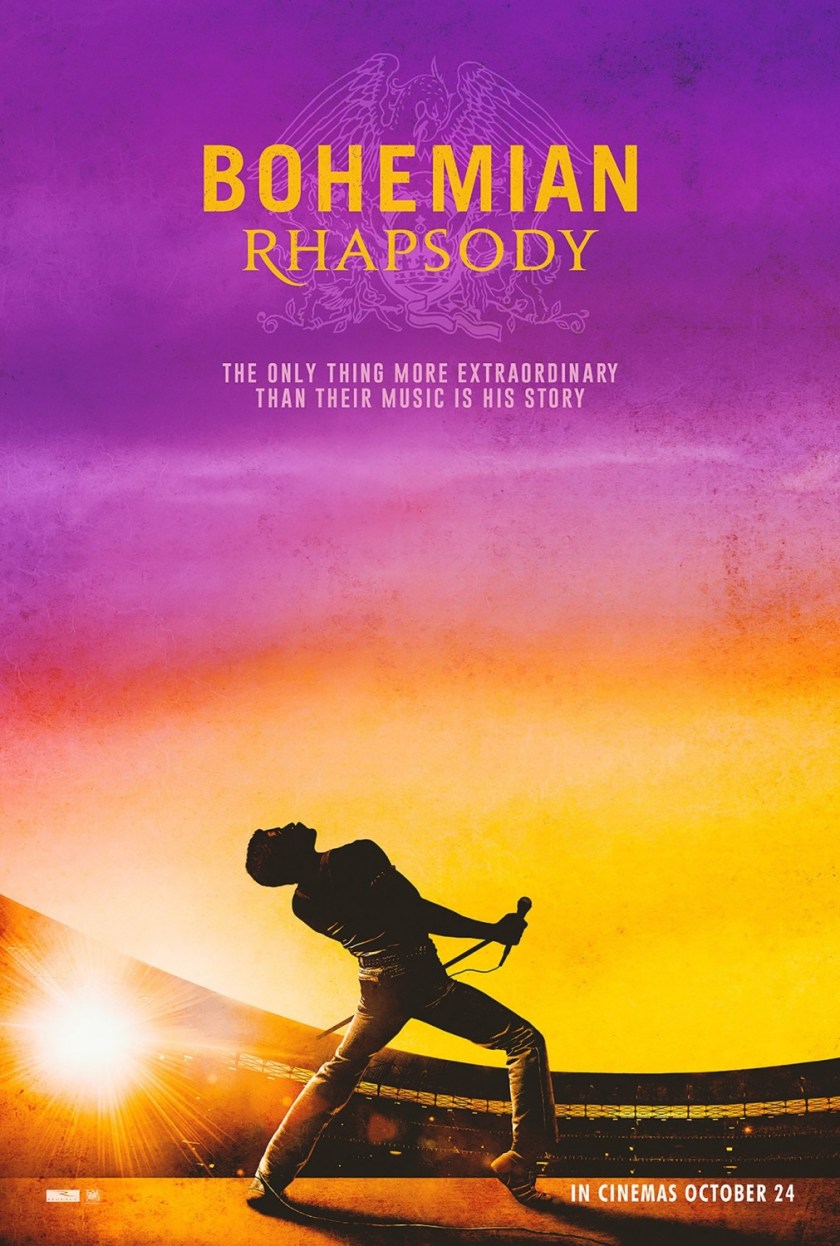
BOHEMIAN RHAPSODY – an Alternative Lens review

Starring: Rami Malek (Mr. Robot), Lucy Boynton (Sing Street), Ben Hardy (X-Men: Apocalypse), Joseph Mazzello (Jurassic Park), Gwilym Lee (Midsomer Murders), Aidan Gillen (Game of Thrones), Allen Leech (Downton Abbey), Tom Hollander (Pride & Prejudice), Mike Myers (Shrek)

Director: Bryan Singer (X-Men)

Writer: Anthony McCarten (The Theory of Everything)

Runtime: 2 hours 14 minutes

Release Date: 24 October (UK), 2 November (US)

Unless you’re a real spoilsport, I think it would be very hard to find someone who doesn’t like Queen. They are one of the greatest rock bands of all-time, producing some of the most memorable and everlasting tunes of the entire genre, and frontman Freddie Mercury is an icon of not only rock n roll but for LGBT representation and AIDS awareness as well. A biopic of this legendary group is long overdue and has been in development hell for some time, with a previous version with Sacha Baron Cohen as Mercury falling apart due to conflict with the surviving band members. But the trouble didn’t stop even once in production, with Bryan Singer (who is still credited as director due to Director’s Guild of America regulations) being fired mid-production and replaced with Dexter Fletcher. With all of this hullaballoo going on behind-the-scenes, it’s a wonder Bohemian Rhapsody has made it to the screen at all.

bohemian_rhapsody_ver2_xlg

Bohemian Rhapsody is in every department a conventional rock biopic. We see the humble beginnings of the band, their fateful meeting with Mercury, their tremendous rise to stardom, all the in-fighting and backstabbing that led to their break-up, and the mixture of tragedy and friendship that brought them back together. From beginning to end, the film is essentially a high-budget dramatisation of an episode of Behind the Music, and even if you aren’t very familiar with Queen’s history it’s easy to see where it’s all going. But all of this expected rise-and-fall narrative is ultimately just a backdrop to the more interesting story at the heart of Bohemian Rhapsody: an exploration of the isolation of being closeted. Contrary to the coy marketing, the film very much explores Freddie Mercury’s sexuality and the effect it had on his professional and personal life. The film paints a vivid portrait of a man struggling to come to terms with himself, drowning himself in excess and ego to compensate, and yet still feeling alone at the end of the night. It’s a tragic but sympathetic and ultimately uplifting journey, one that doesn’t go as far into detail as it could have gone and sugarcoating what’s there, but it goes far enough to get the message across and deliver a compelling if somewhat censored experience.

Now the entire film could have easily fallen apart if the right actor wasn’t cast as Mercury, but in Rami Malek I think they’ve found the one and only person who could do this role justice. Not only is the physical resemblance uncanny, but Malek nails Mercury’s distinct flamboyant mannerisms without turning the man into a caricature. But when not cavorting about on stage, there’s a great subtlety to his performance and the way he handles the more emotionally wrought moments are especially gut wrenching. It’s hard not to think what Malek could have done if given a version of the film that really dove into the craziness and depravity of Mercury’s self-destructive lifestyle, but what’s presented manages to be effective purely based on his performance and he is the main reason to give it a watch.

The rest of the cast is perfectly serviceable, with some pulling their weight whilst others fade into the background. Gwilym Lee does justice to Brian May without particularly wowing, Ben Hardy’s Robert Taylor falls a bit flat, whilst Joseph Mazzello’s John Deacon is fun but given very little to do. Lucy Boynton works as a good emotional anchor as Mercury’s close friend Mary, but I wish just as much care had been put into Mercury’s other lovers. The only obvious misstep in casting is Mike Myers as record executive Ray Foster, whose performance feels like it’s been ripped from a far more farcical version of the story and is only here so they can make a meta joke about Wayne’s World. At least his screen time is brief.

Where Bohemian Rhapsody really struggles is that it definitely feels like a film caught between two directors, even though neither of them are directors known for having a distinctive style to begin with. In what feels like an effort to mesh the visions of Singer and Fletcher, the final product doesn’t particularly read as either director, and as a result it lacks a lot of visual flair. The staging and cinematography feels rote and uninspired, with the writing and acting driving the scenes forward far more than any clear direction. The film visually only really comes alive during its concert scenes, especially the finale at Live Aid, but outside of this every scene feels like its been decked out in the contents of a flamboyant 1970s/80s dress-up box. Luckily, and as you’d expect, the soundtrack is chockfull of Queen’s music, keeping the film alive and exciting even when what’s going on onscreen starts to grow tedious. Then again, it also misses some pretty big ones too (no “Princes of the Universe” or “Flash”) and some of the song placements are a tad on the nose; I mean, could they have picked a more obvious and overbearing scene to pop “Who Wants To Live Forever?” on in the background?

Bohemian Rhapsody fulfils its checklist as a Queen biopic, delivering a feel-good movie that hits all the expected notes without particularly innovating otherwise. Rami Malek’s incredible lead performance and all of the storytelling revolving around his personal character journey is enough to make this worth seeing, and those concert scenes just about could justify doing so on the big screen. But outside of this, the film offers you very little you couldn’t get out of just reading up on the true story and listening to Queen’s albums. Perhaps with next year’s Elton John biopic Rocketman, Dexter Fletcher can get a full opportunity to flex his weight with another giant of British pop. What about Bryan Singer? Well, if any of the stories that have crept up around him in recent years are even remotely true, I don’t think he deserves to make anything else ever again.

FINAL VERDICT: 6.5/10

cropped-screen-shot-2017-10-01-at-19-46-22.png

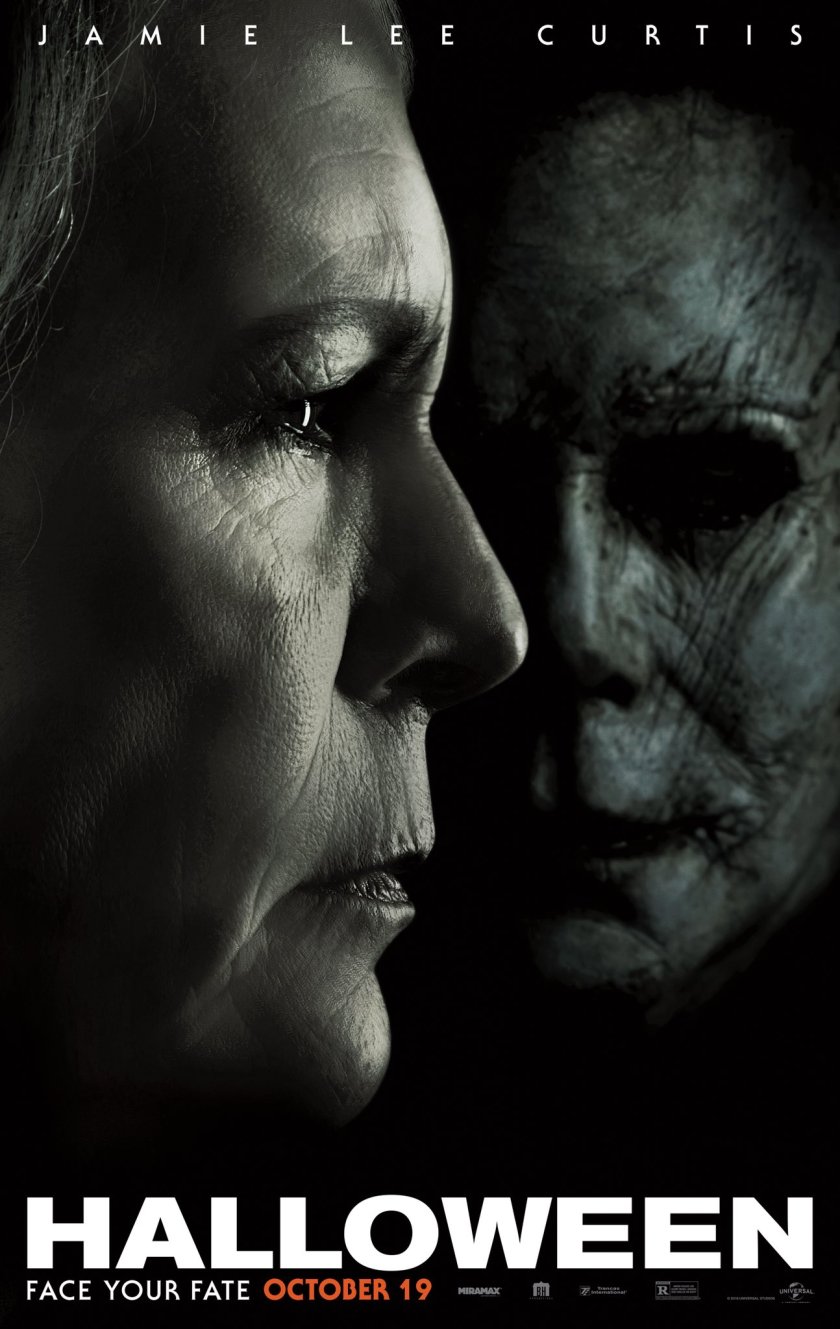
HALLOWEEN – an Alternative Lens review

Starring: Jamie Lee Curtis (Freaky Friday), Judy Greer (Ant-Man), Andi Matichak (Orange is the New Black), Haluk Bilginer (Ben-Hur), Will Patton (Armageddon), Rhian Rees, Jefferson Hall (Star Wars: The Force Awakens)

Director: David Gordon Green (George Washington)

Writers: David Gordon Green & Danny McBride (Your Highness) & Jeff Fradley (Vice Principals)

Runtime: 1 hour 46 minutes

Release Date: 19 October (US, UK)

John Carpenter’s Halloween popularised what we now call the slasher movie, and a dozen sequels, reboots and rip-offs later, Michael Myers still continues to stalk the streets of Haddonfield like it’s 1978. The franchise has been on something of a hiatus after Rob Zombie’s bizarre duology that took the series in a bold but wholly unnecessary direction, and now it’s in the hands of…the guys behind Pineapple Express and Your Highness? OK. I guess after it turned out half of Key & Peele made one of the best horror movies of the modern age, all bets are off.

halloween-poster-2018

The Halloween series has one of the most needlessly complicated series mythologies ever, with multiple timelines and retcons that make creating any sequel at this point seem pointless. This time around, the film wipes the slate clean and serves as a direct sequel to the original, disregarding all previous entries and their various developments. We’re back to just Myers and Laurie Strode, with no brother/sister dynamic, druid cults or kung-fu Busta Rhymes to complicate things. This in turn opens up the opportunity for this new Halloween to return to the roots of the franchise whilst also letting it venture into new territory, and for the most part it succeeds. The film is undeniably a Halloween film from the get go, paying homage to the structure of the original whilst peppering in new twists and gradually shifting gears throughout. Its approach to the filmmaking feels completely old school, but in terms of content and ideas it is very much a modern film at heart, exploring complex themes like the generation gap, post-traumatic stress, and the very concept of evil itself.

However, whilst Halloween is incredibly good at raising these interesting questions and setting up new twists on the familiar tropes, it isn’t so good at following them through. Especially towards the end, as the story’s goes increasingly into uncharted territory, the movie keeps fumbling the ball with its many ideas. Interesting new concepts are brought up and almost immediately dropped, threads set up well in the beginning only get half-baked resolutions, and by the abrupt conclusion it’s unclear what the film’s final thesis even is. Throughout its first two acts, Halloween seems to pose itself as a postmodern autopsy of its own franchise, but by the third those contemplative explorations end up taking a back seat to the entertaining but expected slasher scares. I’m fine with this movie being a deconstructionist exploration of the genre or just another example of it. I just wish it had picked one and stuck with it.

What ultimately drives Halloween from the beginning and over the finish line is Jamie Lee Curtis’ phenomenal performance as Laurie Strode. Touching on similar ideas from Halloween H20 but taken to their logical conclusion, the film’s vision of an elderly Laurie simultaneously motivated to action by her experience in the original but also traumatised and embittered by it is a fascinating character study. Her harsh exterior and emotional instability make her a hard character to like, but deep down you know she’s right and capable of taking action. This dynamic is further put to the test by her daughter Karen (Judy Greer) and granddaughter Allyson (Andi Matichak), with the former being embittered by her attempts to prepare her for the horrors and the latter being sympathetic but concerned about her mental state. The rest of the cast do a reasonably fine job, fulfilling their slasher movie archetypes but with just enough modern flair, but it’s Curtis that carries the movie throughout and redefines what it means to be a final girl. Seriously, she deserves an Oscar nomination for this performance.

On a technical level, the new Halloween falls very much in line with the aesthetic of the old Halloween. There are no overly slick camera tricks, buckets of gore or out-of-place rock music. Though some of the kills are a little over-the-top, this otherwise sticks to the grounded approach of the original film and that restraint is not only refreshing but actually adds to the horror. John Carpenter even returns to contribute to the film’s score, not only bringing back the classic themes with new twists but some wholly new material too that feels straight out of his 80s synth wheelhouse.

Halloween has certainly taken the right approach to revitalising this often-abused franchise, delivering what is certainly the best entry in decades. However, its execution is notably flawed, as it can’t quite decide if it wants to take the series in new directions or make a straight-up no-frills throwback. The old school aesthetic, the fascinating subtext and Curtis’ landmark performance make it an experience more than worth watching, especially for slasher fans, but it isn’t quite the new gold standard for the genre some have called it. There are better examples of a modern slasher than this Halloween out there. It’s just that this one is still better than the vast majority of its imitators.

FINAL VERDICT: 7.5/10

cropped-screen-shot-2017-10-01-at-19-46-22.png

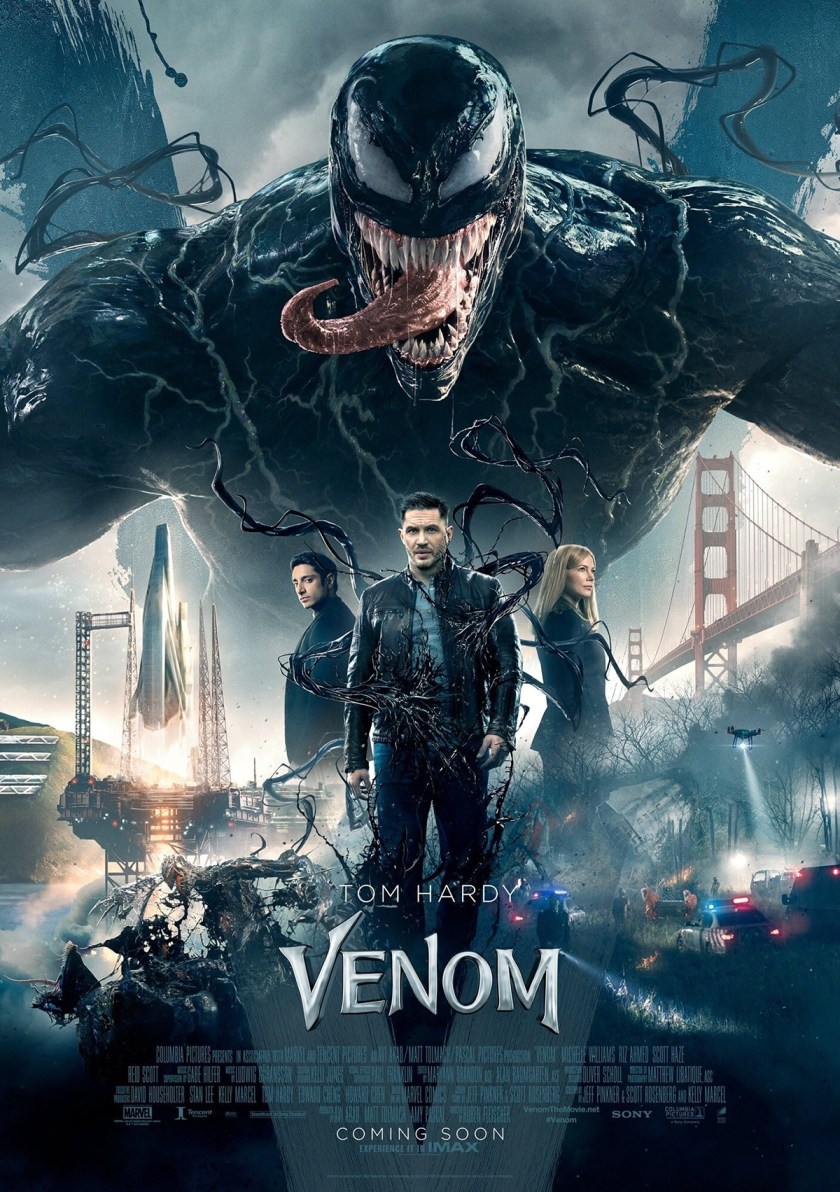
VENOM – an Alternative Lens review

Starring: Tom Hardy (Inception), Michelle Williams (All the Money in the World), Riz Ahmed (Rogue One), Scott Haze (Midnight Special), Reid Scott (Veep), Jenny Slate (Zootropolis)

Director: Ruben Fleischer (Zombieland)

Writers: Jeff Pinker (The Amazing Spider-Man 2) & Scott Rosenberg (Con Air) and Kelly Marcel (Saving Mr. Banks)

Runtime: 1 hour 52 minutes

Release Date: 3 October (UK), 5 October (US)

Let’s get this out of the way: Venom isn’t a particularly great character on his own. As a dark mirror of Spider-Man, he can work in the right hands, but his lasting popularity is mainly down to the edgelord boom of comics in the late 80s and 90s that still somehow overshadows much of the industry and its film adaptations. There is a way of making him relevant in the modern era, but removing him from Spider-Man completely is an incredibly bad first move. Sony have been trying to get a solo Venom movie off the ground since the Sam Raimi era and, after multiple false starts and despite having just gotten on good terms with Marvel Studios, they’ve gone and finally made it anyway. The final result is as messy and confused as you might expect, but also hilarious enough in its own ineptitude to be worth witnessing for the curious.

venom-poster-6

Throughout its runtime, Venom makes a lot of bold and daring decisions. It’s a shame so few of them are the correct ones. The plot is fairly simple and yet haphazardly told, mainly evident by the inconsistent pacing and jarring mood shifts that suggests this thing was hacked to pieces in post. The first act is relatively grounded and crams in a lot of information, but relies heavily on predictable clichés for character motivation and relationships (when there even is any). Shifting into the second act, the film takes a turn for the absurd with a bizarre mix of body horror and slapstick comedy that plays out like Evil Dead II as directed by a 90s teenager. That then quickly segues into a final act that is an incomprehensible blur that most resembles Street Sharks action figures covered in Nickelodeon slime being slammed into each other by a nine-year-old, then some sudden sequel set-up and a mid-credits scene, then it’s over. It’s a superhero film that feels like it was made over a decade ago, making all of the mistakes this genre has made and corrected in the years since, and it’s never quite clear if this is meant to be a tongue-in-cheek homage or to be taken dead seriously. It’s a sloppy mess that is often endearing in its own ridiculousness, but it’s too unfocused and cynically slapped together to fully appreciate. By the time it’s all over, the whole experience feels like, as the already infamous line from the trailer said, a turd in the wind; it blows by quickly but leaves a distinctive smell.

Why Tom Hardy of all times now decided to be in this picture is a mystery to me, but he is pivotal to this whole enterprise remaining afloat. His performance most reminded me of Nicolas Cage in his 90s action movie phase: unhinged and hilarious, and yet still somehow charming. He gives Eddie Brock some interesting depths as an ambitious but pathetic provocateur journalist, which helps differentiate him from the roided-out jock of the original comics or the Peter Parker-but-an-asshole Topher Grace version from Spider-Man 3. Meanwhile, Hardy then goes flipping nuts once the Venom symbiote is inside him, giving full gusto to the variety of absurd situations the script rights him into; it’d be embarrassing if it wasn’t so unbelievable. He also does a good job of playing the double act of being both Brock and Venom as they verbally spar inside his head, but it’s a shame the symbiote itself lacks depth beyond his monstrous image. Venom’s motivations are incredibly tenuous and only really decided upon all-of-a-sudden in the third act, which don’t feel at all informed by the preceding film and also take away much of the creature’s menace. Regardless, if Hardy hadn’t made the potentially career-ruining decision to star in this, we would have a far worse movie on our hands.

The rest of the cast feels incredibly wasted, playing stock characters that really don’t demand the high calibre actors they’ve managed to get for some of them. I applaud Michelle Williams for somehow managing to play this whole thing incredibly straight and give depth to a character that has none of the page purely through her performance, but it’s all for nought; any actress could have played this role, and better or worse it wouldn’t have affected the final product much. Riz Ahmed never quite manages to hit the right beat as Carlton Drake, constantly trying to go for the “villain with noble intentions but questionable methods” character when the film really demands a gonzo over-the-top supervillain to match Hardy’s level of performance. Scott Haze and Reid Scott are in relatively thankless roles (though I do applaud Scott’s role as Williams’ new boyfriend for having the decency to make him both plot-relevant and not a jerk), and why is Jenny Slate even in this movie? The role demands someone nowhere near her level and doesn’t even use her comedic talents; methinks there is a lot of her left on the cutting room floor.

On a technical level, the film feels just as out of time as the rest of the picture. The action sequences are a Michael Bay-level mess, overloading the eyes with dynamic motion and moving too fast for the eye to register what’s going on. That’s when action is even there, as there is a surprising lack of it; there’s only really two and a half Venom-heavy action sequences in the whole thing. Maybe all of this is because the visual effects themselves look incredibly dated too. The symbiotes actually look worse than the one in Spider-Man 3, going for a slimy goop effect that never looks right no matter the lighting or animation. The Venom design itself is impressive as a faithful recreation of the character, but in motion it ends up looking as goofy as Ghost Rider did on the big screen; some thins just don’t translate from page to screen. The film even has a tie-in Eminem song that plays over the credits; how much more anachronistic can this movie get at this point?

Venom is a bad movie. There is no questioning that. It’s a film conceived for cynical intellectual property reasons, telling a near-incomprehensible plot cobbled together from the indecisive minds of behind-the-times producers, featuring a well-respected actor giving a bonkers performance that would be impressive if it wasn’t so confusing, and all slapped together with a veneer that brings to mind early-to-mid-2000s comic book movies for all the wrong reasons. However, if you are in the right mindset, it’s still incredibly watchable as a so-bad-its-good hot mess.

Some have compared this movie to 2004’s Catwoman, and whilst there are parts of the comparison that are apt (both concern villains to a more famous hero removed from their source material, star lead actors way too good to be in them engaging in bizarre tick-led overacting, have an evil corporation based near water as the villain, feature CGI that look at least five years past their prime, AND have a subplot where the main character is annoyed by their neighbour playing music too loud and only having the nerve to do something about it after gaining powers), but I’d say that is going too far.

Venom is more like the Ben Affleck Daredevil or Nicolas Cage Ghost Rider: tonally incoherent and ripe with edgelord angst, but so blissfully unapologetic about its inherent ridiculousness that it’s hard not to find enjoyment in it. So, if you go into this knowing not to expect anything more than trash, you’re going to have a great time. If you were expecting anything more, then what hole have you been living in since 1997?

FINAL VERDICT: 3.5/10

cropped-screen-shot-2017-10-01-at-19-46-22.png