ELVIS – an Alternative Lens review

Starring: Austin Butler (Once Upon a Time in Hollywood), Tom Hanks (Saving Private Ryan), Helen Thomson (La Spagnola), Richard Roxburgh (Van Helsing), Olivia DeJonge (The Visit), Luke Bracey (Hacksaw Ridge), Natasha Bassett (Hail Caesar!), David Wenham (300), Kelvin Harrison Jr. (Cyrano), Xavier Samuel (The Twilight Saga: Eclipse), Kodi Smit-McPhee (The Power of the Dog), Dacre Montgomery (Stranger Things)

Director: Baz Luhrmann (Moulin Rouge!)

Writers: Baz Luhrmann & Sam Bromell (The Get Down) and Baz Luhrmann & Craig Pearce (Romeo + Juliet) and Jeremy Doner (The Killing)

Runtime: 2 hours 39 minutes

Release Date: 24th June (US, UK)

Synopsis: When rock ‘n roll pioneer Elvis Presley attracts the attention of ambitious huckster Colonel Tom Parker, the two form a tumultuous decade-spanning bond through Presley’s rise to stardom to his fall from grace.


Another year, another musician biopic; we seemingly can’t go 365 days without at least one. They’re a subgenre that reliably draws in audiences and awards contention, even though almost every single one is basically the same story with different coats of paint (again, Patrick H Willems did a great video breaking this down). However, Elvis certainly has its own unique draws. For one, it’s Baz Luhrmann’s first directing gig in nine years and, whether you like his aesthetic or not, it’s a style all his own and immediately makes this something more than a standard studio production. More than that even, it’s the first big-budget Hollywood film about the life of Elvis Presley, a figure who you would have thought would have gotten his glitzy production decades ago; there’s been a few TV movies and a miniseries, plus plenty of guest appearances in other major biopics, but never one to call his own. The mere idea of Baz Luhrmann making an Elvis movie seems like either a match made in heaven or a case of sensory overload, as two figures known for their extravagant theatricality merge to create something that, whether you end up liking it or not, you can’t look away from. 2022’s Elvis is indeed an overlong and exhausting ride that hits a lot of the familiar beats, but it’s also an incredibly immersive and audacious piece of cinema that delivers the spectacle and energy of a live rock concert.

Literally as soon as the movie starts, before we are even out of the opening studio logos, this is undeniably a Baz Luhrmann film and it only ramps up from the there. Its opening moments are a little disorienting, not only because it moves so fast and jumps around in time a bunch, but because the visuals themselves make you feel like you’re at one of the many carnivals Elvis plays at in his formative years. Whilst the story eventually settles into a more linear narrative that takes us from Elvis’ early years living in poverty to his vice-addled flop era performing in Las Vegas, the pacing and visual flair doesn’t slow down as much. The whole first half has the frenetic energy of a movie trailer blown up to feature-length, especially in its numerous montage sequences, before slowing down more in the second. However, this speed feels deliberate in how it mirrors Elvis’ fame and state-of-mind, giving you first the intoxicating rush of seeing him perform at his height and then crashing down as Elvis’ career goes off the rails. That’s not to say there’s no substance or downtime in the film, and it’s these moments of introspection that both makes all the glitz mean something and stops the whole enterprise from just being a three-hour music video.

On a skeletal level, Elvis is still a pretty standard rags-to-riches tale that you’ve seen in every music biopic, to the point where you could easily replace certain scenes with their parody equivalent in Walk Hard and some people might not even notice. Where it manages to overcome those tropes is not just in its sheer shownmanship, but in how it focuses more on the love-hate relationship between Presley and his manager Colonel Tom Parker. The Colonel himself narrates directly to the audience as he tries to rationalize his decisions, and most of the major narrative beats centre around Elvis either defying his controlling nature or falling prey to his influence.

Though the story is ultimately a love letter to Presley and doesn’t address some of the darker or unflattering aspects of his life (no, you don’t get to see him die on the toilet), it really emphasises that his downfall wasn’t just out of poor health choices or making a quick buck, but a more tragic situation of being stuck with a man who both made him who he is and trapped him in his grasp forever. As formulaic as it is under the hood, there’s a reason filmmakers keep going back to this structure and Luhrmann does a fantastic job of making this old banger seem like a new model. His directorial style just gives it an infectious charm that makes you feel like you’re right there in the audience watching The King do his thing, and for that reason alone it makes this a movie you need to see on the big screen with an enthusiastic crowd.
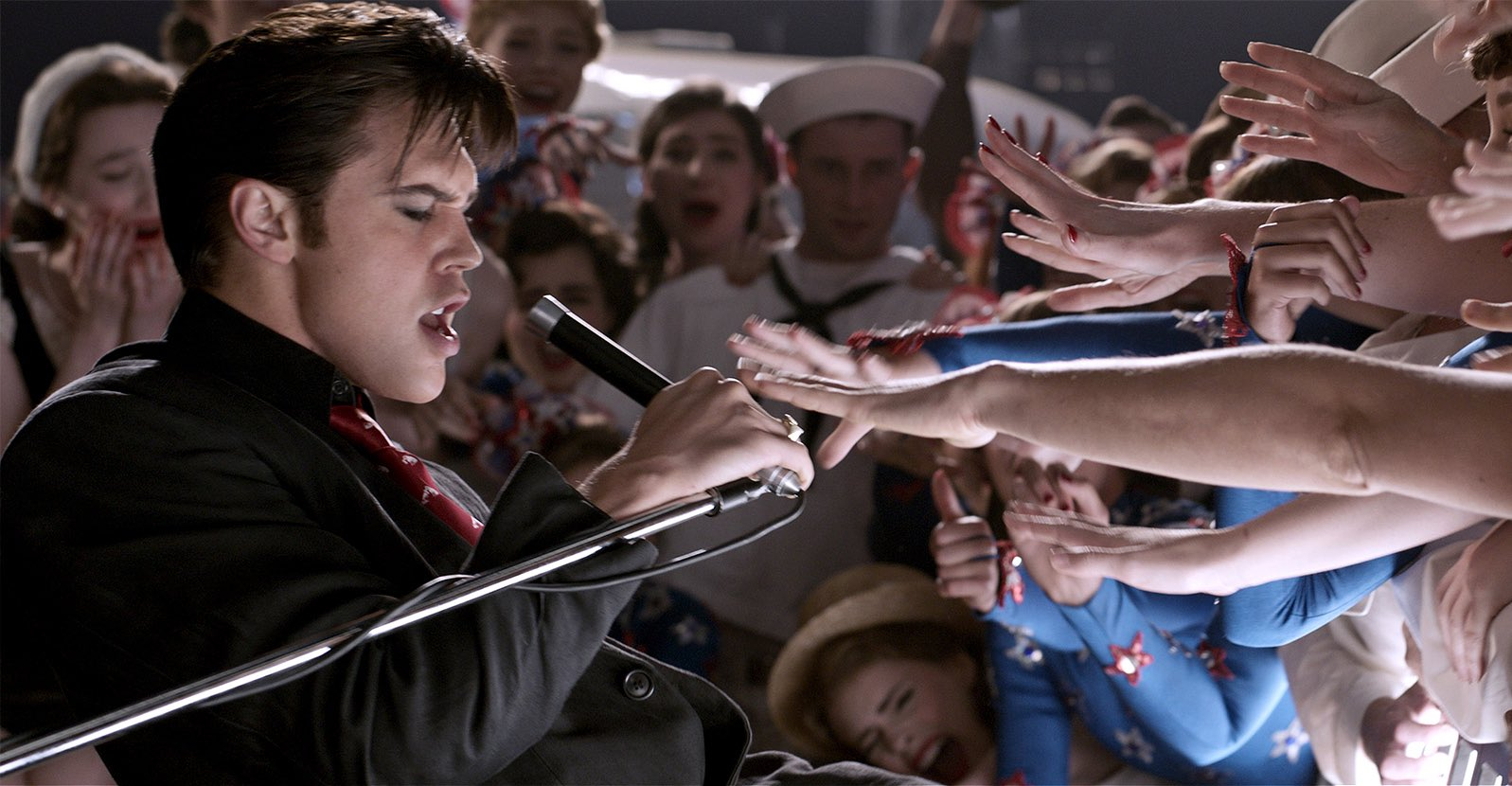
Austin Butler as Elvis Presley in ELVIS (2022, d. Baz Luhrmann)

Whilst stars such as Kurt Russell, Jonathan Rhys Meyers and Michael Shannon have played him over the years, casting Elvis Presley should be approached with the same principle as casting Superman: if you cast a movie star as Superman, the audience just sees that movie star in a Superman costume, but if you cast an unknown, they see only Superman. Austin Butler is by no means a complete stranger picked off the street, but he’s far from the obvious choice and has never even led a major film before. That might quickly change after this though, because Butler delivers a tour de force performance as he completely transforms himself into the King of Rock and Roll. Presley is such a theatrical character that it’s hard to take him completely seriously, but Butler strikes the right balance between being authentic and going over the top, which is especially impressive when you remember who’s directing him. Even the distinctive honky tonk voice, whilst perhaps worth a chuckle at first, eventually just becomes a natural part of his performance. Whether it’s worthy of awards consideration yet is too early to call, but undoubtedly this movie alone is a guaranteed star maker for Butler.

The role that will likely divide more audience is Tom Hanks’ turn as Colonel Tom Parker, whose characterisation here I can only describe as “imagine if Jim Broadbent’s character from Moulin Rouge! had a love child with a hillbilly demon”. He gets pretty much equal screen time with Butler and is rarely far from him, with him being portrayed as a Faustian figure constantly looming over Presley and somehow luring him back every time he thinks their partnership is over. Hanks certainly throws himself into the role with gusto, adopting the strange Dutch-meets-Southern drawl and lumbering around under heavy make-up, but it’s absolutely a highly exaggerated performance by even Luhrmann’s standards, and yet I’m not sure if the movie would work as well if it were toned down. This is an exaggerated Hollywood retelling after all, so it therefore needs a villain, and despite rarely getting such opportunities Hanks can relish a good sinister turn.

The rest of the supporting cast is certainly jam-packed, with some pretty major stars like Kodi Smit-McPhee and Dacre Montgomery in roles that come and go in what feels like five minutes. Helen Thomson certainly shines the most in her brief time as Elvis’ beleaguered mother Gladys, whilst Richard Roxburgh gives a rare understated turn as his father Vernon. Olivia DeJonge certainly throws herself into the role of Priscilla Presley, to the point I didn’t even recognise her until the credits, but the character seems like a bit of an afterthought and devolves into yet another biopic trope character by the end. Kelvin Harrison Jr. is also pretty good as fellow musical pioneer B.B. King, but he’s only in a handful of scenes, which is especially egregious as he’s the only major Black character in a movie about a guy who owes so much of his career to African-American culture. In the grand scheme of things though, this is a story about Elvis and the Colonel, and so it’s only natural those two take up so much of the stage in such a decade-spanning chronicle.
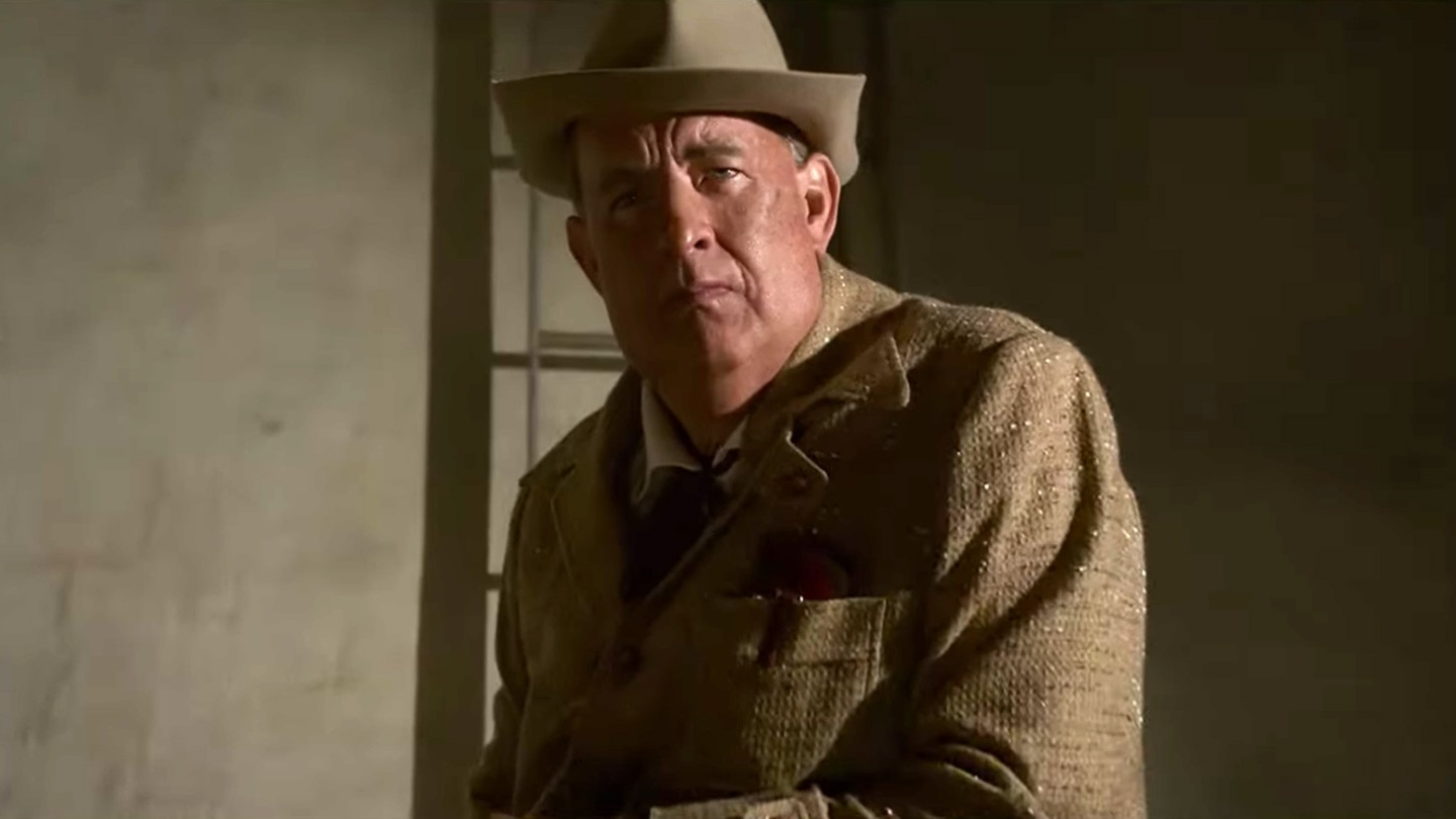
Tom Hanks as Colonel Tom Parker in ELVIS (2022, d. Baz Luhrmann)

If I had to take a guess on a word Baz Luhrmann doesn’t know the meaning of, it would be “subtlety”, because every single one of his movies lack any of it and Elvis is no exception. The visual presentation hits you like a tonne of bricks from the word go, sweeping you off into its technicolour dreamlike presentation and not letting you go until the credits roll. The editing is simply relentless, especially during its concert scenes as we cut between Presley’s on-stage antics and the crowd going quite literally mad for him, but never in a way that feels incomprehensible or random; it is quite deliberately strenuous. The presentation is just awash in bright lights and spinning cameras abound, turning the movie into a figurative roller coaster, and all of the set and costume work is just to die for.

The montage sequences are perhaps relied on a little too frequently, but they keep the energy of the story up and they’ve done a fantastic job of compositing Butler into old archival footage (but there are times when you can see they haven’t bother for shots that don’t show Elvis’ face). Of course for a movie about a musician, you’d expect a stellar music experience and Elvis certainly delivers on all the hits and more, and Butler even gets a chance to show off his own singing ability for a few select songs. Luhrmann also loves himself a bit of anachronistic clashing and inserts modern songs onto the soundtrack, though all of them sample or are outright covers of Elvis songs, so there is at least a theme to it rather than just slapping a Jay-Z song on The Great Gatsby. Still, it is kind of weird to be leaving the cinema as Eminem raps over the credits. What is this? Venom?

Austin Butler as Elvis Presley and Helen Thomson as Gladys Presley in ELVIS (2022, d. Baz Luhrmann)

Elvis isn’t going to please those looking for a more nuanced take on the legend or something that bucks the formula of the musician biopic, but as a crowd-pleasing epic it hits every note like a pro. It’s probably the closest anyone these days can get to seeing the man himself play live, and for fans it’s an absolute must-see in cinemas. As much as I’m personally tired of the current wave of these movies post-Bohemian Rhapsody (with the exception of Rocketman, which this rivals closely for me), I can forgive a lot of workmanlike screenwriting when there’s so much passion and creativity up on the screen, and on that level Baz Luhrmann doesn’t disappoint. The whole experience may have left me feeling like I’d run a marathon, but it’s a ride I’d gladly take again in the right circumstances. More than anything else though, I think The King would be proud, because this matches his own standards of showmanship.

FINAL VERDICT: 7.5/10

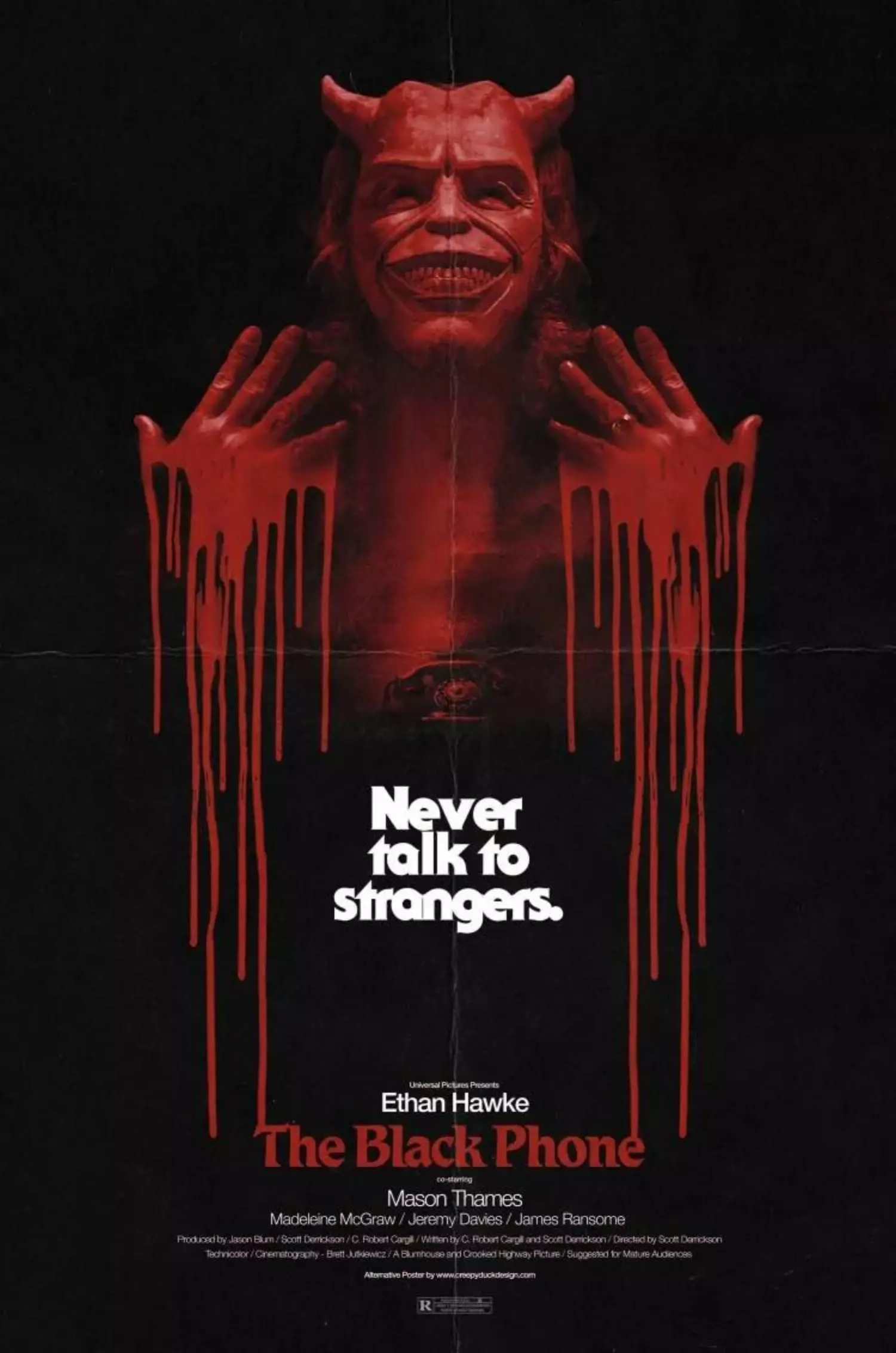
THE BLACK PHONE – an Alternative Lens review

Starring: Ethan Hawke (The Northman), Mason Thames, Madeleine McGraw, Jeremy Davis (Saving Private Ryan), James Ransone (It Chapter Two), E. Roger Mitchell (The Hunger Games: Catching Fire)

Director: Scott Derrickson (Doctor Strange)

Writers: Scott Derrickson & C. Robert Cargill (Sinister)

Runtime: 1 hour 42 minutes

Release Date: 22nd June (UK), 24th June (US)

Synopsis: After being abducted by an unsettling man known only as The Grabber, a young boy communes with his captor’s deceased victims through a supernatural phone to try and plot his escape.


Scott Derrickson’s career has veered its way into sci-fi and superheroes on occasion, but his bread and butter will always be horror, and he really shot himself into the big leagues by teaming with screenwriter C. Robert Cargill to make 2012’s grisly supernatural surprise hit Sinister. After that gig helped both Derrickson and Cargill nab the chance to bring Marvel’s Sorceror Supreme to the screen with 2016’s Doctor Strange, the duo were set to return for the sequel Multiverse of Madness until, due to the usual vague industry reason of “creative differences”, they departed the project and the reigns were instead handed to Sam Raimi. However, Derrickson and Cargill wasted no time in getting another project off the ground, instead returning to their horror roots, reuniting with Sinister lead Ethan Hawke, and adapting a short story from Joe Hill’s 20th Century Ghosts anthology into their latest twisted nightmare. The Black Phone in many ways is the true successor to Sinister, even moreso than its underwhelming 2015 sequel, building on those grimy foundations to make another chilling tale of gruesome murders and supernatural mystery. That said, as eerie and well-executed as it is, it’s far from an evolution of the concept.

In case you weren’t aware, Joe Hill is the son of legendary horror novelist Stephen King and, whilst father and son do have their stylistic differences and have both written stories far outside their usual comfort zones, The Black Phone feels very at home within the world of King. It’s got a creepy murderer disguised as a kids’ entertainer, an alcoholic and child-abusing father, kids with unexplained psychic powers, creepy baloons, and more; honestly, the biggest difference between this and most King stories is that it’s set in Colorado instead of Maine. Tropes aside, The Black Phone still does a really effective job of building tension. It takes almost until halfway through the movie before the titular communication device comes into play, but the carefully-paced journey to that premise gives plenty time to shape out our leads, and once the fantastical elements come into play it really starts to shine. Like a lot of King and Hill stories, it doesn’t waste time explaining how or why these paranormal elements exist and instead has fun playing in the sandbox, but it gives enough context on the margins to give a sense of stories beyond the one we’re in.

Once we hit the main stretch of Finney trying to escape The Grabber’s clutches, The Blank Phone just starts having gleefully dark fun. There’s some wonderfully tense and anxiety-inducing moments as he tries and fails to break free, and brutal twists that come in to wrench away any slight feelings of relief. Whilst the film takes its premise fairly seriously, the screenplay has a great underlying sense of wit that prevents it from getting glum, and those moments of comedic relief only make its darkest moments seem that much more shocking. Unfortunately, whilst this is all well and good, it can’t quite escape the most damning King trope of them all: an underwhelming ending. This is especially disappointing as the anticipation for the climax is built up to incredibly well, setting the audience up for a truly thrilling conclusion, but the whole thing is over far too quickly and neither leaves you feeling neither fully satisfied or majorly creeped out. It just sort of…ends, with no real sense of what the previous ninety minutes were ultimately about beyond just being scary. I’m not demanding that The Black Phone have some big Jordan Peele-style message to impart, but I do wish it left me with something more to grasp onto than its admittedly sharp and professional execution.

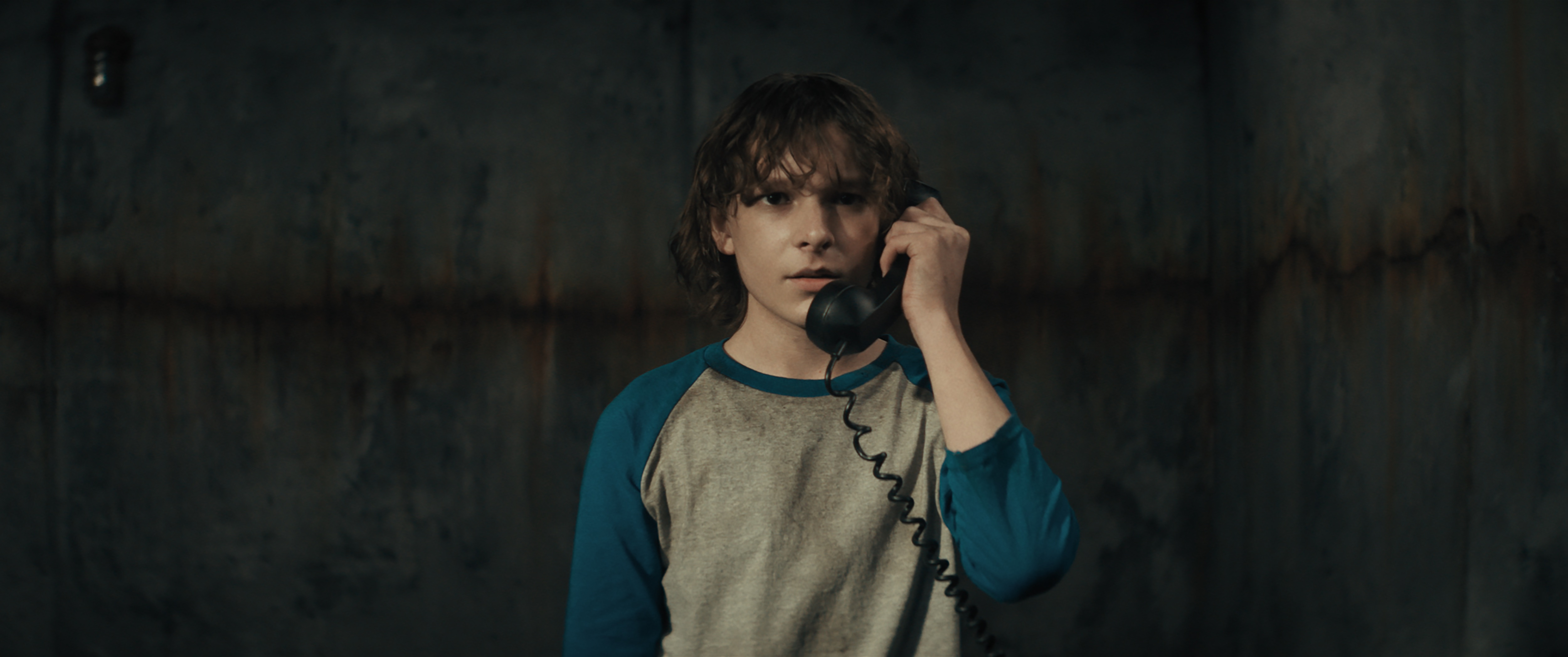
Mason Thames as Finney Shaw in THE BLACK PHONE (2022, d. Scott Derrickson)

Featuring not one but two children as your main protagonists is always a dicey move, but The Black Phone honestly has some of the best child performances seen since (and I don’t say this just because of the King comparison) the recent It adaptations. Both Mason Thames and Madeleine McGraw as siblings Finney and Gwen Shaw are young stars in the making, carrying this heavy movie on their young shoulders with the confidence of their adult peers. Thames especially shines as he spends much of the film by himself talking to muffled voices on the phone, and he alone conveys so much despair and desperation in his torturous situation whilst still feeling genuine; a scene where he finally breaks down after yet another failed escape attempt is especially crushing. McGraw’s performance borders on precocious at times, but she ultimately overcomes it and delivers both one of its most emotionally-wrenching scenes and deliver some of the funniest line deliveries (all I’ll say is “Jesus, what the f*ck?!”).

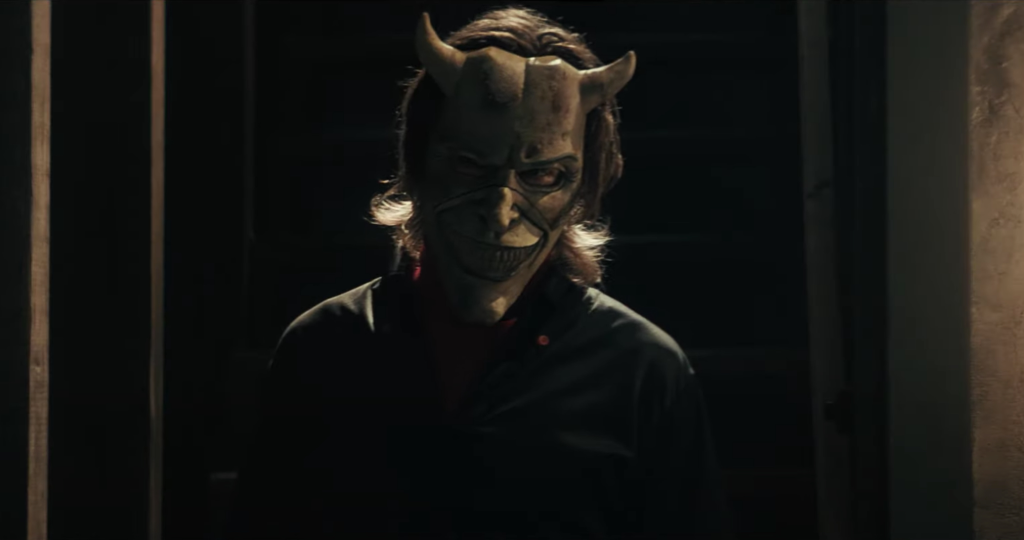
Ethan Hawke is already having a hell of a 2022 with Moon Knight and The Northman (plus Rian Johnson’s Knives Out sequel Glass Onion still to come), and his performance as the eerie Grabber here is unlike anything we’ve seen from him. With his face obscured by various masks for most of the runtime, his performance is more reliant on his body language and voice, and with both he creates a character that should stand the test of time and become a staple for anyone looking for an easy but iconic Halloween costume. The character of The Grabber himself is very thinly drawn and his motivations unknown, but that only makes him scarier and the few hints we do get suggest his madness is far from typical. The rest of the supporting cast is a bit more of a mixed bag. Jeremy Davies puts in a decent turn as Thames and McGraw’s troubled father but he does little to overcome being a King stereotype, the detectives played by E. Roger Mitchell and Troy Rudeseal are interesting but underdeveloped, and whilst fellow Sinister alum James Ransone gives it his all as a coked-out resident trying to solve the Grabber case by himself, he gets far less screen time than he deserves for such a compellingly kooky character.

Ethan Hawke as The Grabber in THE BLACK PHONE (2022, d. Scott Derrickson)

Whilst Sinister was a contemporary story that used cinema aesthetics from the 60s and 70s to tell its snuff-infused tale, The Black Phone is set firmly in 1978 and regularly reminds you of that fact without turning the setting into its whole identity. It all feels very authentic not just in terms of costumes and iconography, but it also borrows a lot of filmmaking ideas from the time, with an eye than sits somewhere between Brian de Palma and Tobe Hooper. The cinematography by Brett Jutkiewicz is simple but effective, and includes a few neat flourishes like slick scene transitions as we move between floors of a house or layers of a dream. Sound also plays a big role as it does in any horror, and whether its the creaking floorboards of The Grabber’s lair or the crackling tone of The Black Phone itself, it all adds to a general unsettling mood. The score by Mark Korven is sadly perfunctory, but that’s more than made up for by the wide array of period soundtrack choices that either compliment or purposefully throw off the mood of a scene; I think this film has now firmly supplanted the first trailer for Guardians of the Galaxy Vol. 2 for the title of “most iconic use of ‘Fox on the Run’ by Sweet”.

Mason Thames as Finney Shaw and Madeleine McGraw as Gwen Shaw in THE BLACK PHONE (2022, d. Scott Derrickson)

The Black Phone is a good piece of trashy summer fun and a great return to his pure horror roots for Derrickson, though it ultimately can’t match the suprise and ingenuity of Sinister. It’s a genre he and Cargill clearly excel in, and I hope the pair continue to craft more tales of the macabre, hopefully with something that pushes the boundaries a little more rather than just a solid tribute to ages past. It might not be the kind of movie you have to rush out and see in a theatre, but it certainly plays well in one as most good horrors tend to, and if you’re a big horror fan you should absolutely support it. Beyond that initial run though, I expect The Black Phone to become a staple of midnight movie marathons or being stumbled across by an unexpecting audience on whatever streaming services it ends up on eventually. There’s a part of me that’s still miffed we never got to see Derrickson’s take on Multiverse of Madness, but at the same time I’m glad he’s excelling and having fun making movies like this he clearly has a passion for rather than having to conform to the Marvel machine.

FINAL VERDICT: 7.5/10

LIGHTYEAR – an Alternative Lens review

Starring: Chris Evans (Knives Out), Keke Palmer (Hustlers), Peter Sohn (Monsters University), James Brolin (The Amityville Horror), Taika Waititi (Free Guy), Dale Soules (The Miseducation of Cameron Post), Uzo Aduba (Orange is the New Black)

Director: Angus MacLane

Writers: Jason Headley (Onward) & Angus MacLane

Runtime: 1 hour 45 minutes

Release Date: 17th June (US, UK)

Synopsis: After getting them stranded on a hostile planet, headstrong Space Ranger Buzz Lightyear’s attempts to find a way for his colony to escape end up flinging him into the future, where he must team up with his best friend’s granddaughter to combat a mysterious technologically-advanced threat.


After seeing their last three features being relegated to a straight-to-Disney+ release (four if you count Onward, which only got a few weeks in theatres before COVID-19 cut its run short), it’s great to see Pixar finally return to the big screen, and what a more fitting happenstance that it’s with a character that helped put them on the map. The mythos of Buzz Lightyear has been explored before outside the main Toy Story films, most notably in the Buzz Lightyear of Star Command cartoon from the early 2000s, but now the animation studio that created him has come to reset the canon. As its opening title cards clarify, this is the movie that young Andy fell in love with and made him ask for the tie-in action figure for his birthday back in 1995, and you can understand why. Whilst it may lack the emotional depth and childhood relatability of the Toy Story films, Lightyear is an action-packed and imaginative sci-fi romp that will inspire a new generation of kids to fall in love with the iconic character.

Right from the off, Lightyear feels very unlike anything else Pixar has ever made before. It tonally sits right on the line between space opera and hard science fiction, taking as much influence from the likes of Interstellar and Silent Running as it does from Star Wars or Lost in Space; it actually reminded me a lot of Mass Effect in its balance. While it works in plenty of family-friendly humour, it takes its world just seriously enough that you can invest in it and enjoy it as a story removed from its action figure origins, though it is still fun to see how they’ve reverse-engineered concepts from the toy back to their “inspiration”. The core themes aren’t exactly deep or profound enough to be considered brilliant sci-fi, instead simply using the tropes of the genre to impart Pixar’s typically earnest life messages; in this case, learning the value of teamwork, letting go of past mistakes, and simply living in the moment.

The story moves at a good pace whilst still taking some time to take it easy, there are a couple of really solid plot twists that keep things compelling, and it has a lot of great gags and even a tear-worthy moment or two. There’s nothing Lightyear does that’s especially wrong or any opportunities it seriously fails to take advantage of, but rather its biggest drawback is that it lacks a huge selling point; something it has that it can truly call its own. Nostalgia for the character may be what initially brings audience through the door, and the movie certainly has plenty of fan service ranging from obvious callbacks to deep-cut references for Pixar aficionados, but the “this is the fictional movie that inspired the toy” isn’t really enough of a revolutionary idea to support what is, whilst very fun and well-executed on all levels, a story that didn’t exactly demand to be told. To put it simply: it’s the Solo: A Star Wars Story of the Toy Story franchise.

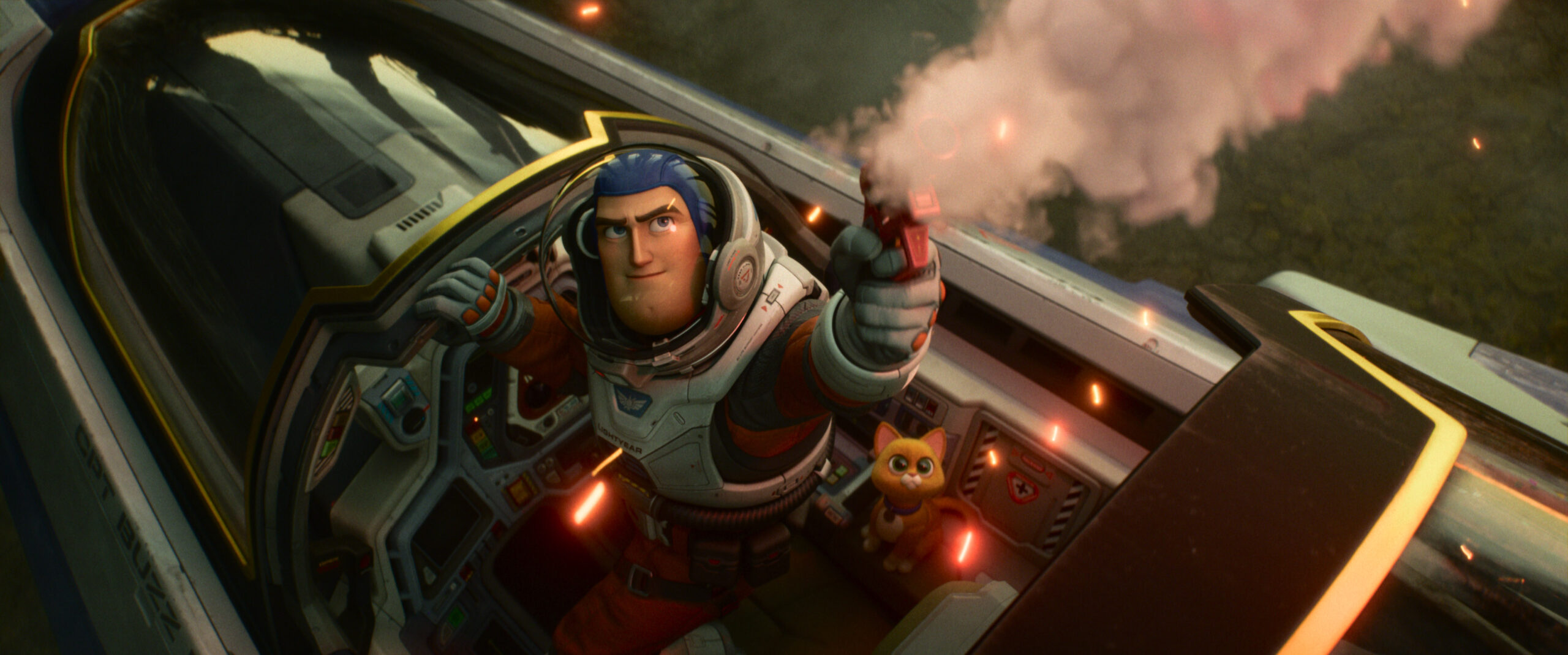
Buzz Lighyear (voiced by Chris Evans) and Sox (voiced by Peter Sohn) in LIGHTYEAR (2022, d. Angus MacLane)

We’ve seen actors take over an iconic role before, but never one quite like in Lightyear. The arrogant and self-righteous Buzz first voiced by Tim Allen audiences met in 1995 may have had the memories and knowledge of the “real” character, but that Buzz was just a toy imitation that broke out of his delusions and evolved into his character over four films and various spin-offs. Chris Evans’ task in inheriting the Space Ranger mantle is therefore made more treacherous, in that he has to imitate Allen enough that you can tell where the toy drew inspiration, but also flesh out and mould the character into more than just an action figure. Thankfully, Evans does a fantastic job on both counts and makes the role his own whilst still unmistakably being Buzz Lightyear. His brashness and tenacity remain intact, but this Buzz has an emotional nuance all his own as he obsesses over completing his mission whilst failing to make connections with the people around him. Whilst far from a revolutionary take on the hero’s journey, he absolutely makes for a compelling hero that kids will look up to, but parents may also seem themselves reflected in him, especially those who may feel life has slipped them by and missed out on the moments that mattered.

Whilst our titular lead does take up much of the spotlight, Lightyear also boasts an impressively likable supporting cast that are given a lot more free reign to define their characters. Keke Palmer makes for a delightful foil to Evans as his friend’s granddaughter Izzy, her blind optimism and crushing inexperience against Buzz’s entire persona. Taika Waititi is his usual lovably quirky self as the bumbling cadet Mo, whilst Dale Soules is consistently fun as the crochety ex-con Darby. Uzo Aduba’s role as Commander Alisha is brief but incredibly powerful and has a lasting impact throughout the film, though her LGBTQ+ status is once again a case where conservative media and homophobic governments have overblown a depiction of queer life that amounts to no more than a brief kiss. The less said about James Brolin’s turn as Zurg, the better. Being the only other character lifted from the Toy Story films, in contrast he is quite a far cry from his plastic counterpart but his reimagining is certainly compelling than just the obvious Darth Vader spoof he was in Toy Story 2. However, the film itself, and likely the hearts of many of its viewers, is stolen by the robotic cat Sox. Played with a wonderfully deadpan affect by Pixar creator Peter Sohn (who also voiced Emile in Ratatouille and Squishy in Monsters University), the character is equally cute and hilarious from the moment he springs to life and only gets funnier from there. From his matter-of-fact observations to how he adorably makes cat noises whilst performing certain tasks, he’s basically a more compact and feline version of Baymax from Big Hero 6. Quite ironically, I expect the best-selling toy from this movie inspired by a toy won’t be its decade-spanning title character, but his little ginger cat.

(from bottom-left to right) Sox (voiced by Peter Sohn), Izzy Hawthorne (voiced by Keke Palmer), Mo Morrison (voiced by Taika Waititi), Darby Steel (voiced by Dale Soules) and Buzz Lightyear (voiced by Chris Evans) in LIGHTYEAR (2022, d. Angus MacLane)

Where Lightyear really sets itself apart from its Pixar siblings is in its stunning visuals. Whilst it still retains a slightly caricaturised look for its human characters, they are rendered with a more photoreal finish than anything the studio has put out before, bringing to mind Spielberg’s The Adventures of Tintin whilst keeping it cartoony enough to comfortably avoid any dives into the uncanny valley. The way it contrasts the more grounded aesthetic of the human colony akin to The Martian against the far more fantastical design of Zurg and his robotic minions gives the world a more unique flavour than if it had been full-on space opera, and how it manages to translate the toyetic designs of the Space Ranger suits and their various gadgets into something that actually seems practical is a joy to behold. The alien world of T’Kani Prime itself is a little basic itself, mostly being a barren rock occasionally broken up by bits of jungle and the cityscape of the colony, and Zurg’s ship is a pretty standard evil spacecraft, but again there’s nothing inherently wrong with their designs other than they lack that final little touch of individuality. The film really shines on an audio level also, with not only fantastic sound design that includes recognisable noises from the toy but with a lifelike sheen, but also an incredible score from the always-reliable Michael Giacchino that elevates the whole experience to its lofty space-faring ambitions.

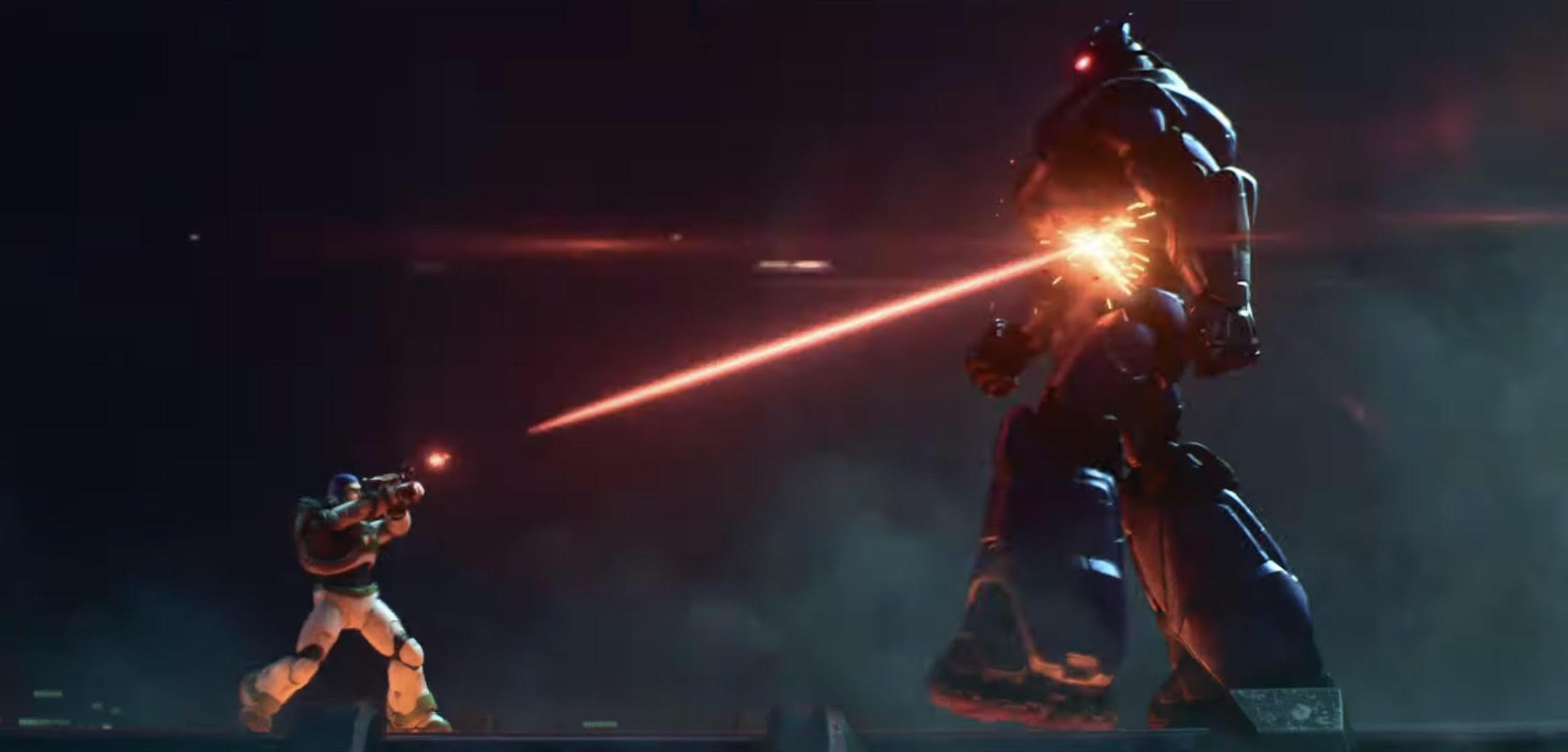
Buzz Lighyear (voiced by Chris Evans) vs Zurg (voiced by James Brolin) in LIGHTYEAR (2022, d. Angus MacLane)

Lightyear completes its main objective in delivering an entertaining and expertly-crafted movie that stands alone from its Toy Story origins, but it doesn’t have a whole lot to offer beyond that. It’s a worthwhile experience for the family on the big screen, whilst also showing a range in style and genre that Pixar has never quite explored in this way before; I’m really looking forward to seeing what Angus MacLane, who makes his feature directorial debut here, will do in the future. At the same time though, it can’t quite escape feeling like more of a corporate idea than a purely creative one, right down to how its breakout character Sox will inevitably join the likes of Baby Groot and Grogu amongst the cute plushies at your local Disney Store. Balancing those two sides out, it ends up somewhere in the middle of the pack in the Pixar catalogue, certainly well above the likes of the heavily-corporatized Cars franchise or troubled productions like Brave or The Good Dinosaur, but a far cry from the quality of any Toy Story adventure. It’s kind of ironic: what’s supposed to be the more grown-up movie that inspired the toy ends up being far less adult and mature than the movies about the actual toys.

FINAL VERDICT: 8/10

JURASSIC WORLD DOMINION – an Alternative Lens review

Starring: Chris Pratt (Guardians of the Galaxy), Bryce Dallas Howard (The Help), Sam Neill (Hunt for the Wilderpeople), Laura Dern (Star Wars: The Last Jedi), Jeff Goldblum (Thor: Ragnarok), Mamoudou Athie (The Get Down), Scott Haze (Venom), Dichen Lachman (Altered Carbon), Daniella Pineda (Cowboy Bebop), Campbell Scott (The Amazing Spider-Man), Isabella Sermon (Jurassic World: Fallen Kingdom), Justice Smith (Pokémon: Detective Pikachu), Omar Sy (Lupin), DeWanda Wise (The Harder They Fall), BD Wong (Mr. Robot)

Director: Colin Trevorrow (Safety Not Guaranteed)

Writers: Emily Carmichael (Pacific Rim: Uprising) and Colin Trevorrow

Runtime: 2 hours 26 minutes

Release Date: 10th June (US, UK)

Synopsis: When their adopted clone daughter Maisie is abducted by the power-hungry genetics company BioSyn, dinosaur trainer Owen and activist Claire must travel to their top-secret research facility to rescue her. Meanwhile, paleobotanist Ellie Sattler and paleontologist Alan Grant head to BioSyn with their own motive: find evidence the company is manufacturing an ecological disaster in order to take control of the world’s food supply.


I think most everyone can agree that the original Jurassic Park was a great film and a landmark in the history of visual effects and blockbuster filmmaking. What’s more contentious, however, is whether any of its sequels come even close to matching its quality. After two immediate follow-ups that mostly just flailed trying to reverse-engineer the success of the first, the Jurassic World series was a chance to reinvogorate the franchise and view it from a fresh, modern perspective. In a way, it succeeded in that aim, but only in that it has veered the story into weird and increasingly baffling directions. Whilst the first was a decent but forgettable summer romp with a few odd segues into WTF territory, the second entry Fallen Kingdom went completely off the rails and is still (to me, anyway) one of the worst Hollywood movies of the last five years. Regardless, they were both billion-dollar hits, and so now we inevitably reach the final entry of the trilogy Dominion, uniting the stars of both the Park and World eras and ending the story started in 1993. Will this entry finally redeem the franchise and give us a movie worthy of the Jurassic name? Short answer: no. Long answer….I mean, just keep reading and you’ll find out why!

One of the biggest flaws of Fallen Kingdom was that it was basically just a set-up for the next movie, crafting an overly-complicated series of events that led to dinosaurs being released into human civilization, then only teasing us with the possibilities of what that could lead to. That build-up, unfortunately, doesn’t mean a whole lot in the grand scheme of things for Dominion. The first act only briefly explores the impact of reintroducing dinosaurs to the modern world (mostly through an expostion dump prologue disguised as a NowThis viral mini-doc) before revealing the true source of Dominion‘s conflict: locusts. Yes, the movie franchise defined by dinosaurs has seemingly run out of ideas for what to do with them, demoting them to mini-boss fodder and shifting focus to genetically-engineered super-locusts who threaten to cause a global food shortage. The giant insects certainly make for an intimidating foe, but the movie places so much import on them that it’s easy to forget at points you’re supposed to be watching a Jurassic World movie.

Once we break into act two and the story splits into two narratives, its trajectory radically shifts even more. For a solid chunk of the movie, it basically becomes an espionage thriller as Owen and Claire chase after bad guys through the streets of Malta whilst Alan Grant and Ellie Sattler sneak their way through a secure lab, and even the presence of dinosaurs doesn’t make it seem that far removed from scenes that otherwise feel ripped straight from a Brosnan-era Bond film. The two storylines ultimately converge in the third act, where it finally starts to feel like a Jurassic Park movie again, but very much one we’ve seen before. It quickly devloves into yet another adventure on an island research facility for our heroes to encounter dinos both new and familiar, and you have to wonder why they even bothered making Fallen Kingdom if they weren’t going to take full advantage of its ramifications.

It is indeed a far less silly film than its immediate predecessor, even as it retains its dumber concepts like laser-targeted dinos, but it lacks any real spark of creativity and mostly just settles for compentently trundling along to the next action sequence. It moves at a good clip, rarely feeling its two-and-a-half hour length, and there’s no stretch where it gets boring or goes off on a tangent or springs some horrible twist, but…there’s really not much else to it. Most bafflingly of all, as the film’s plot is mostly centred around conflicts introduced and solved in Dominion rather than those from the prior films, it ultimately ends pretty much right where it started. Aside from some minor character development, you could literally stop watching the series at Fallen Kingdom and miss NOTHING of value; for a movie that’s marketing itself so heavily on returning cast members and being the “epic conclusion of the Jurassic era”, that’s pretty pathetic.

DeWanda Wise as Kayla Watts and Chris Pratt as Owen Grady in JURASSIC WORLD DOMINION (2022, d. Colin Trevorrow)

Much like Steven Spielberg did with Jaws, the initial draw of Jurassic Park may have been the prehistoric beasts but people remember it because of its characters. Alan Grant, Ellie Sattler and Ian Malcolm were a phenomenal trio, each with their own idiosyncrasies and evolutions that kept the movie interesting in between all the high-concept spectacle, and it’s yet another element none of the subsequent entries have captured. With Dominion, it’s almost like the filmmakers are aware of this fact and just went, “F*ck it, roll out the dumptrucks of cash and get the original stars back!” Seeing the return of Sam Neill, Laura Dern and Jeff Goldblum (this time for more than just a quick cameo!) is quite something at first, picking up the characters again without missing a beat whilst still giving them a sense they’ve evolved since we last saw them. Dern is especially good as she balances being the more mature and environmentally-concerned Ellie whilst occasionally slipping back to the more innocent adventurer we knew in 1993, whilst Neill turns up the curmudgeon levels even more to create a performance that will remind many of their own elderly fathers, and Goldblum…well, he’s just doing his Goldblum thing, so if you’re tired of that shtick, your mileage with him may vary.

When it comes to the newer cast, it really does seem like they ran out of ideas on what to do. Thankfully, they’ve at least dropped the bickering odd couple routine between Chris Pratt’s Owen Grady and Bryce Dallas Howard’s Claire Dearing, portraying them more as responsible surrogate parents to Isabella Sermon’s Maisie, but otherwise they’re just kind of empty shells of characters now. They have motivations and relationships, sure, but their function is now completely plot-focused with no real attempt to give them the slightest bit of introspection. Sermon continues to be a major focus as we learn more about her backstory and how it relates to the franchise mythos, but again she’s basically a walking MacGuffin but now with a generic rebellious teen streak. Justice Smith and Daniella Pineda return from Fallen Kingdom for little more than an extended cameo to write them out of the plot, Omar Sy briefly reprises his role from Jurassic World during the Malta segment before disappearing again, and of course BD Wong is back as Dr Wu for…a poorly-motivated redemption arc? Uhhhh…

But wait, there’s more! Dominion also introduces a few new faces to the series, and the quality of their characters varies even more wildly. Campbell Scott serves as the film’s human antagonist Lewis Dodgson, yet another “Steve Jobs but Bond villain” type so obvious that the film doesn’t even try not to pretend he’s the bad guy. Fans of the original film may recognise that name and yes, he is indeed meant to be the same Lewis Dodgson that hired Wayne Knight’s Dennis Nedry to steal dino DNA samples (where he was played by Cameron Thor, who was unable to reprise his role due to…y’know what, just Google it). However, he bears little resemblence to the original character and, beyond a brief Easter egg reference, him being Dodgson has no bearing on the plot; he could have been named Dr. Weirdo McEvilbad and it wouldn’t change much. Mamoudou Athie portrays Dodgson’s protoge Ramsey and does a comendable job with a role that’s mostly perfunctory, though it may have made sense for expediency to just give all his scenes to Wong instead. The film’s real MVP is DeWanda Wise as no-nonsense freight smuggler Kayla Watts. From the moment she walks on screen, she commands a presence no other character has and grounds the film amidst all the prehistoric chaos, calling out the main characters’ bullsh*t and just being an well-rounded badass. If nothing else, hopefully this will get Wise on enough people’s radar to give her a shot in a meatier franchise role.

Bryce Dallas Howard as Claire Dearing in JURASSIC WORLD DOMINION (2022, d. Colin Trevorrow)

There have been so many memorable action sequences in the Jurassic franchise, with even the weakest entries having one or two stand-outs to call their own, and with this being the supposed finale of the saga you’d hope they’d end it on a bang. Dominion certainly has a larger variety of set pieces than previous outings, mainly thanks to its globe-trotting narrative that shows us dinosaurs in environments never before seen in the series. The easy winner here is the Malta sequence, which spices up a Bourne-style chase over rooftops and on motorbikes with a variety of dinos rampaging through the streets and a frantic rush to catch a plane mid-takeoff to cap it. It’s a ludicrous but very well-staged bit of action, and that’s unfortunately where the movie peaks. Right after that, we’re back to familiar jungles and research labs with all the familiar beats of trying to remain quiet as a dino passes before having to dash to safety. Even the final dino-on-dino showdown is a pale copy of the T-Rex vs. Indominus Rex from the end of Jurassic World, but with lower stakes and a less unique locale. At that point, I would have happily taken something dumb but fresh like, I don’t know, a T-Rex fighting a swarm of locusts that take the form of a T-Rex?

At least the movie looks and sounds pretty good. After Fallen Kingdom eschewed franchise tradition and went for a widescreen presentation, Dominion opts for the less-used 2.oo:1 aspect ratio and it really makes the movie pop, allowing for a good mix of wide vistas whilst also showing off the domineering presence of the dinosaurs. It still feels more like Colin Trevorrow’s style for certain, but it does bring back a little more of that Spielberg feel with its more tempered and wondrous gaze on these prehistoric creatures, as opposed to the commercial excess of World. Whilst it certainly far more favours digital effects than the original films, there’s a lot more practical work here than in the last two films; I especially loved how they used classic animatronics in a scene set in the 80s. The sound design and mixing as expected is phenomenal, being easily the biggest reason to bother seeing this in a cinema, and Michael Giacchino continues to have fun riffing on John Williams’ themes in fun and interesting ways (though it really loves to overplay the classic theme every time there’s a nostalgic moment).

(from left to right) Jeff Goldblum as Dr. Ian Malcolm, Sam Neill as Dr. Alan Grant, and Laura Dern as Dr. Ellie Sattler in JURASSIC WORLD DOMINION (2022, d. Colin Trevorrow)

Jurassic World Dominion has at least learnt some lessons from the failings of Fallen Kingdom, crafting a warmer and more audience-pleasing entry that will appeal to certain wings of the fanbase, especially with its bountiful doses of nostalgia that are thankfully more character-based rather than just “hey, remember that thing?” However, it’s ultimately far too safe and unremarkable to be anything more than a harmless distraction. The original Jurassic Park was summer popcorn fun, but there was subtelty and nuance to its tale of man’s hubris and science gone awry. Much like the first Jurassic World, Trevorrow’s eye is far too focused on the spectacle and not enough on the potent mix of Michael Crichton dystopia and Spielberg whimsy that made audiences fall in love with the series. If Universal intends to continue this series in some form, I hope they take their time and don’t hit that greenlight until they have something that’s a true evolution of the premise that also captures the heart of what made the 1993 film a modern classic.

FINAL VERDICT: 4.5/10