ZACK SNYDER’S JUSTICE LEAGUE – an Alternative Lens review

Starring: Ben Affleck (The Town), Henry Cavill (The Witcher), Amy Adams (Arrival), Gal Gadot (Fast & Furious 6), Ray Fisher (True Detective), Jason Momoa (Conan the Barbarian), Ezra Miller (The Perks of Being a Wallflower), Willem Dafoe (Platoon), Jesse Eisenberg (The Social Network), Jeremy Irons (Die Hard with a Vengeance), Diane Lane (Streets of Fire), Connie Nielsen (Gladiator), J.K. Simmons (Spider-Man), Ciarán Hinds (Tinker Tailor Soldier Spy)

Director: Zack Snyder (Watchmen)

Writer: Chris Terrio (Argo)

Runtime: 4 hours 2 minutes

Release Date: 18th March (US/HBO Max, UK/Sky Cinema)

Back in 2017, I was one of the defenders of the theatrical cut of Justice League, but let me be clear: my opinion has soured since then and you can file that review with about a dozen others I no longer stand by. I still don’t hate that version, but with every viewing the patchwork seams became more and more obvious. It’s not a Zack Snyder film, but it’s not a Joss Whedon film either; it’s a product constructed from disparate parts by a corporation salvaging a troubled production, thrown malformed into theatres hoping to eke out a profit. It didn’t work. Would I have liked to have seen Zack Snyder’s intended version back then? For the sake of curiosity, absolutely, but I doubted it would ever see the light of day. It would remain an unseen what-could-have-been, sat on a shelf next to Josh Trank’s original cut of Fantastic Four, Lord & Miller’s Solo, and the extended version of The Amazing Spider-Man 2 with Shailene Woodley as Mary Jane and Norman Osborn as a head in a jar. No seriously, that almost happened.

In spite of this, whether fuelled by hope, desperation, or old-fashioned toxic fan whinging, the demand for Snyder’s version to be finished persisted. Putting aside both its charitable contributions and its disconcerting connection to online harassment, #ReleaseTheSnyderCut seemed like a campaign doomed to fail for the simple reason that its goal seemed unreachable. This was a prospective project that would cost tens of millions to complete, all for a ridiculously-long version of a film that already lost the studio hundreds of millions, and the final result would make Warner Bros. look like idiots no matter how good or bad the final product turned out. However, whether fuelled by the fan demand or just needing original content to boost subscriptions for HBO Max, they went and did it anyway. Zack Snyder’s Justice League is now a real film you can watch, and let me get all of the important questions out of the way. Is it worthy of all the overblown hype and worth tolerating the obsessive, abusive tactics of some of its campaigners? No. Would it have been releasable as a tentpole theatrical blockbuster? Not without a hell of a marketing campaign and at least one interval. Is it better than the theatrical version? Absolutely. Did I like it? Well…that’s what the rest of the review is for.
Zack Snyder's Justice League (2021) - IMDb

Whilst Zack Snyder’s Justice League is twice as long as its 2017 counterpart and drastically different in many facets, at its core it tells essentially the same story. As much as people decried Whedon’s additions to the film, much of his work was to simplify and stitch together Snyder’s footage into something more “releasable”. That said, having now seen what it was supposed to be, it honestly makes the changes in the theatrical cut that much more baffling. Watching the film, it’s clear that Snyder took the criticisms of Batman v Superman to heart and did his best to satisfy them in his own way. Its story is fundamentally simpler, packing its gargantuan runtime with world-building and character development rather than over-complicated villain schemes or pretentious deconstructionism. It fundamentally lightens the tone without turning into an obvious attempt to ape Marvel, cutting much of the cloying and misplaced humour that permeated Whedon’s cut, resulting in a film that is consistent with Snyder’s prior entries but still has a blockbuster spirit and an uplifting outlook.

However, the most fundamental difference isn’t all of the gratuitous cameos, the increased operatic spectacle, or the plugging up of plot holes and inconsistencies. It’s the simple fact that this version has the core ingredient truly missing from the 2017 version: relatable characters with emotionally satisfying arcs. The film certainly takes its sweet time and probably could afford to kill a few darlings, especially an indulgence towards the end where Snyder gives in to his worst edgelord instincts, but on the whole it’s a satisfying blockbuster experience that hopefully gets the big screen presentation it is crying out for. It’s a true culmination of the story began in Man of Steel whilst opening itself up for plenty more, and its scope can only really be matched by Avengers: Infinity War and Endgame. Honestly, if this version had come out when it was supposed to, people would have accused Marvel of ripping them off.

Zack Snyder's Justice League': an unflinching update fans can be proud of
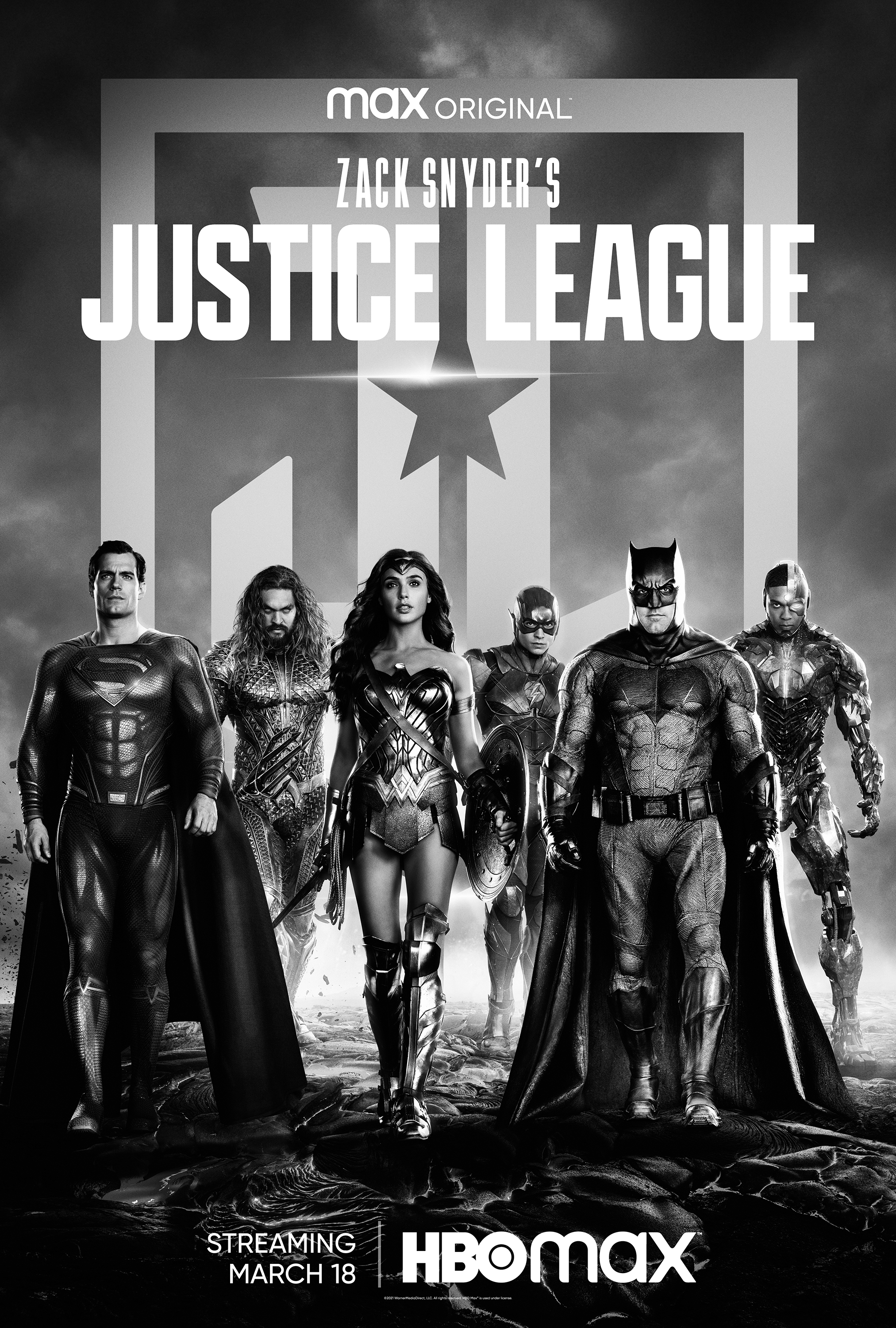
(from left to right) Ray Fisher as Victor Stone/Cyborg, Ezra Miller as Barry Allen/The Flash, Ben Affleck as Bruce Wayne/Batman, Henry Cavill as Clark Kent/Superman, Gal Gadot as Diana Prince/Wonder Woman, and Jason Momoa as Arthur Curry/Aquaman in ZACK SNYDER’S JUSTICE LEAGUE (2021, d. Zack Snyder)

With the increased runtime, that only gives the cast more opportunities to shine, and in some cases it fundamentally improves their characters. Ben Affleck still takes something of a backseat as Batman, but his performance remains strong and he gets plenty of good action beats and solid development. As usual, Gal Gadot is effervescent as Wonder Woman, with her character being improved less by what’s been added back in and more what’s been taken out (i.e. no more Flash lying on top of her or endless pining for Steve Trevor). Jason Momoa doesn’t get that much more screen time as Aquaman, but he now has a more cohesive arc that ties better into his solo film, whilst Ezra Miller’s Flash is given a lot more emotional heft whilst remaining the film’s key source of comic relief. Henry Cavill, now without a trace of his moustache-hiding CG upper lip, still doesn’t have much to do but the build-up to his return now has actual weight to it, by its conclusion delivering the sincere and hopeful Superman we’ve been dying for all along. However, no one benefits from this cut more than Ray Fisher’s Cyborg. Reduced to a mere plot device in the original, he now has a fleshed-out origin, a rapport with the rest of the team, and an actual story that transforms him from the most forgettable member of the Justice League into its emotional backbone. More than anyone, Fisher was done dirty by the theatrical cut, and here’s hoping his career gets the resurgence he deserves; not only because of his great performance here, but everything he’s done since to call out Hollywood toxicity.

There were so many characters in the theatrical version that got short shrift or removed entirely, and in some cases they were understandable. For instance, Willem Dafoe, Kiersey Clemons and Zheng Khai are restored as Nuidis Vulko, Iris West and Ryan Choi respectively, but their plot importance is mostly perfunctory; the film never even mentions that Clemons is playing West. However, for others their addition improves the film. Amy Adams’ Lois Lane gets her own subplot and development as she deals with her grief after Batman v Superman, though her primary purpose remains inextricably linked to Superman’s arc. A scene she shares with Diane Lane as Martha Kent is one of the more emotionally rich in the entire film, making its replacement by Whedon with an inferior version retroactively baffling. Much like his on-screen son, Joe Morton gets his due as Dr. Silas Stone and his strained relationship with Fisher is wonderfully bittersweet, whilst Ciarán Hinds’ Steppenwolf has been bolstered from one of the worst on-screen supervillains into…well, he’s still not that interesting, but he has more nuanced motivations and actually feels like a threat now. Though much hyped, Ray Porter’s role as Darkseid is mostly just sequel bait but he certainly embodies the part well, and Jared Leto’s cameo as The Joker is better than his performance in Suicide Squad but absolutely useless; it doesn’t even have the meme factor of him saying “we live in a society”.

Zack Snyder's Justice League: What the fans are saying
Ray Porter as Darkseid in ZACK SNYDER’S JUSTICE LEAGUE (2021, d. Zack Snyder)

Zack Snyder is a contentious filmmaker for completely understandable reasons, but much like fellow blockbuster punching bag Michael Bay, it would be wrong to call him an unimaginative hack. Even if he hasn’t always fully grasped the material he’s working with, he has a style all his own and has a distinctive eye for spectacle, and he delivers that in spades with Justice League. Whilst much of his action sequences were retained in the theatrical cut, they were cut to ribbons and ruined by a botched attempt to retroactively lighten the material. What were fairly generic set pieces in that version have been restored to full glory and are packed with standout moments, with the fight under Gotham Harbour and the final assault on Steppenwolf’s base being some of the best in DCEU history. The horrid oversaturated colour grade has been replaced with a cooler palette more in line with the previous films, though it does leave much of the film looking like they forgot to colour balance the cameras.

The structural editing of the film is also much improved, with the story now flowing at a more logical pace. Conversely though, the momentary editing now has the opposite problem to the theatrical, with countless takes held much longer than really needed. I understand Snyder probably felt like he needed to show everything, but certain scenes could have been trimmed ever-so-slightly. Easily the most transformation for the film is its new score by Junkie XL, which subtly but radically improves the tone of several key sequences; Danny Elfman’s prior score wasn’t terrible on its own, but it simply didn’t mesh with the visuals no matter what filter they put on it. Even the visual effects, whilst still compromised in certain ways, on the whole look better than the 2017 version, though some of the designs remain contentious; seriously, Steppenwolf now looks like a disco-themed Rob Liefeld character. The only aspect of the theatrical version I ended up missing were the choice of needle drops, with all of the rock music now replaced with sad ballads. Maybe it’s just me, but having seen Aquaman leap into the ocean to the thumping guitar of The White Stripes, it’s odd to see that sequence set to the gloomy tones of Nick Cave instead.
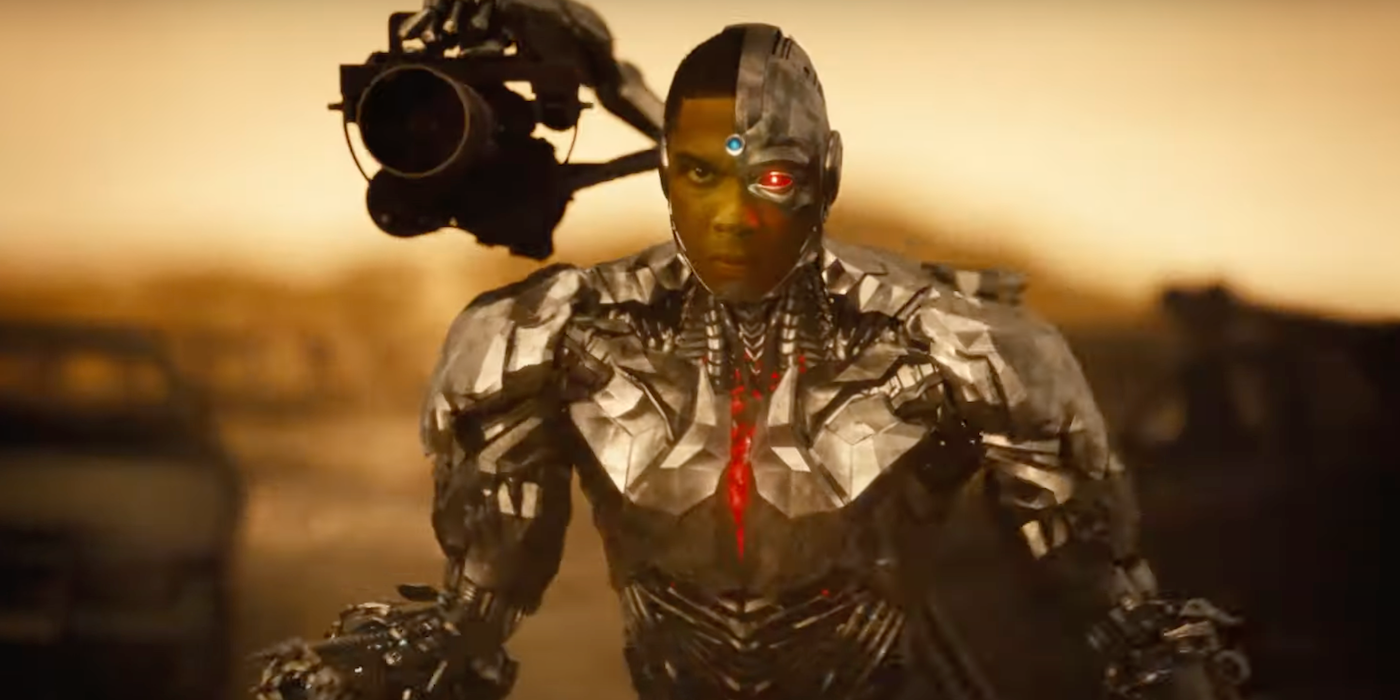
Cyborg Takes Center Stage in Zack Snyder's Justice League Teaser Trailer
Ray Fisher as Victor Stone/Cyborg in ZACK SNYDER’S JUSTICE LEAGUE (2021, d. Zack Snyder)

It baffles me to even say this, but it’s true: Zack Snyder’s Justice League is not only a better film than its 2017 version, it in hindsight makes the theatrical cut feel like a pointed insult. It’s a cinematic glow-up for the ages, transforming a box office bomb into a triumphant epic that dares to be extra. It pays off a trilogy of build-up whilst also setting up a promising and vibrant future for the DCEU, gives every character the time and respect they deserve, and proves that Snyder can listen to criticism whilst not compromising his vision. It’s perfectly understandable why some audiences may still not enjoy it, but it’s hard not to at least acknowledge how significant a moment this is in the current cinematic landscape. Whether this will affect the current plans for the DCEU or how studios approach director’s cuts in general, it’s too early to tell. Right now, all we have is a movie that I’m sure many of the fans who clamoured for it will love, and I hope this ultimately leads to positive change in the fandom. Well done, Zack. I hope this helped you find some peace.

FINAL VERDICT: 8/10
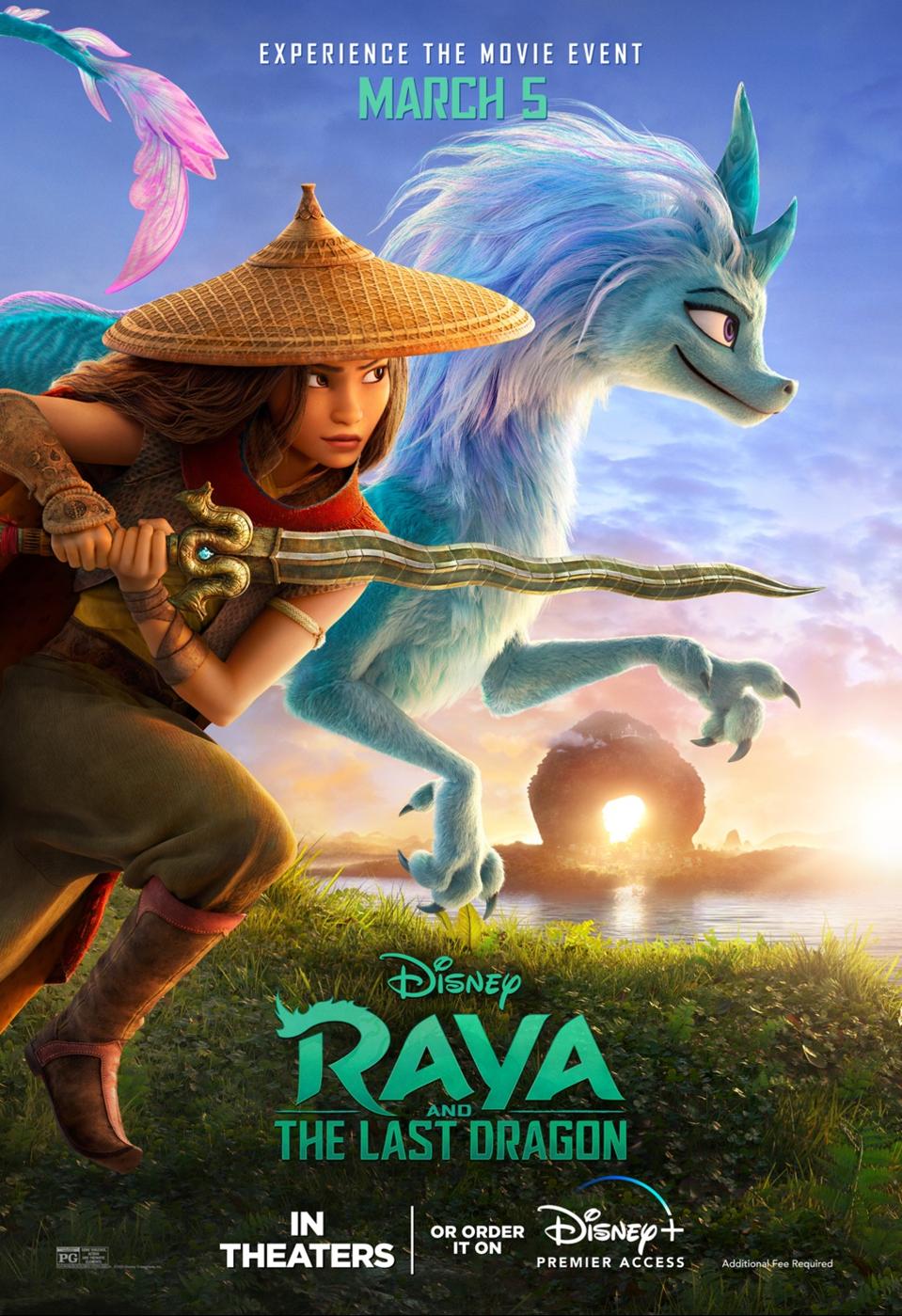
RAYA AND THE LAST DRAGON – an Alternative Lens review

Starring: Kelly Marie Tran (Star Wars: The Last Jedi), Awkwafina (The Farewell), Izaac Wang, Gemma Chan (Humans), Daniel Dae Kim (Hellboy), Benedict Wong (Doctor Strange), Sandra Oh (Killing Eve)

Directors: Don Hall (Big Hero 6) & Carlos López Estrada (Blindspotting)

Writers: Qui Nguyen & Adele Lim (Crazy Rich Asians)

Runtime: 1 hour 47 minutes

Release Date: 5th March (US/Disney+)

It’s been over four years since Walt Disney Animation Studios have delivered a wholly original feature film, with their last two outings being uncharacteristic diversions into sequels with Ralph Breaks the Internet and Frozen II. Whilst there was nothing inherently wrong with those films or making sequels in general, it did leave some to wonder if the studio’s second renaissance may finally have come to an end. With Raya and the Last Dragon, those worries should be put to bed. Though it treads on plenty of familiar territory for a Disney film, it also brings plenty that is innovative and refreshing to the genre. It is a sign that the House of Mouse, whilst still having an immense respect and confidence in its foundations, is willing to experiment and try to reach out to new concepts and audiences, and we can only hope this is a sign of even greater stories to come.

Raya And The Last Dragon' Review: Disney On Autopilot

Raya and the Last Dragon takes place in a world ravaged by an unforgiving plague that has ripped families apart and divided humanity against itself, leaving those who survive yearning for a time when life can return to normal whilst their leaders only seek to fortify their own power. Whilst some of these parallels are likely unintentional, it’s a tale that reflects the current state of the world in an optimistic but honest fashion, and will hopefully teach and encourage its younger viewers with its unifying themes. The moment-to-moment storytelling is a little less inspiring, with a first act that relies on heavy-handed exposition and an episodic approach to its main quest. Though all of these elements come together and pay off excellently come the earth-shattering climax, it does leave you wanting a more optimised story. At times, it feels like an entire season of a TV series squashed into ninety minutes; a great series with a beautifully realized world, relatable and distinctive characters, and a truly inspiring message, but an abbreviated version of it nonetheless.

With that said, those broad strokes are more than enough to keep the plot fresh and engaging, and what it lacks in fine detail it makes up for with moral complexity and abundant sincerity. This is easily Disney’s most adult movie since its first renaissance, often evoking the bleaker spirit of Mulan and The Hunchback of Notre Dame,but it doesn’t succumb to tonal whiplash like those films; when things get dangerous or sombre, they are treated as such without relying on slapstick sidekicks or anachronistic humour to placate the kids. It is an emotionally rich and satisfying epic fantasy tale in its own right, and Disney should be commended for taking those risks and relying less on its traditional formulas.

Raya and the Last Dragon and Southeast Asian Representation | Time
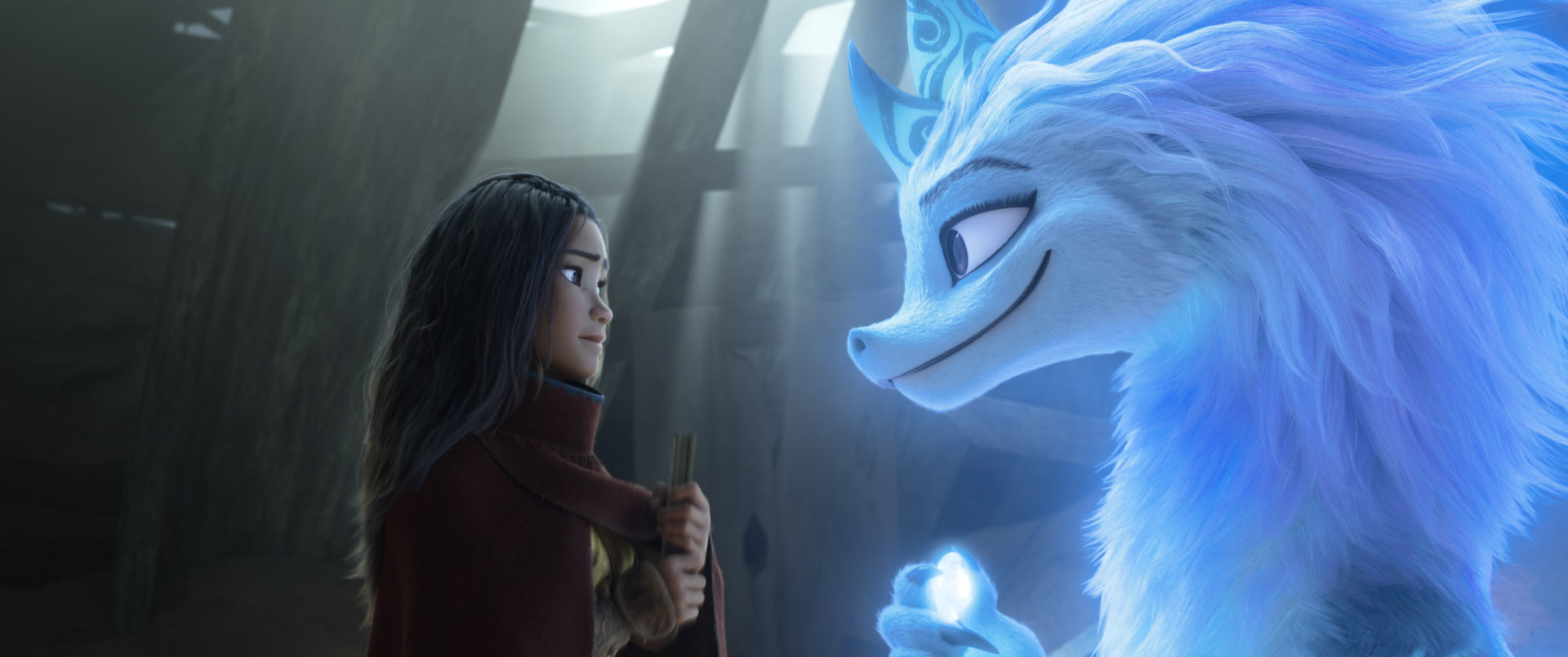
(from left to right) Raya (voiced by Kelly Marie Tran) and Sisu (voiced by Awkwafina) in RAYA AND THE LAST DRAGON (2021, d. Don Hall & Carlos López Estrada)

Disney princesses have come in a lot of varieties over the years, and whilst more modern examples have pushed themselves away from the traditional dainty image, Raya is certainly the most drastic departure from the mould in quite a while. She’s a warrior first and a princess second, with a bitter attitude and a reluctance to trust others, but she has a sensitive soul and a relatable motivation for her pessimistic outlook. Voiced with exuberant aplomb by Kelly Marie Tran, Raya is a truly wonderful protagonist and a stellar example of how to craft a strong and multifaceted female protagonist, and we deserve more heroines of her ilk in the future.

At her side as the titular last dragon is Awkwafina as the naïve and excitable Sisu, who certainly evokes Disney’s previous animated dragon sidekick in her performance. Thankfully, she avoids turning Sisu into a caricature of her real-world persona and plays the character sincerely, delivering some of the film’s most heartfelt moments as well as being its main source of comic relief. The supporting cast is wonderfully fleshed out by a stellar mix of talent, from newcomer Izaac Wang as the boisterous ship captain/cook Boun to the always-dependable Benedict Wong as the warm-hearted barbarian Tong, but the clear standout is Gemma Chan as Raya’s rival princess Namaari. She’s the best kind of antagonist, in that she’s just as emotionally and morally complex as our protagonist, making every time she and Raya come to blows feel that much more captivating; with a simple rewrite, you could easily turn her into the hero and it’d be just as satisfying.

How Disney's Raya and the Last Dragon Animators Finished the Film from Home
(from left to right) Raya (voiced by Kelly Marie Tran) and Namaari (voiced by Gemma Chan) in RAYA AND THE LAST DRAGON (2021, d. Don Hall & Carlos López Estrada)

Though they haven’t always captured these cultures in the most authentic or respectful way in the past, it’s always a joy to see Disney bring to life another part of the world in their world-class animation. The world of Raya takes place in a fantastical land inspired by Southeast Asia, and I would place a hefty bet that the animators took inspiration just as much from a certain popular Nickelodeon cartoon as they did from the actual folklore of Thailand or the Philippines.

That said, any comparisons between this film and Avatar: The Last Airbender are mostly surface level, as the animation and artistic quality of Raya are undeniably those of Disney. This is a richly detailed and gorgeously vivid world they’ve crafted, from the macro concepts like the environments shaped to resemble the anatomy of a dragon, to tiny little moments like Raya using her snake-like sword like a grappling hook (eat your heart out, Ivy Valentine). It’s simply a beautifully realised film from start to finish whether engaging in thrillingly choreographed fight sequences or quiet moments of reflection in the rain, and I wish more audiences could safely experience it on the big screen; do yourself a favour and try to see it on the best TV you can if you’re watching at home.

Raya and the Last Dragon wasn't going to be a Disney Princess film. Adele  Lim changed that - Esquire Middle East
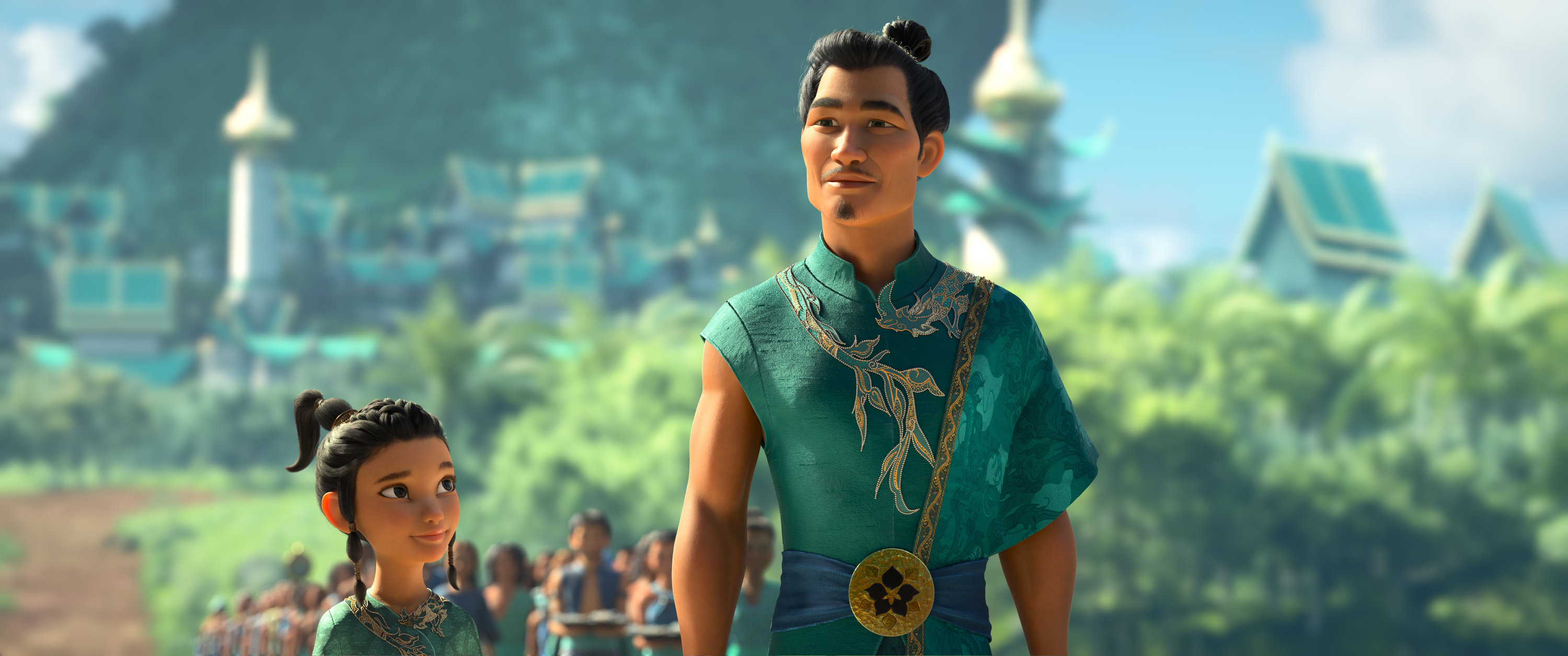
(from left to right) Raya (voiced by Kelly Marie Tran) and Chief Benja (voiced by Daniel Dae Kim) in RAYA AND THE LAST DRAGON (2021, d. Don Hall & Carlos López Estrada)

Raya and the Last Dragon certainly isn’t an instant classic, but it’s more than worthy of the Disney legacy and takes the studio to bold new places. It has some structural issues that lead to some unfortunately cramped storytelling, but on the grand scale those hiccups never threaten what is otherwise a remarkable feat of animation. It stands as a film that reflects the progress and challenges of the time it was made in, but also respects that heritage of stories that came before it whilst remaining timeless for future generations. Whether they’ve known it or not, young audiences have needed and been craving for a hero like Raya for a long time, who now takes a distinguished place in the dynasty of Disney princesses. Much like how the first Disney renaissance broke away from paying homage to the classics and moved into more experimental territory in its second half, Raya and the Last Dragon could represent that shift for this generation. Hopefully, that means we’ve managed to skip over whatever the 21st century equivalent of Pocahontas is. *shudder*

FINAL VERDICT: 8.5/10

COMING 2 AMERICA – an Alternative Lens review

Starring: Eddie Murphy (Beverly Hills Cop), Arsenio Hall (Black Dynamite), Jermaine Fowler (Superior Donuts), Leslie Jones (Ghostbusters), Tracy Morgan (30 Rock), KiKi Layne (The Old Guard), Shari Headley (The Preacher’s Wife), Wesley Snipes (Blade), James Earl Jones (The Lion King)

Director: Craig Brewer (Dolemite Is My Name)

Writers: Kenya Barris (Girls Trip) and Barry W. Blaustein & David Sheffield (The Nutty Professor)

Runtime: 1 hour 44 minutes

Release Date: 5th March (Amazon Prime)

I have mixed feelings about the return of Eddie Murphy. On the one hand, he is clearly still a talented and hilarious actor, with his stellar comeback turn as Rudy Ray Moore in Dolemite Is My Name prooving he still has something to give. However, like a lot of comedians from his era, his brand of humour doesn’t so easily translate to modern sensibilities. Even Murphy himself has apologised retroactively for some of his more tasteless stand-up, and I think that change in sensitivity may be partly why he backed away from Hollywood for nearly a decade after a long string of flops. Now with the goodwill he’s regained from Dolemite, Murphy seems confident to make a true triumphant return by making a follow-up to one of his beloved classics. Coming 2 America is very self-aware of the stigma surrounding comedy sequels, and if there was ever a good time to make a second Coming to America, now is better than any before. Unfortunately, the final product is ultimately stale, formulaic, and old-fashioned in the worst way; far from the royal homecoming Murphy clearly wanted or what his fans deserved.

New Coming 2 America Poster Features New and Familiar Characters

Coming 2 America immediately stumbles within the first ten minutes, spending the rest of its runtime trying to recover from a massive error in judgement that epitomises the film’s greatest weakness. This may be stepping into spoiler territory, but this needs to be made clear up front: the plot begins when Prince Akeem (Murphy) learns he sired an illegitimate son off-screen during the events of the first film, after unknowingly having sex with Mary (Leslie Jones) because he was so high that he thought she was just a boar he hallucinated. Let me just rephrase that to make it clear: THE STORY BEGINS WITH EDDIE MURPHY REALIZING HE WAS RAPED, AND IT IS PLAYED FOR LAUGHS. From that moment on, there is absolutely no way Coming 2 America can recover from such a bad taste moment. Whilst the film never stoops so low again, this poor attempt to meld 80s comedy sensibilities with modern taste runs through the rest of the production and it constantly falls flat. Like so many comedy sequels, most of the jokes are just the recycled remains of the best jokes from the first movie, with pretty much every notable character from that film returning whether they have good reason to or not.

On the other end, Coming 2 America’s attempts at being contemporary and progressive fall just as flat. The story’s vague stab at female empowerment with KiKi Layne’s subplot is typical and underdeveloped, and the rest are just a bunch of tired jokes about Black Panther, being “on fleek”, Lyft drivers and, of course, mild transphobia. The only promising new conceit is Lavelle (Jermaine Fowler) and his reticence to accept royal privilege when he’d rather build a life for himself. It’s an interesting avenue that truly feels like a contemporary reflection on both its predecessor and present-day class disparity, but much like everything with promise in the film, it abandons it in favour of just rehashing the “I want a woman that will arouse my intellect as well as my loins” plot from the first film. With all that said, what’s most baffling about Coming 2 America is how seriously it otherwise takes itself. The story often treats itself as if its part of some great saga and goes for a far more sentimental vibe, which perhaps is fitting in a generational story of passing the torch, but it’s nigh impossible to be emotionally invested when those same scenes often feature Murphy dressed up in caricatured make-up talking in a silly voice and making sexist remarks.

Review: 'Coming 2 America' eventually overcomes its flaws to deliver
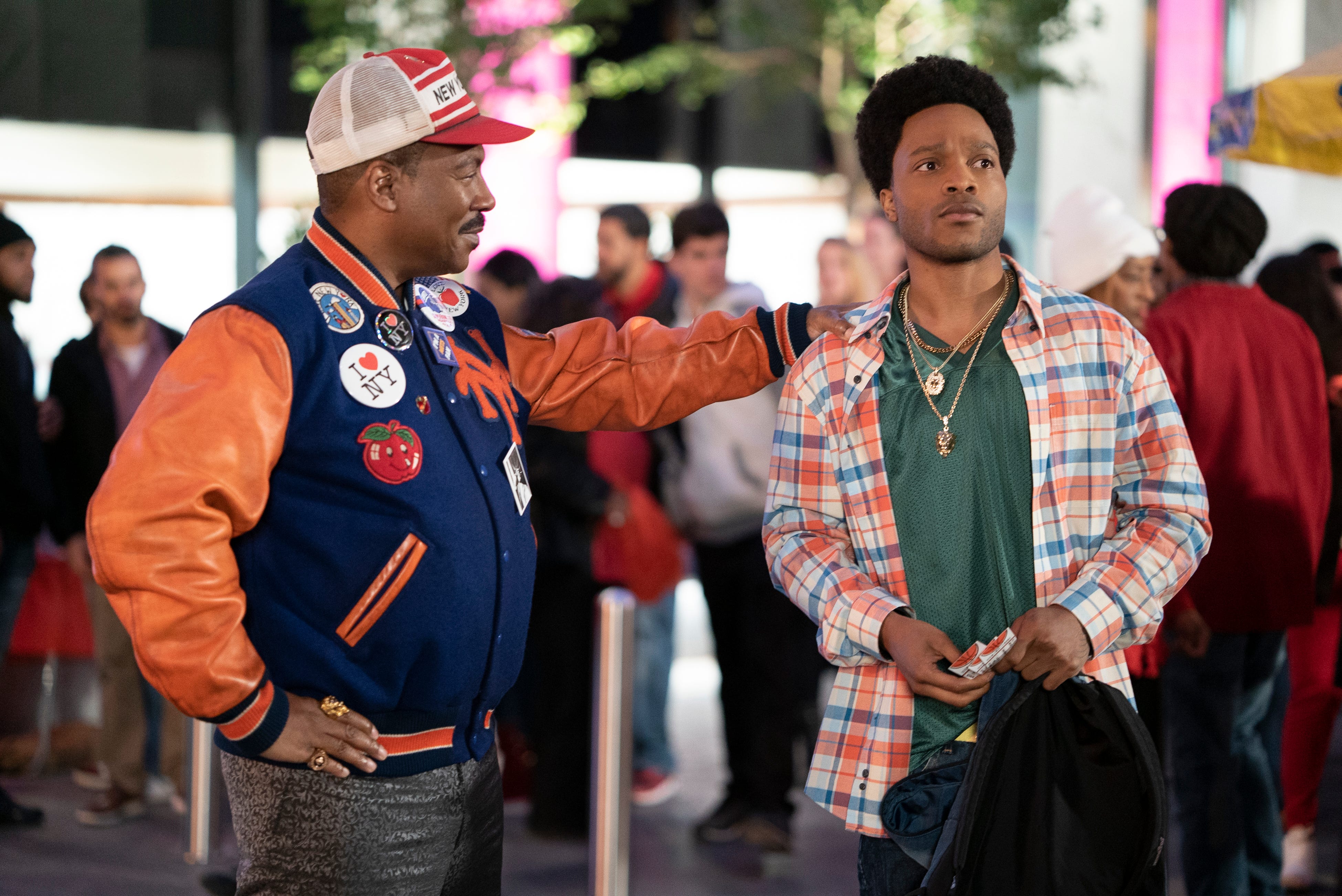
(from left to right) Eddie Murphy as Prince Akeem Joffer and Jermaine Fowler as Lavelle Junson in COMING 2 AMERICA (2021, d. Craig Brewer)

The film only ends up being vaguely watchable because the cast’s talent and charisma manages to wade through the bad material and stay afloat to the end. Though not quite the same man he used to be, Eddie Murphy is certainly trying his best and manages to pull out several laughs and even a few moments of sincerity. He’s clearly not sleepwalking through the film, but there’s certainly a sense that he’s often fighting against an urge to go full Raw. Arsenio Hall, meanwhile, is given very little to work with and often flat-out disappears for good chunks of the film. Despite receiving second-billing and being just as much a star of the first film as Murphy, Hall lacks much if any narrative purpose after the first act other than to butt heads with Tracy Morgan. Shari Headley, returning as Akeem’s bride Lisa, gives a spirited performance with her limited material and once again holds her own against Murphy, whilst James Earl Jones makes a brief but dignified return as King Jaffe.

In terms of new faces, Jermaine Fowler easily comes out of the film the strongest as Akeem’s son Lavelle. He manages to embody Murphy’s mannerisms without directly copying him, and he has a rebellious attitude and grounded perspective that make him a much more relatable character than anyone else in the film; it’s a shame the plot doesn’t let him properly explore that. Leslie Jones does what Leslie Jones does best and steals every scene she is in, which is almost enough to redeem her character after being a key player in the story’s horrendous inciting incident. KiKi Layne is mostly wasted as Akeem’s eldest daughter Meeka, whilst Wesley Snipes hams it up as the treacherous General Izzi in yet another surprisingly accomplished comedic performance. Much of the rest of the cast is chock full of celebrity cameos, many of which playing themselves, but after an early scene where they blow half of them in the space of a few minutes, those surprises quickly feel fleeting.

Coming 2 America review: A fun trip back in time | EW.com
Wesley Snipes as General Izzi in COMING 2 AMERICA (2021, d. Craig Brewer)

Though it recycles a lot of humour and what’s new rarely raises a chuckle, I can’t call Coming 2 America a lazy or unnecessary sequel, but it is a fundamentally misguided one. Like a casually bigoted but otherwise kind old man trying to better himself around his son’s foreign wife and his queer granddaughter, it is a film that clearly wants to get with the times but whose old habits die hard. A sequel to Coming to America could have been more than just a repeat of past glories. It could have been a genuine exploration of changing times, an honest reflection on how “traditions” often come hand-in-hand with marginalisation, and tackled how attitudes towards race, class and gender (and, subtextually, comedy) have changed. Instead, Coming 2 America just wants to tell the same problematic jokes in an inappropriate context, then claim its progressive by making gentrification jokes and saying, “Hey…what about a woman leader?” I had such high hopes this might have been one of those exceptions to the comedy sequel rule, but you can go ahead and toss this in the same pile as Zoolander 2. The great nation of Zamunda deserved better than this.

FINAL VERDICT: 4/10