THE HOBBIT: THE DESOLATION OF SMAUG review

Starring: Martin Freeman (The World’s End), Ian McKellen (X-Men), Richard Armitage (Captain America: The First Avenger), Benedict Cumberbatch (Star Trek Into Darkness), Luke Evans (Immortals), Evangeline Lilly (Real Steel), Orlando Bloom (Pirates of the Carribean: The Curse of the Black Pearl)

Director: Peter Jackson (The Lord of the Rings trilogy)

Writers: Peter Jackson & Fran Walsh & Philippa Boyens (The Lord of the Rings trilogy) & Guillermo Del Toro (Pacific Rim)

Runtime: 2 hours 41 minutes

Release Date: 13 December (US, UK)

We are over the hump on this quest to slay a dragon and reclaim a city, but we still have a fair way to go. The first Hobbit adventure, An Unexpected Journey, was a solid return to Middle-Earth that unfortunately suffered from poor pacing and some uneven storytelling. Have these problems been addressed in this sophomore chapter.

Image

To answer that question: pretty much, yeah. Whilst the first film took 45 minutes of its hefty runtime to even begin the journey, this one (after a brief prologue) picks up right where we left off and gets straight back into the action; its almost as if you never left. And from then on, the film manages to keep up the pace and remains consistently entertaining. At points in the first film, you could nod off for five or ten minutes and not miss anything. Here, it feels much more tightly constructed; I was never bored for long during the film. Does that mean that those issues from the previous instalment have been completely fixed? Not quite. The film does still run a little too long for comfort and certain scenes (such as the sequence with Beorn or the encounter between Thorin (Richard Armitage) and Thranduil (Lee Pace)) could have been cut or simplified. However, these problems have gone from major to niggling, and in comparison it still feels much better. The film benefits from having a much grander scale with more characters, more varied scenery, and a lot more action. At points it feels much more like Lord of the Rings than the first one did. Almost too much. There are certain sequences and plot beats that feel eerily similar to moments from the original trilogy, but for the most part this sense of familiarity gives it the epic quality that the first film often lacked. And to those wondering how much of the book is left to adapt for the final entry by the end: not too much. I’m guessing the third film will feature a lot of new material, but I do think that this film has a much better hook for the next one that the first one did.

Martin Freeman was a perfect casting choice as Bilbo Baggins, and he’s better than ever here. Whilst he still remains as lovable and cunning as ever, the little moments that allude to the true nature of his ring and how it’s affecting him are a nice touch that add dimension to his character. Ian McKellen still owns the role of Gandalf, but unfortunately he’s barely in this outing as he spends the majority of his time in a subplot that seemingly won’t fully pay off until the next one. All the dwarves are still entertaining and have become easier to discern with time, but they still only have one character trait each. Thorin gets the most attention, and even though his role at this point is basically to be Aragon Jr, he still proves to be a formidable force. The film is stuffed with new characters, some of which weren’t even in the book. Luke Evans’ Bard is interesting but he doesn’t get enough screen time, as is the case with Pace’s Thranduil. Orlando Bloom returns from the original trilogy as Legolas, allowing him more time to show off how much of a badass he is but not much else. With him is original character Tauriel (Evangeline Lilly), who has an interesting hinted romance subplot with Kili (Aiden Turner) that mirrors the relationship between Merry and Eoywn but it doesn’t get too much attention. But the real show stealer is Smaug himself, played wonderfully by Benedict Cumberbatch. Ignoring the effects involved in creating the character, the voice and personality Cumberbatch gives the fearsome dragon makes him a truly threatening villain, and his scene with Freeman rivals the Riddles in the Dark sequence from the first film in terms of suspense.

The action scenes in The Desolation of Smaug are more frequent and more varied, filled with wonderfully inventive choreography. The barrel sequence is just a blast to watch with plenty of moving parts and changing dynamics, whilst the final showdown in Erebor is equally thrilling. On a technical level, everything is just as good or better than the first film. The production design is grand, the score rousing, and the digital cinematography and 48fps didn’t feel so out of place this time round; perhaps I’ve just gotten used to it. The visual effects have improved significantly compared to the first film for the most part, but there are certain areas like in the first where it looks unpolished. For example, Smaug looks fantastic but the molten metal used in the finale looks amateurish at points. I think Jackson has again relied too much on VFX and hasn’t done enough practical work with models and animatronics. The balanced mix of live effects and CGI in the original trilogy worked so well that I find it confusing why Jackson decided to pull a George Lucas in this department.

The Hobbit: The Desolation of Smaug is an improvement on the first film and has helped restore my faith in Peter Jackson as a filmmaker. The film has ridden itself of a lot of the fat that weighed its predecessor down to allow for a much more entertaining adventure that is less likely to put you to sleep. It’s certainly a very good film, but still not as good as any of the Lord of the Rings movies and not as massive an improvement the second Hunger Games film was over the first. Let’s just hope Jackson and company can keep the momentum going as we wait another year for the journey to end in There and Back Again.

FINAL VERDICT: 9/10

FROZEN review

Starring: Kristen Bell (Veronica Mars), Idina Menzel (Enchanted), Jonathan Groff (Taking Woodstock), Josh Gad (Jobs), Alan Tudyk (Serenity), Ciarán Hinds (The Woman in Black)

Directors: Chris Buck (Tarzan) & Jennifer Lee

Writer: Jennifer Lee (Wreck-It Ralph)

Runtime: 1 hour 48 minutes

Release Date: 27 November (US), 6 December (UK)

Animated Disney musicals have been around for a long time, but really hit a Renaissance during the 1990s. This is the time we got classics like Beauty and the Beast, Aladdin, and The Lion King. But when the early 2000s rolled around, Disney took a bit of a different direction in attempt to compete with the rising popularity of Dreamworks SKG and left the musicals behind. This period was very much a mixed bag: for every Lilo & Stitch or Treasure Planet, you got a Chicken Little or a Home on the Range. But by the end of the decade, they rolled back around in quality with both more refined modern works like Bolt and Wreck-It Ralph, whilst also bringing back the classic musicals with The Princess and the Frog and Tangled. And now, their latest effort Frozen has been released, and it might just be one of their best efforts in recent memory.

Image

The film is “inspired” by Hans Christian Anderson’s The Snow Queen according to the credits, and that is an accurate description as the story really bares little resemblance to the classic tale. But Disney has always had a loose attitude towards adaptation, and this creative freedom has allowed them create a much more nuanced tale. Sure, there is plenty of familiarity in its conventions here for the Disney purist, but Frozen is a film that truly shines when it goes off the beaten path. The film knows how to play with your expectations, and manages to weave a tale that has plenty of surprises but also manages to satisfy those basest of desires. I only wish the film did it even more. There are certain plot moments that do feel a bit cliché and might have you going “Come on!” or “I know where this is going”; sometimes they subvert these thoughts, but other times they don’t and what you think is going to happen happens. That’s not to say the story is bad, what is there is well done, but I think there were ways they could have made it even more original. Nevertheless, Frozen’s story is still a delightful yarn that should entertain both the young and the old, the newcomer and the veteran.

Unlike a lot of other animation studios, Disney doesn’t like to flaunt a star-studded cast around; name recognition of their company alone is usually enough to get butts in seats. The cast they have assembled though all do a wonderful job as both actors and singers. Kristen Bell’s Anna is a great protagonist, creating a character that is both more relatable and interesting to a modern audience without losing that classic Disney princess veneer. Jonathan Groff and Santino Fontana also do great voice work as Kristof and Hans respectively; both of them have good chemistry with Bell and both also manage to be radically different from each other and Disney princes of the past. Alan Tudyk seems to be having fun here as the pompous Duke of Weaseltown (“That’s Weselton!”), though his character ends up being nowhere near as important to the plot as it initially seemed. But two other cast members easily steal the show. Firstly, Josh Gad’s performance as the confused snowman Olaf is one of the best comic relief characters in Disney history; his mannerisms and odd sayings make for a character that is as fascinating to listen to as it is to watch the wonderful animation job done on him. And then there’s Idina Menzel as Elsa. My god, this is a true powerhouse performance. The relationship she has with Anna, the internal struggle she goes through and how she tries to deal with it; all of that on its own would be enough, but her singing voice is just superb and raises the quality of the film exponentially.

Bad songs can kill a musical, but Disney films always have at least one memorable song per film. “The Circle of Life”, “Beauty and the Beast” and “A Whole New World” are all songs burned into our subconscious, and Frozen’s “Let It Go” is one I think deserves to stand up there with those classics. The lyrics themselves are well written and serve a purpose to the story, but combined with Menzel’s bravado performance and the animation on display during the song makes for the most memorable sequences of the entire production. Some of the other songs are good as well; with “For The First Time In Forever” and “In Summer” being personal favourites, but “Let It Go” just outshines them all on every level. The only song I wasn’t particularly fond of was “Fixer Upper”; not so much because of the song itself, but mainly because it comes at such a time-sensitive part of the plot that it makes you go “Get on with it!” As said before, the animation on this film is excellent. The way these characters move, the way the world is designed, how detailed and fantastical everything looks; it is all masterfully done and marvel to watch whether you see it in 3D or 2D.

Frozen is the best “classic” Disney movie since Tarzan, and also the best animated film of the year. It’s ironic that a film about the land being stuck in winter would be so heart-warming, but it’s the truth. The story is different yet familiar, the animation is top notch, and the songs are the best from a Disney film in a long time. Do yourself and your family a favour and go see Frozen; I’m sure you’ll all enjoy it. Even if you don’t have kids, give it a watch. It really is a film that makes you feel like a kid again.

FINAL VERDICT: 9/10

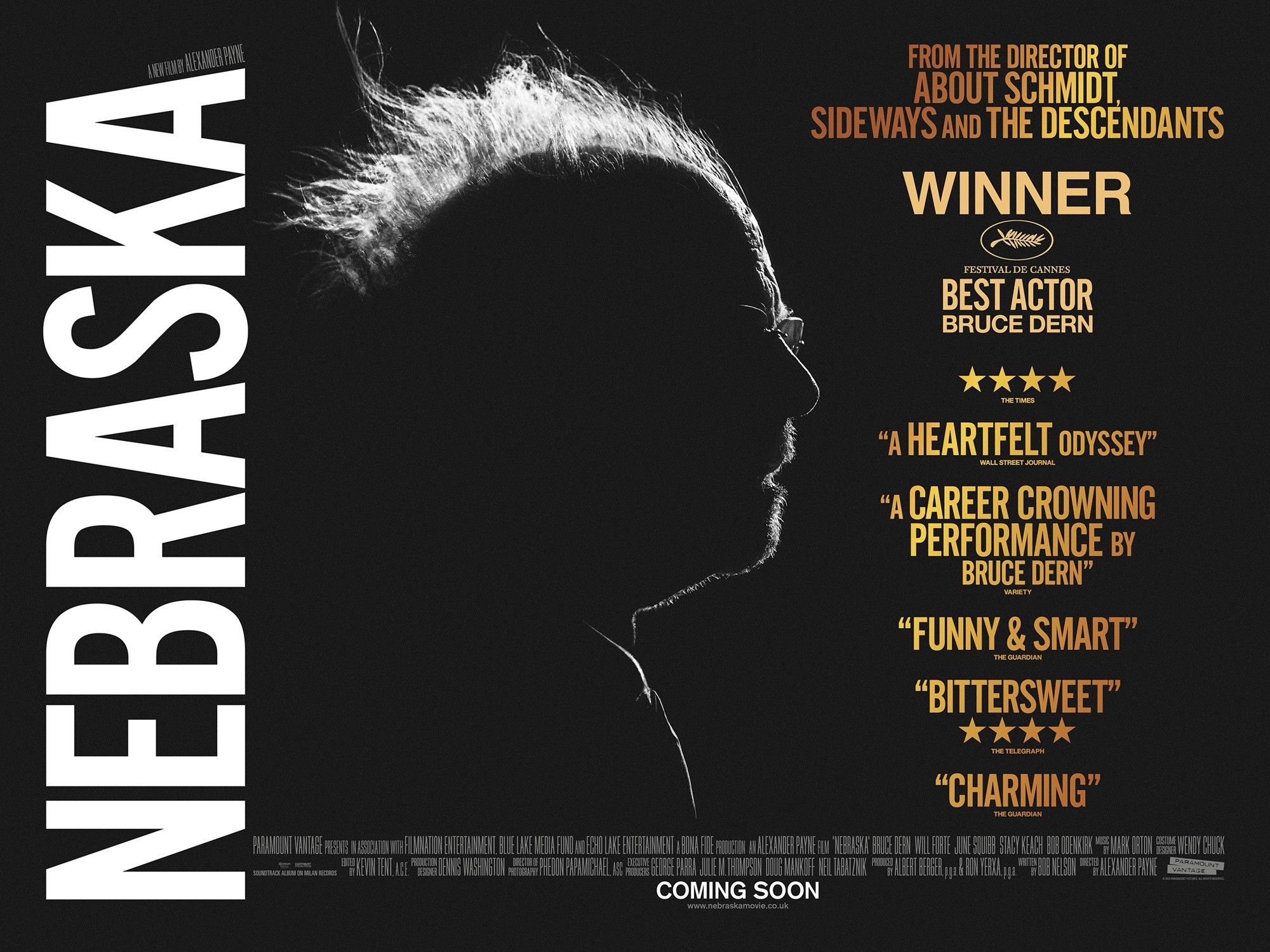
NEBRASKA review

Starring: Bruce Dern (Silent Running), Will Forte (MacGruber), June Squibb (About Schmidt), Stacy Keach (American History X), Bob Odenkirk (Breaking Bad)

Director: Alexander Payne (The Descendants)

Writer: Bob Nelson

Runtime: 1 hour 55 minutes

Release Date: 15 November (US), 6 December (UK)

Dealing with our relatives, especially elder relatives, is something I think most of us can relate to. Whether you love them or hate them, they’re bound to get on your nerves at some point. Nebraska tells the tale of one particularly disparate family, mainly the father and son, and how they learn to cope with each other.

Image

The plot of Nebraska is a fairly simple set-up, but one that creates a lot of areas for conflict and humour. Whilst you know from the start that this situation can’t end too well, you’re still intrigued exactly how it’s going to get to that conclusion. I won’t say much about how the film ends, but it does manage to satisfy on both a story and an emotional level without feeling too sweet or out-of-nowhere. It’s one of those “it’s not about the goal, it’s about the journey” tales but, more specifically, the characters on that journey. The relationship between Woody (Dern) and David (Forte) is one I think we’ve seen before: the delusional old father whose constantly a pain for the put-upon son. But how exactly these two characters come to accept each other is what makes the film really work, as well as how they interact with the rest of the characters they encounter. Alexander Payne’s films always manage to make the mundane feel fascinating, and Nebraska is no different. His direction, combined with Bob Nelson’s excellent screenplay, really gives the film a down-to-earth feel; this world and its characters feel plucked right out of reality, and the way the conversations flow feels naturalistic whilst still remaining engaging and humorous. Here’s a good example: there’s a scene where Woody and David are watching a football game with Woody’s brothers, when one of the brothers sparks up a random conversation about one of the other brother’s old car. This scene has no bearing on the plot whatsoever, but the way the scene flows with its deliberate pacing and simplistic dialogue makes for a moment that is hilarious but also perfectly captures the nature of those meandering conversations you might find yourself in with your family.

Bruce Dern is a true veteran of cinema, with an expansive career on a variety of films dating way back to the 1960s. The appearance of Woody alone sums up his character: a ragged old man on his last legs looking for one last moment of glory. But Dern’s performance just makes it click even more. His confused expressions, quiet manner and obliviousness make for a wonderfully sympathetic character. Just as good is Will Forte as David, whose much livelier persona from Saturday Night Live has been totally ripped away to leave a weary shell of a man. His chemistry with Dern is just outstanding; any scene where they just sit down and talk is wonderful to listen to. The film’s supporting cast is also varied and interesting. June Squibb is terrific as Woody’s long-suffering wife, switching quickly from kindly old lady to fierce, no-bullsh*t woman and back again. Bob Odenkirk as David’s brother is also good, who is just as fed up with his father but not quite as kind as David is at least trying to be. Stacy Keach plays an old friend of Woody and, whilst Keach’s performance is great, I found his character a little one-note and his presence not great enough to feel like a full antagonist. He comes in, asks for some money, doesn’t get it, and the he or the other character leaves. But his comeuppance at the end of the film is a good payoff and makes me forgive some of his less than stellar moments.

Payne has gone for a very classic look for the film, immediately obvious from the first frame that shows the original Paramount logo. Though actually shot on digital, the picture has been processed to look like old black and white film. Whilst this has no overall effect on the quality of the film, the aesthetic of it didn’t always look right and I think they probably should have just shot it on film if that’s what they were going for. Besides that, the cinematography is simple but engrossing, the editing is perfectly paced, and the score is basic but very memorable.

Nebraska is another homerun for Payne. The story is simple but perfectly executed, the cast all provide stellar work, and the film’s message about family and dreams is wonderfully poignant. Other than some of those minor aforementioned problems, the only other negative I have to say is that the second act does go on a little too long. But I really had to think hard to find those flaws, because everything else about this picture is just gold. Go see it.

FINAL VERDICT: 9.5/10

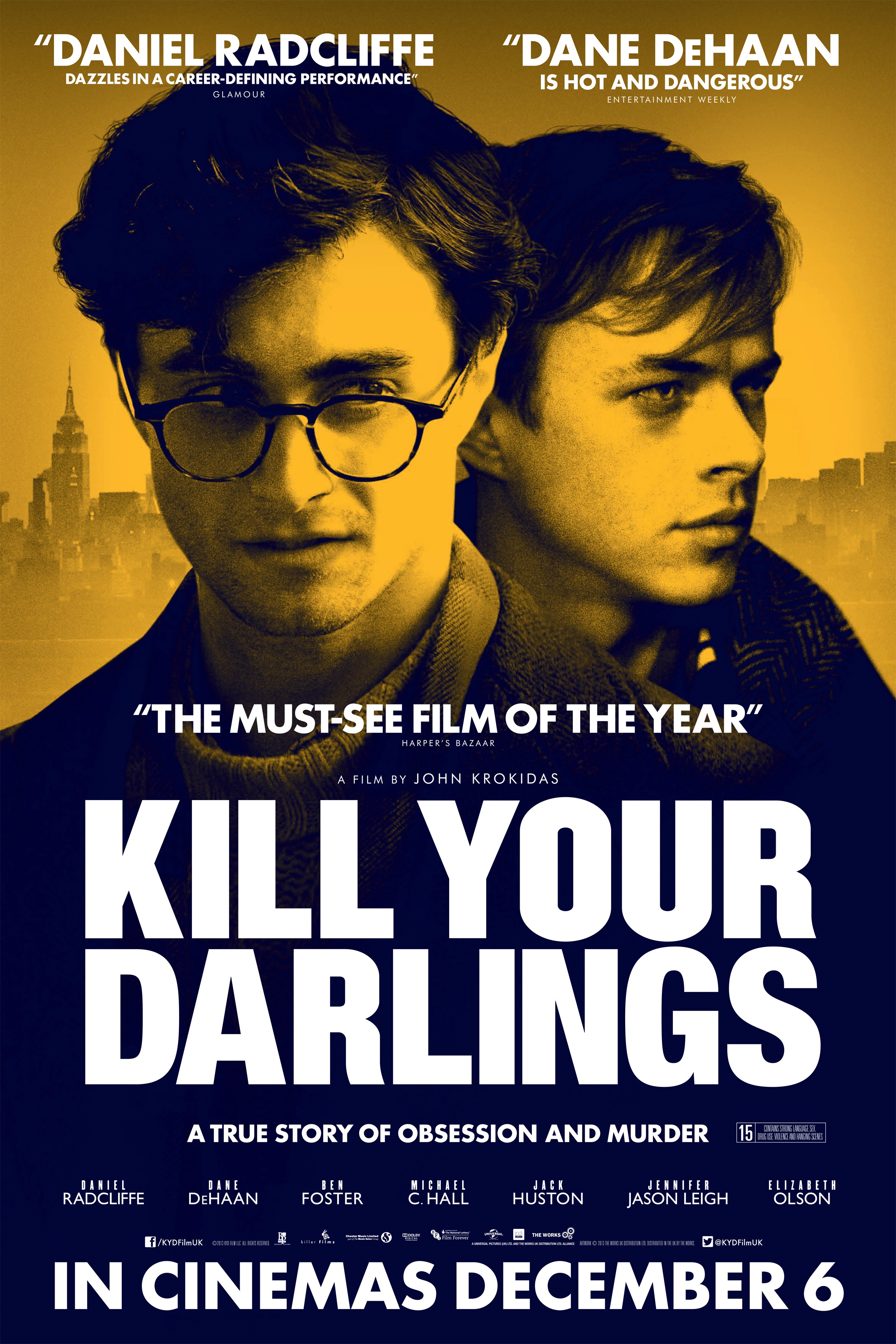
KILL YOUR DARLINGS review

Starring: Daniel Radcliffe (Harry Potter series), Dane DeHaan (Chronicle), Michael C. Hall (Dexter), Ben Foster (The Mechanic), Jack Huston (Boardwalk Empire), Elizabeth Olsen (Martha Marcy May Marlene)

Director: John Krokidas

Writers: John Krokidas & Austin Bunn

Runtime: 1 hour 44 minutes

Release Date: 16 October (US), 6 December (UK)

Despite my passion for writing, I am not one to partake in poetry often. I couldn’t tell you anything about the works of Allen Ginsberg or any other members of the Beat Generation. I have nothing against the form, but it just something I’m not particularly interested. As such, Kill Your Darlings was not a film I saw because I was particularly interested in the subject matter. But if you do take a chance on this picture, I’m sure may find yourself caught up in what it has to say.

Image

Much like poetry, Kill Your Darlings has a story to tell but it is not at the forefront of its goals. That’s not to say that the film is meandering or without point, but the character and themes of the picture is what takes forefront. The film captures that creative spark, that sense of rebelliousness and experimentation one finds themselves in at university age. It feels genuine and you grow to like these characters whether you agree with their acts and beliefs or not. It has its moments of humour and fun, but in the end this is a serious and true tale. It deals with the negative aspects of death, love and life; subject matter fitting for a poem. It moves slowly but surely, but never to the point of tedium. How much of it is 100% true is unknown to me; I am not an English historian. But what matter is that this is a compelling story, and one that I found involving despite my disinterest in poetry. The only mistake I think they made was by starting in media res then going back; I felt it was unnecessary and spoils some of the tension in the third act.

Kill Your Darlings is an actor’s film, and the entire cast gets to show off their stuff in both big and small parts. Daniel Radcliffe has finally managed to shake off the shoes of Harry Potter and really sinks his teeth into the role of Ginsberg. His journey from naïve but troubled boy to poetic genius is a compelling one, made strong by his great performance. But in many ways he is outshined by Dane DeHaan as Lucien Carr, whose true entrance into the story is a memorable scene that immediately tells you what kind of character he is. His chemistry with Radcliffe is wonderful, with moments of friendship, betrayal and even love that seem truly genuine. Michael C. Hall has found an entirely new way to be creepy here, playing a much different kind of weirdo than Dexter fans would expect. Ben Foster is wonderfully bizarre as William S. Burroughs; this is probably his best work in a while. Jack Huston is also good as Jack Kerouac, though his performance isn’t quite as unique or deranged to stand out among the rest of the main players. Even smaller cast members like Elizabeth Olsen, David Cross and Jennifer Jason Leigh provide tremendous work in little screen time, topping off what is a nigh perfect cast.

This is John Krokidas’ first feature, and after watching this I’d say he has a bright future ahead of him. He doesn’t have any immediately noticeable flair to his work, but he knows how to cover action well and there are certain memorable moments of ingenuity, such as an Inception-esque moment in Ginsberg’s head. However, I found the film’s use of playing certain flashbacks backwards a bit odd and it didn’t really do anything for me. The film’s soundtrack captures the feel of the 1940’s, but occasionally too the music feels off.

Kill Your Darlings is a film that mainly rides on the performances of its cast, and it’s lucky that it has such a wonderful one. But the story and themes are good too and, like any great film manages to do, it got me to care about subjects I am not too interested in. This is not just a film for people who love “the fine arts”; anyone who has a passion for creativity and freedom should find something to enjoy here.

FINAL VERDICT: 8/10

CARRIE review

Starring: Chloe Grace Moretz (Kick-Ass), Julianne Moore (Don Jon), Judy Greer (Archer), Gabriella Wilde (The Three Musketeers), Ansel Elgort (Divergent), Portia Doubleday (Youth In Revolt), Alex Russell (Chronicle)

Director: Kimberly Peirce (Boys Don’t Cry)

Writers: Lawrence D. Cohen (Carrie [1976]) and Roberto Aguirre-Sacasa (Glee)

Runtime: 1 hour 40 minutes

Release Date: 18 October (US), 29 November (UK)

The original Carrie, directed by Brian De Palma in 1976, is considered today to be a classic in the horror genre and one of the best adaptations of Stephen King’s work. It may be a little dated by today’s standards, but it is still genuinely thrilling and features a wonderful performance from Sissy Spacek. Now, just like every horror film under the sun, it’s gotten a remake. Does the film justify its existence, or would you be happier living in the past?

Image

If you’ve seen the original Carrie, you’ve seen this one for the most part. Other than some slight updates to modern day and an extended climax, it is beat-for-beat, note-for-note an exact replica of the original film; I swear even half the dialogue is ripped straight from the De Palma version. I can understand that they respect the original, but the best remakes tend to take the original material and give it a new spin; they may add some details or change up the scenario or characters slightly. Here, there’s nothing new for existing fans to make it worthwhile. It’s not quite Gus Van Sant’s Psycho, as at least it isn’t shot-for-shot the same film, but it is a few steps away from it. And even then, a lot of the changes don’t really shake things up much. In this version, Carrie’s incident in the shower is filmed and put on YouTube. You’d think this might make the film more relevant and add a new dimension to her torment. But all it does is extenuate the problems that are already there; it merely adds a bit more fuel to the fire but nothing that seriously affects the final outcome. However, I will say I was impressed with how the climax at the prom has been expanded into a much larger scale event; the advances in technology since the original has allowed the filmmakers to go really nuts and create a much more devastating finale. It almost makes sitting through the first hour of the film worth it. Almost, but not quite.

Chloe Grace Moretz is one of the best young actresses working today, and I was curious to see how she would tackle the role made iconic by Spacek. Unfortunately, as much as she tries, Moretz doesn’t manage to pull it off. Not to speak badly of her acting ability; she’s very good and does manage to convey a lot of empathy and sympathy through very little dialog. But I found she wasn’t quite weird enough in appearance. Spacek had an almost alien look to her, constantly wide-eyed and afraid of herself and her surroundings. Moretz just looks like your typical teenager, but with messy hair and a frumpy dress. And when she comes out of her shell and goes to prom, any sense of her being weird gets washed away and she becomes too normal; even Spacek still looked odd during those scenes in the original. But Moretz still comes across as Laurence Olivier when compared to the banality of the majority of the cast, who are all either bland or exaggerated beyond belief. Wilde and Elgort are pretty standard as Sue Snell and Tommy Ross, going through the motions with little else to do. Judy Greer feels wasted as Ms. Desjardin; her usual comic wit and personality are absent from a role that could have been played by anyone. But the real sour spot comes from Portia Doubleday as Chris Hargensen. Sure, Nancy Allen’s performance was a bit OTT back then, but here it is just plain ludicrous. Her levels of despicableness are beyond cartoonish to the point that you just can’t see this level of behaviour happening in any kind of reality. Getting pissed that you can’t go to prom? Understandable. Having you and your boyfriend plan a cruel prank as payback? A bit much, but not totally improbable. Trying to run her over with a speeding car?! Now you’re just being ridiculous! Even Norman Bates would look at this chick and say, “B*tch, you’re crazy!” But what ultimately saves the film on the acting front is Julianne Moore as Carrie’s mother. Her performance is a bit more subdued but is just as creepy as Piper Laurie’s portrayal of the character. The scenes between her and Moretz really work, but still some elements come across as unneeded. Did we really need to see her job and that she self-harms? I think she’s crazy enough already.

As mentioned before, the main thing that makes remaking Carrie seem like a good idea is the opportunity to ramp up the climax. And the effects team has done a good job of it, really making that last reel sizzle and provide some much needed energy in an otherwise pointless movie. The film isn’t shy on the blood either, and if they used CG blood at any point then it’s probably the best CG blood I’ve ever seen. But in all other areas, everything seems pulled back. The cinematography is much blander, the score isn’t as memorable, and they’ve removed all nudity. Considering the opening shower scene in the original was so iconic, and the fact they easily could have gotten away with it considering they’ve got an R rating anyway, the removal of the nudity alone sums up how much the film feels less like a filmmaker having something to say about the material and more like a studio wanting a marketable film based on an established property.

Watching the remake of Carrie is like replacing your phone with a newer version of the exact same phone: it may have a few new things in there, but it serves the exact same purpose as the old one and what’s new doesn’t add much. Perhaps if I’d never seen the original, I’d be more forgiving of this film considering that most of its problems can stem right back to the original. But that is the root of the problem: I have seen the original, and if given the choice I’d pick it over this version every time.

FINAL VERDICT: 5/10

THE SECRET LIFE OF WALTER MITTY review

Starring: Ben Stiller (Zoolander), Kristen Wiig (Bridesmaids), Adam Scott (The Aviator), Shirley MacLaine (Terms of Endearment), Patton Oswalt (Young Adult), Sean Penn (Gangster Squad)

Director: Ben Stiller (Tropic Thunder)

Writer: Steve Conrad (The Pursuit of Happyness)

Runtime: 1 hour 54 minutes

Release Date: 25 December (US), 26 December (UK)

The Secret Life of Walter Mitty, based on the short story by James Thurber and previously adapted for the screen in 1947, has been in development hell since the early 90’s. Actors such as Jim Carrey, Mike Myers, Owen Wilson, Will Ferrell and Sacha Baron Cohen have all been attached to play the title character at some point, whilst possible directors have included Steven Spielberg, Ron Howard, Chuck Russell and Gore Verbinski (who still retains an exec producer credit on the final product). After much trouble, Ben Stiller took on both positions for himself and now it has finally been unleashed to cinemas. Has all that time spent in the kitchen made for an exquisite dish, or is this turkey overcooked?

Image

From what I’ve gathered, the film is more a remake of the previous film than an adaptation of the original story, but still only very loosely. But in some cases, that doesn’t really matter; if the film is a good piece of work on its own, does it really matter if it follows the source material exactly? But respect for the original text is hardly what is fundamentally wrong with this flick. The film’s plot isn’t that outstanding, full of stock characters, plot contrivances, impromptu inspirational speeches and story beats that we’ve all seen before. However, the mediocrity of this tale is the least of the movie’s problems. After watching the film for a while, it becomes clear that Walter Mitty is a bit of a mess. The film suffers from tonal whiplash in several places, moving from forced sentimentality to off-beat comedy and back again. One minute, you might be watching a wacky fight scene straight out of Dragonball Z, then a few moments later followed by a warm romantic moment between Stiller and Kristen Wiig, and then suddenly into a bizarre parody of Benjamin Button of all things (that honestly seems like a deleted scene from Tropic Thunder). It feels like the filmmakers weren’t sure what kind of film to make so they just threw in everything in an attempt to appeal to everyone. Perhaps if the film had a little more consistency, it wouldn’t feel so scattershot. But the main problem I found was that film wants to look important but it just isn’t. It tries to promote all of these ideas about living life to the limits and pursuing your dreams, but it ‘s all been done before and it comes off as dishonest; they’re trying to be poignant instead of just letting it happen naturally. It feels more like a marketing team trying to be artsy for the street cred rather than someone who actually has something meaningful to say about the world. And for a film that is very anti-corporate, that is incredibly ironic.

Walter Mitty boasts a pretty good principal cast, but most of the talent feels either misplaced or underutilised. The role of Walter Mitty seems ideal for an actor of Stiller’s disposition, but only really on a talent scale rather than a physical one; the 48-year old actor honestly feels too old to be playing a daydreaming simpleton who can’t find a girl. Wiig is also a very talented actress, but her role never allows her to show off her more unique traits; pretty much any actress could have played this role and it would have felt exactly the same. Adam Scott is good at playing douchebag, but that is his one note throughout the entire movie that he repeats over and over. Shirley MacLaine does her best, but her entire presence in the film is the source of many of those aforementioned contrivances, whilst Penn’s role is just an extended cameo. Patton Oswalt provides probably the most enjoyable performance of the picture, and he’s just a voice on a phone for most of it.

The film has a very striking visual style, with beautifully shot landscapes and stark production design. It all looks perfect…and that actually hurts the film. It looks too clean, too constructed. All these shots of mountains and oceans feel less like they’re from an epic adventure story and more like clips from a travel agency ad. The constant and intrusive product placement doesn’t help. Again, all these pretty images may make the film look important but it doesn’t feel important. The visual effects are nicely done and the soundtrack is good, but all of the songs are used to spell out the emotion of a scene rather than just compliment it subtly.

The Secret Life of Walter Mitty is a paint-by-numbers film pretending it’s something more by hiding behind breathtaking vistas and inspirational quotes; a Ben Stiller flick that thinks it’s a Terrence Malick production. The film feels calculated to every detail to be meaningful, but it all feels false. It’s certainly not bad but rather simply bland, and that’s almost worse in some cases. I think the film’s ultimate flaw has nothing to really do with the craftsmanship behind but simply with its goals. It fails to understand that poignancy isn’t something you set out to try and be, and that trying to just makes you look pretentious.

FINAL VERDICT: 5/10

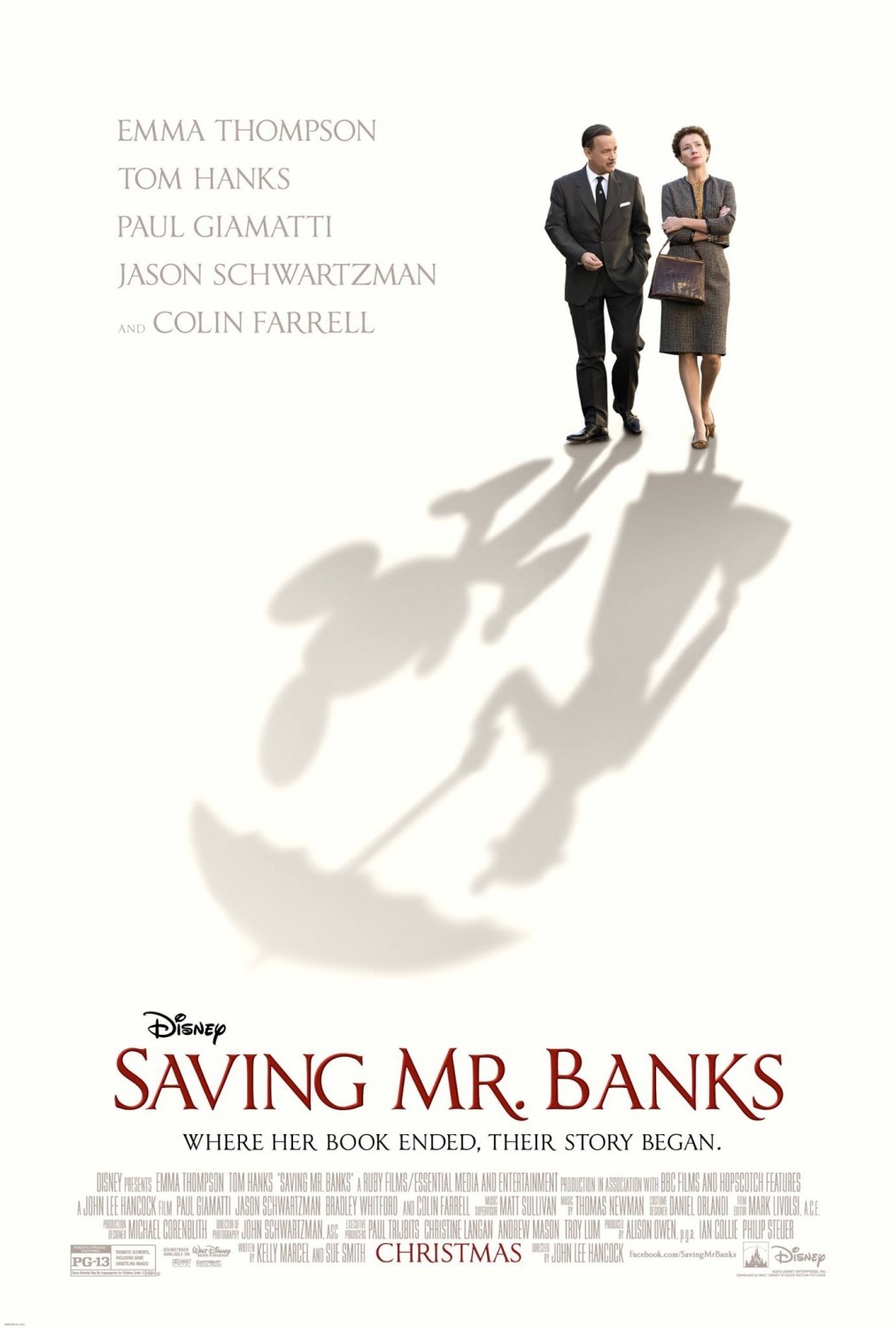
SAVING MR. BANKS review

Starring: Emma Thompson (Stranger Than Fiction), Tom Hanks (Saving Private Ryan), Colin Farrell (Seven Psychopaths), Paul Giamatti (Sideways), Bradley Whitford (The Cabin in the Woods), Jason Schwartzman (Scott Pilgrim vs The World)

Director: John Lee Hancock (The Blind Side)

Writers: Kelly Marcel and Sue Smith

Runtime: 2 hours 5 minutes

Release Date: 29 November (UK), 13 December (US)

I have to be honest here: I don’t really have a strong connection to Mary Poppins. I’ve seen it, I think every child has at some point, but all I really remember are some of the songs and Dick Van Dyke’s accent. So, going into Saving Mr. Banks, I had no sense of nostalgia for the subject matter. But, much like how P. L. Travers is slowly drawn towards the magic of Walt Disney, this film knows how to draw you in.

Image

How accurate Saving Mr. Banks is to the true events surrounding the creation of the Mary Poppins motion picture and P. L. Travers’ life is something I am not aware of. But in pure cinematic terms, this is a well-told if conventional tale. The film’s style is very classical in every way; it easily could have been made in the period in which it is set. It follows conventions and anyone with a keen eye will know where it ends up (the fact that the Mary Poppins film exists should give you a big clue). But it is the way it gets there that makes you care. The film tells two simultaneous stories: one of the creation of the film, and the other of Travers’ childhood. Both are deeply connected (sometimes too deeply at points), but both do an effective job of delving into Travers’ character and showing us who she is. I only wish that the film did a better job balancing between the two. The childhood half of the film is the weaker part, and for certain stretches of time the film focuses on it too much. But my main fault with the film is that it gets a little too melodramatic at points. The film is full of emotional events, tackling subjects often too risqué for Disney films such as alcoholism, but often I found them a little overplayed to milk for that Oscar moment. Considering how Travers spends most of her screen time complaining about the simplified and grandiose nature of Walt Disney’s films, this is somewhat ironic. But on the whole, this is exactly what you want from this type of picture. It’s just a pity that screenwriter Kelly Marcel’s next project is an adaptation of inexplicably popular mummy porn novel Fifty Shades of Grey. Good luck trying to make that seem dignified.

Emma Thompson and Tom Hanks. Two of the world’s most respected actors, sharing screen time together. It sounds like a wonderful idea, and in execution it certainly is. Thompson and Hanks do a wonderful job playing off each other, with Travers’ picky eccentricity clashing against Disney’s playful, endearing nature. The two light up the screen when on it separately, but truly make the movie shine when on together. And no, before you ask, the film doesn’t portray any of Disney’s alleged darker traits; considering the film was made by his own company, that’s not surprising. Their performances are wonderfully supported by a number of recognisable players. Bradley Whitford, Jason Schwartzman and B. J. Novak are terrific as screenwriter Don DaGradi and musicians The Sherman Brothers respectively; much like everyone that meets Travers, their buoyant personalities are perfectly played against her stubbornness. Paul Giamatti also does great work as the affable driver Ralph, whose naivety is both endearing and comical. But the big surprise here is Colin Farrell, who delivers one of his finest performances as Travers’ troubled father. Truly a much more challenging and different role for Farrell, he pulls it off wonderfully and balances that fine line between joyful and drunk.

As said before, Saving Mr. Banks has a very classic Hollywood feel to it, and that extends to the technical details. The cinematography is grand and colourful, but simple and effective as well. The production design is neat and sharp, and the costumes capture the sometimes-gaudy nature of 1960’s fashion well. But it is the music that stands out in my mind the most. Thomas Newman has done a wonderful job reworking many of the songs from Mary Poppins into new forms and they all work spectacularly, especially the new piano-based sombre version of “Chim Chim Cheree”.

Saving Mr. Banks is schmaltzy, but it’s that good type of schmaltz. It’s heart-warming, charming and full of wonderful performances. Whether you’re a fan of Mary Poppins or not, this is a film that can be enjoyed by anyone with a thirst for imagination.

FINAL VERDICT: 8.5/10

THE HUNGER GAMES: CATCHING FIRE review

Starring: Jennifer Lawrence (Silver Linings Playbook), Josh Hutcherson (The Kids Are All Right), Liam Hemsworth (The Expendables 2), Sam Claflin (Snow White & The Huntsman), Jena Malone (Sucker Punch), Phillip Seymour Hoffman (The Master), Woody Harrelson (Zombieland), Elizabeth Banks (Slither), Donald Sutherland (Invasion of the Body Snatchers)

Director: Francis Lawrence (I Am Legend)

Writers: Simon Beaufoy (Slumdog Millionaire) and Michael deBruyn (Oblivion)

Runtime: 2 hours 26 minutes

Release Date: 21 November (UK), 22 November (US)

The first Hunger Games was a success on several levels. Other than the obvious good critical reception and hefty box office receipts, it showed that adaptations of young adult novels could deal with heavy themes and ideas and not just be pandering crap filled with sparkly vampires. But it certainly wasn’t perfect. It dragged at points, it wasn’t always as original as it thought it was, and of course there’s that damn shaky-cam. But now the sequel, Catching Fire, is upon us. Did they bother to fix these problems, or is it just more of the same?

Image

To answer that question bluntly: kind of, yeah. But let me elaborate. The film is structurally identical to the first film in many facets, with certain scenes and events repeated. But amazingly, this never bothered me too much, and I think I know why. Firstly, there are the characters. They certainly haven’t reverted back to the way they were at the start of the first film; the baggage they carry from those events is still strong and it seriously changes the way the film plays out. This is especially obvious when the film does shift gear, as the characters’ reactions to the twists in their path makes them feel that much more vulnerable. Another advantage is that the film doesn’t have to set up our main characters anymore, leaving more opportunities to delve deeper into their psyches and relationships, and the filmmakers certainly take them. Another factor that relates to this is the much stronger writing. The first film occasionally felt a little stilted, unsure how to communicate its ideas fluently. But here, it all flows much better. Character interactions are full of emotion, whether serious or relieving, and the film is so well paced that the extended running time breezes past; in fact, you probably won’t want it to end. But it certainly does, and with a hell of a cliffhanger. Sure, the film somewhat cheats you out of a third act, but the revelations that come in those final moments should have you clamouring to know what happens next. Unless of course you’ve read the books and you know what happens next, and if you did then please don’t tell me.

Catching Fire boasts an expansive cast, filled with both returning players and some welcome fresh faces. Jennifer Lawrence is as incredible as ever playing Katniss, taking what was already a strong character and making her even more sympathetic and awesome; she’s got an Oscar already for a reason, you know. Hutcherson has also developed well as an actor, and his performance as Peeta is great especially when sharing scenes with Lawrence. Harrelson, Banks and Lenny Kravitz return as well, and all get ample time to shine; the stand-out of them being Banks, who gets a couple of great subtle moments that hint that Effie isn’t just a shallow waif. Donald Sutherland gets a much bigger role this time round as the villainous President Snow and truly relishes his screen time; an early scene between him and Lawrence is just deliciously taut. The new characters are equally terrific, often stealing the show from our heroes. Claflin’s Finnick is a brilliant addition to the cast; he’s powerful and charming in equal measure, but still with an air of mystery around his intentions. His performance is not only a stark contrast to Claflin’s whiny pointless role in the fourth Pirates of the Caribbean movie, but it also works as a great audition tape for him to play Aquaman (sorry, I know everyone’s already made the joke, but I couldn’t resist). Equally kick-ass is Malone as Johanna; her rebellious, no-bullsh*t attitude helps her stand apart from the others, and her introductory elevator scene perfectly encapsulates everything about her (trust me, you’ll see when it happens). Jeffrey Wright, Amanda Plummer and Lynn Cohen are also welcome additions, though they don’t get as much screen time as the other main players. Hoffman’s appearances are also limited, but he squeezes every moment for what it is worth and I think we’ll be seeing more of him later anyway. But, as with the last film, the weak link here is Liam Hemsworth as Gale. And I don’t completely blame this on Hemsworth as an actor; I just find the character of Gale seriously underwritten. He’s supposed to be Katniss’ true love, but I don’t at all get what is appealing about him. He’s just a bit bland to be honest, but Hemsworth doesn’t do anything to help elevate the material he’s given (something which his brother is very good at).

Remember that annoying shaky-cam from the first film? Remember how it obscured everything and got on your nerves? Well, it’s pretty much gone; the cinematography is much steadier here. Sure, the action is still fairly bloodless and isn’t shot or edited as fluidly as it could be, but it is still a massive improvement. It’s clear that this movie has a much bigger budget than the first film, as everything has been upped a notch since last time. The production is grander, the costumes are more extravagant (if you can even believe that), and the effects have received a much-needed update. Top it all off with a rapturous score from James Newton Howard, and you’ve got yourself a nice looking picture.

Catching Fire is a massive improvement on all fronts. It takes everything good about the first film and improves it, but also takes what wasn’t so good and fixes it. It is the Empire Strikes Back of the franchise, both in terms of story and achievement. As just a pure piece of entertainment, it is one of the best blockbusters of the year. Filmgoers who were perhaps a little underwhelmed by the first one should give this one a watch; hopefully they will enjoy it much more. And now to wait for the final chapter…wait, they’re splitting it in two?

FINAL VERDICT: 9/10

THE COUNSELLOR review

Starring: Michael Fassbender (Shame), Penelope Cruz (Vanilla Sky), Cameron Diaz (The Mask), Javier Bardem (Skyfall), Brad Pitt (Moneyball)

Director: Ridley Scott (Gladiator)

Writer: Cormac McCarthy (No Country for Old Men [novel])

Runtime: 1 hour 57 minutes

Release Date: 25 October (US), 15 November (UK)

Ridley Scott and Cormac McCarthy. Both of them highly respected in their respective arts. One of them has created some of the most memorable films in cinema history (just not recent memory), whilst the other has written books that have enjoyed great success and both novels and film adaptations. The idea of the two of them teaming up seems like a good proposition. But much like the title character of The Counsellor finds out, sometimes plans like this can fall apart and come back to bite you in the arse.

Image

The Counsellor immediately stumbles out of the starting gate due to its script. Most Hollywood films have the problem of being underwritten, but this film is a rare case of a script that is overwritten, at least in the dialogue department. The characters almost constantly talk in odd metaphors and soliloquies, jumping from one random subject to the next and it all ends up just cluttering up the place. Most of it is rambling nonsense that could easily be excised, and the anecdotes that do end up coming back are brought back in so long after that you’ve forgotten by then. It’s all just pretentious blabbering in an attempt to make the film sound more sophisticated than it is. Because if you strip away all the fancy dialogue, The Counsellor’s plot is pretty basic crime thriller stuff. In fact, a lot of elements of the story are eerily similar to plot elements of McCarthy’s most famous work No Country for Old Men. But where that film managed to balance between story and message rather well, this one is just a shambles. The film’s pacing is very sparse, but does pick up considerably during the more intense moments, and it’s these moments where the film shines a bit brighter. There’s some violent and realistic gunplay on display that really crackles, and there’s some gory moments that truly work. But these elements are scarce in a sea of self-important waffle. I get the feeling that everyone involved was too revering of McCarthy’s work to change it or maybe he had a clause in his contract that the script couldn’t be changed. Either way, perhaps if someone had come in and cleaned up the script then perhaps we’d have a better film.

The Counsellor is jam-packed with recognizable actors. Pity that none of them have anything to work with. Every character is so underwritten that everyone has little to no personality, and that reflects badly on the people who have to portray them. Fassbender, one of the best actors working today, does his best with the material but still fails to create any empathy for a character whose background, motivations and even his name remain completely mysterious. Cruz is stuck with nothing to do, and whose only purpose seems to be to give Fassbender’s character something to live for. Bardem spends the whole movie looking like a coked-up Hispanic Goku, whilst Pitt lounges around in a cowboy hat spouting “words of wisdom”. Actors like Dean Norris, Natalie Dormer, Bruno Ganz and Toby Kebbell all turn up for thankless bit parts, presumably there due to the pedigree of Scott and McCarthy. The only one whose performance stands out, even if it’s due to the insanity of it, is Diaz’s. Her character’s extravagant wardrobe and funky hairdo only hint at a truly deranged and ludicrous character, and her presence provides some of the more memorable parts of the movie. Watch out for a scene involving her and a Ferrari; it is truly unbelievable.

Scott has always been a master in the technical department, and his expertise is very clear here as well. The film is beautifully photographed by Dariusz Wolski, which features some great landscape shots and vibrant, dynamic colours. The editing is occasionally odd; there’s one scene where Fassbender and Bardem are talking, and then we cut to them standing in vastly different positions but the flow of conversation remains the same, almost as if they cut out a big chunk of the scene (which, considering the nature of the dialogue, is probably a good thing). The score is good if somewhat out of place; it sounds like it belongs more in a Robert Rodriguez movie more than a Ridley Scott one.

The Counsellor is a mess of a film. Some good moments do shine through, but most of it is just mediocrity hiding behind pretention. I had flashbacks to the similarly plagued Only God Forgives at several points, but at least this film had a cohesive narrative and some semblance of character. This film is further evidence that Scott is not quite the same man he used to be, as he slowly seems to be following in the footsteps of Oliver Stone. But more importantly, this film proves that perhaps McCarthy isn’t as great as everyone initially thought.

FINAL VERDICT: 4.5/10

DON JON review

Starring: Joseph Gordon-Levitt (Looper), Scarlett Johansson (The Avengers), Julianne Moore (Crazy Stupid Love), Tony Danza (Crash)

Writer/Director: Joseph Gordon-Levitt

Runtime: 1 hour 30 minutes

Release Date: 27 September (US), 15 November (UK)

Many actors have attempted to make the leap into the director’s chair. Sometimes, they make great films; George Clooney and Ben Affleck are great examples of this. Other times, the results are mixed such as the spotty filmography of Mel Gibson and Kevin Costner. And then there’s William Shatner. Need I say more? So now that Joseph Gordon-Levitt has gotten his chance to call the shots, which camp does he fall into?

Image

Don Jon does follow the typical structure of the romantic comedy almost exactly, but it gets away with it because it is aware of it; an early scene where Jon (Gordon-Levitt) deconstructs the plot of every rom com shows that the filmmakers are very aware of the genre conventions and the film certainly knows when and where to go off the beaten track. The film is very well paced, mainly thanks to the efficiency of the film’s set-up. Gordon-Levitt never lingers too long on things, giving you everything you need to know and keeps things moving forward; he briskly moves you through the story without ever making you miss a beat. The comedy is well written and down-to-earth, and the film also manages to pack an emotional punch when it needs to. But in other areas, it is clear that Gordon-Levitt is still learning the ropes. The film gets itself into a very repetitive rhythm, repeating certain shots and types of scenes; by a certain point, you can almost predict how one scene leads into another. Sure, I can get what they were going for and it makes more sense by the end, but it did start to grate on me by the seventh bloody time this guy goes to church. And, whilst I did find the conclusion to be satisfying, I don’t think the ending is as original as they think it is. But all in all, this is for the most part a well-crafted picture with plenty of drama and laughter.

With the man wearing three hats here, you’d think Gordon-Levitt’s acting would take a hit. Nope. He’s as great as ever. The character of Jon is a change of pace for the man; a character that isn’t quite as pleasant or as intelligent as roles he has played before. But he remains convincing throughout, making you sympathize with his situation but also wanting him to develop and get past his issues. Johansson is also wonderful here, portraying perfectly that kind of woman who can play a man like a fiddle without either of them realising it. Moore is as good as she always is, though I feel she isn’t stretching as far away from her usual persona as everyone else is. Danza and Glenne Headly are brilliant as Jon’s parents, making the concept of the bickering couple seem fresh again. The only casting choice that had me somewhat puzzled was Brie Larson as Jon’s sister. I’m not saying there’s anything wrong with the part or Larson as an actress; I just found it odd that they cast a recognisable face like hers in a part that requires her to do almost nothing for most of the movie. She’s like a female Silent Bob, and honestly anyone could have played her.

In technical terms, Don Jon doesn’t do anything astounding but it’s not that kind of movie. There is some simple but good cinematography on display here, and some nice lighting touches such as the way Johansson’s character is always lit in glowing light no matter how dark the environment is. The soundtrack is well done too; it’s cheesy at points, but I think that was the point.

Don Jon isn’t just a good effort from a first-time director. It’s a pretty good film on its own too. It’s funny, it’s engaging, it makes some good analysis on the conventions of the romantic comedy and it twists them around to fit a more real world. It’s certainly not perfect, but for a first effort it is pretty astounding. With more time and practice to hone his skills, Joseph Gordon-Levitt has the potential to be up there with the high echelon of actors-turned-directors.


FINAL VERDICT: 9/10