
THE BRUISES ON MY LIFE – my history of abuse in “elite” education

In the ongoing living nightmare that is the sexual assault allegations mounting against SCOTUS nominee Brett Kavanaugh, a frequent defence used by the right-wing media in their attempts to diminish the stories of his accusers (at least the ones who aren’t outright claiming it never happened) is the old “boys will be boys” excuse. They claim that this is normal behaviour for a teenage boy, that they meant nothing by it and were just joking around, and that Christine Blasey Ford, Deborah Ramirez and Julie Swetnick are simply exaggerating harmless events for political gains. These assumptions are vile and destructive and enable the cycle of violence that keeps toxic masculinity alive in our society, but they are of course far from new.

Survivors of sexual harassment and assault have been forever seen as hypersensitive and untrustworthy, but especially so for those whose experience didn’t go as far as rape. They are made to be seen like what they went through was nothing because they weren’t “actually harmed”. But physical damage isn’t required to cause trauma. Sometimes, mental and psychological effects can be just as or even more damaging, leaving scars on the soul that may never heal. I know this because, though I never experienced anything quite as harrowing as Dr. Ford et al, I spent my adolescence in an environment not too dissimilar to Kavanaugh’s Georgetown Prep, and the scars I received there are still bleeding.

My parents, in the hopes of improving my education, sent me to a prestigious UK boarding school at the age of twelve. As a pudgy closeted trans girl who was neither academically nor athletically inclined, I was like a ripe piece of meat dropped into the lion’s den of these entitled hormone monsters. I had spent most of my life up to this point in state education. Most of these boys had spent their entire lives in some form of privileged education, growing up in an environment that constantly reassured them that they were better than everyone else. I had no chance of making it out of here unscathed.

For six years, this was my life. This wasn’t just inconsequential gibing on the school playground. This became nearly every moment of my life not spent in a classroom. I couldn’t even sleep without fear of something happening to me. What I faced at that school encompassed a large span of the abuse spectrum. There was simple name calling and social rejection, which then might escalate to the spreading of disparaging rumours and public embarrassment, then on up to the stealing and/or destruction of personal belongings, followed by direct physical and emotional torment, all leading up to the ultimate act: borderline sexual abuse. Rarely did it reach this culmination point, but on the times it did, they were the moments that broke me the most.

Now let me make it clear: I am not a victim of rape or attempted rape, and the students involved probably wouldn’t classify what they did as sexual abuse. I do not want to conflate what I endured with survivors of far more despicable acts. But on the other hand, and this is what so many of these allegation deniers so infuriating, that doesn’t make what DID happen to me OK.

The shameful acts inflicted upon me and, worse, the ones I was forced to inflict upon myself, still haunt me to this day. They didn’t know I was a girl at the time, and neither did I fully to be honest, but if I had been a cis girl enduring these events, there’s no question what I endured would be classified as sexual abuse. And it’s not like this was info privy only to me and one or two abusers. They told their friends about it. Sometimes, they even filmed it and shared it with who knows how many people.

And the worst part is I was made to feel like I deserved it. My bullies saw everything they did to me as a joke. The vast majority of the time, the other boys just stood there and watched; sometimes they were even coerced to join in. Any time I looked for help from teachers, my pleas were usually brushed off. I was told I needed to take a joke better, to man up and learn to put up with the changing room banter. And why should they have believed me? The boys I kept talking about were model students in their eyes, doing the school proud in their studies and sports performance and acting perfectly mature whenever they were around. From their optics, they thought I was being overly sensitive and needed to mature. But that doesn’t mean they had to do effectively nothing, and by doing so it just enabled my tormentors’ behaviour. And no, I didn’t tell the teachers about the sexual stuff. I was shamed and embarrassed into silence, and I feared the teachers would brush it away just like everything else.

I was gaslit by this constant torment into believing that I was the problem and that no one was willing to help me. I was constantly told that I was an anti-social freak, that all of the girls thought I was weird and disgusting (and any time they showed signs of sympathy was just disingenuous pity), and that I’d never achieve anything in life. I vividly remember one time, a boy literally grabbed my head, forced me to stare into his eyes, and directly told me that I was worthless and that nobody could ever like me. I owe that one moment for why I, to this day, struggle keeping eye contact with people in conversations.

Six years of this does a lot of damage to a developing mind, and I’m still unravelling the number it did on mine. I went from a shy but good-natured child to a cold and perpetually anxious human being. I was forced to try and make myself the kind of person this school would accept, essentially disassociating my mind from my body, and it only further drove me into depression. Some days, I could cope just fine. Others, I struggled to even stay sane. Sometimes, it would take just a few little acts to drive me over the edge, and that’s exactly what happened on the day of my vain attempt at suicide at age fourteen. I didn’t really want to die that day. It was just a last-ditch attempt at getting the help I needed. It never came.

If you met me between 18 and 24 and found me a bit distant and odd, it was because of experiences like this. This period of my life made me harbour a deep mistrust of people and their intentions. I’m often still waiting for that moment everyone will turn around and laugh at me. I know the real world doesn’t work like that, and I’ve done my best to fight those fears and just be myself, but I was conditioned for years to expect that; I was made to believe it was what I deserved. I’m a much happier and more cognisant person these days, surrounded by friends who do care about me and love me for who I am, and that’s mainly come from deprogramming everything I learnt about who I had to be at that school and discovering who I want to be.

And you think now maybe these people regret their actions? That they too have moved on with their lives and learnt to become their own independent people? Some of them, maybe. To be honest, I’ve cut ties with most everyone from that time in my life. But in a lot of cases, people brought up in that bubble tend to stay in it, and the Kavanaughs of the world continue to look back upon that time fondly, completely unaware of the trauma their adolescent fun left in others’ lives.

Screen Shot 2018-10-01 at 23.23.46

I remember seeing this post several years ago pop up in my Facebook timeline. I’ve censored all names, including my own deadname, but I’m the one this guy fondly remembers “tormenting”. He brings it up in passing like a good memory; a bonding experience between him and his friends. (The other boy referenced they were “wedgying” was Muslim by the way, so not much respect for others’ religious practices either). This was about three years after graduation. They still think this was funny. And they claimed I was the one who just needed to grow up.

Privileged educational environments like the one I suffered in and people like Brett Kavanaugh thrived in are a breeding ground for the worst kind of toxic masculinity. Children and adolescents are being thrown into these environments and asked to sink or swim, and those who prosper in these places go into adult life with an enormous sense of entitlement. Some of them experience the real world for the first time then and realise their behaviour is wrong, but many don’t. Mainly the ones who end up in politics.

I’ve known many a Brett Kavanaugh in my life, and if he’s the kind of person who still holds what he did in high school as a highlight in his life, he’s not someone who should represent the people of America. I can only imagine the horrors his victims have endured, but from my experience I have a pretty good idea what it’s like to be subjected to the fleeting whims of an entitled brat who has never been punished for their arrogance.

This culture of toxic masculinity needs to end, and a good place to start is to stop enabling this kind of behaviour in our schools. Stop teaching rich kids that they are better than everyone else. Stop excusing reprehensible behaviour because they are good at maths or can throw a ball really well. Stop belittling the experiences of victims and telling them they should “man up” and learn to be more like their oppressors to survive. Future generations should not have to put up with backwards crap like this, and we can make a difference if we make sure these abusers can’t use their privilege to bully the entire world when they become adults.

#MeToo #BelieveSurvivors

I WISH I WAS A GIRL: pretty much my life so far

I recently read this inspiring Twitter thread by Huffington Post journalist Kimberly Yam. She talks about growing up hating her racial heritage as the child of Chinese immigrants due to cultural racism, and only learning to embrace her identity in adulthood when she realised how much she lost as a result. Give it a read here: https://twitter.com/kimmythepooh/status/1030606408365027334

Reading this, I felt so much empathy. Growing up as a closeted trans girl, I experienced similar feelings of self-hatred and attempted to suppress them. I’ve talked a bit about my own personal experience in my web series, but I’ve not gone into full detail. Reading Yam’s thread, I felt inspired to do something similar.

I originally wrote this to be a Twitter thread…and then realised it was way too long. So here it is on my blog. I’ve spared more specific details like names and places, but otherwise this is the truncated truth…


Age 5

I’m mostly friends with boys. I make one female friend. All my guy friends now won’t hang out with me. They say boys don’t play with girls. I’m forced to disown my friend. I hate being a boy.

Age 6

I get a new winter coat. It’s silver and shiny. I think it looks cool. I go to school wearing it. Turns out a girl in my class has the same coat. I’m made fun of for wearing “a girls’ coat”. I never wear it to school again. I hate being a boy.

Age 10

I struggle to fit in with the boys. I’m delicate, I’m naïve, I’m effeminate. I do my best to be one of them, but I hate it. I prefer hanging out with my sister’s friends, though I’ll never admit it. I wish I was a girl.

Age 12

I’m sent off to boarding school. The boys there are meaner. The bullying gets worse. One time, the girls notice me forced to sit alone at breakfast by the boys. They sit with me. They comfort me. They get the teachers involved. It helps, but not much. I still feel alone. I wish I was a girl.

A couple of friends decide to dress in drag for a school disco. I decide to help, along with several girls. The girls offer to dress me up too, but I refuse. Deep down, I really want to, but I’m afraid I’ll be made fun of. I wish I was a girl.

Age 13

The torment continues. I’m made to believe that I’m weak, that I’m worthless, that all the girls think I’m disgusting. Other students rarely intervene. Any attempt to seek help from teachers is usually met with a variation on “man up”. Far worse happens, but there are some things I won’t share; those wounds haven’t healed yet.

I ponder if my life would be easier if I was born a girl. It feels so right, but I dismiss it. That can’t happen. I’m a boy, and so I have to be one.

Age 14

I reach a tipping point. After one bad day, I attempt to strangle myself with a tie. I don’t intend to kill myself. This is a desperate cry for help. I hate being a boy, but I can’t be a girl. Why can’t I be me? Someone finally notices. Things get better, but not for long. I wish I was a girl.

Age 15

Puberty rears its head. I egg it on. I’m often picked on because I look young and effeminate. Maybe if I look like a man, that’ll finally stop. Maybe I’ll even feel like a man.

That doesn’t happen. I just hate myself more. I wish I was a girl.

Age 16

My only friend gets expelled. The bullying stops being so blatant. Now, I’m just isolated. I don’t fit in anywhere. With no other options, I commit to being a boy to survive. I don’t care about trying to fit in. I don’t care what anyone else thinks. I just want out of here.

My drama teacher mentions the concept of the gender spectrum. I immediately relate. Could that be me? Could I have been a girl all along? I dismiss it. “I’m normal”, I convince myself. “That happens to other people.”

Age 17

I’m alone in the house. I end up in my sister’s room for some reason. I see her clothes lying out. I get the sudden temptation to try them on. I resist. What if someone came in and saw me?

I start researching the trans community. I see how mistreated and isolated they are by society. I relate so much, but I deny it. I already feel mistreated and isolated. I don’t want to make my pain any worse.

Age 18

I finally get away from high school and head off to uni. I find myself surrounded by generally nice people. I begin to rebuild my self-confidence, but I still feel empty. Being a boy has been so knocked into me, I struggle to break free. I’m afraid of what will happen if these people I’ve grown to love see the real me.

Age 20

I decide I want to be a writer. I find that my protagonists more often than not end up being women. I don’t know why. I just intrinsically feel more comfortable writing from their perspective. I wish I was more like one of my characters.

I volunteer at my local film festival. Most of my fellow volunteers are women. I allow myself to socialise exclusively with women for the first time since childhood. I feel comfortable. I feel like I belong. I wish I was a woman.

Age 21

I’ve been living with my parents since finishing my BA. They go off on holiday, and I’m left alone in the house. I’ve been watching Sense8. I relate to Nomi so much; she’s the first trans person I’ve seen who isn’t someone to be pitied, laughed at or worse. I want to be like her.

I find myself in my sister’s room again. I search through her clothes and make-up. This time, I know nobody will suddenly walk in. I give in to the temptation.

Everything suddenly feels right. Then I look at myself. I cry. All I can hear in my head are the judgement of others. The ridicule, the rejection, the hatred. I give up. I tear off the clothes, wash off the make-up, and vow to never give in to that feeling again.

I break that promise almost immediately.

Age 22

I’ve been raiding my mother and sister’s wardrobes on and off for a year. The temptation comes and goes. Gaps between these indulgences are sometimes mere days, sometimes months. Every time I finish, I tell myself it will be the last. I don’t believe I’m trans, but only because I’m afraid of what might happen if I’m wrong. I feel like I need someone to tell me I am trans, but I’m too afraid to talk to anyone about it.

Age 23

I get accepted onto a master’s course. I leave behind all my feminine possessions. I vow to be a man again. I am basically putting myself to the test. If I can survive this without temptation surrounding me, maybe I’ll be rid of these thoughts.

I quickly find myself socialising almost exclusively with women again. My self-confidence takes another boost. Maybe I can be happy being one of the girls without going that far? This feeling doesn’t last long.

One of my friends slowly drifts away. Eventually, she won’t even talk to me. Much later, I would find out it was because she thought I had a crush on her. I had suspected as much. I feel rejected. I am reminded everyone sees me as a man. My self-confidence dives as low as it has been since I was a teenager. I wish I was a woman.

I begin jumping back into old habits in private. I really begin to hate myself. I feel like nobody sees me, but I’m still too afraid to break the façade. I am trapped in the fortress I built myself, and now it’s beginning to starve me.

I cry myself to sleep every night. I dream about finally having the courage to be myself. But every morning, I wake up back in my body. The body I hate more and more every day. I can’t stand to look at myself in the mirror. I feel a great pang of pain every time I hear, say or even see my own name. Everything is a reminder.

Again, it takes one bad day for me to break down. But this time, I don’t try to hurt myself. I stop denying feelings in the attempt to make things easier. I take a look myself internally and make a decision. If I so badly wish I were a woman, I should pursue that. I jump back into research with earnest and start making arrangements to see a counsellor.

Age 24

I finish my master’s. I decide to move in with a friend from uni. Before I do, I come out to him in a fit of tears after hours on the phone unable to spit it out. He accepts me immediately. A few weeks later, I come out to my family. They are quick to remind me they love me no matter what.

I move in with my friend. I meet his new girlfriend; the first person to only know the real me. She accepts me without question. I come out publically on Facebook. I am met with nothing but encouragement and support from close friends and those I haven’t seen in years.

My friend gets me a temp job at his work. For a variety of reasons, I present male. The dysphoria is more obvious than ever. Every day, I just want to go home and be myself. After calling in sick after an intense anxiety attack the previous day, I am amicably let go. I can’t go on pretending any longer.

I struggle to find a new job at first. I decide to be myself in interviews; after all, that’s who they’re hiring in the long run. I’m constantly afraid of what other people think of me. A lot of my prospective employers clearly have no idea what to make of me.

I begin presenting female full time in public and legally change my name. Soon after, I secure a job. I enter my first major social group as myself. The usual anxieties of fitting in rear their head. To my relief, I am welcomed with open arms. For the first time in my life, I feel like I belong.

My job involves a lot of public interaction. As a result, I’m met with a lot of misgendering. It upsets me, but I soldier on, and my co-workers are there to console me when it gets particularly bad.

After a few months of back-and-forth with counsellors and doctors, I get prescribed HRT. Within mere weeks of starting, I feel so much better. The fog of self-hatred begins to lift. Slowly, the misgendering grows less and less frequent. My body has begun to synch up with my mind, and it feels so right.

Age 25

I’ve been out publically for nearly a year now and on HRT for six months. My job is simple but I don’t mind; I’m slowly working on my writing ambitions whenever I can. Right now, I’m just trying to be me. I still have my dark days, but I can control those feelings better now. I now know I have people around me I can trust whenever I’m in trouble. I’ve still got a way to go in my transition aspirations, but I’m in no rush. These things take time, and I’ve already come so much further than I could have imagined when I started.


I write this to show the journey I have been on. To show how this confused and lonely child grew to love herself when no one else could see her. To inspire those young trans kids who are struggling themselves, to remind my trans brothers and sisters that every trans story is unique, and to educate everyone else on what it feels like to grow up not knowing who you are.

This is my story. You can’t take it away from me. You can’t tell me how to live my life anymore, because I’ve spent most of mine living for others already. I’m ready to forge my own path as the woman I deep down have always wanted to be. I’ll tell you all about where I’m going when I get there.

FullSizeRender-2

INCREDIBLES 2 – an Alternative Lens review

Starring: Holly Hunter (The Big Sick), Craig T. Nelson (Poltergeist), Sarah Vowell (A.C.O.D.), Huck Milner, Bob Odenkirk (Better Caul Saul), Catherine Keener (Being John Malkovich), Samuel L. Jackson (The Avengers)

Writer/Director: Brad Bird (Ratatouille)

Runtime: 1 hour 58 minutes (+ 8 min short Bao)

Release Date: 15 June (US), 13 July (UK)

Of all the films in Pixar’s catalogue, The Incredibles was the one that screamed the most sequel potential from the moment the original finished. It established an imaginative world with a fresh take on the superhero genre through the lens of a family drama, telling a story that was arguably even more entertaining for the adults than the kids. It showed that Pixar could do more than just cuddly creatures and step into more nuanced territory with its storytelling and characters, and yet plans for a sequel were always nixed due to Brad Bird not wanting to disappoint with a lacklustre follow-up. And so 14 years later, with Pixar mining their IPs for sequels more than ever and Bird in need of a pick-me-up after the financial failure of Tomorrowland, we finally return to the world of supers in Incredibles 2. Has Bird finally managed to crack that sequel idea that’ll live up to the original, or is this just more brand management from the House of Mouse?

Picking up right where the first film left off, Incredibles 2 does a fantastic job of bringing the audience right back into the world as we knew it and effectively reminding them of its core themes. However, once the main plot rears its head, it doesn’t do a huge amount to innovate on a narrative level. The film’s story is far too reminiscent of the first instalment, once again having our hero be brought into a scheme that allows them to relive their superhero glory days that turns out to be a massive scheme by a hidden evil who feels wronged by supers in the past by manipulating the public’s perception of heroes. All of the individual details are fresh, but all in all it’s basically the same plan and, considering in film time the Parrs literally just got done dealing with Syndrome mere months ago, it feels odd that they’d fall for this ploy again so soon. It’s a shame, because everything built around the story is executed excellently. The pacing is sharp, the humour lands, the action sequences are frequent and exploding with imagination, and there is strong development in regards to its themes of family. Surprisingly, it’s all of the political and civil rights discussion the film has in regards to superhero rights that fascinates most, and it’s a shame the film doesn’t expand on this further instead. Instead, it feels sidelined to accommodate for the more pedestrian main plot, which already feels watered down compared to the first.

Whilst the story of Incredibles 2 doesn’t move things forward quite enough, on a character front it adds ample amounts of development in satisfying ways. The decision to focus the film more on Helen not only shakes things up but alleviates fatigue; Bob already had his character arc in the first film, and spotlighting him again would threaten to degrade his development. The dynamic of giving Helen the platform to be the premiere superhero whilst Bob is forced to deal with his inadequacies at home works as a great balance, and thankfully doesn’t go down obvious routes. Violet and Dash’s arcs feel less focused, with Violet pulling a full 360 by reverting to her emo self from the first and then coming back again in time for the third act, whilst Dash…struggles with homework? Yeah, Dash feels like the only character who really suffers from having his development completed in the first film and therefore has nowhere to go here. All of the stuff with Jack Jack is where most of the film’s comedy comes in and, even though its mostly just the short Jack Jack Attack expanded, it’s still an imaginative delight to see how insane they can go with his seemingly-limitless power set. Thankfully, their family dynamic as a whole feels stronger than ever, and to see more of them fighting in tandem here is one place where this film does succeed over the original.

Frozone and Edna Mode also return, but they ultimately feel like throwaways; Frozone basically comes in and out when the plot needs him for exposition or his powers, whilst Edna just repeats her schtick from last time whilst providing a mostly-innocuous plot item. In terms of new faces, Winston & Evelyn Deavor are fine enough but feel a little stock as the eccentric philanthropist and his put-upon sister really running the show respectively. There’s a lot of hinted-at depth concerning how Winston uses his childhood obsession with superheroes as something of a coping mechanism, or the burgeoning connection Helen has with Evelyn as powerful women often overshadowed by their male counterparts, but by the third act things are moving so fast that nothing ever really comes of these ideas. The new generation of superheroes introduced feel really undercooked, with Voyd being the only one with any vague sense of character whilst the others are just visual gags, and our villain Screenslaver lacks the unique personality and personal connection to the hero that made Syndrome such a fascinating and memorable foe.

On a technical level, Incredibles 2 certainly surpasses the first film, and not just because of the technological advancements in computer animation. The action sequences are the real showstopper here, pushing the versatility of our heroes’ powers to the limits and captured with whipsmart camera movement, editing and fluidity of animation. From the opening Underminer sequence to the climax that spans land, air and sea, the film certainly empties the bowl on action scene ideas to deliver a visual spectacle that never ceases to entertain; my only worry is that they’ve kind of expended so many ideas here that I worry how they’d do a third if they wanted to. Michael Giacchino got his big break in film composing scoring the first Incredibles, and here he brings his unique blend of 60s jazz and John Barry music to fashion a soundtrack that perfectly compliments his prior work.

Incredibles 2 feels more like an expansion pack to the first film than a full-fledged sequel: it adds some entertainment value and some great new ideas, but it’s still working from the same assets for the most part. For over a decade of waiting, it’s slightly underwhelming to see what Brad Bird and Pixar have come up with, especially since the world they created is screaming out with so many more possibilities for more nuanced tales. That said, there’s more than enough here to entertain as a summer blockbuster for the whole family. The Parrs themselves are better than ever, and the action sequences and animation are some of the best work I’ve seen from both Bird and Pixar in general. I’m thankful it’s more of a good movie formed from lacklustre ideas rather than a bad one failing despite good intentions, and I know that it could never meet expectations after that much build-up, but I can still hear the screams of a better movie hiding inside this one that I would much rather see. I’m glad Pixar has pledged they are going to work on more original ideas after this and next year’s Toy Story 4, but even after this I’d still be interested in an Incredibles 3 so long as it takes the story in a bolder direction.

FINAL VERDICT: 8/10

cropped-screen-shot-2017-10-01-at-19-46-22.png

JURASSIC WORLD: FALLEN KINGDOM – an Alternative Lens review

Starring: Chris Pratt (Guardians of the Galaxy), Bryce Dallas Howard (The Help), Rafe Spall (Life of Pi), Justice Smith (Paper Towns), Daniella Paneda (Sleeping with Other People), Isabella Sermon, James Cromwell (Babe), Toby Jones (Captain America: The First Avenger), Jeff Goldblum (Thor: Ragnarok)

Director: J.A. Bayona (A Monster Calls)

Writers: Derek Connolly (Safety Not Guaranteed) & Colin Trevorrow (Jurassic World)

Runtime: 2 hours 8 minutes

Release Date: 6 June (UK), 22 June (US)

I haven’t bothered to rewatch Jurassic World since it came out it theatres three years ago. In fact, what little I remember about it at this point is all the negative stuff; invisible dinosaurs, raptors being trained for military service, Bryce Dallas Howard running through the jungle in heels, etc. I had to look at my old review of it to even remember I gave it a 7/10, but reading my thoughts then suggest it probably should have been a lower score. Without even seeing it again, I think this is another Star Trek Into Darkness situation for me.

Whatever the case, the fact I haven’t exactly been compelled to revisit it shows how much of an effect it had on me. But the film made a bajillion dollars based purely on nostalgia, so of course a sequel was inevitable, but at least my expectations were much lower going in this time. Maybe with this one, they could address the problems of the first and make a film truly deserving of comparison to the original Jurassic Park. Well, scratch all those expectations, because Jurassic World: Fallen Kingdom doubles down on the stupid and easily takes home the title of worst film in the franchise. Yes, worse than the third one with the talking dinosaur dream sequence.

Picking up three years after the events of the previous film, Fallen Kingdom in its initial premise just seems like a retread of The Lost World, but quickly reveals itself to be something much different and, well, dumber. It seems like nobody got the memo that everybody thought the whole “dinosaurs as weapons” malarkey from Jurassic World was ridiculous, because they’ve taken that concept and made the whole sequel about it. The film takes absolutely no time in hijacking the story away from the familiar and into its bizarre new approach, in the process losing everything that made the film even remotely feel like a Jurassic Park movie. This could at least be OK if it acknowledged how outrageous it was getting; the last movie at least attempted to lampshade itself a bit. But nope, the movie treats it all completely seriously. Not an ounce of irony. At its best, this movie feels like Alien: Resurrection but without the fascinating quirkiness. At its worst, it’s a Sharknado movie that was accidentally given a blockbuster budget.

The script is so haphazard in its pacing and plotting, I swear it must have been hashed out in a hurry based on a rough outline thrown together over a weekend…on cocaine. Plot threads are introduced and go nowhere, characters make Prometheus-level stupid decisions purely to force a gag or move the story forward, and what isn’t ludicrous about the film is just boring and uninspired; I predicted a good chunk of the story within the first act. By the time it reached its preposterous climax, I had basically checked out. There was nothing it could do to save itself at that point. I know all of this sounds really vague without context, but trust me. If for the sake of morbid curiosity you go see this thing after reading my thoughts, I want you to experience the audacity of this movie without spoilers. My words won’t do it justice.

The characters in Jurassic World were already paper thin, but they at least hired charismatic actors in the lead roles who could carry it all. But here, all that charm has worn off, and now it is blindingly clear there is nothing going on under the engine. Chris Pratt comes across like he’s on autopilot, throwing out smarmy quips like afterthoughts, whilst Bryce Dallas Howard feels like she’s trying but the script gives her nothing to work with. The two of them barely even feel like the same characters from the previous film; they have no chemistry comedically or romantically, their motivations are limp and basic, there’s barely even any sign of a character arc for either of them. Heck, even calling them characters at this point is generous. They’re just chess pieces with pretty faces on them.

In terms of new faces, there’s not much to rave about here either, as they’re all pretty much reduced to stereotypes too. Here, I’ll run them down for you. You’ve got Rafe Spall as the generic “I’m totally not a bad guy, honest” rich guy, Justice Smith as the geeky comic relief who is just here to scream a lot and be a coward, Daniella Paneda as the “strong independent woman” who you know is such because she has, like, glasses and a short hair cut and stuff, James Cromwell as Not John Hammond, Ted Levine as Muldoon but evil, and Toby Jones as…the other evil guy who…talks loud and…runs the auction in the third act. I mean, wow. Way to waste your Toby Jones, movie.

Oh, and there’s also Isabella Sermon as the generic precocious kid, but she deserves special mention because of what they do with her. See, they constantly build up that there’s going to be this big twist with her; they try to hide it, but it’s obvious from her first glimpse on screen. They keep building it and building it, and when they finally reveal it, it’s…really underwhelming and has absolutely no impact on anything other than a way to justify its facepalm-inducing ending. It…I mean…seriously? This script got approval for filming?

Ah, and also before I forget: remember how they’ve been really playing up that they got Jeff Goldblum back to play Dr. Ian Malcolm again? Remember how he’s been all over the marketing and doing the press tours and that, and this was giving some people hope he’d be getting some kind of important role? Well, sorry, but nope. He’s in two short superfluous scenes as bookends. You could cut them out of the movie and you’d lose nothing. Well, except for getting to hear Goldblum’s dulcet tones. Really, we need to get this guy in more good movies instead of just rehashes of his 90s heydays. I mean, the fact that this movie makes Independence Day: Resurgence look decent by comparison is giving me hives.

I’ll give this movie this much: it has a couple of shots that made me go, “Oh, that’s a clever shot”. That’s about it though. On all other technical levels, Fallen Kingdom falls short. For all the pretty little moments it captures, the cinematography completely misses the mark in feeling like a Jurassic Park movie. Even in broad daylight, the whole picture feels murky and dour, which isn’t especially helpful when most of the film takes place at night or indoors. (Yes, they made a Jurassic Park movie mostly set indoors. Still think this sounds any good?) That’s not even mentioning the decision to shoot the film in 2.39:1, the widest aspect ratio in the series so far, which completely robs all the dinosaur action of the sense of scale and immersion all the other movies created with their fullscreen presentations; yes, aspect ratio choice is pretty damn important for this kind of thing. But it doesn’t matter ultimately. It’s not like better camerawork would have made any of these generic and/or absurd action sequences any better.

[Damn, I’ve not gotten this angry writing a review in a long time. Then again, a movie hasn’t ticked me off like this in a while.]

Jurassic World: Fallen Kingdom is maybe not the worst summer blockbuster I’ve seen, but is easily one of the laziest and most absurd I’ve seen in a long time. It takes everything that didn’t work about the last movie and makes that the focus, telling an incoherent and laughable story that feels like it was written by an eight-year-old; if this is the same quality of writing Colin Trevorrow & Derek Connolly were offering on Star Wars Episode IX, no wonder they got fired. It can’t even rest its laurels on nostalgia factor like the last movie did, because it barely even feels like a Jurassic Park movie to begin with.

Just to be clear, that necessarily isn’t a bad thing. The Last Jedi recently proved you can make a movie that completely upends everything about your series and still create something amazing, but that movie did two key things Fallen Kingdom doesn’t: it paid respectful homage to its forbearers, and what it gave us in return was intelligent and brought a whole new perspective to the material.

I am still in awe of how much this movie completely misses the mark. I can’t believe what I just watched. I didn’t think I’d ever see a franchise collapse this spectacularly after Alien: Covenant, at least not for a while, but here we are.

Please, just let his franchise die before it embarrasses itself any more. Only the first one was any good. But just watch. They’re already planning another one, and if this film does even semi-decently we’ll be seeing it in about three years. And when that almost inevitably gets greenlit, ask me about it then. For now, if you need me, I’m going to be screaming into a pillow.

FINAL VERDICT: 2.5/10

cropped-screen-shot-2017-10-01-at-19-46-22.png

SOLO: A STAR WARS STORY – an Alternative Lens review

Starring: Alden Ehrenreich (Hail, Caesar!), Woody Harrelson (Zombieland), Emilia Clarke (Game of Thrones), Donald Glover (Community), Thandie Newton (Westworld), Phoebe Waller-Bridge (Fleabag), Joonas Suotamo (Star Wars: The Last Jedi), Paul Bettany (Avengers: Infinity War)

Director: Ron Howard (Rush)

Writers: Jonathan Kasdan (In the Land of Women) & Lawrence Kasdan (The Empire Strikes Back)

Runtime: 2 hour 15 minutes

Release Date: 24 May (UK), 25 May (US)

Up front: this movie does not need to exist. Origin films, especially for characters who work precisely because we don’t know that much about them, are inherently flawed from the get-go, especially so in the Star Wars universe where the fact it feels lived in is negated if we know where all the scratches and grooves came from. So from even the mere concept stage, Solo: A Star Wars Story shouldn’t be a good movie, and that’s what had me far more worried than all of the behind-the-scenes trouble with the change in directors. But somehow, against all odds, it is good. Actually, it’s really good. Funny that.

Getting the bad out of the way, the worst parts of Solo are the parts you’d expect to be bad: all the callbacks and unnecessary explanations for innocuous details about Han Solo. Some of the more character-based elements do provide some fun and illuminating depths, like the beginnings of his relationships with Chewbacca and Lando, but did anybody really need to know where Han got his gun? I didn’t think so. Solo is at its worst when it is actively trying to be a prequel, as most prequels are. However, when the film puts that aside and is just its own thing, it improves exponentially. The film gets off to a rough start with some cringe-worthy character exposition and wonky pacing, but by the time Han is off on his adventure all the fat has been dropped and the film moves at a solid clip from there. The story balances a lot of genres from mafia movie to heist flick to western, but they all blend together fairly seamlessly. What gives Solo an extra kick is the hidden depths to its story and characters; themes of trust, optimism vs. pessimism, and the blurry morality of crime are constantly discussed. Heck, there’s even something of a subplot about the autonomy and discrimination of droids in the Star Wars universe! None of it is exactly as deep as some of the stuff The Last Jedi discussed, but its those little details that give Solo something more to say than just “this is why Han is Han”.

Harrison Ford is Han Solo and forever will be but, if anyone is worthy enough to captain the Falcon in his stead, Alden Ehrenreich gives it his best shot. He avoids outright imitating Ford, giving the character a more buoyant outlook and affect, but he definitely captures the confidence and conceitedness that define the character. Woody Harrelson does what he does best and blends surprisingly well into the Star Wars universe as Solo’s mentor Beckett, whilst Emilia Clarke brings a tragic and fascinating femme fatale edge to Qi’ra. Joonas Suotamo has been doing great standing in for Peter Mayhew on the sequel trilogy so far, and now given full reign of Chewbacca here he delivers a physically impressive performance worthy of the legendary Wookie. There’s also some great smaller turns from the likes of Thandie Newton and Jon Favreau as Beckett’s crew, as well as a few surprising faces I won’t dare spoil. The only real sour note is Paul Bettany, who is interesting as the film’s gangster antagonist Dryden Vos, but his screen time is unfortunately cut short which diminishes him greatly as a threat. However, the real MVPs of the movie are Donald Glover as Lando Calrissian and Phoebe Waller-Bridge as L3-37 respectively. Glover absolutely captures the suave magic of Billy Dee Williams’ performance but gives it a youthful edge that makes the character feel fresh again, whilst Waller-Bridge brings an interesting new take on the droid sidekick that’ll have you laughing, cheering, and perhaps even shed a tear. I know we don’t need more origin films, but if they ever do one about these two, I’m totally in just so I can see more of them interacting.

From the first frame, it’s clear that Solo is a Star Wars movie but it still brings its own distinctive twists to the aesthetics. The cinematography certainly sets it apart, with Bradford Young giving the film a distinct palette and wonderful camerawork that balances classic and modern filmmaking whenever the mood calls for one or the other. The design work from the sets to the costumes to the make-up is all top-notch as expected, and the pre-rustbucket Millennium Falcon is an especially nice touch. The visual effects work is fantastic, with CG characters like L3 and Favreau’s Rio Durant blending effortlessly in with the live-action elements, and John Powell’s compositions avoid the mistakes made by Michael Giacchino on Rogue One by being undoubtedly a Star Wars score whilst still being distinctive and memorable.

Solo never does make the case that it needs to exist but, in terms of quality of execution, it’s possibly the best movie one could hope for given the brief it has to fulfil. It accomplishes the base level of being an entertaining romp through the Star Wars universe, but sweetens the deal with some memorable new characters, great performances, and a surprising amount of profundity in its underlying themes. Your mileage may vary, but for me what this film got right was more than enough to outweigh the hereditary faults of the concept itself. I encourage Lucasfilm to expand their horizons with the spin-offs more rather than just making more origin stories, but if they’re going to do them anyway, Solo stands as a solid example of how to do them right.

FINAL VERDICT: 8.5/10

cropped-screen-shot-2017-10-01-at-19-46-22.png

DEADPOOL 2 – an Alternative Lens review

Starring: Ryan Reynolds (The Hitman’s Bodyguard), Josh Brolin (Sicario), Morena Baccarin (Serenity), Julian Dennison (Hunt for the Wilderpeople), Zazie Beetz (Atlanta), TJ Miller (Ready Player One), Brianna Hildebrand (Tragedy Girls)

Director: David Leitch (Atomic Blonde) 

Writers: Rhett Rheese & Paul Wernick (Zombieland) & Ryan Reynolds

Runtime: 1 hour 59 minutes

Release Date: 15 May (UK), 18 May (US)

It’s hard to imagine that just a few years ago, 20th Century Fox wasn’t even willing to make Deadpool. But one leaked test video and a million screeching fans later, it became not only one of the most successful R-rated films of all time but more successful than any of its X-Men cousins. With Deadpool 2, the training wheels have been taken off but the infamous Merc with a Mouth had an even more difficult task ahead of itself: blow our minds all over again…with a magic trick we’ve already seen. The final result is a film that matches it predecessor consistently, even exceeding it in certain areas, but probably won’t set the world on fire or anything.

In comparison to other recent comic book sequels, Deadpool 2 most resembles Guardians of the Galaxy Vol. 2. Both are attempting to recapture the same sense of fun and quirkiness that defined their predecessors but, for better or worse, ultimately put most of their efforts into upping the emotional bar over spectacle or humour. That’s not to say that Deadpool 2 isn’t a hilarious action-packed ride. This movie jumps from zero to sixty within the first three minutes and stays there throughout the brisk two hours it has to tell its story, packing the proceedings with set pieces and comedy routines galore. However, where the film falters is in how it tells its story. Whereas the first film was a relatively simply revenge/love story made unique by its non-linear structure and self-deprecating humour, the sequel aims a little higher and doesn’t quite stick the landing. Saying much more would spoil it, but to summarise I’d say Deadpool 2’s main failure is that doesn’t reconcile its irreverent core with its emotional intentions quite as well.

Ryan Reynolds was born to play Deadpool and he is as obnoxious and in-your-face here as he was in the first whilst still somehow remaining relatable and endearing. Even if the film itself struggles to balance tone, Reynolds himself does and delivers a phenomenal performance that develops the character in fascinating ways. Josh Brolin is perfectly cast as Cable and bounces his gruff demeanour off of Reynolds’ antics to consistently comical effect, whilst Zazie Beetz is effortlessly cool and charming as the perpetually fortunate Domino; they practically deserve movies of their own. Morena Baccarin’s Vanessa has a smaller but just-as-vital role here, once again acting as Wade Wilson’s moral compass, whilst returning supporting players like Leslie Uggams, Karan Soni, Brianna Hildebrand and Stefan Kapicic continue to bring the laughs as their respective characters. The only recurring actor to feel undercooked is TJ Miller’s Weasel, with the character given little to do and not much funny to say. Given his lack of importance and Miller’s recent…um, “public difficulties”…I wonder why he was kept around at all. The film’s new MVP is easily Julian Dennison as the fiery teen Russell who, whilst essentially playing his Hunt for the Wilderpeople character again, adds both a new layer of comedy and emotional depth to the film and is arguably a better foil to Deadpool than Cable even is. The film’s main character weakness is (and I’ll avoid saying exactly who they are) its villains, who feel a little too generic and undercooked especially when compared to the simple but effective adversaries of the first film. They serve their purpose, and one of them is a really fun surprise at first, but they lack a sense of personality or an element of subversion that would have really set them apart.

As opposed to original director Tim Miller, who relied much more on his VFX expertise to deliver the action, David Leitch’s experience with stuntwork on the likes of John Wick and Atomic Blonde leads to Deadpool 2 being a more practical affair than its predecessor. There’s still a ton of CGI and it’s all done on par with the average superhero blockbuster, but the fight choreography here is far more visceral and tangible this time around, and not just because the gore factor has been turned up to eleven too. There are some great standout action sequences to behold here that are often just as funny as they are entertaining, and they are all shot and cut sharply and without incoherence. Tyler Bates’ score for the sequel is not as memorable as Junkie XL’s tunes for the first, but the film’s soundtrack choices more than pick up the slack.

If you liked Deadpool, you will also more likely than not like Deadpool 2. It is just as inherently funny and entertaining as the first, and I could certainly see some declaring it to be superior to the original. From my perspective, I don’t think there’s much else they could have thrown in to make this a better movie, so I can’t exactly say they didn’t try or failed in any spectacular way. Deadpool 2 is just another sequel to a nearly perfect movie that can’t help but feel like a letdown in some ways. It’s a movie that delivers everything it promises, but doesn’t offer that same sense of surprise that only the first film could ever pull off. Then again, if they did anything too radically different, it wouldn’t be Deadpool anymore. If you’re already interested, you’re going to have a great time, almost guaranteed. I just personally don’t see this one having the staying power or the pop culture impact the first one did.

FINAL VERDICT: 8.5/10

cropped-screen-shot-2017-10-01-at-19-46-22.png

AVENGERS: INFINITY WAR – an Alternative Lens review

Starring: Robert Downey Jr (Sherlock Holmes), Chris Hemsworth (Rush), Mark Ruffalo (Begin Again), Chris Evans (Gifted), Scarlett Johansson (Ghost in the Shell), Benedict Cumberbatch (The Imitation Game), Tom Holland (The Impossible), Chadwick Boseman (42), Chris Pratt (Jurassic World), Josh Brolin (Sicario) 

Directors: Anthony Russo & Joe Russo (Captain America: Civil War)

Writers: Christopher Markus & Stephen McFeely (Captain America: Civil War)

Runtime: 2 hours 32 minutes

Release Date: 26 April (UK), 27 April (US)

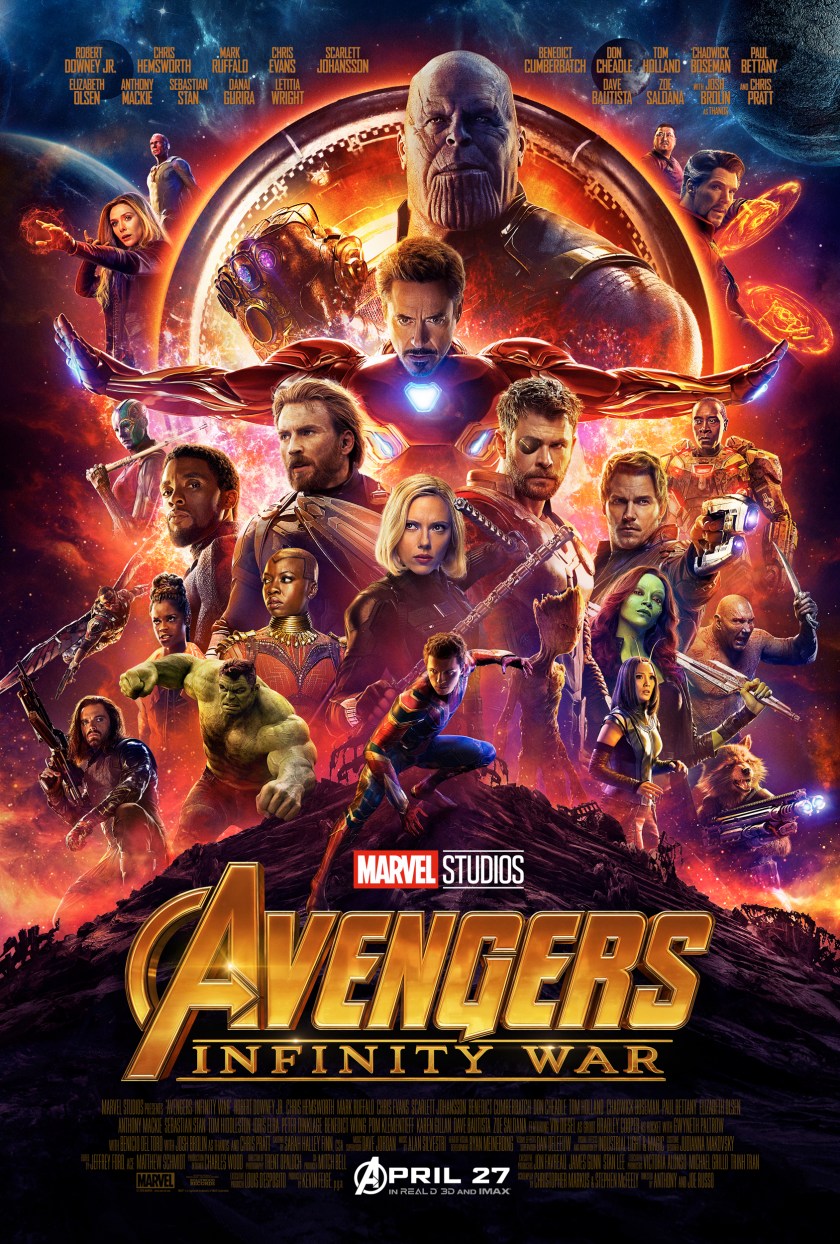
So…it’s all been leading to this. Ten years after Samuel L. Jackson turned up in an after-credits sequence and mentioned “The Avengers Initiative” to the confusion of anyone who has never picked up a comic book, the Marvel Cinematic Universe has now transcended nerd culture and become more essential to pop culture than some of its longest-running franchises. Avengers: Infinity War is testament to how expansive yet accessible these films have become, bringing together nearly all characters and plot threads developed through eighteen preceding films and expecting you’re all reasonably kept up. However, as much as some of the marketing makes it out to be, the story is far from being over. What Infinity War represents more accurately is the beginning of the end of this current incarnation of the MCU, and it does so in ways no other movie could even dare to attempt without the immense build up it has had.

Avengers_Infinity_war_poster

Though you don’t have to have memorised a Marvel encyclopaedia to make sense of this film, being reasonably familiar with all the major events of the previous MCU movies is pretty much required to get the desired experience. Rather than being just one big mash-up of all the characters thrown into one place, Infinity War follows a more fragmented narrative, with different teams of heroes off on their own quests to solve the larger problem; plenty of characters weave in and out of these various plotlines, but there are definitely distinct delineations. As a result, the film truly feels like it spans the whole scope of the MCU rather than consolidating everything on Earth, better matching the stakes and scale of The Empire Strikes Back than Age of Ultron previously tried to do. Speaking of, Infinity War captures a similar sense of hopelessness and defeat as that landmark Star Wars entry but on a phenomenally larger scale. It’s hard to say much without spoiling everything, and the film is best experienced going in as dark as possible, so I will surmise as follows: the pacing is tireless, the banter as sharp as ever, there are too many standout scenes to count, and your expectations are probably far off what truly unfolds.

Infinity War has such a gargantuan cast that listing them all in the starring section would probably take up half the review. With the exception of a few smaller characters, every cast member here has already had ample time to shine in the previous films and all deliver performances at least on par with their previous efforts. Whilst that means not every character gets the focus you might hope for, the film still does an impressive job of balancing everything just right enough that the story remains cohesive and the characters engaging. Again, it’s hard to pick standouts without potentially giving away the game, but what I will say is that I really appreciate how the film actually gives more focus to some of the smaller characters. We’ve seen time and again these stories from the point of view of major figures like Captain America and Iron Man, and as such following them too much might have felt redundant; we already understand them well enough and they don’t have anywhere else to go at this point. To instead bring a little more focus to the likes of Gamora or Scarlet Witch not only allows them much-needed development, it makes the story feel less consolidated to the same three main characters yet again. And hey, that’s not to say that characters served less by this film won’t be fairly compensated in the imminent sequel.

But what ultimately makes the bloated character list and delicate smattering of character development work is that the film, when you look at the bigger picture, isn’t about the heroes at all. They are on the morally righteous side and our sympathies clearly lie with them, but all they can really do is delay and be obstacles to the inevitable. The film’s genius ploy is that our protagonist, the one who has the clearest motivations and personal journey, is actually the tyrannical Thanos himself. Whilst perhaps not as charming as Loki or as relatable as Erik Killmonger, Thanos proves himself as more than just another big bad and brings depth to a character archetype that never moves past those world-ending clichés; he truly put similar figures in the genre recently like Apocalypse and Steppenwolf to shame. A lot of this is thanks to Josh Brolin’s magnetic performance, bringing an effortless menace and convincing internal logic to the galactic madman. It’s very easy to hate him, but there’s an undeniable sense of tragedy to what he has to do, why he thinks he has to do it, and what he completely misunderstands as a result. Even in his most despicable moments, it’s hard not to understand his motives and even sympathise with his emotional turmoil. On reflection, it’s really the heroes who serve as his obstacles, in turn bringing a unique perspective twist to the traditional superhero story.

Audiences have seen these characters clash on screen multiple times before, but the metahuman melee is still just as fun to watch. After the phenomenal airport sequence in Captain America: Civil War set the bar for large scale superhero battles, Infinity War does its utmost to live up to those expectations and succeeds far more often than not. With the film itself feeling like a gigantic third act in and of itself, the action is constant from the get go and every skirmish feels appropriately epic. They are fast-paced, packed with fantastic stunt work and visual effects magic, and the choreography that makes these characters’ fisticuffs bounce off each other as beautifully as their quips keeps things constantly entertaining. The film does an excellent job of combining all the radically different design corners of the MCU together whilst keeping everything aesthetically consistent, and after some patchy effects work in the last few films the VFX here is pretty exemplary; the performance capture work on Thanos is especially fantastic. Wrapping up the entire package is a bravura yet haunting score by Alan Silvestri that summarises the film all on its own: heroic and dynamic, but with a constant reminder of dread and collapse.

It’s best not to think of Avengers: Infinity War as only half of a movie. Instead, think of it more like the penultimate episode of a season of television; everything has been building to this point, all bets are off, and now all we can do is wait for the finale. Much like Star Wars: The Last Jedi, it’s a film that doesn’t seem to hold up when viewed through a traditional lens. However, when seen from a deconstructive perspective and viewed on its terms rather than those of a more traditional movie, it’s a unique and entertaining emotional rollercoaster. It is a monument to everything Marvel Studios has accomplished to this point whilst also eschewing many of the expectations and clichés it helped build about the genre. It is not only a reflection of what has passed, but also a glimpse through the keyhole of what is to come for the universe, and I personally cannot wait to see how everything pans out from here. Unfortunately, we have a whole year of waiting now ahead of us…

FINAL VERDICT: 10/10!

cropped-screen-shot-2017-10-01-at-19-46-22.png