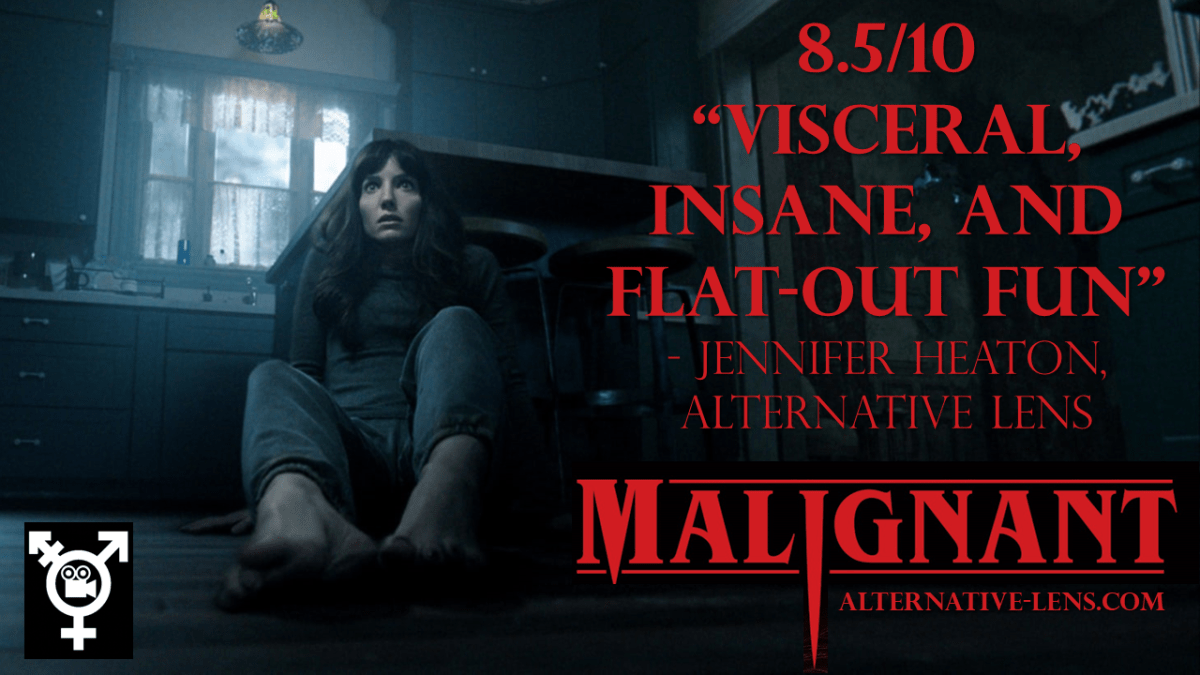
MALIGNANT – an Alternative Lens review

Starring: Annabelle Wallis (The Mummy), Maddie Hasson (Impulse), George Young (Containment), Michole Briana White (Songbird), Jacqueline McKenzie (Deep Blue Sea), Jake Abel (The Host), Ingrid Bisu (The Conjuring: The Devil Made Me Do It), Mckenna Grace (Gifted)

Director: James Wan (Aquaman)

Writer: Akela Cooper (Hell Fest)

Runtime: 1 hour 51 minutes

Release Date: 10th September (US/HBO Max, UK)

When a low-budget director finally gets their shot at the big leagues, one of two things usually happens: they either stay there indefinitely, or go back to their roots once their time in the spotlight is over. However, there is a third option that some take and is probably the best of both worlds: make smaller, more personal projects in between the giant blockbusters. James Wan has already done this once before, returning to his horror stomping grounds by making the comparably small The Conjuring 2 in between Furious 7 and Aquaman, and now he’s done it again before embarking on his second underwater adventure with the DC superhero. Malignant (which, to clarify, is totally unrelated to Wan’s 2011 graphic novel Malignant Man) is in some ways a return to Wan’s grungier Saw origins, but it’s an entirely different beast in other. It’s a film that the marketing has quite rightly been coy about, selling itself as a more traditional paranormal chiller, and to some viewers they will likely be disappointed or completely revulsed once they realised its true nature. However, if you’re willing to jump on board, Malignant is easily one of the most thrilling, idiosyncratic and utterly batsh*t mainstream horror movies in recent memory.

(I don’t usually do this in my reviews, as I generally don’t discuss narrative in beat-by-beat detail, but even mentioning the slightest details of Malignant’s story threatens to ruin the experience. Most films are best enjoyed knowing as little as possible going in, and this one has been specifically marketed that way. So, without further ado: POTENTIAL SPOILER WARNING! If you are interested in seeing Malignant, especially if you’re a huge horror fan, stop reading now and just go see it! If you’re still undecided and need a little more info to know if it’s your cup of tea, I will try to be as sensitive to potential giveaways in my critique as possible, but there are just some thoughts that have to be said that may give away the game. You have been warned.)

Malignant (2021) - IMDb

By all intents and purposes, Malignant shouldn’t work. Unlike Wan’s previous horror films that pick a style and mostly sticks with it, this one is like a bag of pick-and-mix, but with various styles and subgenres rather than sugary treats. The first two acts are mostly comparable to the Insidious franchise, especially in how it blurs the lines of perception and reality, but with a slightly more heightened, almost comic book tone. However, it throughout draws stylistic influence from all eras and types of horror: it has the suspense and mystery of Psycho and Rosemary’s Baby, the psychological eeriness of Repulsion and Don’t Look Now, and the gruesome imagery of Possession and The Evil Dead. As wild as all these influences sound, they merge together fairly well because the film stays consistent on a story level. There is a compelling whodunnit narrative as we learn more about the characters in drips and drabs and, whilst the final revelations do seemingly come out of nowhere, the pieces are all there and certainly solvable with an open mind. There is some clunky expositional dialogue and unsubtle foreshadowing, but it moves at such a brisk pace and with a knowing sense of self-deprecation that it’s easy to forget about the niggles and get swept up in the mystery.

That said, where the moviesimultaneously comes alive and goes off the rails is in its third act. In possibly the biggest mid-film shift since From Dusk till Dawn, Malignant finally reveals its trump card, drops all pretentions of subtlety, and proudly comes out as a tribute to 1980s exploitation movies. It still has the slick sheen of a mid-budget Hollywood film, but at its core this is absolutely the kind of gonzo high-concept horror flick you’d stumble across at the video store or on late-night TV. It’s a massive and risky swing that will likely turn off many, and even for those willing to go with it won’t find it an easy transition. There are logic holes left that even the biggest suspension of disbelief won’t account for and, whilst its nice to see a horror film be self-contained, it does leave plenty of unanswered questions. However, if you can get past the growing pains and accept the movie for what it is, you will find one of the most visceral, insane and flat-out fun horror movies since The Cabin in the Woods. Again, it’s hard to describe without giving it all away, but here’s a final litmus test: if the works of Larry Cohen and Frank Henenlotter mean anything to you, go see this movie immediately!

James Wan's Horror Movie 'Malignant' Will Release This September; Check Out  a New Teaser Image! - Bloody Disgusting
Annabelle Wallis as Madison “Maddie” Lake-Mitchell in MALIGNANT (2021, d. James Wan)

One does not usually go to horror movies looking for high-calibre acting, but there are exceptions…and Malignant isn’t one of them. That’s not to say the performances or characters here are bad in any way, but it’s hard to say to say that any of them are particularly exemplary. Annabelle Wallis takes the lead as the meek and disturbed Maddie, and she does a pretty solid job of portraying a character who has clearly been through a lot of abuse. However, her performance kind of begins and ends with that emotion, and we don’t really get much time with her before the plot kicks in to understand what she’s like outside of these supernatural circumstances. We actually get a much better sense of who her sister Sydney (Maddie Hasson) is through little incidental details that flesh her out, and she excels at emotionally grounding the film and providing some earnest comic relief. George Young is likable but a bit bland as Detective Kekoa Shaw, whilst his partner Regina (Michole Briana White) is mostly saddled with the typical “sceptic who immediately suspects and gaslights the protagonist” routine. Jake Abel and Susanna Thompson have mostly perfunctory roles as Maddie’s husband and mother respectively, whilst Ingrid Bisu (who also co-wrote the story with Wan and Akela Cooper) has a small but memorable role as a forensic officer that evokes Leigh Whannel’s role in the Insidious movies. However, the real unsung stars of the film are voice actor Ray Chase and stunt performer Marina Mazepa as the elusive shadow that is Gabriel. That’s all I can really say about them. See the movie for yourself, and you’ll understand why these two have together created a potential cult horror icon.

James Wan has proven himself time and again as a director willing to make bold and brazen choices, and Malignant is easily his most visually distinctive film yet. Yes, even more so than his movie with the giant octopus playing drums. Its use of harsh reds and midnight blues in its lighting is incredibly 70s, bringing to mind Dario Argento, but then the bombastic camera work is more in line with that of Wan’s blockbusters. There are some incredible tracking shots throughout the film that would make David Fincher blush, like an intense overhead sequence that follows Maddie up, down, and around the house. This frenetic shooting style then works perfectly into the movie’s action sequences. Yes, you read that right: action sequences! There’s an absolutely relentless chase through the streets of Seattle that keeps finding ways to up the ante, and the third act blow-out is best described as “What if John Wick was a Cenobite?”, which are only made more visceral by the copious amounts of gore; it more than earns its 18 certificate from the BBFC. The entire aesthetic experience is then further enhanced by the excellent sound mixing and Joseph Bishara’s haunting score, which sounds like the disturbed love child of Bernard Hermann and John Carpenter. The only odd musical choice is its use of an instrumental cover of “Where Is My Mind” by Pixies as a recurring leitmotif; it’s a decent enough cover on its own, but it sticks out a little amongst the film’s mostly older cultural references.
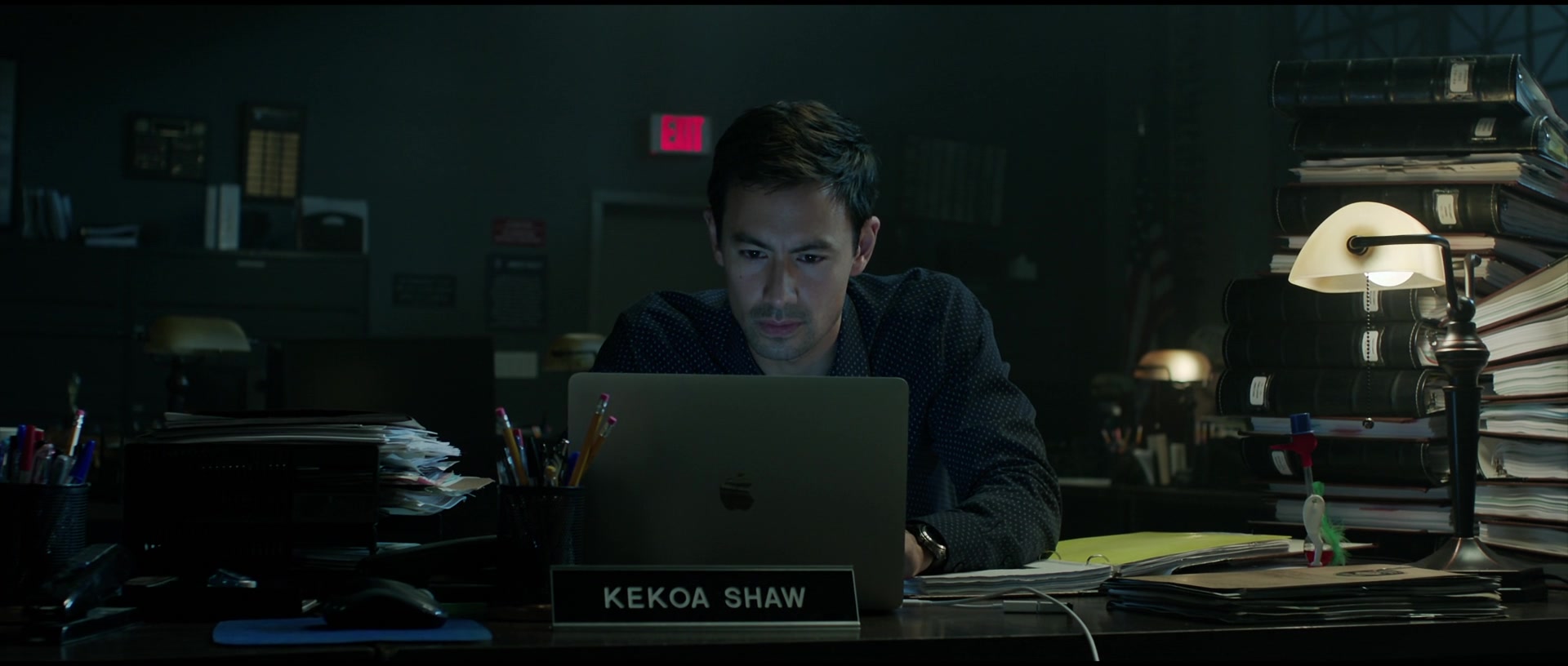
Apple MacBook Laptop Used By George Young As Kekoa Shaw In Malignant (2021)
George Young as Detective Kekoa Shaw in MALIGNANT (2021, d. James Wan)

Malignant simply isn’t the kind of movie that gets made anymore, especially by a major studio, and most other directors would have watered it down into something far more generic. In the hands of James Wan though, who both loves the horror genre and is willing to turn things up to eleven, it makes it an experience hard to forget whether you end up enjoying it or not. It’s easily the most distinctive movie he’s made since the original Saw, and reimagines a long-dormant subgenre on a scale its influences could only dream of. Seriously, the fact Warner Bros. even agreed to fund this is frankly unbelievable, and likely only did because of Wan’s track record…and the fact he just handed them a billion-dollar juggernaut in Aquaman. To make a long review short, Malignant is B-movie schlock dolled up in blockbuster drag, and destined to become a cult favourite amongst horror aficionados.

FINAL VERDICT: 8.5/10

SHANG-CHI AND THE LEGEND OF THE TEN RINGS – an Alternative Lens review

Starring: Simu Liu (Kim’s Convenience), Awkwafina (Raya and the Last Dragon), Meng’er Zhang, Fala Chen (Turning Point), Florian Munteanu (Creed II), Benedict Wong (The Martian), Michelle Yeoh (Crouching Tiger, Hidden Dragon), Tony Leung (Chungking Express)

Director: Destin Daniel Cretton (Short Term 12)

Writers: Dave Callaham (Wonder Woman 1984) & Destin Daniel Cretton and Andrew Lanham (Just Mercy)

Runtime: 2 hours 11 minutes

Release Date: 3rd September (US, UK)

Some people are sick of superhero origin stories; they think they’re tired and samey, and that more movies should just skip to the good stuff. Whilst this makes sense with characters whose histories are not only simple but ingrained in pop culture (Batman, Spider-Man, Hulk, etc), origins are vital to those who sit outside the trodden grounds of dead parents and/or freak accidents. Shang-Chi is a venerable but oft-forgotten Marvel hero whose story has potential that even the comics never fully tapped into, with not only his martial arts prowess and mystical connection to Chinese folklore, but as a superhero descended from a supervillain. Now is a better time than any to put him in the spotlight, and Shang-Chi and the Legend of the Ten Rings rises to the occasion in every aspect. It’s not only the best Marvel solo movie since Black Panther, but an engaging and beautifully put-together blockbuster that meshes western and eastern influences seamlessly.

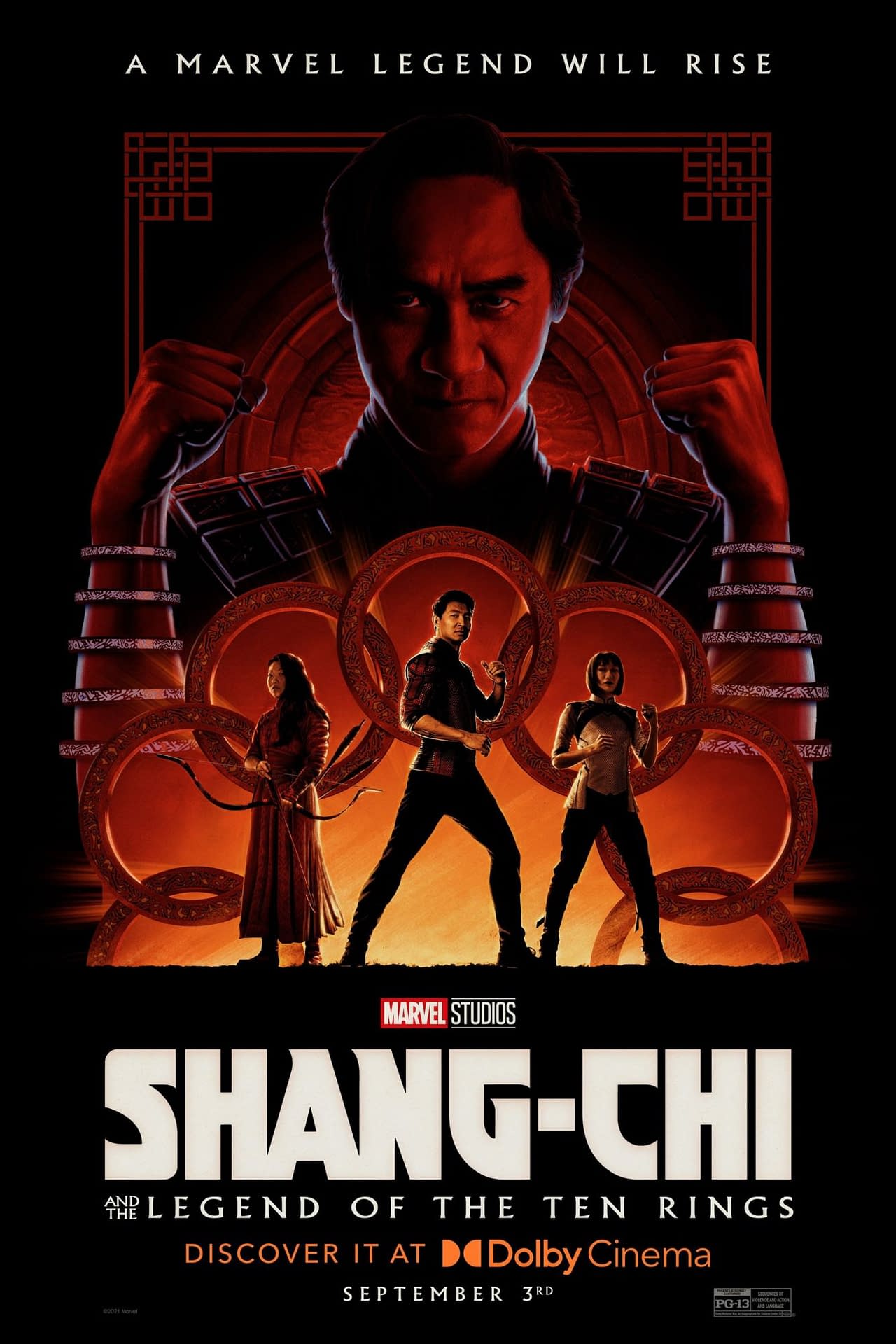
Shang-Chi and The Legend of The Ten Rings: New Poster and Clip

Shang-Chi immediately sets itself apart from the other MCU origin stories by following the Batman Begins structure, switching between past and present as we witness both our hero’s sinister past and his ascendancy to the light. The story is simple but well-told and filled with theatrical heft, putting far more focus on character dynamics and thematic resonance than furthering the MCU canon (though it has its fair share of that too). On balance it is certainly classic Marvel tone-wise, but it does swing pretty far to both sides of that spectrum. It unexpectedly goes to some incredibly dark places, especially when showing Shang’s upbringing and his contentious relationship with his father, which help emotionally ground it in a way very few Marvel films do. At the same time, it’s an incredibly bright and funny movie, injecting a lot of self-aware humour and imaginative worlds that feel pulled from animation more than reality. It’d be easy for these clashing vibes to muddy the emotional timbre, but for the most part Shang-Chi doesn’t undercut itself where it counts and shows restraint even when it has an easy opportunity to chuck in a joke. I can’t speak fully to its authenticity (being a white European and all), but the film’s use of its Asian cast, setting and cultural influences is outstanding by Hollywood standards. Roughly 20% of the film, including the entire prologue, is in Mandarin and fluidly switches between it and English to great effect. Aside from a solid jab at the racist undertones of naming a character “The Mandarin”, it’s not exactly a thematically weighty film with something deep to say about Asian culture like Black Panther did for the African experience, but there is certainly a similar level of respect and a revelling joy from the filmmakers getting to tell this kind of story on such a huge canvas. That said, what it does do is tell a story with a core conflict that speaks to Asian experiences but that audiences of all backgrounds will relate to in one way or another. This is ultimately a family drama about legacy and nature vs. nurture told through the lens of an action fantasy epic, and it doesn’t have to be any deeper than that.

Shang-Chi and the Legend of the Ten Rings' Review: House of Hidden Dragons  - The New York Times
(from left to right) Meng’er Xhang as Xu Xialing, Simu Liu as Xu Shang-Chi, and Awkwafina as Katy in SHANG-CHI AND THE LEGEND OF THE TEN RINGS (2021, d. Destin Daniel Cretton)

There are so many great portrayals of superheroes on screen both past and present, but only a few are so iconic that the actor and character become the definitive version in your head; Christopher Reeve, Hugh Jackman, Robert Downey Jr, Gal Gadot, and Margot Robbie are just a few that come to mind. Simu Liu certainly has an advantage stepping into the role of Shang-Chi, as the character has no major prior appearances outside the comics, and yet he manages to make the character iconic entirely by his own skill. Liu is an immediately likable leading man with a natural wit and strong physicality, but what truly sets the character apart is his internal conflict. We’ve seen plenty of heroes who don’t want the power or responsibility of saving the world, but Shang-Chi stands apart as someone whose abilities are irreconcilable to them from their childhood trauma and inner demons, and their journey overcoming this block could prove inspirational to those struggling with their own dark side. Awkwafina does what she does best as Shang’s best friend Katy, but they thankfully avoid making her just comic relief and make sure she has her own satisfying arc and relationships. Her chemistry with Liu is absolutely top-notch, more than selling these two as long-time buds who are there for each other in both good times and bad, and hopefully the MCU finds plenty more room for both of them.

Meng’er Zhang is fantastically stoic as Shang’s sister Xialing, getting across a lot with very little dialogue and selling herself as a stone-cold badass throughout; whenever she has an action sequence, it’s hard to take your eyes off her. Michelle Yeoh is as gracious and excellent as you’d expect her to be as Shang’s aunt Ying Nan, Florian Munteanu manages to bring forward depth and humour in what could be a stock henchman role as Razorfist, and there’s a fantastic redemptive return from an old MCU character I won’t spoil here (no, it’s not Wong, whose role is little more than a fun extended cameo). All that said, anyone who’s a fan of Chinese cinema will be here for Tony Leung as archvillain Wenwu, and he absolutely owns the movie from the moment he appears until the end. He is a far cry from the racist stereotyping of both The Mandarin and Fu Manchu, incorporating the better aspects of both into a new composite character that utterly destroys those dated expectations. He has all the trappings you’d expect of a supervillain, from the mountaintop lair and army of henchmen to his unyielding lust for power, but he’s also incredibly grounded and his motivations come from a completely human pain. Leung absolutely sells both sides of the character without ever undermining the other, and the father-son dynamic he has with Shang-Chi is relatable yet tragic; they both clearly want the best for each other, but know their paths cannot cross. He’s not only one of the MCU’s best villains yet, but possibly the first performance I’ve seen in one worthy of awards consideration.

Shang-Chi: Tony Leung's Wenwu Is 'Not The Mandarin In The Way People Are  Expecting' – Exclusive | Movies | Empire
Tony Leung as Xu Wenwu in SHANG-CHI AND THE LEGEND OF THE TEN RINGS (2021, d. Destin Daniel Cretton)

Destin Daniel Cretton is a fantastic director of intimate drama, and that experience is absolutely key to why the story and characters work so well. That said, he finds himself at the helm of a martial arts movie despite having no experience in directing action of any scale but, like any good director knows how to do, he’s surrounded himself with the best in the business. I mean, he has the late Brad Allan, veteran of multiple Jackie Chan films, as his stunt co-ordinator, and Bill Pope, cinematographer of the first three Matrix movies, behind the camera. If the final result wasn’t some of the best hand-to-hand action sequences in MCU history, you’d want your money back, and thankfully Shang-Chi delivers on all that and more. This is a visually stunning movie on every level, from its gorgeous environments (both realistic and mystical) to its spectacular special effects, but of course the fight choreography is the real showstopper. It’s not quite on par with classic Hong Kong cinema, especially considering it can’t get too brutal for the kids in the audience, but it comes as close as it can and melds surprisingly seamlessly with the expected Marvel flair. This is further bolstered by the film’s music, with both Joel P. West’s gallant score and the great selection of rap and EDM tracks on the soundtrack perfectly symbolising the east-meets-west nature of the entire production.

Shang-Chi and the Legend of the Ten Rings' Film Review: Marvel's  Martial-Arts Saga Nails the Characters and the Kicks
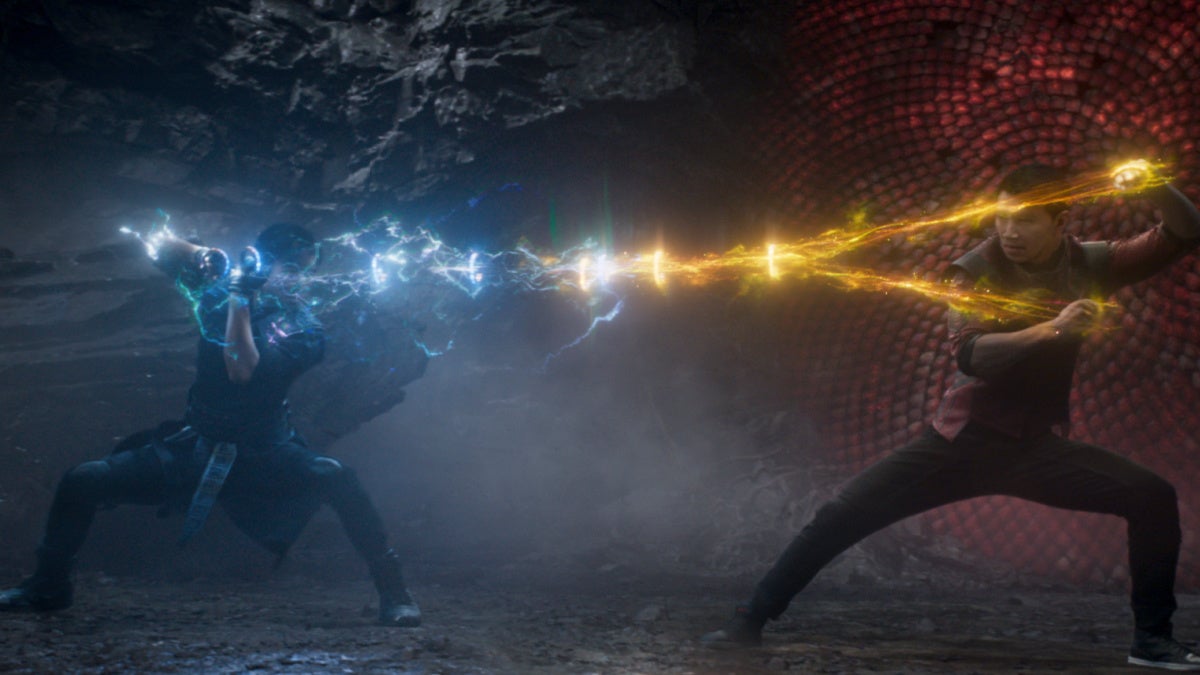
Tony Leung as Xu Wenwu and Simu Liu as Xu Shang-Chi in SHANG-CHI AND THE LEGEND OF THE TEN RINGS (2021, d. Destin Daniel Cretton)

Shang-Chi and the Legend of the Ten Rings is an absolute blast from start-to-finish and a wonderful way to truly kick off the Phase Four films. Even after over a decade of storytelling, Marvel Studios shows no signs of slowing down and continues to find new ways to keep their output fresh, diverse, and of quality. Simu Liu is a superstar in the making, ably taking on the title role with the confidence of a veteran of ten blockbusters, and holds his own against a cinema legend like Tony Leung. It feels like another cohesive piece of the Marvel universe, but it stands up better on its own than most and has gallons of potential as a franchise in its own right, and hopefully it finds an audience craving more. Whether you’re a diehard MCU fan, an action junkie wanting something with a little Hong Kong flavour, or you just appreciate good storytelling and imagination, you cannot go wrong with Shang-Chi.

FINAL VERDICT: 9.5/10