THE NEW MUTANTS – an Alternative Lens review

Starring: Maisie Williams (Game of Thrones), Anya Taylor-Joy (Split), Charlie Heaton (Stranger Things), Alice Braga (Predators), Blu Hunt (Another Life), Henry Zaga (Looking for Alaska), Adam Beach (Suicide Squad)

Director: Josh Boone (The Fault in Our Stars)

Writers: Josh Boone & Knate Lee (Kidnap)

Runtime: 1 hour 38 minutes

Release Date: 28th August (US), 4th September (UK)

In our current reality where the cinematic calendar is constantly shifting, The New Mutants is like the hipster lurking in the back watching and laughing: it was constantly pushing back its release date before it was the norm. Originally slated for release in April 2018, this X-Men spin-off was repeatedly kicked from slot to slot for over two years due to planned reshoots that never happened and complications related to the Disney/Fox merger, finally given a firm date of April 2020 before COVID-19 hit it like almost every other major release. Finally in cinemas whilst the pandemic still afflicts the world and its own franchise having died over a year ago, there were many theories running about the internet as The New Mutants sat on the shelf that it was so unwatchable that it may never see the light of day. However, after having finally witnessed this mythic film, it’s safe to say that it isn’t some unsalvageable abomination. It’s actually just…fine.
New “The New Mutants” posters : movies

There were several reports before release that claimed that all references to Fox’s X-Men films had been excised from the final cut of The New Mutants, supposedly so the film could be retroactively placed in the Marvel Cinematic Universe should Disney want to. Those reports, much like a lot of the rumours surrounding the film, are bunkum. The film not only mentions the X-Men several times, but actually ties into the events of Apocalypse and Logan, in the process typing up some dangling plot threads from the prior films. However, those pieces of continuity are relatively minor, as The New Mutants is otherwise a standalone story set almost entirely in one location. The film is something of a mash-up of teen coming-of-age movie and horror flick, most comparable to A Nightmare on Elm Street 3: Dream Warriors, but unfortunately neither element is particularly exemplary.

The teen angst stuff works well enough on its own, with director Josh Boone’s experience on films like The Fault in Our Stars and Stuck in Love evident in the grounded performances and tender exchanges; if only these moments had more time to breathe. Meanwhile, the horror elements are extremely lacklustre and barely even worth a hair raise. For a film whose premise is based around people’s fears being brought to life, there’s not any particularly frightful images or haunting concepts here that aren’t cliché, with the filmmakers’ imagination of horror extending only about as far as ‘Slender Man in a tacky silk shirt.’ With that said, in spite of the tepid scares, the film ultimately works somehow. The pacing is solid, the storytelling is efficient if a little rushed, the third act is exciting when it finally arrives, and its themes of overcoming trauma and rejection hit home. Those planned reshoots may have been helpful, especially if they used them to either amp up the horror or bolster the character development, but the final product is far from terrible. Compared to many of the big budget X-Men films with their bombastic scale and lack of respect for the source material, The New Mutants is competently made by comparison.
New Promo Spot for THE NEW MUTANTS Features the Cast Discussing the Story  and Their Characters — GeekTyrant
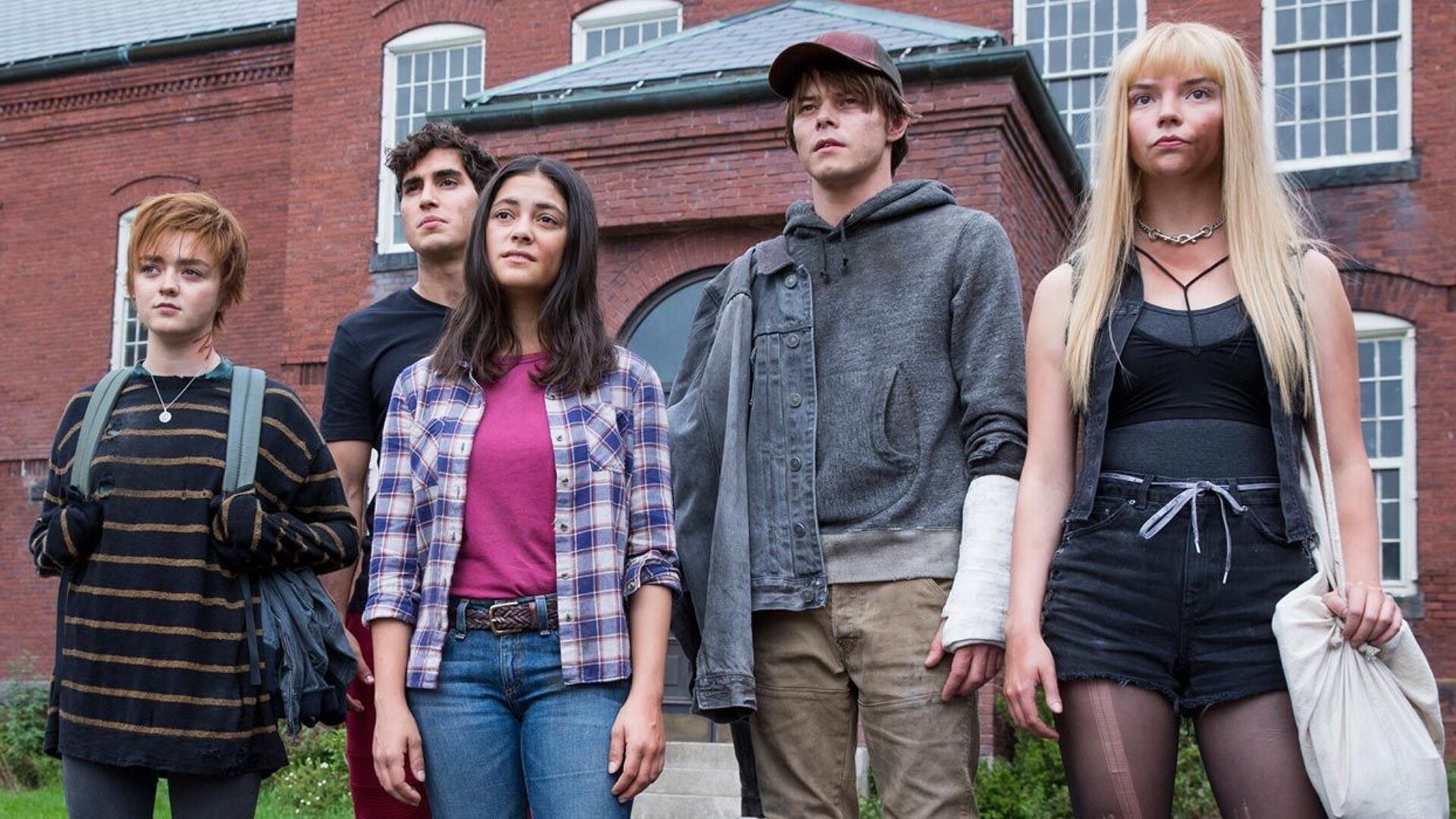
(from left to right) Maisie Williams as Rahne Sinclair, Henry Zaga as Roberto da Costa, Blu Hunt as Dani Moonstar, Charlie Heaton as Sam Guthrie, and Anya Taylor-Joy as Illyana Rasputin in THE NEW MUTANTS (2020, d. Josh Boone)

The film may give Maisie Williams top billing due to her being the biggest star, and the marketing focuses most on Anya Taylor-Joy because her character’s powers are the most visually impressive, but the protagonist of The New Mutants is actually Blu Hunt’s Dani Moonstar. Hunt delivers a perfectly fine central performance, but Moonstar is a bit of a blank slate and she has little to work with given how the story obstructs much of her true nature. Where Hunt shines is in her scenes with Williams, who plays the religiously-conflicted lycanthrope Rahne. The two have solid chemistry and just enough screen time together to cement a solid relationship, easily taking the crown of best LGBTQ+ representation in a mainstream superhero film. Then again, given the level of competition so far, that’s not exactly hard.

Taylor-Joy is as captivating an actor as ever, even though the characterisation of Illyana is a tad all over the place. She’s presented as this arrogant and frigid bully compensating for her inner trauma, but not only is her backstory wildly complicated compared to her peers and not explained too well, but her demeanour very suddenly shifts in the third act because the story needs her in action mode. The skeleton of a solid arc is there for Illyana, but it feels like there’s a few key steps missing. Charlie Heaton is somewhat wasted as Sam, his only distinguishing characteristic being his inconsistent Kentucky accent that fluctuates from non-existent to Benoit Blanc between scenes, whilst Henry Zaga’s Roberto is…there. Alice Braga is fine enough as Cecilia Reyes, but her characterisation is also slightly unclear; is she a good person forced into doing bad things, or a bad person hiding behind a kind exterior? The only other character of note is Adam Beach in a brief role as Dani’s father, and…wait, Marilyn Manson was the voice of one of the monsters? Huh. That’s an odd bit of trivia for you.
New Mutants Shows Off Anya Taylor-Joy, Villains, More – Worlds Greatest  Detective
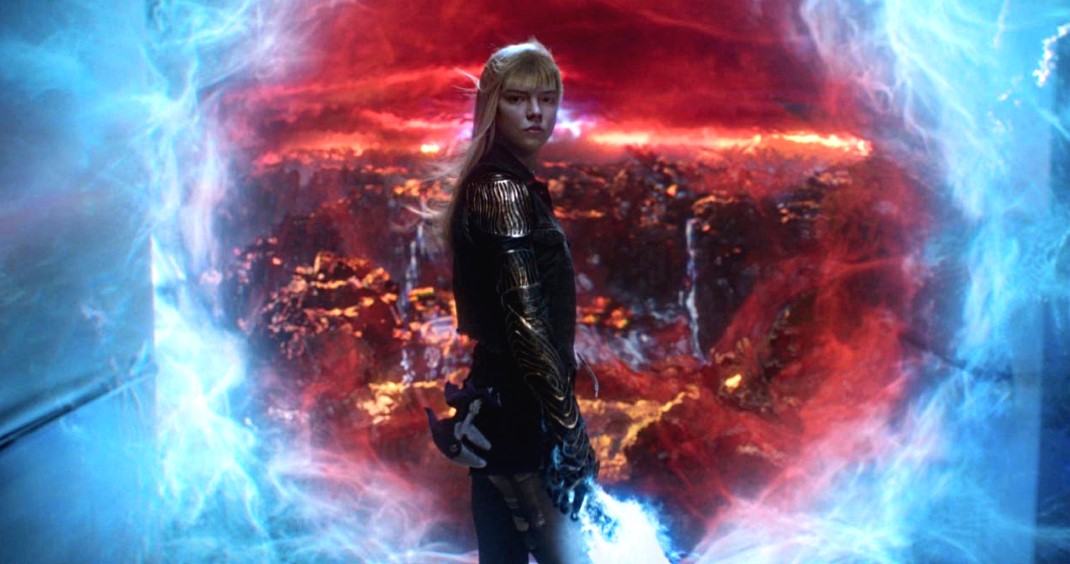
Anya Taylor-Joy as Illyana Rasputin in THE NEW MUTANTS (2020, d. Josh Boone)

The New Mutants is by no means a terrible looking film, but for a production that allegedly cost $80 million, it looks like one that barely spent a quarter of that. For comparison, the first Deadpool cost just under $60 million, and that film had dozens of sets, bigger name stars and extensive CGI. Much of the film takes place in the halls of a hospital but, unlike Fox’s similarly confined Fantastic Four reboot, the restrictive locale works to film’s scale and tone. The cinematography by Peter Deming is suitably moody and grounded, giving the picture an indie quality that helps separate it from its big-budget cousins, and the visual effects are for the most part well-designed if not flawlessly executed; Illyana’s Magik powers and the film’s final boss in particular stand out. The film’s most underwhelming technical aspect is the film’s score, composed by Mark Snow of The X-Files fame. The music is almost unnoticeable, sounding barely above the generic royalty-free horror tracks you can find online, and its lack of oomph only makes the moments of horror fall even flatter.

Despite its many faults, The New Mutants is a distinct and enjoyable little superhero movie, and with some tweaks it could have been the breath of fresh air the genre needed. In its clearly undercooked released form and under intense scrutiny after two years of build-up, it’s something of a miracle that it’s as decent as it is. At least we can now put all the wild speculation and memes to rest, and with it the last vestiges of Fox’s mixed handling of the X-Men property. When all is said and done, The New Mutants will end up just being an interesting footnote to a franchise that lasted twenty years, with its troubled production history and cult internet status overshadowing the plucky little film that tried hiding underneath. It might not be worth the hype, but I’d certainly watch it ten times in a row before I even considered watching X-Men Origins: Wolverine or Dark Phoenix again.

FINAL VERDICT: 6/10

TENET – an Alternative Lens review

Starring: John David Washington (BlacKkKlansman), Robert Pattinson (The Lighthouse), Elizabeth Debicki (The Man from U.N.C.L.E.), Kenneth Branagh (Henry V), Dimple Kapadia (Rudaali), Himesh Patel (Yesterday), Aaron Taylor-Johnson (Kick-Ass), Michael Caine (Get Carter), Clémence Poésy (127 Hours)

Writer/Director: Christopher Nolan (Inception)

Runtime: 2 hours 30 mins

Release Date: 26th August (UK), 3rd September (US)

Cinemas in the UK have been open for roughly a month now, but there’s been very little incentive to go back. Partly due to fears about safety, but also just a lack of enticing releases; it’s mostly just been reruns, obscure indies and just generally films that don’t demand being seen on the big screen. Whilst most studios delayed their releases for this year or made them available to stream at home, Tenet was always seen as a certainty for cinematic release, mainly at the behest of Christopher Nolan himself. Known for his passion for the traditional cinema experience, Nolan’s insistence on bringing the film to movie theatres come hell or high water has been seen as the make-or-break moment for these venues. With Disney backing away for now by putting Mulan up for premium streaming, the future of cinemas has been saddled on the shoulders of Tenet, which is both a momentous and frightening prospect.

Even with all of the precautions taken by cinema chains and myself as an audience member, going back to the cinema in the midst of an ongoing pandemic was still a dicey prospect; I won’t lie, my anxiety was high as I sat down and the film finally began. However, even in a socially-distanced theatre with my mask on and being extremely cautious of what I touched, eventually I found myself comfortably back in my home away from home. The only real disappointment of the experience was that, as good as Tenet is in many aspects, I fear it’s ultimately going to be more remembered for the tumultuous nature of its release than for anything in the film itself.

New Tenet Posters Offer a Different Perspective – /Film

Like many Nolan films, Tenet has been marketed in a way to obscure much of the story in secrecy, even down to the exact nature of its time-bending conceit. It’s a tactic that certainly preserves the surprises of the movie, but also makes it incredibly hard to review. The best I can do is say that Tenet does for time travel what Inception did for dreams, so if that film’s approach to its premise left you perplexed or annoyed, this one is probably not for you either. That said, as unique and visually captivating as many aspects of the film are, there is also an unnerving familiarity to the entire production. Much in the same unfortunate vein as Quentin Tarantino and Edgar Wright, Christopher Nolan’s style has reached a point where it has stopped being distinctive and started to feel tiresome. The first half of the film is frustratingly slow and dreary, only waking up for brief spurts of action that are cleverly executed but lack audience investment. The dialogue is 90% just exposition as characters exchange unnatural dialogue filled with scientific technobabble and philosophical musings, making it hard to care about the context of anything happening on screen. It’s a difficult film to follow at times; not because its story or ideas are particularly complicated, but because it gets so tedious at points that it is hard to pay attention. As bombastic and fascinating as many of its concepts and set pieces are, it’s all delivered with Nolan’s typical po-faced self-seriousness with nary a trace of humanity, and it just sucks much of the possible fun out of the movie.

However, once it hits the halfway mark and starts really embracing the full potential of its premise, the film not only finds its groove but also retroactively makes the preceding half better in retrospect. The film’s pacing kicks into high gear, the action sequences start being exciting rather than just nifty, and even the characters start to actually come to life as stakes are raised and relationships take interesting turns. Much like Memento or The Prestige, it’s a film that certainly entices you to watch it again for how its revelations recontextualise early scenes, and perhaps with time and reflection its quality may improve. With that said, its early fumbling still handicaps its overall enjoyment in a way Nolan’s previous mind-bending efforts didn’t. In his efforts to top himself, he has ended up making something too complex, focusing so much on crafting the mechanics of his world that he has ended up sacrificing the character, wit and energy that made his other films so consistently entertaining.

Tenet first look: See photos from Christopher Nolan's next movie | EW.com
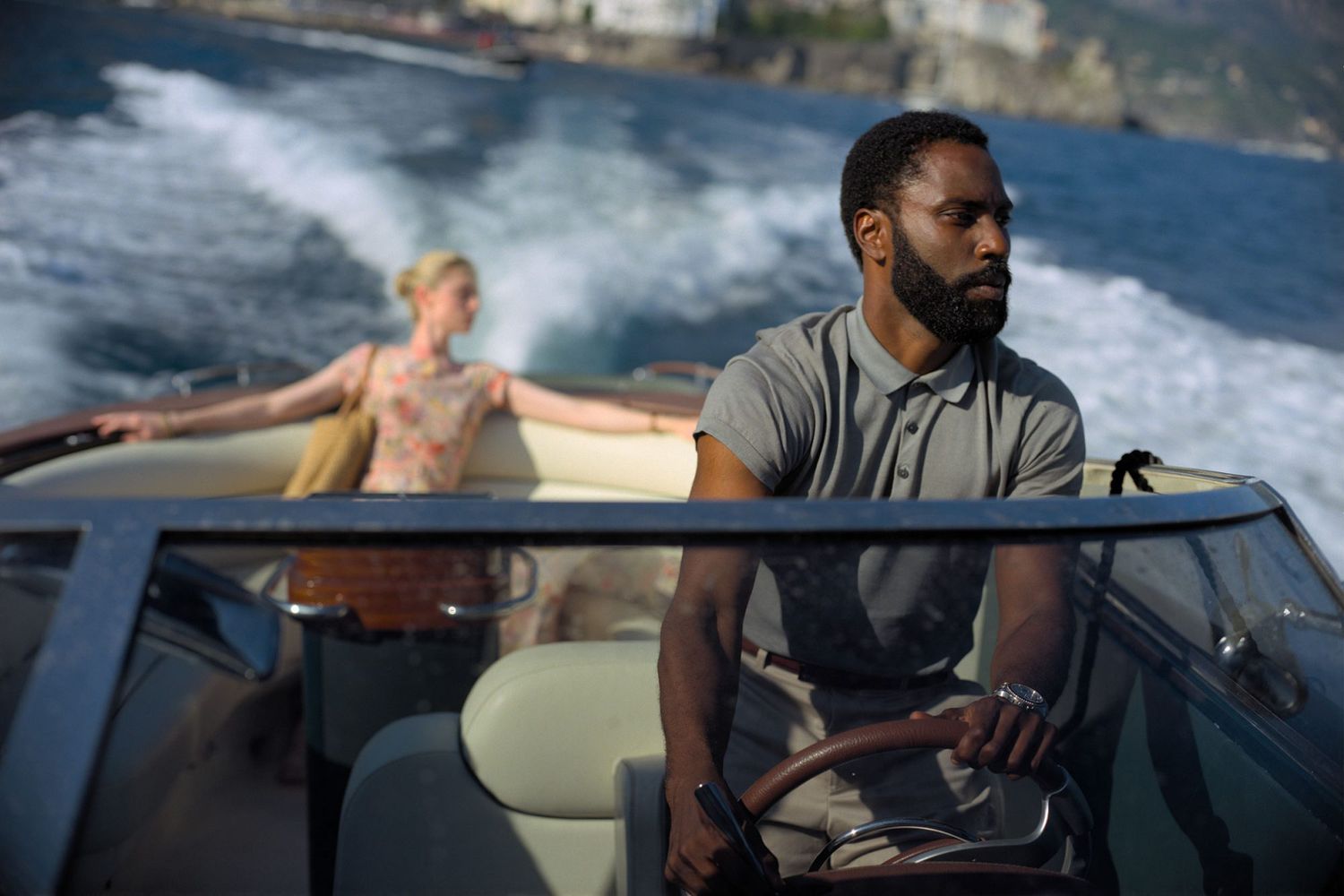
(from left to right) Elizabeth Debicki as Kat and John David Washington as The Protagonist in TENET (2020, d. Christopher Nolan)

After a filmography mostly featuring white dudes in nice suits as main characters, it’s nice to see Nolan mix it up a bit and make his main character a Black dude in a nice suit. Jokes aside, John David Washington is a charismatic actor and his natural charm does a lot of heavy lifting as Tenet’s nameless lead. He’s something of a blank slate due to the nature of his character’s profession, but Washington brings subtleties to his performance that demonstrates a degree of humanity to this otherwise no-nonsense man on a mission. Elizabeth Debicki is as alluring as ever as Kat, giving easily the most emotionally vulnerable performance in the film as a woman trapped in an abusive marriage, though the film unfortunately boxes her in as a damsel-in-distress until the third act. Kenneth Branagh makes for an interesting choice as the film’s villain Sator, clearly having brushed up on his Russian accent since his questionable stab at one in Jack Ryan: Shadow Recruit, giving a brutal and vicious performance but not without completely losing Branagh’s signature magnetism.

There’s a lot of great talent in small supporting roles throughout the film, some of whom only get one or two scenes before disappearing. There’s of course the expected Michael Caine cameo, but there’s also Clémence Poésy in a small role as a scientist who introduces Washington to the time-warping conceit of the plot, Himesh Patel as one of his accomplices, and Aaron Taylor-Johnson as a military figure who arrives late into the second act. Dimple Kapadia, a respected Indian actress unknown to most western audiences, gets more screen time than all of these stars combined, and she delivers a strong performance that makes me hope she gets some more mainstream attention. However, the film’s unquestionable MVP is Robert Pattinson as Washington’s right-hand man Neil. In quite an odd turn, the usually brooding actor ends up being the one easily having the most fun, delivering much of the film’s scant moments of levity and injecting a healthy dose of charisma and emotion into the film. His character is easily the most nuanced in the whole film, and one of the main reasons watching the film again is a compelling prospect.

Robert Pattinson Online on Twitter: "📸 𝐔𝐇𝐐 | New still of Robert  Pattinson in Tenet (𝟸𝟶𝟸𝟶) https://t.co/xCqxLtOT0K… "
(from left to right) Himesh Patel as Mahir, Robert Pattinson as Neil, and John David Washington as The Protagonist in TENET (2020, d. Christopher Nolan)

If you’ve seen any of Christopher Nolan’s films, especially those from Batman Begins onwards, you know what you’re going to get aesthetically, but there have been some noticeable changes behind-the-scenes that slightly alter its flavour. Most notably, the music is composed not by Nolan’s usual choices of Hans Zimmer or David Julyan, but by Ludwig Göransson of Black Panther and The Mandalorian fame. His score takes some inspiration from Zimmer but is noticeably more muted and techno-influenced, giving it slightly grungier and less operatic feel than a typical Nolan score. This change in musical tone is even reflected in the end credits, which play over an original rap song ‘The Plan’ by Travis Scott, that complements Göransson’s compositions beautifully.

The film’s editing, done by Noah Baumbach regular Jennifer Lame rather than Nolan’s usual Lee Smith, is tight and keeps up the tension in all of the right places, whilst the production design is grounded but intricate in much the same vein as Inception or Interstellar. In his third collaboration with Nolan, the cinematography by Hoyte van Hoytema is, for the most part, gorgeous and captures the peculiar action sequences in enthralling fashion. The only flaw here is the lighting in scenes set at night, which often threaten to make Washington almost invisible; it seems even the best cinematographers could use some lessons in photographing Black skin.

Tenet is a unique and often stunning film about the nature of time and fate, but it’s ultimately a little too smart for its own good. It’s a difficult film to penetrate even by Nolan’s standards, and though its second half ultimately brings it across the finish line, getting through its slog of a first will be an endurance test for those looking for something more immediately entertaining. It’s certainly far from Nolan’s worst film (I swear, The Dark Knight Rises only gets shoddier every time I watch it), but in comparison to most of his filmography, it is a disappointment. I don’t doubt that many of those willing to go back to cinemas and see Tenet will love it. However, for those still understandably hesitant to venture to the multiplex, I will simply say this: Tenet is not worth rushing out to see anyway.

FINAL VERDICT: 7/10