BOHEMIAN RHAPSODY – an Alternative Lens review

Starring: Rami Malek (Mr. Robot), Lucy Boynton (Sing Street), Ben Hardy (X-Men: Apocalypse), Joseph Mazzello (Jurassic Park), Gwilym Lee (Midsomer Murders), Aidan Gillen (Game of Thrones), Allen Leech (Downton Abbey), Tom Hollander (Pride & Prejudice), Mike Myers (Shrek)

Director: Bryan Singer (X-Men)

Writer: Anthony McCarten (The Theory of Everything)

Runtime: 2 hours 14 minutes

Release Date: 24 October (UK), 2 November (US)

Unless you’re a real spoilsport, I think it would be very hard to find someone who doesn’t like Queen. They are one of the greatest rock bands of all-time, producing some of the most memorable and everlasting tunes of the entire genre, and frontman Freddie Mercury is an icon of not only rock n roll but for LGBT representation and AIDS awareness as well. A biopic of this legendary group is long overdue and has been in development hell for some time, with a previous version with Sacha Baron Cohen as Mercury falling apart due to conflict with the surviving band members. But the trouble didn’t stop even once in production, with Bryan Singer (who is still credited as director due to Director’s Guild of America regulations) being fired mid-production and replaced with Dexter Fletcher. With all of this hullaballoo going on behind-the-scenes, it’s a wonder Bohemian Rhapsody has made it to the screen at all.
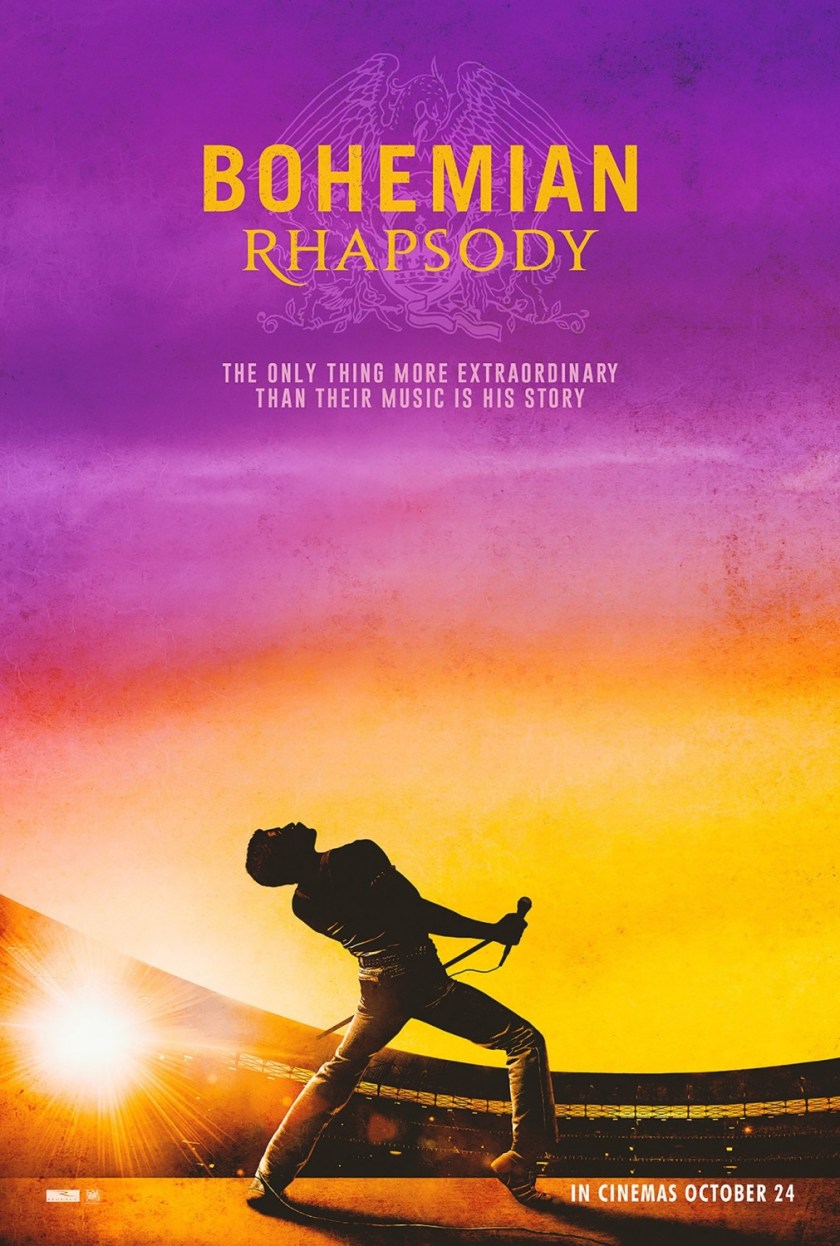
bohemian_rhapsody_ver2_xlg

Bohemian Rhapsody is in every department a conventional rock biopic. We see the humble beginnings of the band, their fateful meeting with Mercury, their tremendous rise to stardom, all the in-fighting and backstabbing that led to their break-up, and the mixture of tragedy and friendship that brought them back together. From beginning to end, the film is essentially a high-budget dramatisation of an episode of Behind the Music, and even if you aren’t very familiar with Queen’s history it’s easy to see where it’s all going. But all of this expected rise-and-fall narrative is ultimately just a backdrop to the more interesting story at the heart of Bohemian Rhapsody: an exploration of the isolation of being closeted. Contrary to the coy marketing, the film very much explores Freddie Mercury’s sexuality and the effect it had on his professional and personal life. The film paints a vivid portrait of a man struggling to come to terms with himself, drowning himself in excess and ego to compensate, and yet still feeling alone at the end of the night. It’s a tragic but sympathetic and ultimately uplifting journey, one that doesn’t go as far into detail as it could have gone and sugarcoating what’s there, but it goes far enough to get the message across and deliver a compelling if somewhat censored experience.

Now the entire film could have easily fallen apart if the right actor wasn’t cast as Mercury, but in Rami Malek I think they’ve found the one and only person who could do this role justice. Not only is the physical resemblance uncanny, but Malek nails Mercury’s distinct flamboyant mannerisms without turning the man into a caricature. But when not cavorting about on stage, there’s a great subtlety to his performance and the way he handles the more emotionally wrought moments are especially gut wrenching. It’s hard not to think what Malek could have done if given a version of the film that really dove into the craziness and depravity of Mercury’s self-destructive lifestyle, but what’s presented manages to be effective purely based on his performance and he is the main reason to give it a watch.

The rest of the cast is perfectly serviceable, with some pulling their weight whilst others fade into the background. Gwilym Lee does justice to Brian May without particularly wowing, Ben Hardy’s Robert Taylor falls a bit flat, whilst Joseph Mazzello’s John Deacon is fun but given very little to do. Lucy Boynton works as a good emotional anchor as Mercury’s close friend Mary, but I wish just as much care had been put into Mercury’s other lovers. The only obvious misstep in casting is Mike Myers as record executive Ray Foster, whose performance feels like it’s been ripped from a far more farcical version of the story and is only here so they can make a meta joke about Wayne’s World. At least his screen time is brief.

Where Bohemian Rhapsody really struggles is that it definitely feels like a film caught between two directors, even though neither of them are directors known for having a distinctive style to begin with. In what feels like an effort to mesh the visions of Singer and Fletcher, the final product doesn’t particularly read as either director, and as a result it lacks a lot of visual flair. The staging and cinematography feels rote and uninspired, with the writing and acting driving the scenes forward far more than any clear direction. The film visually only really comes alive during its concert scenes, especially the finale at Live Aid, but outside of this every scene feels like its been decked out in the contents of a flamboyant 1970s/80s dress-up box. Luckily, and as you’d expect, the soundtrack is chockfull of Queen’s music, keeping the film alive and exciting even when what’s going on onscreen starts to grow tedious. Then again, it also misses some pretty big ones too (no “Princes of the Universe” or “Flash”) and some of the song placements are a tad on the nose; I mean, could they have picked a more obvious and overbearing scene to pop “Who Wants To Live Forever?” on in the background?

Bohemian Rhapsody fulfils its checklist as a Queen biopic, delivering a feel-good movie that hits all the expected notes without particularly innovating otherwise. Rami Malek’s incredible lead performance and all of the storytelling revolving around his personal character journey is enough to make this worth seeing, and those concert scenes just about could justify doing so on the big screen. But outside of this, the film offers you very little you couldn’t get out of just reading up on the true story and listening to Queen’s albums. Perhaps with next year’s Elton John biopic Rocketman, Dexter Fletcher can get a full opportunity to flex his weight with another giant of British pop. What about Bryan Singer? Well, if any of the stories that have crept up around him in recent years are even remotely true, I don’t think he deserves to make anything else ever again.

FINAL VERDICT: 6.5/10

cropped-screen-shot-2017-10-01-at-19-46-22.png

HALLOWEEN – an Alternative Lens review

Starring: Jamie Lee Curtis (Freaky Friday), Judy Greer (Ant-Man), Andi Matichak (Orange is the New Black), Haluk Bilginer (Ben-Hur), Will Patton (Armageddon), Rhian Rees, Jefferson Hall (Star Wars: The Force Awakens)

Director: David Gordon Green (George Washington)

Writers: David Gordon Green & Danny McBride (Your Highness) & Jeff Fradley (Vice Principals)

Runtime: 1 hour 46 minutes

Release Date: 19 October (US, UK)

John Carpenter’s Halloween popularised what we now call the slasher movie, and a dozen sequels, reboots and rip-offs later, Michael Myers still continues to stalk the streets of Haddonfield like it’s 1978. The franchise has been on something of a hiatus after Rob Zombie’s bizarre duology that took the series in a bold but wholly unnecessary direction, and now it’s in the hands of…the guys behind Pineapple Express and Your Highness? OK. I guess after it turned out half of Key & Peele made one of the best horror movies of the modern age, all bets are off.

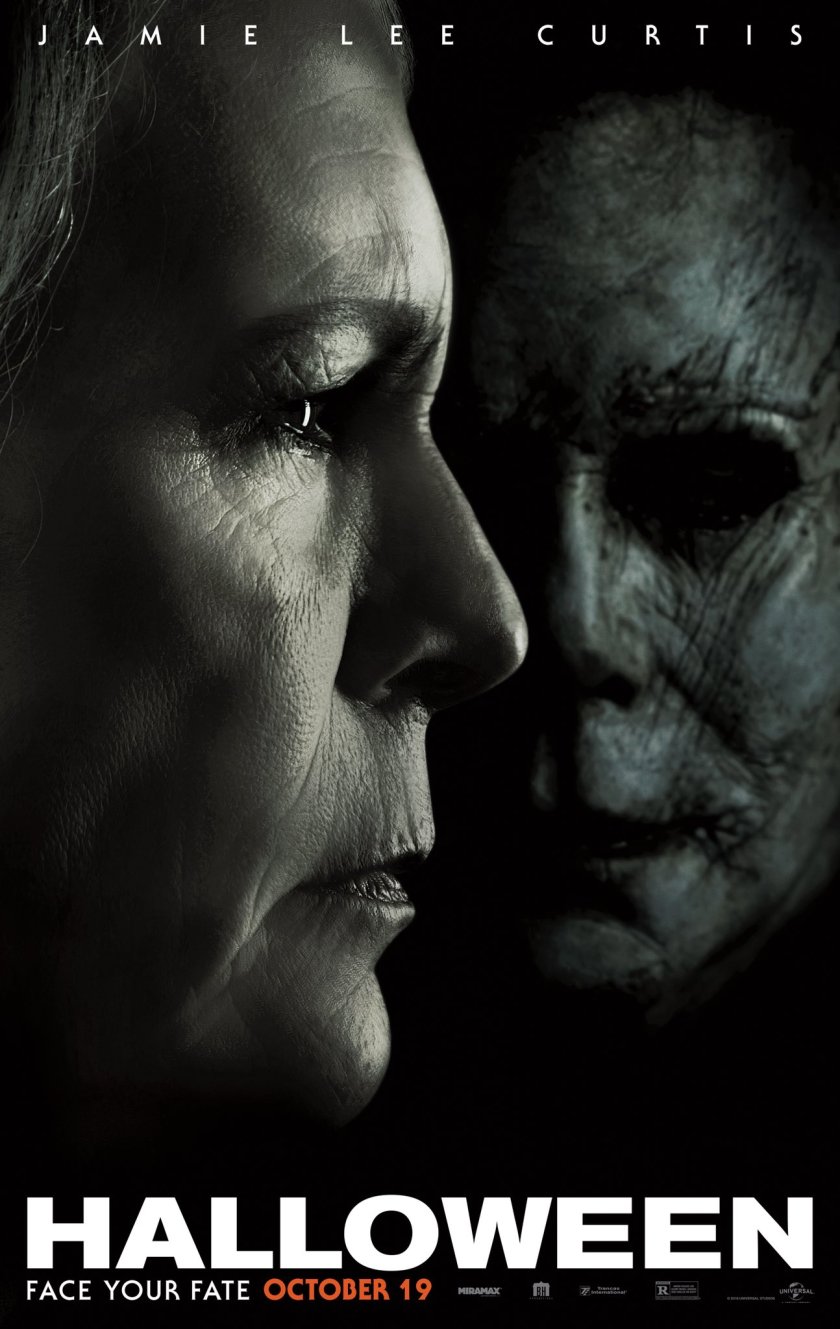
halloween-poster-2018

The Halloween series has one of the most needlessly complicated series mythologies ever, with multiple timelines and retcons that make creating any sequel at this point seem pointless. This time around, the film wipes the slate clean and serves as a direct sequel to the original, disregarding all previous entries and their various developments. We’re back to just Myers and Laurie Strode, with no brother/sister dynamic, druid cults or kung-fu Busta Rhymes to complicate things. This in turn opens up the opportunity for this new Halloween to return to the roots of the franchise whilst also letting it venture into new territory, and for the most part it succeeds. The film is undeniably a Halloween film from the get go, paying homage to the structure of the original whilst peppering in new twists and gradually shifting gears throughout. Its approach to the filmmaking feels completely old school, but in terms of content and ideas it is very much a modern film at heart, exploring complex themes like the generation gap, post-traumatic stress, and the very concept of evil itself.

However, whilst Halloween is incredibly good at raising these interesting questions and setting up new twists on the familiar tropes, it isn’t so good at following them through. Especially towards the end, as the story’s goes increasingly into uncharted territory, the movie keeps fumbling the ball with its many ideas. Interesting new concepts are brought up and almost immediately dropped, threads set up well in the beginning only get half-baked resolutions, and by the abrupt conclusion it’s unclear what the film’s final thesis even is. Throughout its first two acts, Halloween seems to pose itself as a postmodern autopsy of its own franchise, but by the third those contemplative explorations end up taking a back seat to the entertaining but expected slasher scares. I’m fine with this movie being a deconstructionist exploration of the genre or just another example of it. I just wish it had picked one and stuck with it.

What ultimately drives Halloween from the beginning and over the finish line is Jamie Lee Curtis’ phenomenal performance as Laurie Strode. Touching on similar ideas from Halloween H20 but taken to their logical conclusion, the film’s vision of an elderly Laurie simultaneously motivated to action by her experience in the original but also traumatised and embittered by it is a fascinating character study. Her harsh exterior and emotional instability make her a hard character to like, but deep down you know she’s right and capable of taking action. This dynamic is further put to the test by her daughter Karen (Judy Greer) and granddaughter Allyson (Andi Matichak), with the former being embittered by her attempts to prepare her for the horrors and the latter being sympathetic but concerned about her mental state. The rest of the cast do a reasonably fine job, fulfilling their slasher movie archetypes but with just enough modern flair, but it’s Curtis that carries the movie throughout and redefines what it means to be a final girl. Seriously, she deserves an Oscar nomination for this performance.

On a technical level, the new Halloween falls very much in line with the aesthetic of the old Halloween. There are no overly slick camera tricks, buckets of gore or out-of-place rock music. Though some of the kills are a little over-the-top, this otherwise sticks to the grounded approach of the original film and that restraint is not only refreshing but actually adds to the horror. John Carpenter even returns to contribute to the film’s score, not only bringing back the classic themes with new twists but some wholly new material too that feels straight out of his 80s synth wheelhouse.

Halloween has certainly taken the right approach to revitalising this often-abused franchise, delivering what is certainly the best entry in decades. However, its execution is notably flawed, as it can’t quite decide if it wants to take the series in new directions or make a straight-up no-frills throwback. The old school aesthetic, the fascinating subtext and Curtis’ landmark performance make it an experience more than worth watching, especially for slasher fans, but it isn’t quite the new gold standard for the genre some have called it. There are better examples of a modern slasher than this Halloween out there. It’s just that this one is still better than the vast majority of its imitators.

FINAL VERDICT: 7.5/10

cropped-screen-shot-2017-10-01-at-19-46-22.png

VENOM – an Alternative Lens review

Starring: Tom Hardy (Inception), Michelle Williams (All the Money in the World), Riz Ahmed (Rogue One), Scott Haze (Midnight Special), Reid Scott (Veep), Jenny Slate (Zootropolis)

Director: Ruben Fleischer (Zombieland)

Writers: Jeff Pinker (The Amazing Spider-Man 2) & Scott Rosenberg (Con Air) and Kelly Marcel (Saving Mr. Banks)

Runtime: 1 hour 52 minutes

Release Date: 3 October (UK), 5 October (US)

Let’s get this out of the way: Venom isn’t a particularly great character on his own. As a dark mirror of Spider-Man, he can work in the right hands, but his lasting popularity is mainly down to the edgelord boom of comics in the late 80s and 90s that still somehow overshadows much of the industry and its film adaptations. There is a way of making him relevant in the modern era, but removing him from Spider-Man completely is an incredibly bad first move. Sony have been trying to get a solo Venom movie off the ground since the Sam Raimi era and, after multiple false starts and despite having just gotten on good terms with Marvel Studios, they’ve gone and finally made it anyway. The final result is as messy and confused as you might expect, but also hilarious enough in its own ineptitude to be worth witnessing for the curious.

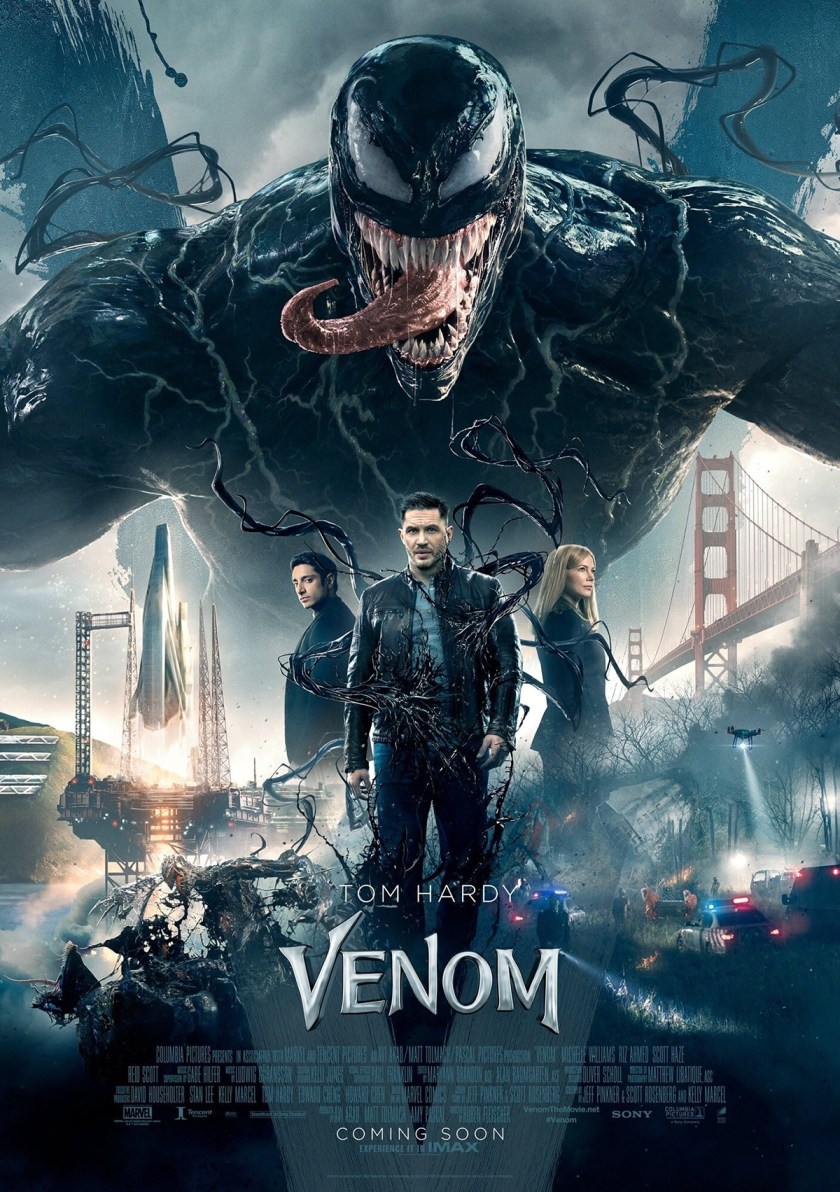
venom-poster-6

Throughout its runtime, Venom makes a lot of bold and daring decisions. It’s a shame so few of them are the correct ones. The plot is fairly simple and yet haphazardly told, mainly evident by the inconsistent pacing and jarring mood shifts that suggests this thing was hacked to pieces in post. The first act is relatively grounded and crams in a lot of information, but relies heavily on predictable clichés for character motivation and relationships (when there even is any). Shifting into the second act, the film takes a turn for the absurd with a bizarre mix of body horror and slapstick comedy that plays out like Evil Dead II as directed by a 90s teenager. That then quickly segues into a final act that is an incomprehensible blur that most resembles Street Sharks action figures covered in Nickelodeon slime being slammed into each other by a nine-year-old, then some sudden sequel set-up and a mid-credits scene, then it’s over. It’s a superhero film that feels like it was made over a decade ago, making all of the mistakes this genre has made and corrected in the years since, and it’s never quite clear if this is meant to be a tongue-in-cheek homage or to be taken dead seriously. It’s a sloppy mess that is often endearing in its own ridiculousness, but it’s too unfocused and cynically slapped together to fully appreciate. By the time it’s all over, the whole experience feels like, as the already infamous line from the trailer said, a turd in the wind; it blows by quickly but leaves a distinctive smell.

Why Tom Hardy of all times now decided to be in this picture is a mystery to me, but he is pivotal to this whole enterprise remaining afloat. His performance most reminded me of Nicolas Cage in his 90s action movie phase: unhinged and hilarious, and yet still somehow charming. He gives Eddie Brock some interesting depths as an ambitious but pathetic provocateur journalist, which helps differentiate him from the roided-out jock of the original comics or the Peter Parker-but-an-asshole Topher Grace version from Spider-Man 3. Meanwhile, Hardy then goes flipping nuts once the Venom symbiote is inside him, giving full gusto to the variety of absurd situations the script rights him into; it’d be embarrassing if it wasn’t so unbelievable. He also does a good job of playing the double act of being both Brock and Venom as they verbally spar inside his head, but it’s a shame the symbiote itself lacks depth beyond his monstrous image. Venom’s motivations are incredibly tenuous and only really decided upon all-of-a-sudden in the third act, which don’t feel at all informed by the preceding film and also take away much of the creature’s menace. Regardless, if Hardy hadn’t made the potentially career-ruining decision to star in this, we would have a far worse movie on our hands.

The rest of the cast feels incredibly wasted, playing stock characters that really don’t demand the high calibre actors they’ve managed to get for some of them. I applaud Michelle Williams for somehow managing to play this whole thing incredibly straight and give depth to a character that has none of the page purely through her performance, but it’s all for nought; any actress could have played this role, and better or worse it wouldn’t have affected the final product much. Riz Ahmed never quite manages to hit the right beat as Carlton Drake, constantly trying to go for the “villain with noble intentions but questionable methods” character when the film really demands a gonzo over-the-top supervillain to match Hardy’s level of performance. Scott Haze and Reid Scott are in relatively thankless roles (though I do applaud Scott’s role as Williams’ new boyfriend for having the decency to make him both plot-relevant and not a jerk), and why is Jenny Slate even in this movie? The role demands someone nowhere near her level and doesn’t even use her comedic talents; methinks there is a lot of her left on the cutting room floor.

On a technical level, the film feels just as out of time as the rest of the picture. The action sequences are a Michael Bay-level mess, overloading the eyes with dynamic motion and moving too fast for the eye to register what’s going on. That’s when action is even there, as there is a surprising lack of it; there’s only really two and a half Venom-heavy action sequences in the whole thing. Maybe all of this is because the visual effects themselves look incredibly dated too. The symbiotes actually look worse than the one in Spider-Man 3, going for a slimy goop effect that never looks right no matter the lighting or animation. The Venom design itself is impressive as a faithful recreation of the character, but in motion it ends up looking as goofy as Ghost Rider did on the big screen; some thins just don’t translate from page to screen. The film even has a tie-in Eminem song that plays over the credits; how much more anachronistic can this movie get at this point?

Venom is a bad movie. There is no questioning that. It’s a film conceived for cynical intellectual property reasons, telling a near-incomprehensible plot cobbled together from the indecisive minds of behind-the-times producers, featuring a well-respected actor giving a bonkers performance that would be impressive if it wasn’t so confusing, and all slapped together with a veneer that brings to mind early-to-mid-2000s comic book movies for all the wrong reasons. However, if you are in the right mindset, it’s still incredibly watchable as a so-bad-its-good hot mess.

Some have compared this movie to 2004’s Catwoman, and whilst there are parts of the comparison that are apt (both concern villains to a more famous hero removed from their source material, star lead actors way too good to be in them engaging in bizarre tick-led overacting, have an evil corporation based near water as the villain, feature CGI that look at least five years past their prime, AND have a subplot where the main character is annoyed by their neighbour playing music too loud and only having the nerve to do something about it after gaining powers), but I’d say that is going too far.

Venom is more like the Ben Affleck Daredevil or Nicolas Cage Ghost Rider: tonally incoherent and ripe with edgelord angst, but so blissfully unapologetic about its inherent ridiculousness that it’s hard not to find enjoyment in it. So, if you go into this knowing not to expect anything more than trash, you’re going to have a great time. If you were expecting anything more, then what hole have you been living in since 1997?

FINAL VERDICT: 3.5/10

cropped-screen-shot-2017-10-01-at-19-46-22.png

THE BRUISES ON MY LIFE – my history of abuse in “elite” education

In the ongoing living nightmare that is the sexual assault allegations mounting against SCOTUS nominee Brett Kavanaugh, a frequent defence used by the right-wing media in their attempts to diminish the stories of his accusers (at least the ones who aren’t outright claiming it never happened) is the old “boys will be boys” excuse. They claim that this is normal behaviour for a teenage boy, that they meant nothing by it and were just joking around, and that Christine Blasey Ford, Deborah Ramirez and Julie Swetnick are simply exaggerating harmless events for political gains. These assumptions are vile and destructive and enable the cycle of violence that keeps toxic masculinity alive in our society, but they are of course far from new.

Survivors of sexual harassment and assault have been forever seen as hypersensitive and untrustworthy, but especially so for those whose experience didn’t go as far as rape. They are made to be seen like what they went through was nothing because they weren’t “actually harmed”. But physical damage isn’t required to cause trauma. Sometimes, mental and psychological effects can be just as or even more damaging, leaving scars on the soul that may never heal. I know this because, though I never experienced anything quite as harrowing as Dr. Ford et al, I spent my adolescence in an environment not too dissimilar to Kavanaugh’s Georgetown Prep, and the scars I received there are still bleeding.

My parents, in the hopes of improving my education, sent me to a prestigious UK boarding school at the age of twelve. As a pudgy closeted trans girl who was neither academically nor athletically inclined, I was like a ripe piece of meat dropped into the lion’s den of these entitled hormone monsters. I had spent most of my life up to this point in state education. Most of these boys had spent their entire lives in some form of privileged education, growing up in an environment that constantly reassured them that they were better than everyone else. I had no chance of making it out of here unscathed.

For six years, this was my life. This wasn’t just inconsequential gibing on the school playground. This became nearly every moment of my life not spent in a classroom. I couldn’t even sleep without fear of something happening to me. What I faced at that school encompassed a large span of the abuse spectrum. There was simple name calling and social rejection, which then might escalate to the spreading of disparaging rumours and public embarrassment, then on up to the stealing and/or destruction of personal belongings, followed by direct physical and emotional torment, all leading up to the ultimate act: borderline sexual abuse. Rarely did it reach this culmination point, but on the times it did, they were the moments that broke me the most.

Now let me make it clear: I am not a victim of rape or attempted rape, and the students involved probably wouldn’t classify what they did as sexual abuse. I do not want to conflate what I endured with survivors of far more despicable acts. But on the other hand, and this is what so many of these allegation deniers so infuriating, that doesn’t make what DID happen to me OK.

The shameful acts inflicted upon me and, worse, the ones I was forced to inflict upon myself, still haunt me to this day. They didn’t know I was a girl at the time, and neither did I fully to be honest, but if I had been a cis girl enduring these events, there’s no question what I endured would be classified as sexual abuse. And it’s not like this was info privy only to me and one or two abusers. They told their friends about it. Sometimes, they even filmed it and shared it with who knows how many people.

And the worst part is I was made to feel like I deserved it. My bullies saw everything they did to me as a joke. The vast majority of the time, the other boys just stood there and watched; sometimes they were even coerced to join in. Any time I looked for help from teachers, my pleas were usually brushed off. I was told I needed to take a joke better, to man up and learn to put up with the changing room banter. And why should they have believed me? The boys I kept talking about were model students in their eyes, doing the school proud in their studies and sports performance and acting perfectly mature whenever they were around. From their optics, they thought I was being overly sensitive and needed to mature. But that doesn’t mean they had to do effectively nothing, and by doing so it just enabled my tormentors’ behaviour. And no, I didn’t tell the teachers about the sexual stuff. I was shamed and embarrassed into silence, and I feared the teachers would brush it away just like everything else.

I was gaslit by this constant torment into believing that I was the problem and that no one was willing to help me. I was constantly told that I was an anti-social freak, that all of the girls thought I was weird and disgusting (and any time they showed signs of sympathy was just disingenuous pity), and that I’d never achieve anything in life. I vividly remember one time, a boy literally grabbed my head, forced me to stare into his eyes, and directly told me that I was worthless and that nobody could ever like me. I owe that one moment for why I, to this day, struggle keeping eye contact with people in conversations.

Six years of this does a lot of damage to a developing mind, and I’m still unravelling the number it did on mine. I went from a shy but good-natured child to a cold and perpetually anxious human being. I was forced to try and make myself the kind of person this school would accept, essentially disassociating my mind from my body, and it only further drove me into depression. Some days, I could cope just fine. Others, I struggled to even stay sane. Sometimes, it would take just a few little acts to drive me over the edge, and that’s exactly what happened on the day of my vain attempt at suicide at age fourteen. I didn’t really want to die that day. It was just a last-ditch attempt at getting the help I needed. It never came.

If you met me between 18 and 24 and found me a bit distant and odd, it was because of experiences like this. This period of my life made me harbour a deep mistrust of people and their intentions. I’m often still waiting for that moment everyone will turn around and laugh at me. I know the real world doesn’t work like that, and I’ve done my best to fight those fears and just be myself, but I was conditioned for years to expect that; I was made to believe it was what I deserved. I’m a much happier and more cognisant person these days, surrounded by friends who do care about me and love me for who I am, and that’s mainly come from deprogramming everything I learnt about who I had to be at that school and discovering who I want to be.

And you think now maybe these people regret their actions? That they too have moved on with their lives and learnt to become their own independent people? Some of them, maybe. To be honest, I’ve cut ties with most everyone from that time in my life. But in a lot of cases, people brought up in that bubble tend to stay in it, and the Kavanaughs of the world continue to look back upon that time fondly, completely unaware of the trauma their adolescent fun left in others’ lives.

Screen Shot 2018-10-01 at 23.23.46

I remember seeing this post several years ago pop up in my Facebook timeline. I’ve censored all names, including my own deadname, but I’m the one this guy fondly remembers “tormenting”. He brings it up in passing like a good memory; a bonding experience between him and his friends. (The other boy referenced they were “wedgying” was Muslim by the way, so not much respect for others’ religious practices either). This was about three years after graduation. They still think this was funny. And they claimed I was the one who just needed to grow up.

Privileged educational environments like the one I suffered in and people like Brett Kavanaugh thrived in are a breeding ground for the worst kind of toxic masculinity. Children and adolescents are being thrown into these environments and asked to sink or swim, and those who prosper in these places go into adult life with an enormous sense of entitlement. Some of them experience the real world for the first time then and realise their behaviour is wrong, but many don’t. Mainly the ones who end up in politics.

I’ve known many a Brett Kavanaugh in my life, and if he’s the kind of person who still holds what he did in high school as a highlight in his life, he’s not someone who should represent the people of America. I can only imagine the horrors his victims have endured, but from my experience I have a pretty good idea what it’s like to be subjected to the fleeting whims of an entitled brat who has never been punished for their arrogance.

This culture of toxic masculinity needs to end, and a good place to start is to stop enabling this kind of behaviour in our schools. Stop teaching rich kids that they are better than everyone else. Stop excusing reprehensible behaviour because they are good at maths or can throw a ball really well. Stop belittling the experiences of victims and telling them they should “man up” and learn to be more like their oppressors to survive. Future generations should not have to put up with backwards crap like this, and we can make a difference if we make sure these abusers can’t use their privilege to bully the entire world when they become adults.

#MeToo #BelieveSurvivors